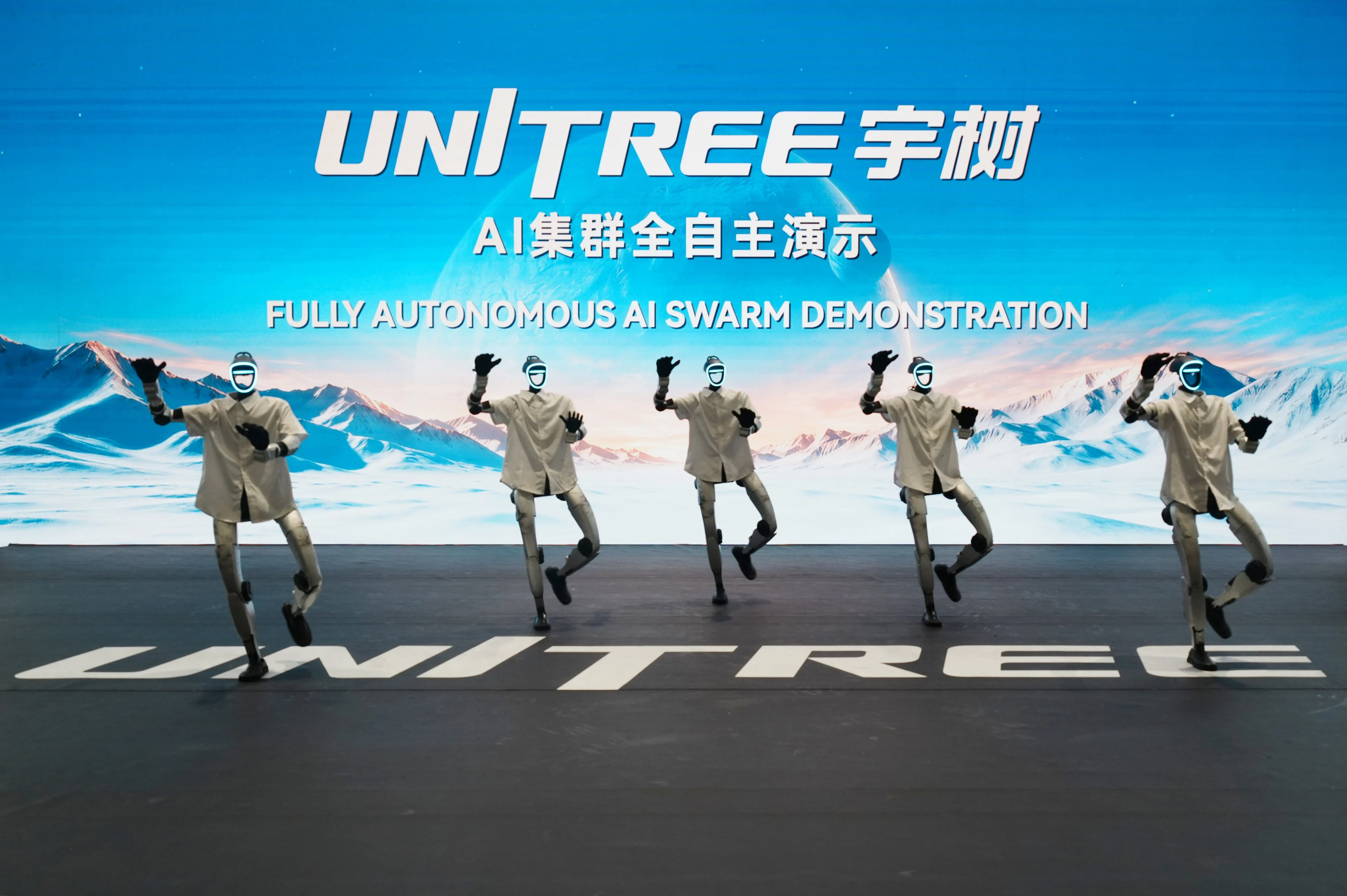
宇树科技正在开发一个“自我进化”的反馈回路,旨在让人形机器人能够独立编写代码、运行仿真并提升现实世界中的表现,创始人王兴兴表示,此举呼应了业界向“自我改进”人工智能迈进的更广泛趋势。
Unitree Robotics is developing a “self-evolving” feedback loop designed to allow humanoid robots to write code, run simulations and improve their real-world performance independently, founder Wang Xingxing said, in a move that mirrors a broader push towards “self-improving” artificial intelligence.
王兴兴周四在宇树于杭州举办的具身智能大会上发布了该项目,代号为“宇树排练”,他称这是公司今年最重要的举措。
Speaking on Thursday at a physical AI conference hosted by Unitree in Hangzhou, Wang unveiled the project, dubbed “Unitree Rehearsal”, which he called the company’s most important initiative of the year.
他说,该项目旨在将机器人开发从劳动密集型的手工编程转向持续、自主的反馈回路。在正在开发的系统中,AI将检索研究论文、编写代码并在仿真环境中测试,随后在实体机器人上进行试运行。
The project sought to shift robotics development away from labour-intensive manual programming towards a continuous, autonomous feedback loop, he said. Under the system in development, AI would search research papers, write code and test it in simulations before running trials on physical robots.
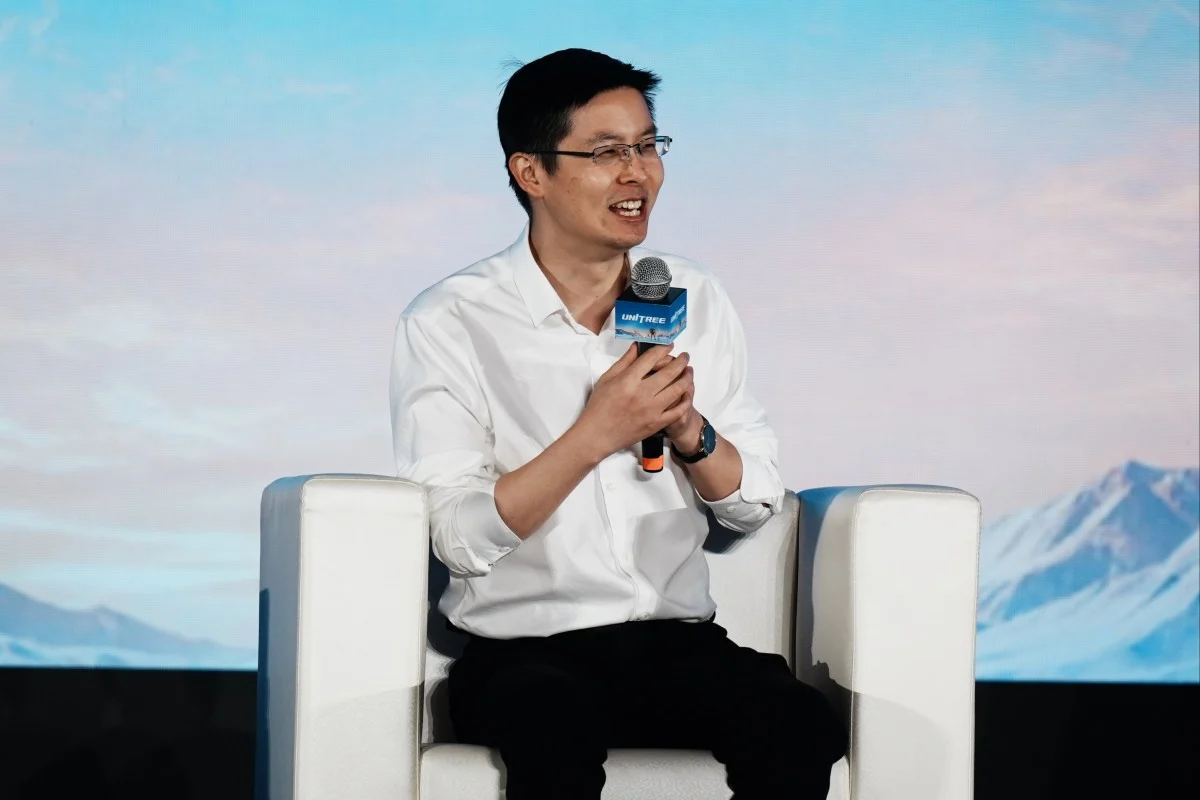
王兴兴表示,人类仍可协助评估性能并提供反馈,但最终目标是创建一个自动化循环,能够指数级加速机器人算法的开发。
While humans could still help assess performance and provide feedback, Wang said the ultimate goal was to create an automated cycle that could exponentially accelerate the development of robotics algorithms.
“过去,每位机器人工程师都要手写代码并手动调试,效率相对较低,”王兴兴说。“随着AI模型不断改进,我们预期它们将承担更多规划和迭代工作,减少对人工干预的需求。”他说,头部AI公司已开始在人工指导下利用模型生成代码和收集数据,机器人企业可遵循类似蓝图。不过他指出,与数字软件不同,机器人还必须应对环境的不可预测性和机械误差。
“In the past, every robotics engineer had to write code and debug manually, which is relatively inefficient,” Wang said. “As AI models improve, we expect them to take on more of the planning and iteration, reducing the need for human intervention.”Leading AI companies had already begun using models to generate code and gather data under human guidance, Wang said, arguing that robotics firms could follow a similar blueprint. Unlike digital software, however, robots also had to navigate environmental unpredictability and mechanical errors, he said.
此番言论距离王兴兴预测OpenAI的GPT-6模型进步可能在一到两年内推动机器人领域实现更广泛突破仅过去几天。他此次演讲聚焦于将AI模型改进转化为现实效用所需的关键步骤。
The comments came just days after Wang predicted that advances in OpenAI’s GPT-6 model could spur a broader robotics breakthrough within one to two years. His latest speech focused on the critical steps needed to translate AI model improvements into real-world utility.
在活动现场播放的一段视频中,宇树科技开发的机器人利用 GPT-6 绘制路线、规划动作,且无需针对特定任务进行训练,但演示并未展示这些机器在陌生环境中能以何种一致性复现该行为。
In a video shown at the event, robots developed by Unitree used GPT-6 to map routes and plan movements without task-specific training, though the presentation did not demonstrate how consistently the machines could replicate that behaviour in unfamiliar environments.
王兴表示,虽然大型 AI 模型能够处理机器人的规划与导航,但最大的挑战在于“将 AI 模型的输入输出与真实机器人的输入输出对齐”。
While large AI models could handle robot planning and navigation, Wang said the biggest challenge was “aligning the AI model’s inputs and outputs with those of a real robot”.
他指出,若能攻克这一难关,人形机器人最早可于 2027 年按指令整理房间,但他给出 2028 年作为更切合实际的时间表。
If that challenge could be overcome, humanoid robots could be tidying rooms on command as early as 2027, Wang suggested, though he offered 2028 as a more realistic estimate.
宇树科技乐观的路线图呼应了埃隆·马斯克近期的言论。周三,特斯拉首席执行官在该公司财报电话会上表示,人形机器人最终可能成为“地球上最大的产品”,且数量将超过人类。不过他同时警告,特斯拉在 Optimus 机器人上仍面临约一年的开发难关。
Unitree’s upbeat road map echoed recent comments from Elon Musk. On Wednesday, the Tesla CEO told the US carmaker’s earnings call that humanoid robots could eventually become “the biggest product on Earth” and outnumber humans. He cautioned, however, that Tesla still faced about a year of development hurdles with its Optimus robot.
然而,数据显示从实验室走向客厅的过渡充满挑战。斯坦福大学 2026 年《AI 指数报告》发现,在评测中机器人完成现实家庭任务的成功率仅为 12%,尽管它们在仿真环境中的表现好得多。
Data, however, points to a challenging transition from laboratory to living room. Stanford University’s 2026 AI Index found that robots succeeded in only 12 per cent of real-world household tasks during evaluations, despite performing significantly better in simulation.