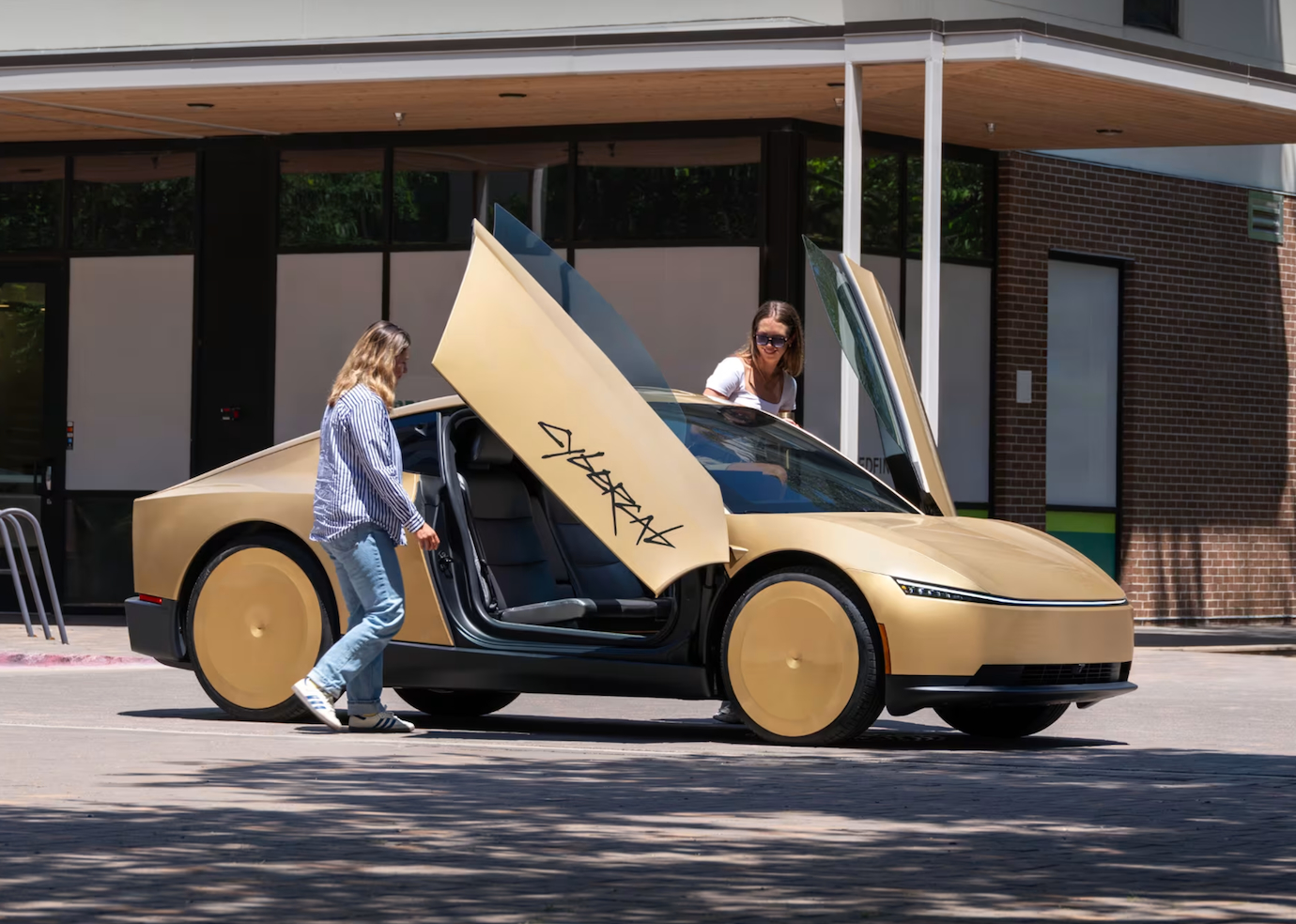
特斯拉表示,正准备在总部所在地得克萨斯州奥斯汀以外的新市场推出其闪亮金色的Cybercab,力图“真正接管地面交通的每一个部分”。首席财务官瓦伊巴夫·塔内贾在周三的公司第三季度财报电话会议上表示:“我们首先从把人从一个地方送到另一个地方开始,但我们的目标基本上是拥有地球上任何形式的交通。”
Tesla says it is preparing to launch its shiny gold Cybercab in new markets outside its home of Austin, Texas, in a bid to “literally take over every part of terrestrial transportation.”“We’re starting with getting people from one place to the other, but we want to basically own transportation of any kind on Earth,” Chief Financial Officer Vaibhav Taneja said on the company’s third-quarter earnings call Wednesday.
特斯拉此前曾展示过一款名为“Robovan”的多座车辆概念版,但目前不清楚塔内贾这番豪言是否意味着公司正在研发其他类型的交通工具。
Tesla has previously shown a concept version of a multi-passenger vehicle it calls the “Robovan,” but it’s unclear if Taneja’s bombastic comments mean the company is working on other types of transportation.
电话会议上更明确的一点是,特斯拉的Cybercab扩张将于下个月在达拉斯启动,并在今年年底前扩展到其他城市。特斯拉已经在达拉斯、休斯敦以及佛罗里达州的迈阿密、奥兰多和坦帕以小型车队形式运营其Model Y运动型多用途车(SUV)的robotaxi版本。公司还在财报电话会议上表示,将在今年年底前开始向车队运营商销售Cybercab。
What was clearer on the call is that Tesla’s Cybercab expansion will begin in Dallas next month and spread to other cities by the end of this year. Tesla already operates robotaxi versions of its Model Y SUV in small fleets in Dallas, Houston, and the Florida cities of Miami, Orlando, and Tampa. The company also said on its earnings call that it will start selling Cybercabs to fleet operators by the end of this year.
Cybercab的更广泛扩张可能引发与Waymo的真正较量。Waymo目前是美国robotaxi市场的领导者,已在十几个以上城市部署了超过4000辆robotaxi。特斯拉主张,其Cybercab造价更低、制造更容易,这应使其能够在价格上压过Waymo和其他robotaxi运营商。但公司必须在奥斯汀以外实现真正的规模,才能证明这一点。
Broader expansion of the Cybercab could set up a real fight with Waymo, which is currently the market leader for robotaxis in the United States, with more than 4,000 of them deployed across more than a dozen cities. Tesla has argued that its Cybercab is cheaper and easier to build, which should allow it to undercut Waymo and other robotaxi operators on price. But the company has to reach real scale outside Austin in order to prove that point.
特斯拉表示,由于近几周其自动驾驶汽车行驶里程大幅增加,公司已做好准备。这话或许不假,但特斯拉周三对整体robotaxi业务究竟带来了多少收入缄口不言。特斯拉CEO埃隆·马斯克表示,这项新的网约车业务要到2027年第二季度才会在公司整体财务数据中显现出来,“到明年第三或第四季度可能才会成为一项重要业务。”特斯拉还修改了致股东信中的一处内容,使外界原本就十分有限的robotaxi业务可见度变得更加模糊。
Tesla said it’s ready thanks to a dramatic increase in the number of miles its self-driving cars have traveled in recent weeks. While that may be true, Tesla was mum on Wednesday about how much money the overall robotaxi effort is bringing in. Tesla CEO Elon Musk said the new ride-hailing business won’t be noticeable in the company’s overall financial figures until the second quarter of 2027, “and probably a big deal by Q3 or Q4 of next year.”Tesla also made a change to its letter to shareholders that further obscures what little visibility there was into its robotaxi business.
在特斯拉第二季度致股东信中,公司附了一张“累计付费robotaxi里程”图表。仔细查看该图表可以发现,这一数字较今年第一季度下降了36%。在周三发布的新致股东信中,特斯拉将该图表改为显示“累计无监督robotaxi里程”——这是一个更简单的指标,反映车队车辆行驶了多远,无论车上是否有付费乘客。
In Tesla’s second-quarter letter, the company included a chart for “Cumulative Paid Robotaxi Miles.”A close read of that chart showed a 36% decline from the first quarter of the year. In the new letter released on Wednesday, Tesla changed that chart to show “Cumulative Unsupervised Robotaxi Miles” — simpler indicator of how far the fleet cars are driving, whether or not they have paying riders on board.
电话会议上也没有提供更多清晰信息。当被问及付费robotaxi行驶里程时,塔内贾表示公司“看到利用率在改善”,但没有提供具体数据。
There wasn’t much more clarity on the call, either. When asked about paid robotaxi miles traveled, Taneja said the company is “seeing utilization improving,” but didn’t offer specifics.
相反,塔内贾的大部分发言总体上集中在特斯拉扩大Cybercab规模的计划上。其中包括对特斯拉工程团队的赞扬,称其打造出了一款据制造团队称非常容易生产——而且能快速生产——的车辆。
Instead, Taneja kept most of his comments generally focused on Tesla’s plans to scale the Cybercab. That included praise for Tesla’s engineering team for creating a vehicle that, according to the manufacturing team, is very easy to build — and build quickly.
“他们认为,就制造而言,这是他们最容易实现规模化的产品之一,”他说。“所以扩大规模不会是什么太大的挑战。”塔内贾表示,真正的挑战可能在于,特斯拉需要确保获得“所有监管批准”,以便能够“以我们所能生产的最快速度开始部署Cybercab”。这与马斯克此前多次表态相呼应,他长期以来一直声称,“监管批准”才是特斯拉robotaxi计划的最大障碍,而非技术进展。
“They think this is one of the easiest products for them to scale in terms of manufacturing,” he said. “So scaling would not be that much of a challenge.”What might be a challenge, Taneja said, is that Tesla needs to make sure it has “all the regulatory approvals” so it can “start deploying the Cybercabs as fast as we can produce them.”That echoes many previous comments from Musk, who has long claimed that “regulatory approval” was the biggest barrier to Tesla’s robotaxi plans, not technical progress.
马斯克对于具体需要哪些审批一直含糊其辞。不过,该公司今年确实遇到了监管障碍。9月,就在特斯拉在奥斯汀正式推出其Cybercab几小时后,美国国家公路交通安全管理局(NHTSA)就对该车辆是否符合现行联邦机动车安全标准展开了调查。
Musk has always been a bit hazy about what approvals, specifically, he felt were needed. The company has run into a regulatory hurdle this year, though. In September, just hours after Tesla formally launched its Cybercab in Austin, the National Highway Traffic Safety Administration (NHTSA) opened an investigation into whether the vehicle complies with current federal motor vehicle safety standards.
所有汽车制造商都自行认证其车辆符合这些标准,特斯拉也声称Cybercab是合规的。但它缺少现行标准所要求的一些功能,比如刹车踏板和侧后视镜。NHTSA已提议取消其中部分要求,但这一规则变更可能至少还需要几个月才能落地。在周三的电话会议上,并非所有特斯拉高管都认同这一说法。
All automakers self-certify that their vehicles conform to these standards, and Tesla has claimed that the Cybercab is compliant. But it is missing features that the current standards require, like a brake pedal and side mirrors. The NHTSA has proposed removing some of these requirements, but that rule change is likely still at least a few months away. Not every Tesla executive agreed on this during Wednesday’s call.
当被问及更广泛推广robotaxi仍存在哪些瓶颈时,特斯拉负责自动驾驶的副总裁阿肖克·埃卢斯瓦米表示,这些瓶颈“不完全是监管方面的”。
Asked about the remaining bottlenecks for a wider robotaxi rollout, Ashok Elluswamy, Tesla’s vice president overseeing autonomy, said they are “not purely regulatory.”
“这是技术驱动的,”他说。“我们最初的robotaxi服务时间是早上6点到晚上9点,后来扩展到晚上10点到11点,现在很快将延长到凌晨2点。所以我们正在逐步扩大robotaxi的可用时间,而这取决于AI软件的能力。”这或许可以解释为什么特斯拉的服务仍然不在高速公路上运营,也不在某些条件下运营,尽管在奥斯汀已多次被看到在大雨中运行——而Waymo的robotaxi基本上避免了这种情况。
“It’s technology driven,” he said. “We had initially had the robotaxi service from 6 a.m. to 9 p.m., and then expanded to 10 p.m. to 11 p.m, now it’s going to be pretty soon, [to] 2 a.m. So we’re slowly expanding the availability of robotaxi, and that is driven by the capability of the AI software.”That could be why Tesla’s service still doesn’t operate on highways, and in certain conditions, although it has been spotted operating in heavy rain many times in Austin — something Waymo’s robotaxis have largely avoided.
埃卢斯瓦米周三表示,特斯拉计划在今年年底前应对更多这类具有挑战性的驾驶场景,然后再进一步扩大规模。
Elluswamy said Wednesday that Tesla plans to tackle more of these challenging driving scenarios by the end of this year, before scaling further.
“我们只是想确保不发生任何一起安全事故。这是我们的运营原则。哪怕存在一丝一毫的风险,我们也不会去冒这个险,”他说。
“We just want to make sure that there’s not a single safety incident. That is our operating principle. And even if there’s the slightest possible risk at all, we don’t like take on that risk,” he said.