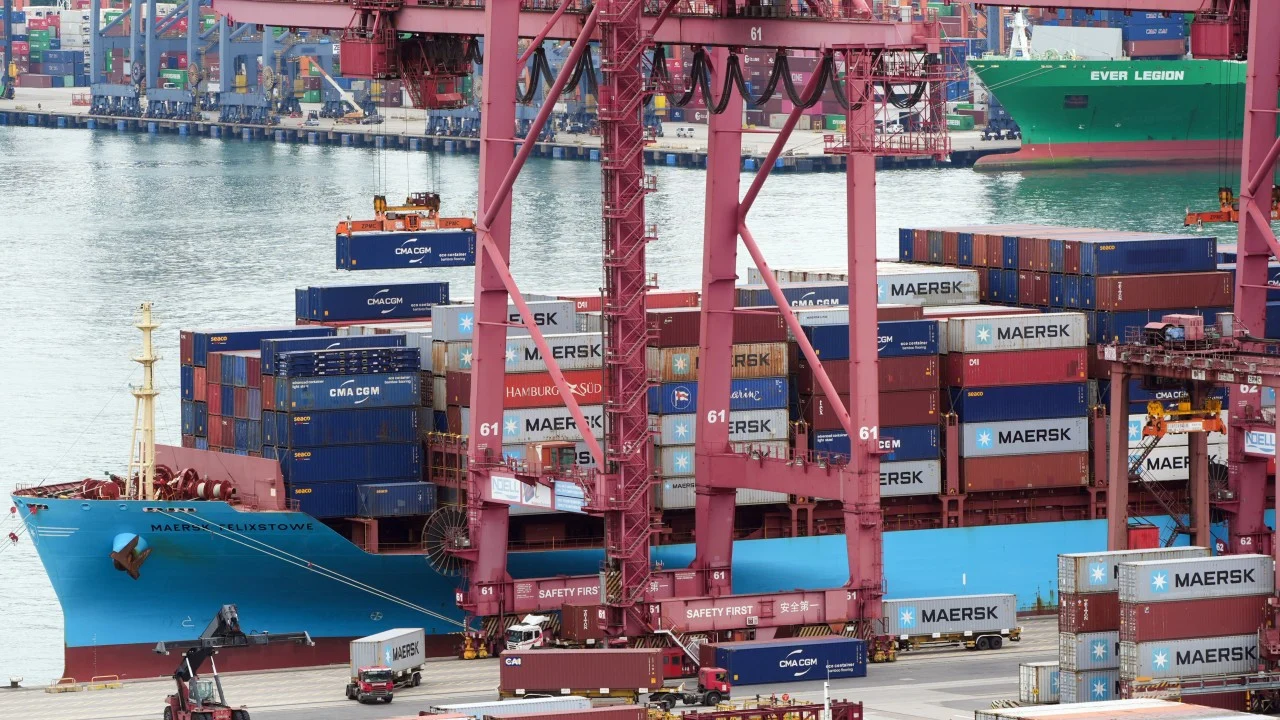
今年,全球贸易迎来了一个难得的相对平静窗口期。10月8日,世界贸易组织将全球货物贸易增长预期由1.9%上调至3.9%。美中、欧中关系紧张局势缓和,为开放型经济体赢得了喘息空间。
This year has opened a rare window of relative calm in global commerce. On October 8, the World Trade Organization doubled its forecast for global goods trade growth, from 1.9 to 3.9 per cent. The easing of US-China and Europe-China tensions has given open economies some breathing space.
香港抓住了这一契机。2026年前八个月,香港出口同比增长42.5%,仅8月单月就飙升53%,主要得益于人工智能相关设备和高价值电子元件的强劲需求。
Hong Kong has seized the moment. Its exports rose 42.5 per cent year on year in the first eight months of 2026, with figures from August alone up 53 per cent, driven largely by AI-related equipment and high-value electronic components.
然而,在亮眼的头条数据之下,一场更深层的转型正在悄然发生。香港不再仅仅是一个被动的贸易枢纽。几十年来,其在全球商业中的角色由其在地缘政治暗流涌动中的“缓冲地带”地位所定义。传统的“中国制造、经香港转运、西方消费”模式,使这座城市沦为一个过境点,而非决策点。
A deeper transformation lurks beneath the headline numbers. Hong Kong is no longer merely a passive trade hub. For decades, its role in global commerce was defined by its position as a buffer in geopolitical cross-currents. The traditional model of “Made in China, shipped via Hong Kong, consumed in the West” made the city a passage point rather than a decision point.
当前的问题是,香港能否将自己重新定位为一个区域供应链管理枢纽,连接多元化的亚洲生产网络与西方市场。三大结构性变化正在创造这一机遇。
The question now is whether Hong Kong can reposition itself as a regional supply-chain management hub linking diverse Asian production networks with Western markets. Three structural shifts are creating this opportunity.
首先,香港贸易正向高价值商品集中。截至8月,出口美国的商品中,近68%为电讯设备、计算机零件和半导体;转口内地的商品则日益以高端芯片和人工智能服务器为主。这些体积小、价值高的产品对快速、安全的物流提出了更高要求,而香港的空运运力优势在此显得独特。
First, Hong Kong’s trade is concentrating in high‑value goods. Nearly 68 per cent of exports to the United States through to August were telecoms equipment, computer parts and semiconductors, while re‑exports to mainland China are increasingly dominated by high‑end chips and AI servers. These compact, high‑value products demand fast, secure logistics, an area where Hong Kong’s air freight capacity gives it a distinct edge.
其次,香港的货源基地正在亚洲范围内多元化。2020年,内地货源占香港转口美国商品的72.9%,到2026年前八个月已降至23.8%。越南已崛起为最大货源地,占比42.9%,印度、韩国、泰国和马来西亚紧随其后。香港正从“内地之窗”升级为亚洲生产网络中的核心节点。
Second, Hong Kong’s sourcing base is diversifying across Asia. The share of mainland-origin goods in Hong Kong’s re-exports to the US has fallen from 72.9 per cent in 2020 to 23.8 per cent in the first eight months of 2026. Vietnam has emerged as the largest source, accounting for 42.9 per cent, with India, South Korea, Thailand and Malaysia close behind. Hong Kong is upgrading from a “China window” to a core node in Asia’s production network.
第三,离岸贸易正在增长。离岸贸易年额现已超过5万亿港元(约6371亿美元),超越传统转口贸易。越来越多的货物并不实地经过香港,但订单、融资、结算和风险管理等交易环节却在该城市完成。增值环节正从物流转向金融与合规。香港正成为“交易式中转”枢纽,管理的是资金与合同流向,而非集装箱流向。
Third, offshore trade is rising. Offshore trade now exceeds HK$5 trillion (US$637.1 billion) annually, surpassing traditional re-exports. Increasingly, goods do not physically pass through Hong Kong, yet transactions such as orders, financing, settlement and risk management are completed in the city. The value added is shifting from logistics to finance and compliance. Hong Kong is becoming a hub for “transactional transit”, managing flows of capital and contracts rather than containers.
这些趋势共同构成了香港从以中国为中心的制造业“通道”,演变为多节点、多规则供应链网络“控制塔”的基础。这一角色的考验在其与美国的关系中表现得最为明显。香港是美国为数不多的持续保持货物贸易顺差的经济体之一,2025年顺差达285亿美元,较上年增长30.2%。
Together, these trends create the basis for Hong Kong to evolve from a conduit for China-centred manufacturing into a control tower for a multi-node, multi-rule supply chain network. The test of that role is most evident in its relationship with the US. It is one of the few economies where the US consistently runs a goods trade surplus, reaching US$28.5 billion in 2025, up 30.2 per cent from the previous year.
然而,香港尚未将其作为真正“控制塔”的角色制度化。在订单路由、库存分配、贸易融资、合规签署、货币对冲和合同仲裁等决策上仍显碎片化。在这一考验中,香港拥有资产却尚缺架构。政策任务是将新兴贸易模式转化为制度化的决策职能。四大支柱界定了香港如何将其转化为持久角色。
However, Hong Kong has yet to institutionalise its role as a true control tower. Decisions on order routing, inventory allocation, trade finance, compliance sign-off, currency hedging and contract arbitration remain fragmented. On this test, Hong Kong has assets but not yet an architecture. The policy task is to convert emerging trade patterns into institutionalised decision-making functions. Four pillars define how Hong Kong can turn this into a durable role.
第一,香港的离岸财富管理行业现已成为全球最大,但供应链金融——应收账款融资、贸易结算、货币对冲——尚未在此大规模落地生根。将资本市场能力嵌入贸易融资,将使香港从中转点转变为决策节点。差距不在于资本,而在于将资本转化为亚洲供应商营运资金解决方案的贸易金融产品架构。
First, Hong Kong’s offshore wealth management sector is now the largest in the world, but supply-chain finance – receivables financing, trade settlement, currency hedging – is not yet anchored here at scale. Embedding capital-market capacity into trade finance would move Hong Kong from a transit point to a decision node. The gap is not in capital; it is the trade-finance product architecture that turns capital into working-capital solutions for Asian suppliers.
第二,合规与法律。普通法与仲裁制度赋予香港一个中立论坛,使受美国与中国规则共同约束的合同得以执行。相互认可仍属愿景而非现实;当务之急是积累判例法与执行实践,使香港成为跨制度争议的首选审理地。
Second, compliance and law. Common law and arbitration give Hong Kong a neutral forum where contracts shaped by both US and Chinese rules can be enforced. Mutual recognition is aspirational, not operational; the task is to build the case law and enforcement practice that make Hong Kong the default venue for cross-regime disputes.
第三,数字化与物流。电子提单与实时追踪让香港即便在货物绕过其港口时,仍能管理供应链。获中美双方认可的数据框架仍是长远目标;与此同时,香港可构建受信任的数字贸易基础设施,并与主要合作伙伴试点数据沙盒。
Third, digital and logistics. Electronic bills of lading and real-time tracking let Hong Kong manage supply chains even when goods bypass its ports. A data framework accepted by both China and the US remains a long-term goal; meanwhile, Hong Kong can build trusted digital trade infrastructure and pilot data sandboxes with major partners.
第四,区域总部。约200家美国母公司企业在香港设有区域总部,另有480家运营区域办事处。然而,设立机构不等于拥有决策权:企业可保留办事处,却将订单路由、库存持有与合规签批安排在别处。这四大支柱的考验,在于这些决策权是否在香港行使。而这正是前三大支柱必须交付的成果。
Fourth, regional headquarters. About 200 US-parented companies maintain regional headquarters in Hong Kong, with another 480 running regional offices. However, presence is not mandate: a firm can keep its office and still route orders, hold inventory and sign off compliance elsewhere. The test of the four pillars is whether those mandates are exercised here. That is the outcome the other three pillars must deliver.
随着亚太经济合作组织(APEC)领导人非正式会议在深圳临近,香港必须行动。这段平静窗口期是锁定其“亚洲供应链控制塔”角色的契机。以合规与法律为基石,金融为驱动,数字化为基建,区域总部为显性成果。若香港将这些职能嵌入连贯战略,它将从全球贸易的被动受益者,转型为主动塑造未来的建筑师。
As the Asia-Pacific Economic Cooperation forum summit in Shenzhen approaches, Hong Kong must act. This window of calm is a chance to lock in its role as Asia’s supply‑chain control tower. Compliance and law should be the foundation, finance the driver, digital the infrastructure and regional headquarters the visible outcome. If Hong Kong embeds these functions into a coherent strategy, it will move from a passive beneficiary of global trade to an active architect of its future.