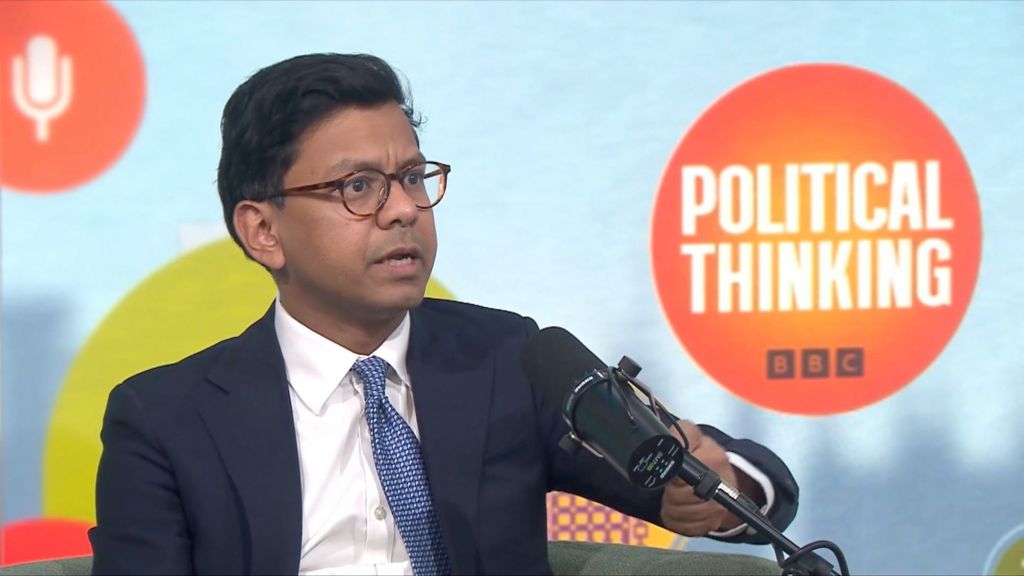
英国人工智能大臣卡尼什卡·纳拉扬表示,英国不能让人工智能由“科技圈大佬和寡头”来主导。
Kanishka Narayan tells the BBC that dealing with the technology requires not only regulation, but "building capability and capacity".
纳拉扬在接受BBC《政治思考》播客节目采访时表示,应对这项技术不仅需要监管,还需要“在国家层面建设能力和容量”。
By Ewan Somerville Britain cannot let aritificial intelligence be ruled by "tech bros and oligarchs", the AI minister has said.
他将人工智能比作维多利亚时代的工业革命,但表示英国需要比当时实现更好的转型。
Kanishka Narayan told the BBC's Political Thinking podcast that dealing with the technology requires not only regulation, but "building capability and capacity in the state" too.
他的这番言论录制于巴克莱银行集团宣布将在人工智能驱动的效率提升计划中裁减5000个职位的前一天。
He compared AI to the Victorian-era Industrial Revolution, but said the country needed to transition better than it did back then.
他在另一重大人工智能相关进展——在人工智能协助下发现影响数百万网站的网络安全漏洞——披露之前发表了上述言论。
His comments were recorded the day before Barclays banking group announced it was cutting 5,000 jobs in an AI-led efficiency drive.
纳拉扬于7月由首相安迪·伯纳姆任命,成为英国首位内阁级人工智能大臣。他表示,这场技术变革的规模“是几十年来未曾见过的”。
He was also speaking before another major AI-related development - the discovery of a cyber-security flaw affecting millions of websites, which was found with the help of AI. Narayan, who became the UK's first cabinet minister for AI when he was appointed by Prime Minister Andy Burnham in July, said the scale of the technological change was "something that we haven't seen for decades and decades".
他说:“这与工业革命相当,在某些方面甚至超过了工业革命。”他指的是1750年至1900年左右,经济从以农业为主向工业和制造业转变的过程。
"It is comparable and in some ways exceeds the Industrial Revolution," he said, referencing the shift from a predominantly agricultural economy to industrial and manufacturing sectors between about 1750 and 1900. The Labour MP told the BBC's Nick Robinson that Britain needed to avoid what happened in the Industrial Revolution where "the outcome as a whole was good for the country, but the transition was extremely painful for too many people".
这位工党议员告诉BBC的尼克·罗宾逊,英国需要避免工业革命时期发生的情况,当时“总体结果对国家有利,但转型过程对太多人来说极其痛苦”。
"The fundamental thing is that the British public and democracy has to assert power rather than leave it to tech bros and oligarchs," he added.
他补充道:“根本在于,英国公众和民主制度必须行使权力,而不能将其交给科技圈大佬和寡头。”他未点名任何具体公司或科技高管。
He did not name any specific companies or tech bosses. As well as "pulling the lever of regulation", the country needs to build AI in Britain "so you can shape the working conditions" and avoid it all being developed abroad, he said.
他说,除了“拉动监管这根杠杆”,英国还需要在本土构建人工智能,“这样才能塑造工作条件”,避免所有开发都在国外进行。
"We need to build technology to defend ourselves and to grow ourselves so we have leverage internationally - we're now currently totally reliant on other countries for essential bits of technology," he added.
“我们需要建设技术来保卫自身并发展自身,以便在国际上拥有筹码——我们目前完全依赖其他国家提供关键技术,”他补充道。
Pointing to the capabilities of AI, he said the government recently used frontier AI models in Whitehall to check for cybersecurity issues.
谈到人工智能的能力时,他说政府最近在白厅使用前沿人工智能模型来排查网络安全问题。
"We only spent £13,000 on it - we discovered 500 new vulnerabilities.
“我们只花了1.3万英镑——发现了500个新漏洞。这些是我们在公共部门重要领域发现的新型漏洞,”纳拉扬说,但未详述具体是什么漏洞。
These are novel vulnerabilities that we discovered in significant areas of the public sector," Narayan said, without detailing what they were.
他还表示,与财政大臣约翰·希利的交谈暗示,下周的预算案中可能会有关于人工智能的宣布,但他未透露具体内容。
He also said his conversations with Chancellor John Healey had hinted at a potential AI announcement in next week's Budget, though he did not say what this was.
纳拉扬驳回了只有美国和中国才是人工智能领域重要力量的观点,称英国的人工智能安全研究所已见到“每一家美国实验室……都来找我们”,要求在部署前测试模型。
Narayan rejected the notion that the US and China were the only powers that matter for AI, saying the UK's AI Security Institute had seen "every US lab...coming to us" asking it to test models before deployment.
本月早些时候,纳拉扬警告称,英国的网络防御届时很可能会被攻破,此前一名OpenAI的失控智能体于6月攻破了一个澳大利亚政府网站。
Earlier this month, Narayan warned it was likely the UK's cyber defences will at some point be breached, after a rogue OpenAI agent hacked an Australian government website in June.
在一名人工智能安全研究人员公开声称,构建该技术的人认为它可能毁灭人类之后,他最近几周接连发声。
He has made a series of interventions in recent weeks after an AI safety researcher went public with claims that people building the technology believed it could destroy humanity.
