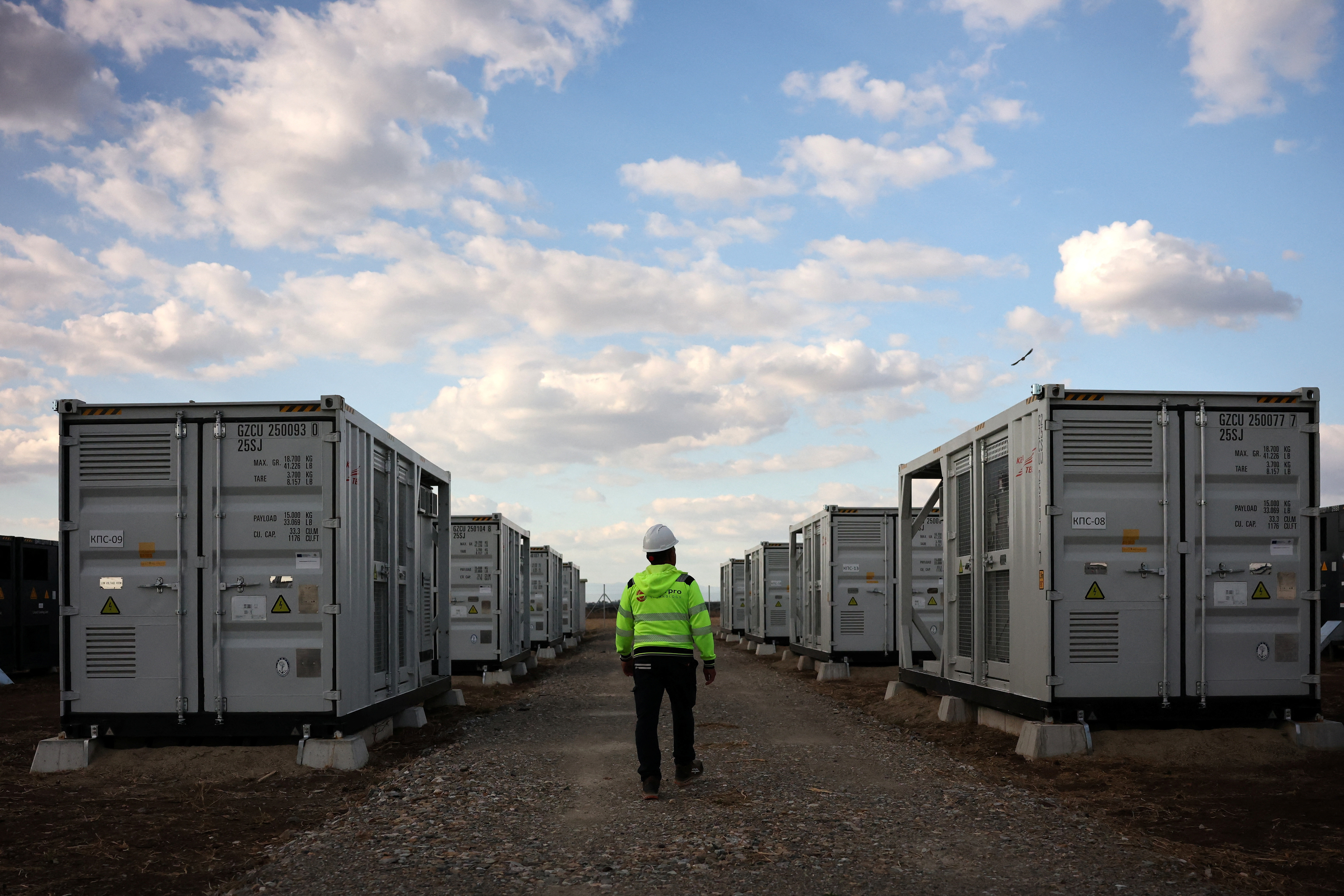
欧洲正疲于应对高昂的能源价格、供应担忧以及气候变化将带来更炎热夏天的前景,保加利亚为解决这一问题作出的贡献为其赢得了“巴尔干电池”的绰号。
Europe grapples with high energy prices, supply concerns and the prospect that climate change will lead to ever hotter summers, Bulgaria's contribution towards a solution has won it the nickname the "Battery of the Balkans".
在该国获得7亿欧元(约合7亿8386万美元)的欧盟拨款帮助下,这个黑海国家在过去一年里将其电池储能容量翻了一番,从而能够储存白天产生的太阳能,并在晚间用电高峰时段释放。
Helped by €700 million ($783.86 million) in European Union grants, the Black Sea country has doubled its battery capacity over the last year, allowing it to store solar energy produced in the day and release it during peak hours in the evening.
这使得电力出口大幅增加,在7月和8月的热浪导致各国电网难以应对需求时,向邻国供应了电力。
That enabled a significant rise in power exports that supplied neighbouring countries when heatwaves in July and August left national grids struggling to cope with demand.
行业机构电力生产、储存与贸易协会(简称APSTE)主席尼古拉·加兹多夫表示:“电池储能现在至关重要。这不是锦上添花,而是必不可少。”
"Battery storage is critical now. It’s not a nice to have, it’s a must have," said Nikola Gazdov, chairman of industry body the Association for Production, Storage and Trading of Electricity, or APSTE for short.
多年来,欧盟国家一直在寻求发展电池储能,以平衡太阳能和风能间歇性的特点。
European Union countries have for years sought to develop battery storage to balance the intermittent nature of solar and wind energy.
尽管预计普及速度将会加快(特别是在德国、英国和意大利),但由于漫长的监管审批和电网连接等待时间,进展受到了耽搁。今年的事件——高昂的能源价格加剧了引发社会动荡的不满情绪——进一步集中了人们的注意力。
Progress has been delayed by long waits for regulatory approvals and grid connections, although adoption is expected to pick up, especially in Germany, the UK and Italy. The events of this year, when high energy prices have added to grievances that have provoked social unrest have focused minds further.
成功在最需要的时候储存电力,有助于决定客户为电力支付的费用,并缓冲与美以对伊朗战争相关的中断所带来的影响。
Success in storing power for when it is most needed helps to determine how much customers pay for electricity and to cushion the impact of the disruption linked to the US-Israeli war on Iran.
保加利亚国内的石油和天然气储量有限,其发电量与许多其他欧盟国家相比相形见绌。
Bulgaria has only limited amounts of domestic oil and gas, and its electricity output is dwarfed by many other EU countries.
但APSTE的数据显示,在欧盟拨款和监管变革帮助吸引了对电池储能的私人投资后,该国今年成功将电力出口比去年增加了62%,达到3.5太瓦时。其储能容量目前约为6吉瓦,高于一年前的3吉瓦。
But it succeeded in increasing its power exports by 62% this year from last year, APSTE figures show, to 3.5 terawatt-hours after EU grants and regulatory changes helped to draw in private investment to its battery storage. Its storage capacity is now around 6 gigawatts, up from 3 GW a year ago.
其中一些出口流向了罗马尼亚。8月,由于干旱导致多瑙河水位下降,而多瑙河水被用于冷却反应堆涡轮机,罗马尼亚被迫关闭了一座核反应堆。
Some of the exports went to Romania, which was forced to shut a nuclear reactor in August after a drought that reduced the levels of the Danube River whose waters are used to cool reactor turbines.
除了出口的价值,电池电力的增加还通过减少水力发电的需求,帮助罗马尼亚维持了水库水位,水力发电传统上被用于满足高峰需求。
Apart from the exports' value, the increase in battery power also helped Romania to maintain reservoir levels by reducing its need to use hydropower, traditionally used to meet peak demand.
保加利亚电力系统运营商(Electricity System Operator)中央调度管理负责人迪米塔尔·扎尔切夫(Dimitar Zarchev)表示,保加利亚曾每天出口高达5万兆瓦时的电力。
Bulgaria has exported as much as 50,000 megawatt-hours of electricity per day, said Dimitar Zarchev, head of Central Dispatch Management at Bulgaria's Electricity System Operator.
“为了便于理解,这相当于平均每小时有大约2000兆瓦的电力流出保加利亚——大致相当于科兹洛杜伊核电站(Kozloduy Nuclear Power Plant)的发电量。”该电站位于保加利亚西北部。
"To put that into perspective, that works out to an average of around 2,000 megawatts flowing out of Bulgaria every hour — roughly equivalent to the output of the Kozloduy Nuclear Power Plant.”The plant is located in northwestern Bulgaria.
预计电池在冬天的影响将会较小,因为日照时间减少意味着太阳能发电量减少。
The batteries are expected to have less impact in winter when reduced daylight hours mean less solar power.
扎尔切夫预计,在接下来的冬季月份里,保加利亚将不得不更多地依赖传统发电厂,而不是储存的可再生电力。
Zarchev expects over the coming winter months that Bulgaria will have to rely more on conventional power plants than stored renewable power.
电池储能的进一步增加也面临其他问题,包括保加利亚扩大电网的需求。
Further increases in battery storage also face other issues, including the need for Bulgaria to expand its grid.
规模扩大的速度也削弱了吸引投资者的部分财务激励,因为价格差缩小了,从而减少了通过电力储存时的价格与释放时的价格之间的差距所能获得的收入。
The pace of the scale-up has also eroded some of the financial incentives that drew investors as price spreads have narrowed, reducing the amount of revenue to be made from the gap between the price when power is stored and when it is discharged.
保加利亚能源部在给路透社的一份声明中表示:“在某个时候,电池可能会开始蚕食它们的一部分收入。届时,对它们而言,不仅要参与廉价时段和昂贵时段之间的简单套利,还要参与平衡市场和系统服务,将变得更加重要。”
"At some point, batteries may begin to cannibalise part of their revenues," Bulgaria's Energy Ministry said in a statement to Reuters. "It will then become even more important for them to participate not just in simple arbitrage between cheap and expensive hours, but also in balancing markets and system services".
以数月阳光充足而闻名的希腊,曾看似是电池竞赛中的天然领跑者。
Greece, known for its many months of sunshine, looked like a natural leader in the battery race.
根据国际可再生能源署的数据,尽管希腊的太阳能发电能力大幅增长,在2020年至2025年间增长了两倍多,但其电池储能却滞后了,该国依赖进口天然气来满足晚间的高峰电力需求。
While its solar capacity has grown significantly, more than tripling between 2020 and 2025, according to the International Renewable Energy Agency, its battery storage is lagging and the country depends on imported gas to meet peak evening demand.
根据政府数据,尽管自2023年以来进行了三轮独立电池拍卖,但希腊直到4月才安装了第一批电池。到今年年底,总储能预计将达到1吉瓦,这仅占保加利亚储能能力的很小一部分。
Despite three rounds of auctions for standalone batteries since 2023, Greece only installed a first chunk in April. Total storage is expected to reach one gigawatt by the end of the year, a small fraction of Bulgaria's capacity, according to government figures.
欧盟统计局的数据显示,今年上半年,希腊剔除税费后的零售电价平均为每千瓦时0.1967欧元,而保加利亚为0.1117欧元。
Greek retail electricity excluding taxes and levies averaged €0.1967 per kilowatt-hour in the first half of the year, compared to €0.1117 for Bulgaria, data from the EU statistics service Eurostat showed.
希腊能源部在上个月的一份演示文稿中表示,该部门正致力于在欧盟资金的帮助下加快储能建设,以努力降低能源价格。
The Greek energy ministry said in a presentation last month it was working to speed up storage with the help of EU funds to try to lower energy prices.
官员们表示,除了预计在今年年底前投入运营的1吉瓦电池储能外,预计到2030年还将有5吉瓦的电池储能投入运营。对一些人来说,这还不够快。
Officials have said another 5 GW of battery capacity is expected to come online by 2030, in addition to the GW expected to be online by the end of this year. For some that is not soon enough.
希腊电力储能开发商协会首席执行官马诺利斯·卡拉皮达基斯对路透社表示:“如果我们现在拥有这6吉瓦的储能并投入运行,我们的电力系统就会更加平衡,这也会惠及消费者。”
"If we had had those six gigawatts operating now, our power system would have been more balanced and this would have passed on to consumers," Manolis Karapidakis, the chief executive officer of the Greek association of power storage developers, told Reuters.