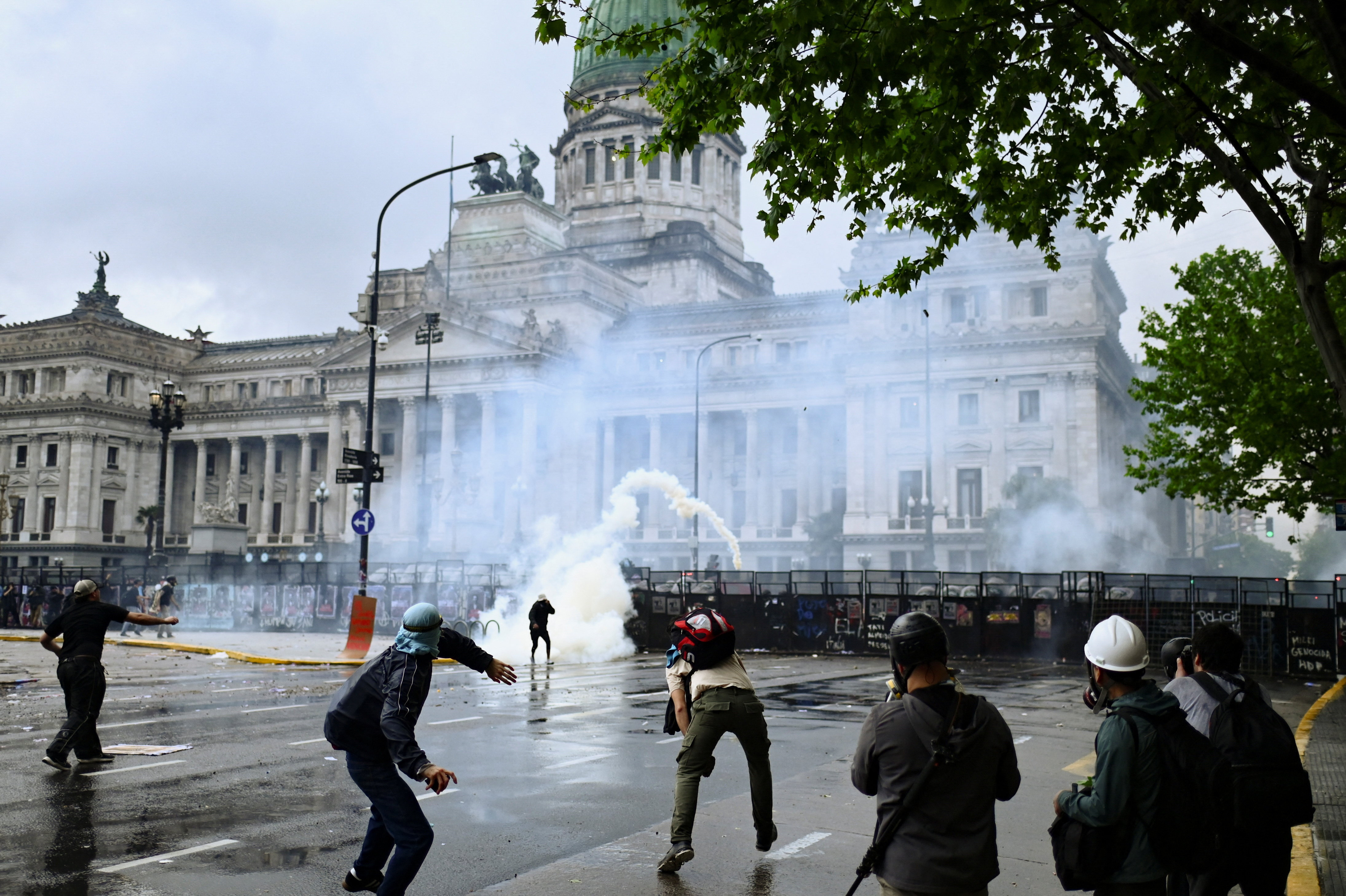
莉比·乔治(Libby George)、尼古拉斯·米斯库林(Nicolás Misculin)、乌迪塔·贾亚辛哈(Uditha Jayasinghe)报道:古斯塔沃·劳尔·佩雷斯(Gustavo Raul Perez)在布宜诺斯艾利斯郊区经营了一家六年的五金店里,正对着一本笔记本皱着眉头。
By Libby George, Nicolás Misculin, Uditha Jayasinghe Gustavo Raul Perez furrows his brow over a notebook at the hardware shop he has run for six years on the outskirts of Buenos Aires.
自从哈维尔·米莱(Javier Milei)于2023年当选阿根廷总统以来——佩雷斯当时投了赞成票——迅速的改革让投资者为之振奋,并赢得了国际货币基金组织(IMF)的赞誉。不过,佩雷斯主要感受到的是经济紧缩带来的痛苦。“这个经济计划只为少数人服务,”他说。
Since Javier Milei became president of Argentina in 2023 — with Perez's vote — rapid reforms have thrilled investors and won praise from the International Monetary Fund. Perez, though, mainly feels the pinch. "This economic plan is for a few," he said.
通货膨胀率已从近300%降至约33%,进口已经开放,补贴也有所减少。
Inflation has fallen to roughly 33% from nearly 300%, imports have opened up and subsidies have fallen.
但佩雷斯补货的成本却增加了两倍,而顾客们的消费能力却在下降。
But Perez's restocking costs have tripled and customers have less to spend.
“三年前这里还有一个中产阶级,”他说,“现在已经不复存在了。”佩雷斯的经历反映了一种贯穿新兴经济体的紧张局势:那些恢复了投资者信心并稳定了公共财政的改革,迄今尚未改善许多人的生活水平。
"There was a middle class three years ago," he says. "It doesn't exist anymore."
在摩洛哥,金光闪闪的崭新办公大楼与城市郊区的沮丧情绪形成了鲜明对比。在斯里兰卡,经济危机和债务违约已经消退,但贫困率仍高于危机前的水平。
Perez's experience reflects a tension coursing through emerging economies: reforms that restored investor confidence and stabilised public finances have yet to improve living standards for many. In Morocco, glittering new office towers contrast with frustration on city outskirts.
从尼日利亚取消燃油补贴,到埃及的私有化,再到乌兹别克斯坦的市场开放,多年的改革帮助新兴经济体经受住了冲击——然而,这些改革往往激怒了那些听到经济好转却对自己毫无帮助的普通公民。
In Sri Lanka, economic crisis and debt default have subsided but poverty remains above pre-crisis levels.
不容忽视的是,尼日利亚财政部长曾警告称,不解决不平等问题就像是“坐在火药桶上”。摩洛哥中央银行表示,挥之不去的失业问题拉大了经济表现与公民感知之间的差距。
From fuel subsidy removal in Nigeria to privatisation in Egypt and market opening in Uzbekistan, years of reforms have helped emerging economies weather shocks — yet often grate with citizens who hear of economic turnarounds that do nothing for them. Nigeria's finance minister warned failing to address inequality is like "sitting on gunpowder".
Verisk Maplecroft咨询公司的托尔约恩·索尔特维特(Torbjorn Soltvedt)表示:“当新兴市场的民众面临不断上涨的食品、燃料和能源成本时……那是他们最直接的感受。”他警告称,动荡和不稳定可能会随之而来。事实上,据他的公司统计,今年全球平均民间动荡风险创下了近十年来的最高纪录。
Morocco's central bank says stubborn unemployment has widened the gap between economic performance and citizens' perceptions. "When people in emerging markets are faced with rising food, fuel and energy costs...that is what they feel immediately," says Torbjorn Soltvedt of Verisk Maplecroft, warning that unrest and instability could follow. Indeed, average global civil unrest risk hit its highest in nearly a decade this year, according to his company.
国际货币基金组织和投资者长期以来一直敦促新兴经济体减少补贴和货币管制。
The IMF and investors have long pressed emerging economies to reduce subsidies and currency controls.
大流行病以及随后俄罗斯对乌克兰发动全面入侵导致的食品和燃料价格飙升,促使许多国家采取行动:削减开支、实行汇率自由化以及加息。
The pandemic, then food and fuel spikes after Russia's full-scale invasion of Ukraine, jolted many into action: cutting spending, liberalising exchange rates and hiking interest rates.
宏蜂巢(Macro Hive)的西蒙·基哈诺-埃文斯(Simon Quijano-Evans)表示,取消补贴和货币贬值会导致物价上涨,而削减开支又会挤压收入,但领导人们“绝对别无选择”,否则他们将面临失去投资的“深渊”。
Removing subsidies and weakening currencies raises prices even as spending cuts squeeze incomes — but leaders had "absolutely no other choice," says Simon Quijano-Evans of Macro Hive, or they risk an "abyss" of lost investment.
这些变化吸引了投资者回流;新兴经济体目前正以约4%的速度增长,大约是发达经济体增速的两倍。
The changes drew investors back; emerging economies now grow around 4%, roughly twice the pace of advanced economies.
但是,如果公众的愤怒破坏了改革,这些国家面临的风险将不止于失去信心——开倒车可能会阻碍缩小与较富裕国家差距所需的投资和就业创造。
But if public anger derails reform, these countries risk losing more than confidence — backsliding could stall the investment and job creation needed to narrow the gap with richer nations.
在摩洛哥,去年的外国直接投资流入量几乎翻了一番,但致命的青年抗议活动却震撼了该国,7月份数百名意图移民的人涌入了邻近的一个西班牙飞地。
In Morocco, foreign direct investment flow nearly doubled last year, but deadly youth-led protests rocked the country, and in July hundreds of would-be migrants flocked into a neighbouring Spanish enclave.
土木工程师阿纳斯·萨亚德(Anass Sayad)在卡萨布兰卡金融城与家人散步时说:“摩洛哥正以两种不同的速度发展。”他指着体育场和摩天大楼表示,教育和医疗保健应该得到更多关注。摩洛哥政府在其2026年预算中增加了对这两项的支出,不过任何影响都需要时间才能传导给普通公民。
"Morocco is developing at two different speeds," civil engineer Anass Sayad said while walking with his family in Casablanca Finance City. He pointed to stadiums and skyscrapers while saying that education and healthcare deserve more attention. The government boosted spending on both in its 2026 budget, though any impact will take time to reach its citizens.
世界银行估计,在未来十年里,发展中国家将有12亿人达到工作年龄——这让人对投资能否为他们创造足够的就业机会产生了怀疑。
The World Bank estimates 1.2 billion people in developing countries will reach working age over the next decade — raising doubts over whether investment will create enough jobs for them.
国际货币基金组织总裁克里斯塔利娜·格奥尔基耶娃(Kristalina Georgieva)警告称,尽管经过多年的“艰苦努力”,但更高的燃料和食品成本以及不断下降的发展援助正在加重压力,同时该基金呼吁为低收入国家提供更多支持。
IMF chief Kristalina Georgieva warned higher fuel and food costs and declining development assistance were piling on pressure despite years of "hard work", while the Fund called for more low-income country support.
愤怒和动荡并不局限于新兴经济体;生活成本的压力已经将抗议者推向了法国、意大利和西班牙的街头。
Anger and unrest are not confined to emerging economies; cost-of-living pressures have brought protesters onto the streets of France, Italy and Spain.
但富裕国家拥有更强大的财政实力来缓冲家庭受到的冲击。在发展中国家,通货膨胀的打击也可能更重,食品占消费品支出篮子的30%到50%,而美国这一比例为13%到14%。
But wealthy countries have greater fiscal firepower to cushion households. In developing economies inflation can also bite harder, with food accounting for 30% to 50% of consumer price baskets, compared with 13% to 14% in the US.
在科伦坡,食品小贩西里莫达拉·瓦达拉姆格·斯里亚坎蒂(Sirimodara Wadaramge Sriyakanthi)在清晨5点之前就起床准备草药粥和午餐饭盒,她选择自己承担不断上涨的成本,以将价格维持在2美元左右。
In Colombo, food vendor Sirimodara Wadaramge Sriyakanthi wakes before 5 a.m. to prepare herbal porridge and rice packets for lunch, absorbing higher costs to keep her prices near $2.
“我以合理的价格出售午餐饭盒,这样人们才能买得起,”她说,同时还在担心儿子的学费和女儿的舞蹈课费用。
"I sell the lunch packets at a reasonable price so people can afford it," she says, worrying about her son's school fees and daughter's dance lessons.
斯里兰卡或许已经走出了危机——但在她看来,一切似乎没有什么不同。“我们有太多的开销,”她说。
Sri Lanka may have emerged from crisis — but to her, little feels different. "We have so many expenses," she says.