
在中国决策者推出一揽子温和的额外刺激措施以确保经济实现北京的年度增长目标之前,中国政府已连续第七个月削减财政支出。
China trimmed its government spending for the seventh straight month, before policymakers delivered a modest package of additional stimulus to ensure the economy hits Beijing’s annual growth target.
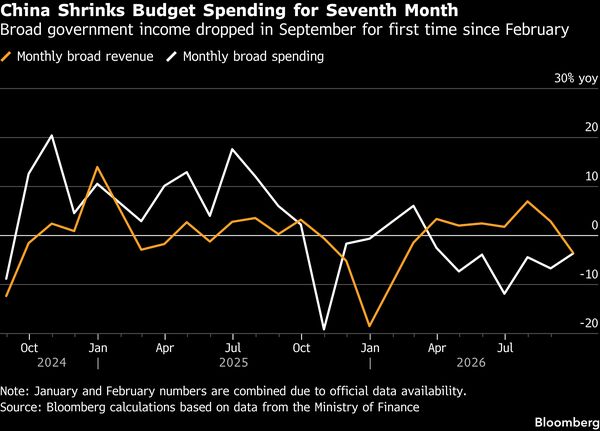
根据彭博社基于财政部周五发布的数据进行的计算,9月份广义预算支出同比下降3.7%。广义收入下降3.5%。
A measure of broad budget expenditure fell 3.7% in September from a year earlier, according to Bloomberg calculations based on Ministry of Finance data released on Friday. Broad revenue declined 3.5%.
这导致9月份财政赤字收缩3.8%。今年前九个月,广义支出超出收入7.57万亿元(合1.1万亿美元)。
That led the fiscal deficit to contract 3.8% in September. In the first nine months of the year, broad spending exceeded income by 7.57 trillion yuan ($1.1 trillion).
今年以来,紧缩的财政状况一直是拖累中国经济的主要因素,在出口持续强劲推动增长的同时,未能对国内需求起到提振作用。随着包括“六张网”倡议在内的国家级重大项目陆续启动,加之北京推出近期批准的旨在促进投资的额外支持措施,未来几个月这些削减可能会有所缓和。
Tight fiscal conditions have been a major drag on China’s economy this year, failing to give domestic demand a boost as booming exports continued to power growth. The cutbacks could ease up in the coming few months as major national projects, including the Six Networks initiative, get underway and Beijing rolls out additional support recently approved to bolster investment.
在过去短短几周内,中国决策者出台了一系列旨在支持经济增长的新措施,其中包括面向符合条件购房者的按揭补贴,以及允许地方政府额外发售5.5万亿元的债券。在此轮新刺激出台之前,官员们最近几个月加快了此前计划政策的实施,例如通过国有政策性银行提供8000亿元资金以支撑投资。
Chinese policymakers delivered a string of fresh measures to support economic growth over the fast few weeks, including mortgage subsidies for qualified home buyers and an additional 550 billion yuan of bonds local governments are allowed to sell. The new stimulus came after officials accelerated the implementation of previously planned policies in recent months, such as 800 billion yuan in funding provided via state-owned policy banks to shore up investment.
在上一季度增速跌破北京4.5%-5%的年度目标后,世界第二大经济体在第三季度的增长率回升至4.5%。固定资产投资的低迷持续了又一个月,而基础设施支出的萎缩则略有加深。N经济学家普遍预计,在更强有力的政府支持背景下,未来基础设施支出的回落势头将会收窄。
Growth in the world’s second-largest economy edged up to 4.5% in the third quarter after sliding below Beijing’s annual target of 4.5%-5% in the prior three months. The slump in fixed-asset investment persisted into another month while the contraction in infrastructure spending deepened a tad. Economists broadly expect the pullback in outlays on infrastructure to narrow going forward on the back of stronger government support.