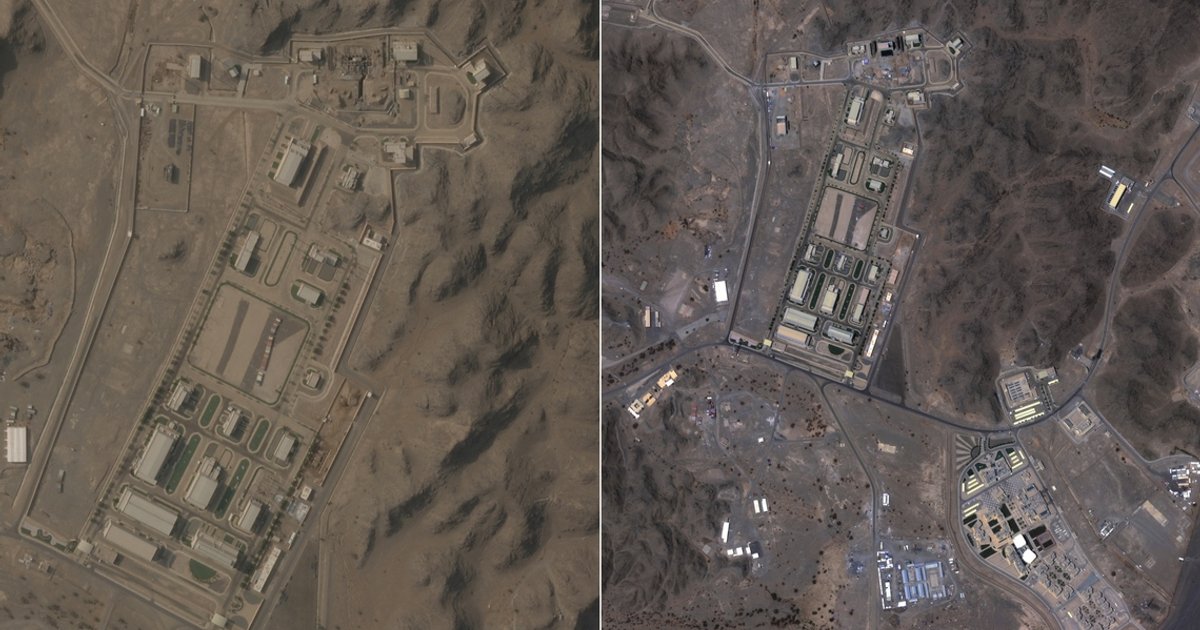
沙特阿拉伯似乎正在扩建其位于杜瓦迪米(al-Duwadimi)的导弹制造厂。卫星图像显示,该工厂新建了用于铸造大型固体燃料导弹的设施以及相应的储存建筑。
Saudi Arabia appears to be expanding its al-Duwadimi missile plant, with satellite images showing new casting pits and storage buildings for larger solid-fuel missiles.
美国研究人员指出,这一扩建举措可能有助于沙特开发射程更远、威力更强的武器,从而增强其防御能力(尤其是针对伊朗的防御能力),并进一步扩大其在也门冲突中的影响力。
US researchers said the work could help Riyadh build longer-range or heavier weapons, boost defence against Iran, and widen its role in the Yemen conflict.
不过,这一行动可能会加剧人们对导弹扩散的担忧,同时也会增加美国国内对沙特核协议的反对声浪。据估计,该工厂可能在今年年底前建成。
The move may deepen fears of missile proliferation and increase US political opposition to a Saudi nuclear deal, while the plant could be ready by year-end. AI generated WASHINGTON - Saudi Arabia appears to be expanding its ballistic missile factory to build larger solid-fuel missiles that could fly farther or carry heavier payloads, according to two US researchers who analysed more than a year of commercial satellite images.
根据两位美国研究人员的分析(他们研究了超过一年的商业卫星图像),沙特阿拉伯正在扩建其弹道导弹制造厂,旨在生产射程更远、载荷更大的固体燃料导弹。这些更先进的导弹将有助于沙特抵御伊朗的攻击,并提升其军事实力;但同时也可能加剧地区内的导弹竞赛,进一步加剧美国国会对于美沙民用核协议的反对情绪(该协议本身就已引发了关于导弹扩散的担忧)。
More capable missiles could help Saudi Arabia to deter attacks by Iran and make its military more self-reliant, while possibly strengthening its position in a deadly conflict with Yemen’s Tehran-backed Houthi fighters. But they risk fuelling a regional missile race and could deepen opposition in the US Congress to a US-Saudi civilian nuclear agreement that has already raised concerns about proliferation.
位于美国的卫星公司 Planet Labs 在 2025 年 4 月至 2026 年 9 月期间拍摄了杜瓦迪米导弹工厂的卫星图像。这两位研究人员(来自外交政策研究所的萨姆·莱尔 [Sam Lair] 和迈克尔·杜伊茨曼 [Michael Duitsman])指出,新建设的建筑内设有专门用于铸造导弹发动机的设施——在这些设施中,燃料成分会被倒入导弹发动机外壳中并经过固化处理。
Satellite company Planet Labs, based in the US, took images of the al-Duwadimi complex about 200km west of Riyadh between April 2025 and September 2026. The two researchers, Sam Lair and Michael Duitsman of the Foreign Policy Research Institute, assessed that those images show a new building that houses casting pits - wells in which a mixture of fuel ingredients is poured into missile motor casings and allowed to harden.
沙特大使馆及信息部并未对相关评论请求作出回应。莱尔和杜伊茨曼表示,这座新建筑的大小至少是现有铸造设施的两倍;建筑周围还建有防护墙,旨在防止附近结构因爆炸而受损。外交政策研究所(FPRI)是位于费城的一个无党派研究组织。他们说,第二座新建筑可能用于储存燃料成分或成品导弹部件。
The Saudi embassy and Information Ministry did not respond to requests for comment. The building, flanked by what appear to be walls to protect nearby structures from accidental explosions, is at least twice as large as the one believed to house the plant’s existing casting pits, Lair and Duitsman said in their assessment. The Foreign Policy Research Institute (FPRI) is a non-partisan research organisation in Philadelphia. A second new building could be used to store fuel ingredients or finished missile components, they said.
他们写道,这些图像“表明沙特阿拉伯正在扩建导弹生产基地的基础设施,很可能是为了生产射程更远或可携带更大载荷的大型导弹。”
The imagery “suggests that Saudi Arabia is expanding the infrastructure at the missile production complex, likely to produce larger missiles which could deliver larger payloads or reach longer ranges,” they wrote.
军方青睐固体燃料导弹,因为它们可以长期储存,且比液体燃料系统发射更快。
Militaries favour solid-fuel missiles because they can be stored for long periods and launched more quickly than liquid-fuel systems.
莱尔和杜伊茨曼以及伦敦国际战略研究所(IISS)和CNA研究分析组织的专家告诉路透社,沙特阿拉伯导弹部队的构成表明,杜瓦迪米基地依赖中国技术。莱尔和杜伊茨曼说,其特征也与中国导弹工厂相似。
Lair and Duitsman and experts from the London-based International Institute for Strategic Studies (IISS) and the CNA research and analysis organisation told Reuters that the makeup of Saudi Arabia’s missile force suggests that the al-Duwadimi complex relies on Chinese technology. Lair and Duitsman said that its characteristics also are similar to Chinese missile plants.
根据1991年解密的中央情报局估算,沙特阿拉伯于1987年秘密从中国购买了约40枚液体燃料DF-3(东风-3)弹道导弹。根据YouTube视频和活动照片,沙特于2014年4月的一场阅兵中首次公开展示了其中两枚。
Saudi Arabia secretly acquired about 40 liquid-fuel DF-3 ballistic missiles from China in 1987, according to a 1991 declassified CIA estimate. It displayed two of them for the first time in an April 2014 military parade, according to a Youtube video and photographs of the event.
FPRI团队最近还从社交媒体视频和照片中识别出,他们评估为在也门发现的、由沙特发射的中国设计的DF-15(东风-15)导弹残骸。
The FPRI team also recently identified from social media videos and photos what they assessed was the wreckage in Yemen of a Saudi-fired Chinese-designed DF-15 missile.
莱尔说,该王国现在可能正在生产固体燃料DF-15导弹,而杜瓦迪米基地的扩建很可能是为了生产射程更远的DF-21(东风-21)或类似导弹。
Lair said the kingdom may now be producing the solid-fuel DF-15, and that the expansion of a1-Dumadimi is likely for the production of the longer-range DF-21 or a similar missile.
人们认为,利雅得转向北京是因为华盛顿长期以来限制远程导弹系统的出口。中国大使馆和国防部未回应置评请求。中央情报局拒绝置评。白宫未回应置评请求。导弹将改变力量平衡萨斯查·布鲁克曼(Sascha Bruchmann),英国国际战略研究所(IISS)研究员表示,远程导弹将使沙特阿拉伯能够在不让其美国提供的F‑15战斗机面对伊朗防空系统的风险下,对伊朗进行打击。
Riyadh is believed to have turned to Beijing because Washington has long restricted exports of longer-range missile systems. The Chinese embassy and defence ministry did not respond to requests for comment. The CIA declined to comment. The White House did not respond to a request for comment. Missiles would alter balance of power Sascha Bruchmann, a research fellow at IISS, said longer-range missiles would allow Saudi Arabia to strike Iran without risking its US-supplied F-15 jet fighters against Iranian air defences.
布鲁克曼在提到美国制造的卫星制导炸弹(JDAM)时说:“如果你没有政治意愿让F‑15携带JDAM飞越德黑兰,就需要一种系统来威胁德黑兰所视为神圣的目标。”
“You’d want a system to threaten whatever is holy to Tehran... if you don’t have the political will to send an F-15 with JDAMs over Tehran,” said Bruchmann, referring to US-made satellite-guided bombs.
他说:“伊朗在这方面占先,因为它的导弹和无人机可以随意打击沙特。沙特可以在一定程度上缩小这一能力差距。”应路透社邀请审阅美国外交关系协会(FPRI)分析的布鲁克曼,同意该机构对阿尔‑杜瓦迪米(al‑Duwadimi)扩建可能用于生产更强大固体燃料导弹的判断。
“Iran has a lead because its missiles and drones can strike Saudi wherever it wants. The Saudis could close that capability gap a bit.”Bruchmann, who reviewed the FPRI analysis at Reuters request, concurred that the expansion of al-Duwadimi could be for producing more powerful solid-fuel missiles.
防务情报公司简氏(Janes)也对其进行了审查,并称这些建筑“可能表明正在努力扩大生产能力或支持更远程导弹的研发”。CNA分析师德克尔·埃弗莱斯(Decker Eveleth)通过商业卫星影像跟踪阿尔‑杜瓦迪米的建设,并认同FPRI的评估,他指出,沙特对更强大导弹的明显追求正值其他海湾国家也在寻求扩充进攻和防御武库之际。他说:“这在整个中东地区都在复制。”
Janes, the defence intelligence company, also reviewed it and said the buildings “may suggest an effort to expand production capability or support the development of longer-range missiles.”Saudi Arabia’s apparent pursuit of more powerful missiles comes as other Gulf powers are also seeking to expand their offensive and defensive arsenals, said Decker Eveleth, a CNA analyst who has been tracking the al-Duwadimi construction with commercial satellite imagery and concurred with the FPRI assessment. “This is being replicated across the Middle East,” he said.
“在阿联酋看到完全相同的情况,在土耳其也看到完全相同的情况。现在每个人都在这么做。”
“You see exactly the same thing happening in the UAE. You see the exact same thing happening in Turkey. Everybody is doing this now.”
阿尔‑杜瓦迪米的扩建可能在美国产生政治后果,加剧两党国会对美沙协议的反对。该协议旨在美国帮助沙特建立用于发电的铀浓缩设施。
The expansion of al-Duwadimi could have political consequences in the US by stiffening bipartisan congressional opposition to a US-Saudi agreement under which the US would help Riyadh establish uranium enrichment for power generation.
反对者称,该协议缺乏足够的保障措施,以防止沙特秘密制造核武器。沙特王国否认有此类计划。
Opponents say that the deal lacks sufficient safeguards to prevent Riyadh from secretly building a nuclear weapon.
该工厂的施工始于2025年。外交政策研究所的评估称,Planet Labs的卫星图像显示,杜瓦迪米的扩建工程于2025年4月开始,先是清理地面并挖掘疑似储存建筑的基坑。评估称,疑似浇注坑车间的施工于当月晚些时候或5月初开始。
The kingdom has denied any such plan. Work on the plant began in 2025 The FPRI assessment said the Planet Labs imagery showed that the expansion at al-Duwadimi began in April 2025 with ground-clearing and digging for the suspected storage building. Work on the suspected casting-pit building began later that month or in early May, it said.
2025年12月12日的一张照片显示,研究人员判定该建筑内部有两个深坑,当时建筑尚未封顶。
A Dec 12, 2025, photo showed what researchers assessed were two deep pits inside the building that had no roof yet.
2026年9月18日的一张照片显示,屋顶仍部分缺失,两侧设有“重型泄爆墙”,用于防止意外爆炸损坏相邻建筑。
A Sept 18, 2026, photo shows the roof still partly missing and “heavy duty blast diverting walls” on either side to prevent accidental explosions from damaging adjacent structures.
研究人员表示,这些墙体与卫星图像中美国和伊朗导弹工厂所见的墙体有些相似,这“进一步证明该建筑用于浇注固体推进剂发动机”。
The walls, the researchers said, are somewhat similar to those depicted in imagery of US and Iranian missile plants and “further evidence the building is for casting solid propellant motors.”
外交政策研究所表示,完成屋顶施工不会耗时太久,但安装浇注设备可能需要数月时间。该设施最早可能在今年年底就具备开始生产导弹的条件。
Finishing the roofs would not take long, the FPRI said, but installing casting equipment may take several months. The facility could be ready to start producing missiles as early as the end of the year.