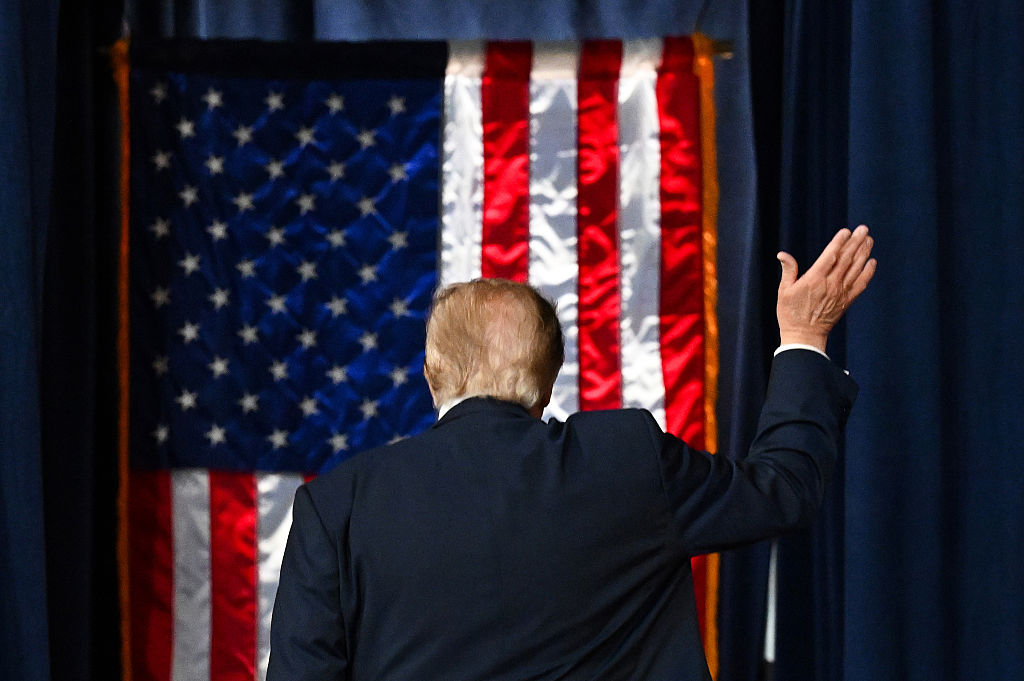
在给一个国际海湾和一个跨境湖泊改名后仍不满足,美国总统唐纳德·特朗普近日在田纳西州克拉克斯维尔的一次政治集会上,又提出将大西洋或太平洋改名为“特朗普海洋”或“美洲海洋”。
Not content with renaming an international gulf and a cross-border lake, on Oct. 10, U.S. President Donald Trump recently floated the idea of renaming the Atlantic or Pacific Ocean as “Trump Ocean” or the “Ocean of the Americas” at a political rally in Clarksville, Tenn.
“我们需要一片海洋。所以我考虑的是大西洋或太平洋,”他在笑声和掌声中说道。“我们称之为‘特朗普海洋’或‘美洲海洋’,诸如此类。”
“We need an ocean. So, I was thinking of either the Atlantic or the Pacific,” he said to laughter and applause. “We call it ‘Trump Ocean’ or ‘Ocean of the Americas,’ something like that.”
随后,在10月21日南卡罗来纳州的一次集会上,特朗普称他曾要求谷歌首席执行官桑达尔·皮查伊在谷歌地图上将大西洋改名。据特朗普说,皮查伊回复道:“请不要要求我们做那种事。”
Then, at an Oct. 21 rally in South Carolina, Trump said he asked Google’s CEO, Sundar Pichai, to rename the Atlantic Ocean on Google Maps. According to Trump, Pichai replied, “Please don’t ask us to do that.”
“那我大概就算了,”特朗普说。“我觉得还是保留大西洋这个名字吧。”虽然谷歌尚未就此事发表正式声明,但特朗普执着于以自己或美国的名字命名地点,这点令人瞩目。我们认为,这反映了一个教科书式的“地名自恋”案例——利用地名重塑来按自己的形象重塑世界。
“So, I'll probably pass,” Trump said. “I think let's keep it the Atlantic Ocean.”While Google has not issued a formal statement on the matter, Trump’s obsession with naming places for himself or America is remarkable. In our view, it reflects a textbook case of “toponymic narcissism”—the use of place naming to remake the world in one’s own image.
我们不必自欺欺人:特朗普懂得一两招品牌营销。事实上,他的商业生涯很大程度上围绕着在酒店、高尔夫球场甚至金色运动鞋上推销特朗普品牌。他在第二个总统任期里沿用同一套剧本,我们不应感到惊讶。
Let’s not fool ourselves: Trump knows a thing or two about branding. In fact, his business career has largely revolved around marketing the Trump brand on hotels, golf courses, and even golden sneakers. We shouldn’t be surprised to find him following the same playbook in his second presidential term.
然而,世界地图不是私人房地产开发项目。地名也不能简化为品牌营销活动。地名具有更重要的公共目的,作为共享的全球象征,应超越任何个人领袖的个人荣耀和政治利益。
Yet the world map is not a private real estate development. Nor can place names be reduced to a branding exercise. Place names have a greater civic purpose as shared global symbols that should transcend the personal glorification and political interests of any individual leader.
地名构成我们非物质文化遗产的一部分,具有文化意义,将比特朗普总统的制图一时兴起更长久。它们塑造我们的地理想像,以及人们感知和理解世界的方式。地理命名对教育、国际关系,以及我们希望向世界传递的信息类型,也有重要影响。
Place names form part of our intangible cultural heritage with cultural significance that will outlive the cartographic whims of President Trump. They shape our geographical imaginations and the way people perceive and understand the world. Geographical naming also has important consequences for education, international relations, and the types of messages we wish to project to the world.
值得注意的是,特朗普将大量改名精力集中在带有原住民名称的地点,例如安大略湖和墨西哥湾。就大西洋而言,这也可被视为试图抹去一个指向希腊、进而指向北非的词源。该名称源自希腊语“阿特拉斯之洋”,指的是居住在非洲西北部阿特拉斯山脉的一位巨人的神话。
For instance, it is notable that Trump has focused much of his renaming energy on places with Indigenous names, such as Lake Ontario and the Gulf of Mexico. In the case of the Atlantic Ocean, this could also be seen as an attempt to erase an etymology that points through Greece to North Africa. The name derives from the Greek for “Ocean of Atlas,” referring to the mythology of a giant who lives in the Atlas Mountains of northwestern Africa.
作为地名学者,我们数十年来一直在研究地名命名的文化、社会和政治层面。政治领导人和制图师利用地名命名通过重绘世界地图来彰显赤裸裸的权力,这有着悠久历史。从某种意义上说,特朗普的改名把戏只是这段制图与政治交织的宏大叙事中最新、最引人注目的一个例子。
As place name scholars, we have spent decades studying the cultural, social, and political aspects of place naming. There is a long history of political leaders and cartographers using place naming to assert raw power by rewriting the world map. In one sense, Trump’s renaming shenanigans are simply the latest flashy example in this broader story of mapping and politics.
但特朗普不仅仅是通过改名在世界舞台上投射美国力量。他还在嘲弄地名命名这一行为本身——以及随之而来的、指导制图过程的国际规范。
But Trump is not merely renaming places to project American power on the world stage. He is also making a mockery of the very act of place naming itself—and, along with it, the international norms that inform the map-making process.
国际社会必须重申尊重地名文化价值的承诺,并阐述负责任的地名命名原则,特别是针对跨越国际边界共享的地理实体。在一份与世界各地地名专家共同撰写的公开信中,我们提出了负责任地名命名的五项关键原则:第一项原则是承认地名是具有文化意义的非物质遗产形式和共享资源,其管理责任超越任何特定政府、领导人、机构或世代的利益。
The international community must reaffirm its commitment to respecting the cultural value of place naming and to articulate responsible place-naming principles, especially for geographical features that are shared across international borders. In an open letter co-authored with place name experts around the world, we propose five key principles for responsible place naming: The first principle is recognizing that place names are culturally significant forms of intangible heritage and shared resources whose stewardship carries responsibilities extending beyond the interests of any particular government, leader, institution, or generation.
鉴于地名的文化意义,我们的第二项原则强调在命名决策中需要有意义的公众参与。国际社会不应承认那些随意更改、未经正当程序产生的地名。
Given the cultural significance of place names, our second principle highlights the need for meaningful public participation in place naming decisions. Place names that are changed arbitrarily and without due process should not be recognized by the international community.
第三,地名不应被用来宣称文化优越性、推进领土野心,或主张对不同民族共享的地理空间拥有排他性的国家所有权。
Thirdly, place names should not be used to proclaim cultural superiority, advance territorial ambitions, or assert exclusive national ownership over geographical spaces shared among different peoples.
地名通常不应以在世人物命名。相反,地名命名应服务于公共利益,而非宣扬那些寻求以此纪念自己、实现自我吹嘘之人的个人功绩。
Places should generally not be named for living people. Instead, place naming should serve the public interest rather than promoting the personal legacies of those seeking to commemorate themselves as a form of self-aggrandizement.
最后,我们承认,共享的地理空间不一定非要有一个单一名称,因为多个地名可以见证某地通过层层叠叠的历史、语言和情感依恋而获得意义。然而,这种承认不应延伸为纵容在缺乏受影响国家和社区之间国际对话的情况下,单方面重新命名共享地理要素。
Lastly, we recognize that a shared geography need not always have a single name, since multiple place names can bear witness to the layered histories, languages, and attachments through which places acquire meaning. However, this recognition should not extend to condoning the unilateral renaming of shared geographic features without international dialogue among affected countries and communities.
如果特朗普推进试图重命名大西洋或太平洋,国际社会应团结一致,拒绝这种博取关注的制图失范行为,捍卫地名命名作为我们共同世界地图和地理想象基石的文化价值。
If Trump moves forward with attempting to rename the Atlantic or Pacific Ocean, the international community should stand united in rejecting this attention-seeking act of cartographic malpractice and defend the cultural value of place naming as a cornerstone of our shared world map and geographical imagination.