北京已告知布鲁塞尔不要“幻想”通过施压来获取让步。这是在中国最近在混合动力汽车贸易协议中作出善意姿态之后发生的。欧盟随后加大了对一项拟议的贸易“紧急停摆”机制的力度。
Beijing has told Brussels not to “fantasise” that pressure will extract concessions. This came after China made a goodwill gesture in the recent hybrid-car trade deal. The European Union responded by doubling down on a proposed trade “kill switch”.
该机制源自法德提案。它将允许欧盟在面对经济胁迫时迅速限制单一市场准入。欧盟委员会主席乌尔苏拉·冯德莱恩表示,27位领袖全部支持。化工和机械是重点行业。法国总统埃马纽埃尔·马克龙希望将塑料和铁合金纳入其中。德国总理弗里德里希·梅尔茨等人则主张对中国的贸易做法、货币贬值和关键依赖采取更强硬、统一的立场。正式提案预计将在十二月出台。
The instrument follows a Franco-German proposal. It would let the bloc swiftly restrict single-market access in response to economic coercion. EU chief Ursula von der Leyen says all 27 leaders back it. Chemicals and machinery are priority sectors. French President Emmanuel Macron wants to add plastics and ferroalloys. German Chancellor Friedrich Merz and others want a tougher, unified line on Chinese trade practices, currency depreciation and critical dependencies. The formal proposal is expected in December.
27位领袖的一致同意本身就是罕见的现象。通常只有在关于大家多么重视一致性的公报中才会出现。在俄罗斯代理战争、可能的中欧贸易战以及与美国的矛盾将普通欧洲人的生活成本和生计逼向悬崖边缘的时刻,这开始看起来像是一场集体疯狂、共同的死亡冲动。但中国是其中最不重要的问题。
Unanimity among 27 leaders is itself a rare thing. It is usually reserved for communiques about how much everyone values unanimity. At a time when a proxy war with Russia, a likely trade war with China and acrimony with the United States are pushing the cost of living and livelihoods of ordinary Europeans to the brink, this is starting to look like a case of collective madness, a communal death drive. But China is the least of its problems.
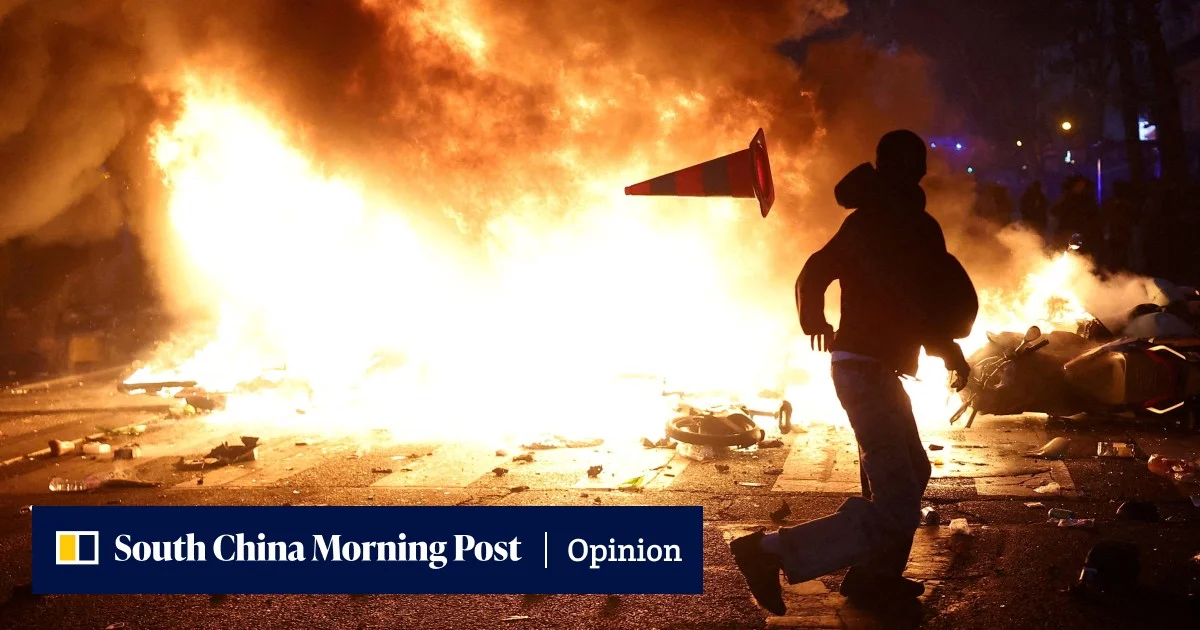
欧盟正面临可能是其最为危急的时刻。其领袖极度不受欢迎,经济增长乏力。难怪愤怒的欧洲人走上街头。我曾读到过对“欧洲秋天”的描述,公民在一个又一个首都转而反对统治者,情形颇似阿拉伯之春。欧洲人会像阿拉伯人那样对无能且傲慢的领袖感到厌倦吗?
The union faces what may be its most precarious moment. Its leaders are deeply unpopular, and its economy is sluggish. No wonder angry Europeans are hitting the streets. I have read a description of a “European Autumn”, with citizens turning on their rulers in one capital after another, much like the Arab Spring. Could Europeans become as fed up with incompetent and arrogant leaders as Arabs did?
然而在危机时,冯德莱恩和外交政策负责人卡娅·卡拉斯一如既往:在所有战线上升级。
But when in trouble, von der Leyen and foreign policy chief Kaja Kallas do what they always do: escalate on every front.
在此背景下,值得回顾上周美国经济学家杰弗里·萨克斯在欧洲议会的演讲,他在演讲中概括了这场疯狂。演讲题目为《如何在疯狂的世界实现和平》。当然,这一演讲被彻底忽视。
In this context, it’s instructive to turn to an address last week by American economist Jeffrey Sachs at the European Parliament, where he summed up the madness. Its title was “How to Make Peace in a Crazy World”. It was, of course, duly ignored.
萨克斯称目前主导欧洲的战争言论“令人震惊且极其危险”。他说美国正处于深层政治危机之中,并用一些不太适合在礼貌场合使用的词汇形容了他的总统。他向欧洲议会议员传达的信息是:欧洲只能靠自己,但其领导人到处挑起争端,尤其是与中国,这无助于解决问题。
Sachs called the war rhetoric now dominating Europe “shocking and extremely dangerous”. He said the US is in a deep political crisis, and he described his president in terms not exactly suitable for polite society. His message to Members of the European Parliament was that Europe is on its own, but its leaders are not helping by picking fights everywhere, most of all with China.
他的宏观叙事始于亚洲。他说,1820年亚洲生产了约占世界总产出60%的份额。到1950年,在经历了一个半世纪的帝国掠夺、战争与混乱后,这一份额跌至20%。如今已回升至约50%。萨克斯在中国和印度工作了几十年,他称这是过去半个世纪最伟大的成就之一。40亿人的生活变得更好。华盛顿和欧洲大部分政治精英对此只看到威胁。他的解释是:中国犯下了拒绝继续贫穷的“罪行”。
His big picture started with Asia. In 1820, he said, it produced about 60 per cent of world output. By 1950, after a century-and-a-half of imperial plunder, war and chaos, that share had sunk to 20 per cent. Today it is back to about 50 per cent. Sachs, who has worked in China and India for decades, called this one of the great achievements of the past half-century. Four billion people are better off. Washington and much of Europe’s political class see only a threat in that. His explanation was that China committed the crime of refusing to stay poor.
他认为俄罗斯犯了类似的“罪行”。他引用历史学家约翰·豪斯·格利森的研究,说明英国如何在拿破仑战败后约25年内从俄罗斯的盟友变为敌人,表面上是因为俄罗斯变得足够强大,令伦敦感到恐惧。他称今天的乌克兰战争是“第二次克里米亚战争”,是“我们的战争”,而不仅仅是普京的战争。
He argued that Russia committed a similar offence. He cited the historian John Howes Gleason’s study of how Britain went from ally to enemy of Russia within about 25 years after Napoleon’s defeat, apparently because Russia had grown large enough to frighten London. He called today’s Ukraine war a “second Crimean War” and “our war,” not simply Putin’s.
这是一个老生常谈的论点,但依然成立。尽管西方在1990年做出过保证,北约仍然东扩。华盛顿于2002年退出《反弹道导弹条约》。2008年布加勒斯特峰会承诺乌克兰和格鲁吉亚最终将成为成员国,这违背了默克尔的私下反对意见,他说默克尔自己的回忆录描述了莫斯科如何解读这一决定。萨克斯称2014年基辅发生了一场政变,称《明斯克第二协议》被破坏,并回忆说他在2021年12月曾建议拜登总统的国家安全顾问杰克·沙利文,将莫斯科的草案安全提案视为一个缓和台阶。他说沙利文引用了北约的“门户开放”政策。
It is an old argument, but still true. Nato expanded despite Western assurances in 1990. Washington quit the Anti-Ballistic Missile Treaty in 2002. The 2008 Bucharest summit promised Ukraine and Georgia eventual membership over Angela Merkel’s private objections, and he said Merkel’s own memoir describes how Moscow interpreted that. Sachs called 2014 a coup in Kyiv, described the Minsk II agreement as sabotaged, and recalled telling Joe Biden’s security adviser Jake Sullivan in December 2021 to treat Moscow’s draft security proposals as an off-ramp. Sullivan, he said, cited Nato’s open-door policy.
欧洲继续听命于华盛顿。当美国和以色列袭击伊朗时,欧洲保持沉默了吗?萨克斯表示,他曾目睹欧洲各国驻联合国安理会大使谴责伊朗的反击,却对挑起事端的那次袭击只字不提。
Europe continues to defer to Washington. Was it silent when the US and Israel attacked Iran? Sachs said he watched European ambassadors at the UN Security Council condemn Iran’s response but say nothing about the strike that provoked it.
他提出了一个直截了当的结局方案,尽管这不太可能被欧洲各国首都采纳。北约应宣布不会向乌克兰或格鲁吉亚扩张,随后在乌克兰谈判划定停火线。默茨只需拿起电话致电莫斯科即可。当然,这位德国领导人刚刚还在呼吁升级局势。
He proposed a straightforward ending, though it is unlikely to be heeded in European capitals. Nato should declare that it will not expand to Ukraine or Georgia, and then negotiate an armistice line in Ukraine. Merz should simply pick up the phone and call Moscow. The German leader, of course, has just called for escalation.
萨克斯赞扬了德国前领导人维利·勃兰特、赫尔穆特·施密特和赫尔穆特·科尔,他们愿意与对手对话,因为这才是外交的本质。遗憾的是,他们的继任者更倾向于“以战代谈”,用温斯顿·丘吉尔的话说,就是宁要“战争战争”,不要“谈判谈判”。
Sachs praised former German leaders Willy Brandt, Helmut Schmidt and Helmut Kohl, who talked to adversaries, because that was what diplomacy is. Sadly, their successors prefer war-war to jaw-jaw, to paraphrase Winston Churchill.