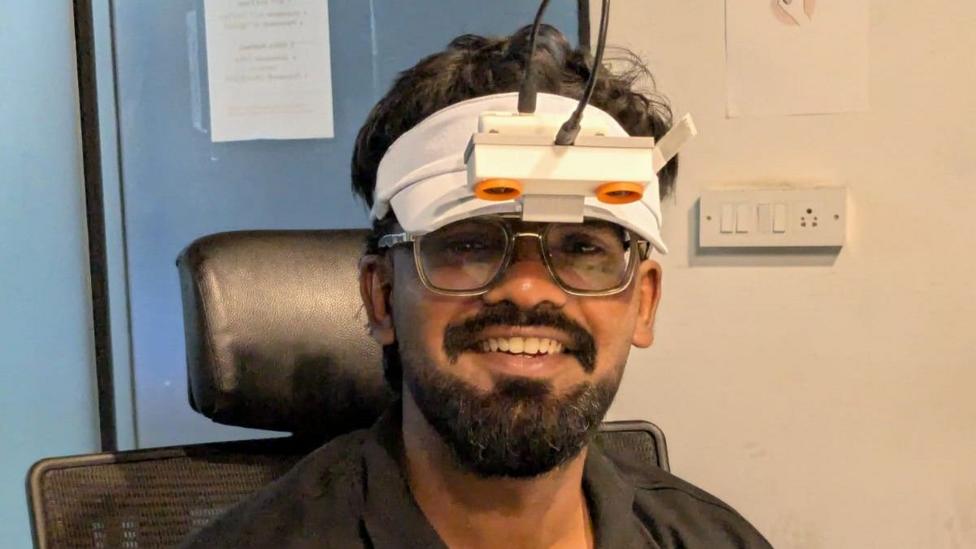
穆罕默德·阿希姆 穆罕默德·阿希姆因拍摄自己工作时的双手而获得报酬 普里蒂·古普塔 科技记者 发自孟买 2026年10月23日 穆罕默德·阿希姆在班加罗尔剪头发、修胡子已经有四年了。
Mohammed Ashim Mohammed Ashim is paid to film his hands at work Priti Gupta Technology Reporter Mumbai 23 October 2026 Mohammed Ashim has been cutting hair and trimming beards for four years in Bengaluru.
但最近,这位22岁的年轻人开始把摄像头绑在头上,用来记录他的工作。摄像头只记录他的双手和手指——他顾客的脸被模糊处理了。
But recently the 22-year old has been strapping a camera to his head to record his work. The camera only records his hands and fingers - his client's faces are blurred out.
“日常流程很简单,但你必须对自己的移动方式保持纪律。运营团队教导我,我的双手必须始终清晰地留在画面之内,光线必须锐利,而且在工作时我不能头部倾斜得太突然。”他每天佩戴摄像头五到六个小时。
"The routine is simple, but you have to be disciplined about how you move. The operations team taught me that my hands always have to stay cleanly inside the frame, the lighting has to be sharp, and I can't tilt my head too abruptly while working." He wears the camera for five or six hours a day.
“报酬很不错,但老实说,做这种充满未来感的事情的感觉才让我一直感到兴奋。我从未想过我的剃须刀技巧会对一家全球科技公司有用,”阿希姆说道。他是全球数十万因记录自己的活动而获得报酬的工人之一。
"It's good money, but honestly, the feeling of doing something this futuristic is what keeps me excited. I never imagined my razor techniques would be useful to a global tech company," says Ashim. He is one of hundreds of thousands of workers across the world paid to record their activities.
阿希姆的镜头由一家本地公司收集,该公司可能拥有数百名拍摄自己工作的员工。
Ashim's footage is collected by a local company, which might have hundreds of people filming their work.
这些视频随后被出售给科技公司和研究机构,他们用这些视频来训练人工智能——特别是所谓的具身人工智能,这是一种能够在现实世界中控制机器人的AI类型。拉什丹科技公司负责收集和处理此类人类生成的数据。
That video is then sold on to technology companies and research organisations who use it to train artificial intelligence - in particular so-called physical AI, a type of artificial intelligence that can control robots in the real world. Rashdan Technologies collects and processes such human generated data.
“每一家机器人公司、每一个前沿AI实验室,都有他们想要的特定数据:工业任务、农业、家务劳动、小型企业的工作,比如制陶、服装制作、刺绣、蜡烛制作。任务在哪里,我们就去哪里,”联合创始人兼首席执行官沙希尔·拜格说道。
"Every robotics company, every frontier AI lab, has a specific kind of data they want: industrial tasks, agriculture, household chores, small business work like pottery, garment-making, embroidery, candle-making. We go wherever the task is," says co-founder and CEO Shahil Baig.
他的公司支付5美元到10美元(约合3.74英镑至7.47英镑),购买8到10小时的录制工作。“对许多这样的人来说,这是一笔可观的收入,”拜格说道。
His company pays $5 to $10 (£3.74; £7.47) for eight to 10 hours of recorded work. "For a lot of these people, that's meaningful," Baig says.
他表示,确保工人们给予同意并且对这一过程感到舒适是很重要的。
Making sure workers give their consent and are comfortable with the process is important, he says.
“我们记录的是手部动作,而非面部,即便多摄像机设备会拍摄到更多身体部位或环境,我们也会对面部进行模糊处理。我们移交的数据中没有姓名、联系方式,没有任何能识别个人身份的信息。”但他的客户要求越来越高。
"We record hands, not faces, and where multi-camera rigs do capture more of the body or environment, we blur faces out. No names, no contact details, nothing that identifies them personally goes into what we hand off." But his customers are getting more demanding.
“现在客户要求在一个人头部周围安装四到六个摄像机,以覆盖整个场景,而不仅仅是手部。
"Now clients are asking for four to six cameras rigged around a person's head to cover the entire scene, not just the hands.
“让某人同意佩戴一个小型摄像机是一次谈判;让他们同意佩戴实际上相当于五摄像机头显的设备,则是完全不同、且难度大得多的一次谈判。我们为这一层级的数据采集支付更高费用,是因为我们对参与者的要求更高。”阿加瓦尔预计,今年印度将涌现出数十家新的竞争对手,行业竞争将更加激烈。
"Getting someone to agree to one small camera is one conversation. Getting them to agree to wearing what's effectively a five-camera headset is a completely different, and harder, one. We pay more for that tier of data collection because of what we're asking of people." And the industry is becoming more crowded, Agarwal expects dozens more competitors to emerge in India this year.
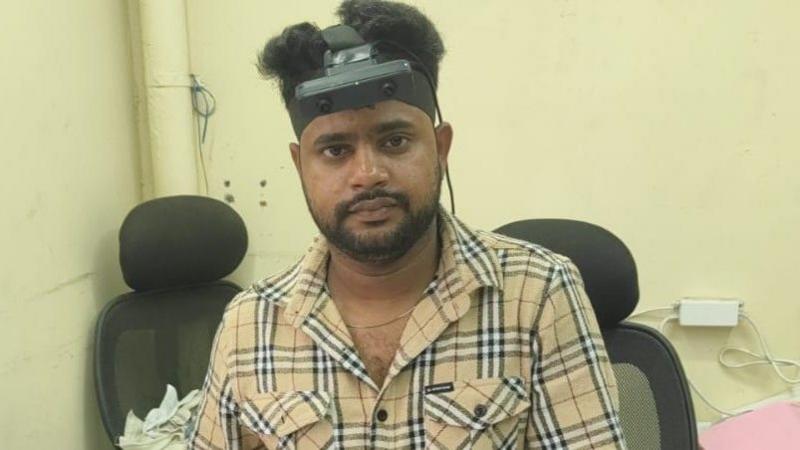
拉什丹科技的沙希尔·贝格预计,将有数十家新公司开始采集工人视频数据。这类数据为何如此重要?
Rashdan Technologies Shahil Baig expects dozens more firms to start collecting video of workers Why is such data so important?
如果想让机器人在现实世界中导航,它们不能仅在计算机模拟中训练,收集和处理人类生成数据的Humyn Labs创始人马尼什·阿加瓦尔认为。
If you want robots to navigate the real world, they can't just be trained inside computer simulations, argues Manish Agarwal, the founder of Humyn Labs, which collects and processes human-generated data.
这些数据大多来自视频,但有时采集人员会在手部和手指佩戴硬件设备,以捕捉物理接触。
Most of that data comes from video, but sometimes collectors wear hardware on their hands and fingers to capture physical contact.
“物理任务需要涉及肢体动作、手指、手腕、肘部、肩部以及动态施力的高质量信号。例如:施加正确的抓握力度,既不会捏扁塑料瓶,也不会捏碎钢化玻璃杯。”他说。直到最近,这类数据尚不存在。
"Physical tasks require high-quality signals involving limb movements, fingers, wrists, elbows, shoulders and dynamic force application. For example: applying the correct grip force so a plastic bottle doesn't crumble versus a steel glass," he says. And until recently, that data was not available.
“互联网上不存在具身人类活动的现成档案——没有厨房清洁的数据集,也没有双手精准掌握施力技巧组装汽车的数据集。这些数据必须从零开始采集,在真实世界、跨多样化环境中完成。”阿加瓦尔表示,他的公司在班加罗尔和旧金山设有基地。
"There is no existing internet archive of embodied human activity - no dataset of a kitchen being cleaned, or a car being assembled by hands that know exactly how much force to apply. That data has to be captured from scratch, in the real world, across diverse environments," says Agarwal, whose company has bases in Bangalore and San Francisco.
目前,他的公司在拉丁美洲和东南亚多个国家拥有9.6万名数据采集人员。
At the moment his firm has 96,000 data collectors across countries in Latin America and Southeast Asia.
Humyn Labs对这些采集者提供的数千小时视频进行筛选,挑选出最有用的内容。随后对其进行标注,以便人工智能知道它在看什么,并将其打包成客户可以使用的格式。
Humyn Labs filters the thousands of hours of video supplied by those collectors, selecting the most useful content. It's then labelled so the AI knows what it is looking at and packaged in a format that can be used by clients.
“你需要从各种工厂、各种任务、不同的地理位置采购,因为如果你想为美国工厂或美式住宅进行部署开发,你会希望环境能对此起到替代作用。印度的住宅可能并不适合作为在美国开发机器人用例的背景。”工厂工人正在教机器人如何像人类一样工作,但工人们是否在为有一天会取代他们工作的机器收集数据?
"You need to source across a variety of factories, a variety of tasks, in different geographies because if you want to build deployment for US factories or US houses, you'd want environments that are a proxy for that. Residential houses in India may not be the right context for building a robotics use case for the US." The factory workers teaching robots how to work like humans But are workers collecting data for machines that will one day do their jobs?
孟买塔塔社会科学研究所(TISS)管理与劳工研究学院高级教授比诺·保罗(Bino Paul)表示,目前下定论还为时过早。
At the moment it's too early to tell says Bino Paul, senior professor at the School of Management and Labour Studies at the Tata Institute of Social Sciences (TISS) in Mumbai.
他说,对某些工人来说,人工智能可能是一个有用的工具,但机器人可能会使其他工作实现自动化。问题在于,如果机器真的开始接管工作,工人们将无能为力。
For some workers AI might be a useful tool, but robots could automate other jobs, he says. The problem is that, if machines do start to take over, there will be little workers can do about.
他说:“等工人们意识到他们参与了什么的时候,事情可能已经走得太远了。”和许多其他人一样,他希望政府对人工智能进行监管。
"By the time workers realise what they have participated in, things may have gone too far," he says. Like many others, he wants governments to regulate AI.
“人工智能不能仅仅被视为一个技术系统。我们需要开发一个社会技术系统,在这个系统中,通过人类的能动性来坚持伦理,确保人工智能带来的是福祉而非祸害。”“这是为了生存”尽管人们对人工智能的发展方向感到担忧,但资金仍在源源不断地注入其开发中。
"AI cannot be viewed merely as a technical system. We need to develop a socio-technical system in which ethics is upheld through human agency, ensuring that AI delivers beneficence rather than maleficence." 'This is survival' Despite concerns over where AI is heading, money is still being poured into its development.
其中一部分资金会流向印度的工人们,在那里,不乏愿意每天戴着摄像头赚取几美元的工人。
Some of that trickles down to workers in India, where there is no shortage of workers prepared to wear a camera for a few dollars a day.
穆罕默德·阿尔曼(Mohammed Arman)在班加罗尔的纺织行业工作了10年。
Mohammed Arman has been working in the textiles industry in Bangalore for 10 years. "Garments stitching and cutting.
他说:“服装缝纫和裁剪。这份工作我太熟悉了,甚至闭着眼睛都能做。布料、线、针、机器,干了10年之后,你的手在脑子反应过来之前就知道该做什么了。”他最近开始佩戴一台头戴式摄像机,记录自己的工作。
I know this work so well I could probably do it with my eyes closed. Cloth, thread, needle, machine after 10 years, your hands just know what to do before your mind even tells them," he says. He has recently started wearing a head-mounted camera that records his work. "For me, it's simple.
“对我来说,这很简单。这是生存问题。我家在比哈尔邦,我寄回去的每一卢比都很重要。如果有人给我额外的钱,让我在做了10年同样工作的同时戴上摄像机,我不会拒绝。
This is survival. I have a family back home in Bihar, and every rupee I send back matters. If someone offers me extra money to wear a camera while I do the exact same work I've been doing for 10 years, I'm not going to say no.
“这不需要我付出任何额外成本。我本来就在缝纫、裁剪。现在只是因为这多拿一点报酬而已,”他说。
"It doesn't cost me anything. I'm already doing the stitching, already doing the cutting. Now I just get paid a little more for it," he says.
Mohammed Arman Mohammed Arman一直在拍摄自己的裁缝工作 只要有此类影像需求,这些素材就会被收集到某处。
Mohammed Arman Mohammed Arman has been filming his tailoring work While there is demand for such footage it will be collected somewhere.
“印度在该行业目前的角色主要是原材料供应商——人们绑上摄像机,记录自己做日常任务,然后这些素材被运往国外的实验室,”Agarwal说。
"India's current role in this industry is largely as a supplier of raw material - people strap on cameras, record themselves doing ordinary tasks, and that footage gets shipped off to labs abroad," Agarwal says.
但他辩称,随着更多公司争夺收集合同,这类工作的价值将迅速被侵蚀。
But he argues the value of that kind of work will quickly become eroded, as more companies compete for collection contracts.
“印度不能永远只做素材供应商。它需要向价值链上游迈进:从记录原始视频,转向拥有将视频转化为可用资源的管道——清洗、构建、验证数据,并最终制定何为高质量训练数据的标准,”他说。
"India can't afford to stay a footage supplier. It needs to move up the value chain: from recording raw video to owning the pipeline that turns that video into something usable - cleaning it, structuring it, validating it, and ultimately setting the standards for what counts as high-quality training data," he says.
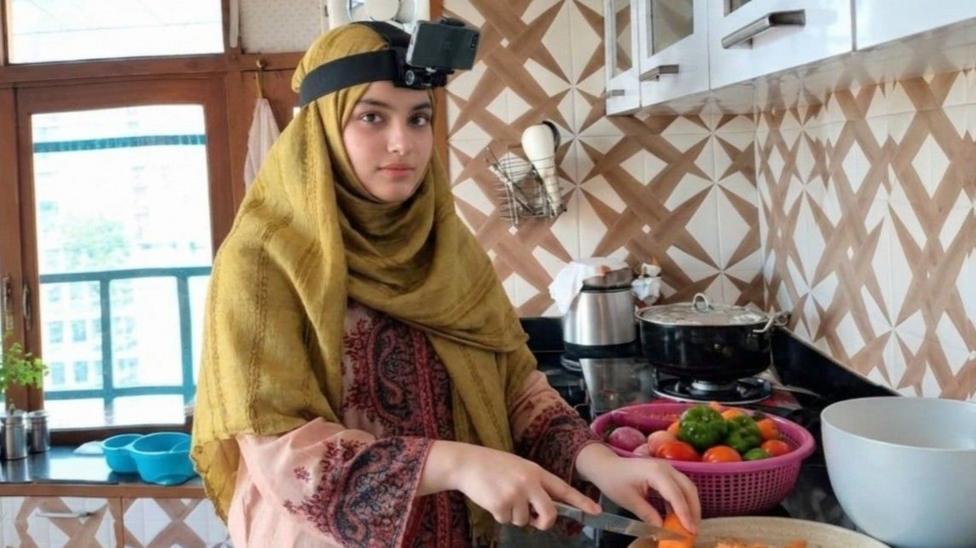
Jolly Arifur Jolly Arifur每天花几小时拍摄家务劳动 对一些人来说,收集数据是一份有吸引力的兼职工作。
Jolly Arifur Jolly Arifur has been filming domestic work for a few hours a day For some people collecting data is attractive part time work.
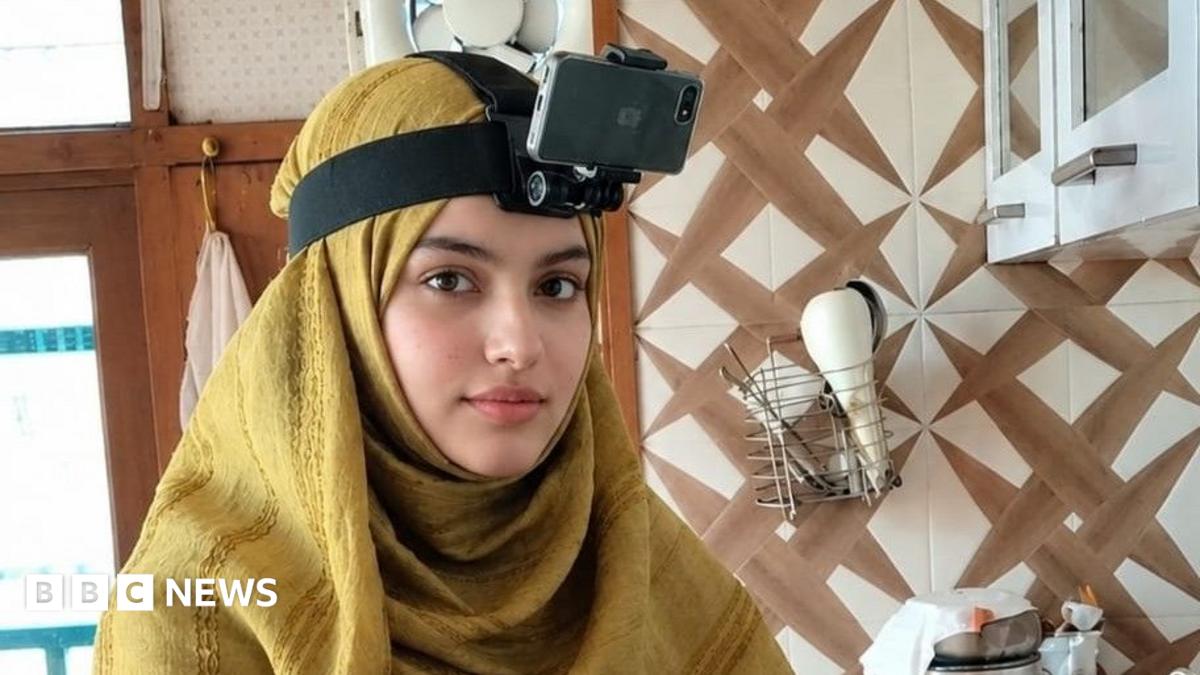
科学教师Jolly Arifur在寻找一份可以居家、配合年幼儿子作息的工作。
Science teacher Jolly Arifur was looking for work she could do from home that would fit around her young son.
“过去七个月,我在做日常家务——刷洗、烹饪、扫瓷砖地、叠衣服时,头上绑着一台支架式摄像机进行录制。”住在安得拉邦阿纳塔普尔贡塔卡尔的Arifur将录制工作安排在教学之余。
"For the past seven months, I strapped a rig-mounted camera on my head while doing my routine domestic work scrubbing, cooking, sweeping tile floors, and folding laundry." Arifur, who lives in Guntakal, Anantapur, fits the recording work around her teaching. "I get paid two to three dollars per hour.
“我每小时能拿两三美元。如果我每天录三到五小时,收入相当可观,这成了除教学外的额外收入来源。我两边都顾得上,说实话,过得挺好。”更多商业科技
If I record three to five hours a day, that's a good amount in hand it's become an extra source of income for me, on top of teaching. I'm managing both honestly, fantastically." More Technology of Business