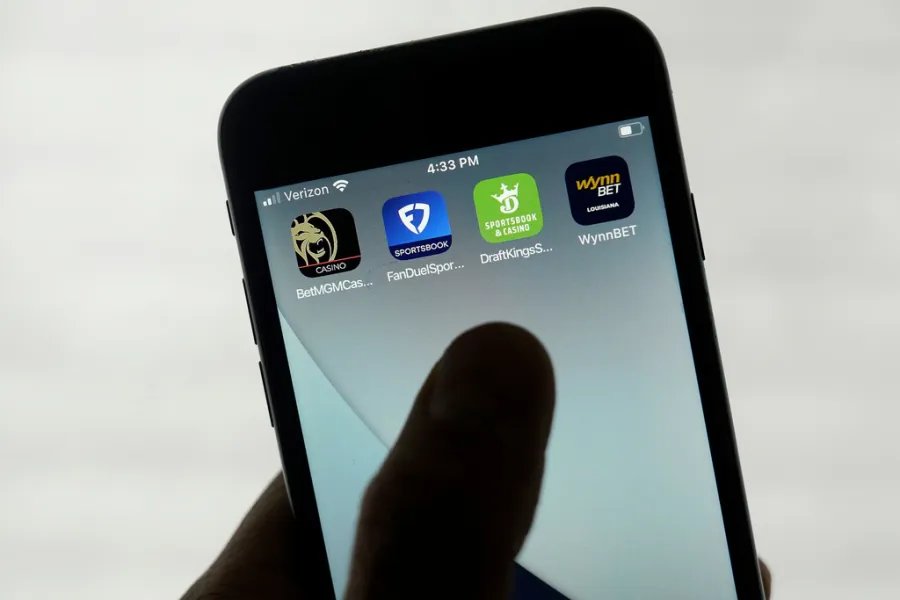
美国存在赌博问题,且这一问题正变得愈发难以察觉。几十年来,成瘾总与显而易见的恶习联系在一起:毒品、酒精,以及在较小程度上,坐在赌场赌桌前的绝望灵魂。如今,赌博可以随时随地进行,只需一部手机和一个银行账户。你可以在整场橄榄球比赛期间持续下注,而无需离开沙发。你可能输掉数千美元,而亲友却毫不知情。
America has a gambling problem, and it’s becoming harder to see. For decades, addiction was associated with the obvious vices: drugs, alcohol and, to a lesser extent, the desperate soul sitting at a casino table. Today, gambling can happen anywhere, at any hour, with nothing more than a phone and a bank account. You can gamble throughout an entire football game without ever leaving the sofa. And you can lose thousands of dollars without a friend or family member even knowing.
这使得赌博成瘾显得格外危险。瘾君子不必看起来像个瘾君子。他可以清醒且事业有成。他可以身边围绕着挚爱之人,却在手机上私下追逐亏损。与毒品或酒精不同,赌博本身提供了一种诱人的救赎承诺。输掉一个月工资后,赌徒能说服自己,再下一注就能让一切好转。然而,一次亏损接踵而至,接二连三。如今,人工智能恐将使这一问题恶化数倍。
That makes gambling addiction particularly dangerous. The addict doesn’t have to look like an addict. He can be sober and successful. He can be surrounded by people he loves while privately chasing losses on his phone. Unlike drugs or booze, gambling offers its own seductive promise of salvation. After losing a month’s salary, a gambler can convince himself that one more bet will make everything all right. Instead, one loss becomes another, and another. Now AI threatens to make this problem many times worse.
博彩公司早已收集海量信息,掌握客户如何下注、何时下注以及输掉多少。人工智能能将这些信息转化为详细画像,精准锁定谁最可能持续赌博、谁最可能重注输光。令人担忧的问题是:当技术比赌徒自己更擅长识别其弱点时,会发生什么?美国花了几十年学会识别毁掉的人生。人们寻找含糊不清的言语、布满血丝的眼睛、针眼、藏在脏衣篮里的空伏特加瓶,或是为换现金而当掉的失踪婚戒。
Gambling companies already collect enormous amounts of information about how customers bet, when they bet and how much they lose. AI can turn that information into a detailed picture of who is most likely to keep gambling and who is most likely to lose heavily. The troubling question is what happens when the technology becomes better at identifying a gambler’s weaknesses than the gambler is himself. America spent decades learning to spot a ruined life. People looked for slurred speech, bloodshot eyes, needle-marks, empty vodka bottles hidden in the laundry basket or a missing wedding ring pawned for cash.
然而,这套新系统却不留任何真实的身体痕迹。一名25岁的金融分析师坐在曼哈顿中城豪华的会议室里,在季度汇报间隙用手机下注六位数的串关投注。他回公寓与未婚妻共进晚餐,随后在周四晚间比赛第四节结束前,输光了全年奖金。
The new system, however, leaves no real physical trace. A 25-year-old financial analyst sits in a fancy conference room in Midtown Manhattan, executing a six-figure parlay on his phone between quarterly presentations. He goes home to his apartment, eats dinner with his fiancée and then loses his entire annual bonus before the fourth quarter of a Thursday night game ends.
实体赌场过去迫使人们跨过一道门槛。1996年,如果一个男人想在凌晨3点拿薪水去赌博,他得穿上裤子、发动汽车、开车去某个特定地点做出一个糟糕的决定。他得把纸币交给一个直视他双眼的人类出纳员。这段路程构筑了天然屏障,给人脑留出几十英里的路程去自问那些令人不适的问题。智能手机抹平了这些屏障。
The brick-and-mortar casino used to force a person to cross a threshold. In 1996, if a man wanted to bet his paycheck at 3 a.m., he had to put on pants, start his car and drive somewhere specific to make a terrible decision. He had to hand paper bills to a human cashier who looked him in the eyes. That journey created natural barriers. It gave the human brain a few dozen miles to ask uncomfortable questions. The smartphone obliterated those barriers.
赌场就装在你牛仔裤的前兜里,紧挨着母亲的短信和几十封工作邮件。它在红灯前开着、在葬礼上开着、在孩子的钢琴独奏会上开着、在凌晨2点17分的被窝里也开着。数据收集将这种全方位的接触变成了一场不对称战争。像DraftKings这样的博彩巨头在很多方面作为一家科技公司运作,它并不把数百万用户视为一个单一、均质的群体。
The casino sits in the front pocket of your jeans, right next to your mother’s text messages and dozens of work emails. It stays open at a red light, at a funeral, at a child's piano recital, and under the covers at 2:17 a.m. Data collection turns this total access into an asymmetric war. A gambling giant like DraftKings, which in many ways functions as a tech company, doesn’t treat its millions of users as a single, uniform crowd.
每个用户都是一个个体心理谜题,等待预测模型去破解。软件记录下你在令人心碎的最后一秒射门失手后、往往会加倍下注。它测量你因厌恶而关闭应用的精确时刻,再计算出一条“奖金投注”推送通知所需的确切金额,把十分钟后的你再拽回去。这套残酷的系统旨在识别你的冲动并反复将其变现。在很多方面,这前所未见。
Every user is an individual psychological puzzle waiting for predictive modeling to solve. The software notes that you tend to double your wager after a heartbreaking last-second field goal. It measures the precise moment you close the app in disgust, then calculates the exact dollar amount of a "bonus bet" notification required to drag you back inside ten minutes later. This brutal system is designed to identify your impulses and monetize them, over and over again. In many ways, it’s like nothing we have seen before.
正规银行部署算法标记鲁莽消费,以便客户避免破产、继续支付30年利息。医院利用数据早期发现疾病,让患者存活。体育博彩平台则在一套倒置的激励机制下运行。最赚钱的客户不是每年二月只在超级碗上押10美元的谨慎球迷。摇钱树是那个持续输钱、情绪化输钱、且拥有足够流动信用额度长期维持这些损失的用户。化学成瘾最终会强迫人暂停。
A legitimate bank deploys algorithms to flag reckless spending so the customer avoids bankruptcy and continues paying interest for 30 years. A hospital uses data to catch diseases early so the patient stays alive. A sports betting platform operates under an inverted set of incentives. The most profitable customer isn’t the cautious fan who bets $10 on the Super Bowl every February. The golden goose is the user who steadily loses, loses emotionally, and has enough liquid credit to sustain those losses over a long time. Chemical addictions eventually demand a pause.
人体在倒在毯子上昏睡过去之前,只能代谢有限体积的酒精。可卡因狂吸会触及心脏承受极限和彻底的精疲力竭。赌博运作方式不同,因为毁灭的工具同时也是想象中的救赎工具。当一名男子一夜输掉 1.5 万美元时,他惊慌的大脑并不把体育博彩应用视为毒药,而将其视为日出前唯一能搞到 1.5 万美元的药方。毁灭反而助长了再来一次的欲望。
A human body can only process a finite volume of alcohol before passing out on the carpet. A cocaine binge runs up against cardiac limits and absolute exhaustion. Gambling works differently, because the instrument of destruction doubles as the imagined tool of salvation. When a man loses $15,000 in a night, his panicked brain doesn't view the sportsbook app as the poison but as the only available medicine capable of producing $15,000 before sunrise. The destruction feeds the desire to do it all over again.
传统赌博需要耐心。你选一支队伍,下注,然后等上几个小时看谁赢了比赛。现代微额投注将一场比赛变成成百上千次微小、高速的多巴胺冲击。你可以押注棒球比赛下一球是否为好球、篮球队下一次罚球能否命中、足球运动员半场前是否会犯规,或者冰球比赛未来五分钟内是否会发生打架。这种体验感觉不像是体育迷的狂热,更像是一台发疯的老虎机。
Traditional gambling required patience. You picked a team, placed a bet, and then waited a few hours to see who won the game. Modern micro-betting turns a contest into hundreds of tiny, high-velocity dopamine hits. You can bet on whether the next pitch in a baseball game will be a strike, whether a basketball team will make its next free throw, whether a soccer player will commit a foul before halftime, or whether a fight will break out in a hockey game within the next five minutes. The experience feels less like sports fandom and more like a psychotic slot machine.
正在戒酒的人不会收到当地酒类商店发来的个性化推送通知,承诺如果他在午夜前进店就送一瓶免费波本威士忌。前海洛因吸食者打开电子邮箱,也不会看到定制信息,承诺因为经销商发现他三周没买货,所以下次购买打八折。体育博彩平台却持续不断地这样做。在人工智能的帮助下,人们理应预期这种掠夺行为会变得更加猖獗。美国放松管制了一个数十亿美元的寄生产业,并将人类历史上最先进的心理操纵系统交到了它手中。后果可能在财务和社会层面造成毁灭性打击。
A recovering alcoholic doesn’t receive personalized push notifications from the local liquor store offering a free bottle of bourbon if he walks through the door before midnight. A former heroin user doesn't open his email inbox to find a customized message offering a 20 percent discount on his next purchase because the dealer noticed he hasn't bought anything in three weeks. Sportsbook platforms do this continuously. With the help of AI, one should expect predation to become even more pronounced. America has deregulated a multi-billion-dollar parasitic industry and handed it the most advanced system of psychological manipulation in human history. The consequences could be financially and socially ruinous.
约翰·麦克·格利翁是一位作家和研究员,致力于探索文化、社会以及技术对日常生活的影响。
John Mac Ghlionn is a writer and researcher who explores culture, society and the impact of technology on daily life.