科技公司正日益寻求宗教指导,以开发符合伦理的人工智能模型。高管们正在征询各宗教领袖的意见,承认关于 AI 的道德问题无法仅靠实验室来解答。
Tech companies are increasingly turning to religion for guidance on developing ethical AI models. Executives are seeking input from various faith leaders, acknowledging that moral questions about AI can't be answered in labs alone.
克丽丝塔·福里亚 洛杉矶 —— 随着科技公司竞相构建最强大的人工智能,一些公司也在询问:如何教会聊天机器人分辨是非?他们的答案是:宗教。
KRYSTA FAURIA LOS ANGELES — As tech companies race to build the most powerful artificial intelligence, some are also asking how to teach a chatbot right from wrong. Their answer? Religion.
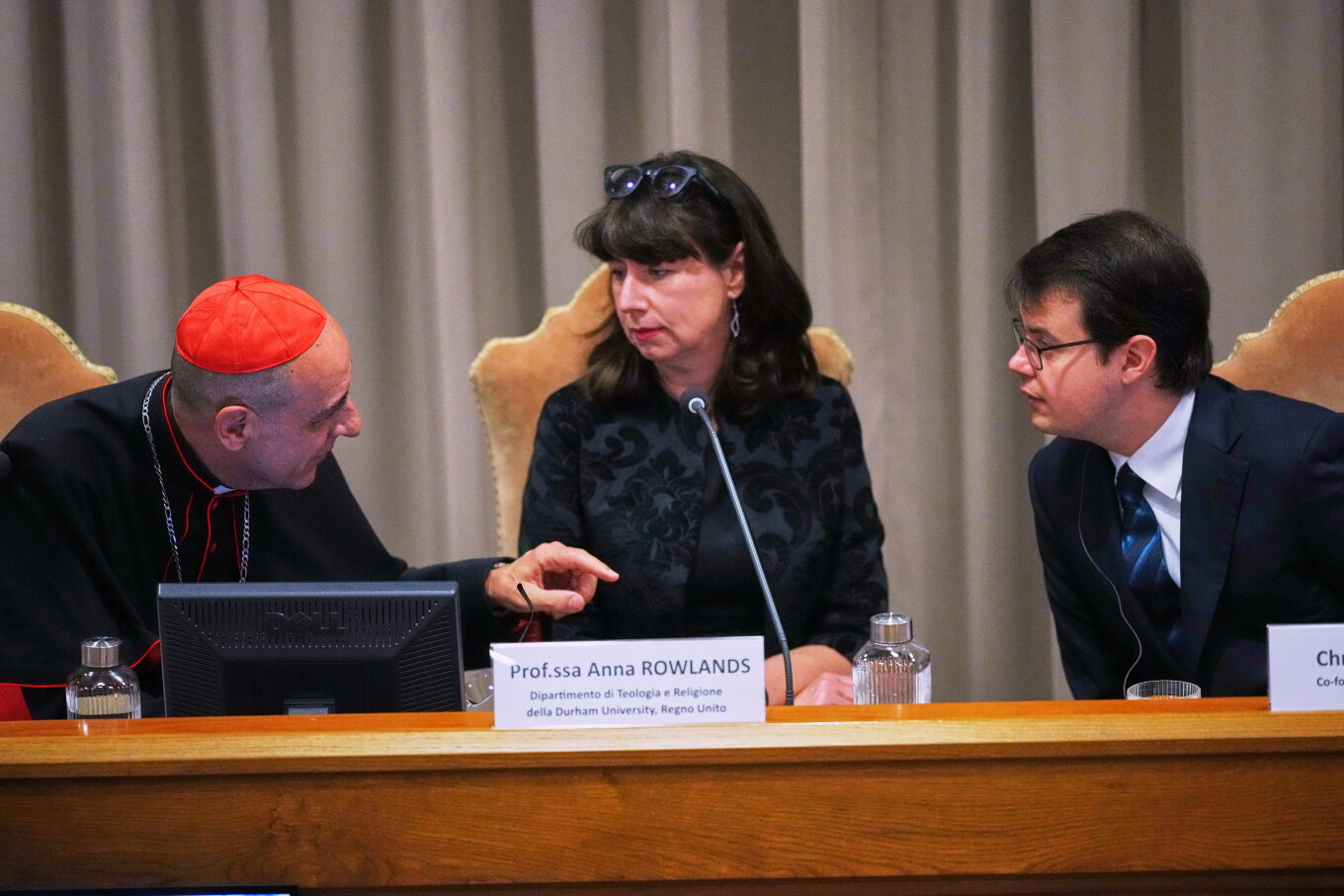
“这些不是实验室能解答的问题,”Anthropic 联合创始人克里斯·奥拉今年早些时候在梵蒂冈发布教皇利奥十四世关于 AI 的通谕时表示。“这些是你们这类传统延续了数千年的问题。” 在这场备受关注的“转向信仰”浪潮中,公众极少审视这些科技公司究竟如何看待宗教——或许更重要的是,他们希望从中获得什么。
“These are not questions a lab can answer,” Anthropic co-founder Chris Olah said earlier this year at the Vatican’s presentation of Pope Leo XIV’s encyclical on AI. “They are questions traditions like yours have carried for millennia.”Amid this much-discussed turn to faith, there has been little public scrutiny surrounding what exactly these technology companies think religion is — and, perhaps more important, what they hope to get out of it.
随着高管们敲响 AI 破坏潜力的警钟,并争论开发符合道德的良性模型的必要性,他们越来越多地寻求哲学家和宗教领袖的意见。这些高管的理念大致是:在对 AI 的担忧——无论有据无据——在文化层面跳跃式蔓延的环境下,宗教可以帮助指导 AI 变得道德向善。
As executives sound the alarm about AI’s destructive potential and debate the need to develop morally good models, they are increasingly seeking input from philosophers and faith leaders. The executives’ philosophy goes something like this: that religion can help inform AI to be morally good in an environment where fears about it — founded and unfounded — are hopscotching across the culture.
因为这些公司不受特定宗教约束,其目标往往相当宽泛——即汇总各种道德观念以指导其模型。“我认为 ChatGPT 应该做的是反映人类道德观点的加权平均值,或者诸如此类,”OpenAI 首席执行官山姆·奥特曼去年表示。
Because these companies are not bound to a particular religion, the goal is often quite broad — an aggregate of moral ideas that can inform their models. “What I think ChatGPT should do is reflect that weighted average, or whatever, of humanity’s moral view,” OpenAI CEO Sam Altman said last year.
但专家和信徒都警告说,这种想法未能正视不同传统和世界观之间往往存在矛盾的现实。简而言之,他们说,宗教并非完全如此运作。
But experts and adherents alike warn that this idea fails to reckon with how different traditions and worldviews can often contradict one another. In short, they say, it’s not exactly how religion works.
宗教不仅仅是一套待遵循的规则 几十年来,学者们一直在反驳一种普遍观点,即认为宗教是一套可以与信徒“混乱、务实、临时应变”的生活方式割裂开来的规则或原则,密歇根大学人类学家韦伯·基恩(Webb Keane)指出。
Religion is more than a set of rules to follow For decades, scholars have pushed back against a widespread view of religion as a set of rules or principles that can be divorced from the “messy, practical, ad hoc” ways adherents live, argues Webb Keane, an anthropologist at the University of Michigan.
认为宗教可以与文化、政治等事物分离的观点依然根深蒂固,尽管宗教以多种方式渗透于两者之中。有人担忧,AI公司在向各宗教领袖询问伦理问题时,将进一步延续一种宗教理论,该理论未能认识到教义、仪式和人际关系的重要性。
The idea that religion can be separated from things like culture and politics remains entrenched, even though it suffuses both in many ways. Some worry that AI companies, as they ask various faith leaders to answer ethical questions, will further perpetuate a theory of religion that fails to recognize the importance of doctrine, ritual and relationships.
基恩指出,问题在于:如果你假设宗教总体上能提供一套独特的、可提取的道德原则,那么利用它来训练AI就有偏重某些传统、扭曲其他传统的风险——特别是对于那些不把自己主要视为伦理体系的信仰而言。
Here’s the issue, Keane argues: If you assume that religion overall can offer a distinct set of extractable moral principles, using it to train AI risks prioritizing certain traditions and distorting others — particularly when it comes to faiths that do not see themselves primarily as a system of ethics.
“有一种非常传统的思维方式,把宗教看作一本规则书,”他说。“这当然与经文宗教紧密相关,而经文宗教归根结底其实是亚伯拉罕诸教。” 信徒表示科技公司正在努力 这并不是说这些会议缺乏多元代表性。也不意味着从与会者(如梅根·沙利文,她是宗教哲学家,领导圣母大学的伦理与AI倡议)的角度来看,他们与宗教的接触缺乏深思熟虑。
“There’s a very conventional way of thinking of religion as a rule book,” he said. “It is certainly very tied to scriptural religion, and the scriptural religions at the end of the day really turn out to be the Abrahamic religions.”Believers say tech companies are making an effort That’s not to say these meetings have lacked diverse representation. Nor does it suggest that their engagement with religion hasn’t been thoughtful from the perspective of those in attendance, like Meghan Sullivan, a philosopher of religion who leads an initiative on ethics and AI at the University of Notre Dame.
虽然Anthropic(安谋科技)没有列举咨询过的传统,但该公司在5月的一篇博客文章中表示,他们已与“来自15个以上宗教和跨文化团体的学者、神职人员、哲学家和伦理学家”会面——他们希望未来能扩大这一群体。
Though it doesn’t enumerate the traditions it has consulted, Anthropic said in a May blog post that they’d met with “scholars, clergy, philosophers and ethicists from more than 15 religious and cross-cultural groups” — a pool they hope to broaden in the future.
今年早些时候,沙利文前往 Anthropic 参加他们的一次会议,与会者包括不同教派的基督徒。与她同其他科技公司的交谈形成对比的是,Anthropic 对宗教的严肃探讨给她留下了深刻印象,该公司被普遍视为最重视伦理与安全的 AI 公司。
Earlier this year, Sullivan went to Anthropic for one of their meetings, which included Christians from different denominations. In contrast to conversations she’d had with other tech companies, she was impressed by the rigorous engagement with religion at Anthropic, which is widely seen as the AI company taking ethics and safety most seriously.
“公司内部的文化有点像一所优秀大学校园的文化,汇聚了一群极具求知欲的人,”她说。“这些会议相当‘极客范儿’——不知这样说是否最贴切——但这是褒义。”
“The culture inside the company is similar to that on a good college campus in the sense that you’ve got a collection of very intellectually curious people,” she said. “These meetings are pretty nerdy — I don’t know if that’s the best way to put it — in a good way.”
她表示,会议分为两部分。首先,公司用“大白话”向与会者解释他们的模型。接着,宗教领袖提出反馈并展开讨论。“这项技术引发的各类道德问题都被提了出来——从‘人类有灵魂吗?’到‘三年级学生该不该能用聊天机器人进行识字教育?’” Meta、Google 和 Amazon 的代表也曾与梵蒂冈会面,而微软在宗教外联方面一直很积极。
Their meeting was split into two parts. First, the company explained their models “in layman’s terms” to those in attendance. Next, the faith leaders responded with feedback and discussions, Sullivan said. “Every kind of moral question that this technology raises — everything from, ‘Do humans have souls?’ to ‘Should third graders be able to access a chatbot for literacy education?’”Representatives from Meta, Google and Amazon have also met with the Vatican, while Microsoft has been vigorous about its religious outreach.
宗教古老,宗教学不古老 宗教通常被认为既古老又普世。虽已故著名学者乔纳森·Z·史密斯等专家承认这在某些方面属实,但他们表示这并非全貌。
Religion is ancient. The study of it is not Religion is generally considered both ancient and universal. And while experts like the late influential scholar of Jonathan Z. Smith concede that is true in some ways, they say it’s also not the full picture.
“人们拥有整个人类历史去构想神祇及与之互动的模式。但人类,更准确说是西方人,仅有最近几个世纪去构想‘宗教’这一概念,”史密斯 1982 年写道。
“Man has had his entire history in which to imagine deities and modes of interaction with them. But man, more precisely Western man, has had only the last few centuries in which to imagine religion,” Smith wrote in 1982.
当今许多宗教学者认同史密斯对该领域的看法。他们质疑“宗教是一组截然不同、可比较的体系”这一观点,称这是一个现代概念,最晚可追溯至 19 世纪。
Many scholars of religion today share Smith’s view of their field. They call into question the idea that religions are a set of distinct, comparable systems, saying it’s a modern notion that can be traced to as late as the 19th century.
例如,宗教研究学者、著作《世界宗教的发明》作者增泽智子指出,在欧洲学者到来之前,修行佛教和印度教的人并未将它们视为界限分明的传统。增泽说:“所有这些范畴都非本土产物。”西方学者多年来将这些范畴固化下来,直到20世纪下半叶才开始认真重新审视它们。
Buddhism and Hinduism, for example, were not recognized as clearly bounded traditions by the people who practiced them prior to the arrival of European scholars, says Tomoko Masuzawa, a religious studies scholar who wrote “The Invention of World Religions.”Says Mazuzawa: “All these categories were not native.”Western academics solidified those categories for years, only beginning to seriously reexamine them in the latter half of the 20th century.
这些关于宗教的根深蒂固的观念——即宗教可以跨文化轻易比较——有助于解释为何硅谷可能感觉不到定义自己对宗教理解的必要性。为了体现各种观点,宗教往往是展示思想多样性的显而易见的方式。
Those entrenched ideas about religion — that it is easily comparable across cultures — help explain why Silicon Valley might not feel the need to define its own understanding of it. In an effort to represent various viewpoints, religion is often an obvious way to showcase diversity of thought.
增泽说:“不知不觉间,宗教成了一种勾勒世界的方式。仿佛全世界都在某种程度上认同了它。”
“Somehow, religion becomes a way of kind of mapping out the world,” Masuzawa said. “It’s as if the whole world has kind of bought into it.”
有人担忧,下载独特的智慧会使其在“累积性思维”中迷失。一些人希望公司进一步界定术语和意图,以更好地理解它们究竟希望从宗教中获得什么。
By downloading distinct wisdom, some worry it will be lost in ‘accumulated thinking’ Some people want companies to further define terms and intentions to better understand what exactly they hope to gain from religion.
Anthropic在博文中说:“这项工作不是要让我们的模型与任何单一传统的世界观保持一致。我们希望Claude能以同等的深度和严谨性,汲取宗教、世俗、政治等全方位的观点。我们在这些对话中追求的是关于良好品格究竟如何形成的审慎、累积性思考。”大语言模型通过反复预测句子中的下一个词来工作,这是在“学习”了海量人类撰写作品(包括宗教文本)的模式之后。
“This work isn’t about aligning our models with any one tradition’s worldview. We want Claude to draw from a full range of viewpoints — religious, secular, political — with equal depth and rigor,” Anthropic said in the blog post. “What we’re after in these conversations is careful, accumulated thinking on how good character actually forms.”Large language models work by repeatedly guessing the next word in a sentence after having “learned” the patterns of a huge trove of human-written works, including religious texts.
独立Meta监督委员会成员、研究天主教社会思想与技术的法律专家保罗·卡罗扎担心,在追求累积的过程中,某一传统的定义性特征可能会丧失——实际上被同质化为某种趋向中间、甚至偏向西方宗教的东西。
Paolo Carozza, a member of the independent Meta Oversight Board and a legal expert who studies Catholic social thought and technology, worries that in the quest for accumulation, there is potential for a given tradition’s defining characteristics to be lost — in effect, homogenized into something that pulls toward the middle or even favors Western religions.
“任何鲜活、成熟的传统都能随着时间推移与外部传统互动,吸收新知识并成长。但它是以这种有机的方式进行的,”他说。“我认为人工智能通常所做的,以及它潜在可能做的,不是以有机方式,而是把一切都扔在一起、搅和在一起,因此无法对其中任何东西做出合理解释。”
“Any living, sophisticated tradition over time is capable of interacting with others outside of it and absorbing some new knowledge and growing. But it does so in this organic way,” he said. “What AI, I think, often does and potentially does, is not in an organic way, but in a way that just throws it all together, mixes it all up, and therefore makes sense of none of it.”
美联社宗教新闻报道通过美联社与《对话美国版》的合作获得支持,资金来自礼来捐赠基金会。美联社对该内容承担全部责任。
Associated Press religion coverage receives support through the AP’s collaboration with The Conversation US, with funding from Lilly Endowment Inc. The AP is solely responsible for this content.