耶鲁环境360 气候编辑部 几十年前,世界上最大的筑巢海鸭亚种群之一在哈德逊湾入口附近的米蒂维克小岛度过夏季。但随着20世纪90年代人们对其全球数量急剧下降的担忧加剧,加拿大政府在该岛附近建立了一个简易研究站,希望能遏制种群崩溃。
Yale Environment 360 Climate Desk Decades ago, one of the world’s largest subpopulations of nesting eider ducks spent its summers on tiny Mitivik Island, near the mouth of Hudson Bay. But as concern grew, in the 1990s, over their steep decline globally, the Canadian government set up a rudimentary research station near the island in the hopes of forestalling a collapse.
这项微薄的投资在随后的30年里带来了巨大回报:来自附近南安普顿岛的因纽特合作伙伴——他们捕猎普通海鸭和帝王海鸭以获取食物和羽毛——与来自世界各地的科学家合作,破解了这些鸟类越冬地之谜,并找出了其数量最初下降的原因及补救措施。研究人员在野外工作数月之久,还获得了关键洞见,了解气候变化、疾病、海冰减少和北极熊如何影响鸟类种群。
The modest investment paid enormous dividends over the next 30 years as Inuit partners from nearby Southampton Island, who hunt common and king eiders for food and feathers, worked with scientists from all over the world to solve the mystery of where the birds spent their winters and the causes of, and remedy for, their initial decline. In the field for months at a time, researchers also gained critical insights into how climate change, disease, diminishing sea ice, and polar bears were affecting bird populations.
尽管这座开创性的研究站成果斐然,加拿大环境与气候变化部却于2024年悄然将其关闭。到那时,筑巢海鸭的数量已再次暴跌,从最高峰的8000对骤降至仅剩几百对。
As remarkably successful as the pioneering research station was, though, Canada’s Environment and Climate Change department quietly shut it down in 2024. By then, the number of nesting eiders had crashed again, from a high of 8,000 pairs to just a few hundred.
“我们比以往任何时候都更需要了解如何应对变暖的北极,它正影响着生活的几乎每一个层面。”如今,联邦研究仅在北极14个候鸟保护区中的3个继续开展。近年来,环北极地区包括格陵兰和美国在内的数百个其他野生动物研究项目也已关闭。
“We need to know more than ever how to respond to a warming Arctic that is affecting almost every facet of life.”Today, federal research continues in only three of the 14 migratory bird sanctuaries in the Arctic. Hundreds of other wildlife research endeavors in the circumpolar world, including in Greenland and the US, have also been shuttered in recent years.
与加拿大环境与气候变化部运营的许多其他机构和项目一样,加拿大野生动物管理局也深受在北极开展研究的高昂成本、随着海冰消退而日益增加的北极熊遭遇风险,以及一系列毁灭性的资金削减之苦。在最近的一次打击中,加拿大政府于2025年承诺将环境与气候变化部的员工队伍削减10%。
Like many other agencies and programs operated by Environment and Climate Change Canada, the Canadian Wildlife Service has suffered from the high cost of conducting research in the Arctic, the increasing likelihood of polar bear encounters as sea ice recedes, and a series of crushing funding cuts. In the most recent blow, the Canadian government in 2025 committed to reducing the Environment and Climate Change workforce by 10 percent In the past, funding to monitor wildlife in the Arctic often had to be justified by its relevance to oil and gas development and how roads, pipelines, and oil wells would affect animals such as migrating caribou, according to Larry Hinzman, an expert in Arctic change at the University of Alaska, Fairbanks.
据阿拉斯加大学费尔班克斯分校北极变化专家拉里·欣茨曼介绍,过去,对北极野生动物监测的资金往往必须通过其与石油和天然气开发的相关性来证明合理性,即公路、管道和油井将如何影响迁徙的驯鹿等动物。但随着2000年代末北极石油和天然气勘探因天然气价格低迷以及水力压裂技术取得突破、刺激了南方新增产量而开始放缓,气候变化成为了优先事项。
But as the search for Arctic oil and gas began to ramp down in the late 2000s, due to low natural gas prices and breakthroughs in fracking for oil and gas that spurred new production in the south, climate change became a priority.
欣茨曼表示,目前环北极地区资金的下降不仅仅关乎成本上升。其根源在于各国政府再次转移优先事项,这一次是从气候变化转向国家安全问题和稀有矿产勘探。据哈佛大学肯尼迪学院贝尔弗科学与国际事务中心称,地缘政治紧张局势也在削弱北极理事会的工作,该理事会是一个由八个北极国家组成的国际论坛,在监测该地区环境变化方面发挥着关键作用。
The current circumpolar decline in funding, Hinzman said, is not just about rising costs. It stems from governments shifting priorities once again, this time from climate change to national security issues and the search for rare minerals. According to the Harvard Kennedy School’s Belfer Center for Science and International Affairs, geopolitical tensions are also undermining the work of the Arctic Council, an international forum comprising the eight Arctic countries that plays a key role in monitoring environmental changes in the region.
在对北极研究的支持减弱之际,加拿大正投资4.05亿加元,推进一条通往北极海岸的新公路建设,以促进资源开发并连接偏远社区,这是一项旨在巩固其对北极领土主权的400亿加元计划的一部分。
While support for research in the Arctic wanes, Canada is investing $405 million to advance the construction of a new highway to the Arctic coast to facilitate resource development and connect remote communities, part of a $40 billion plan to assert sovereignty over its Arctic territory.
阿拉斯加的研究工作受到的冲击尤为严重,原因是俄罗斯入侵乌克兰后,数百项基于气候的合作项目被暂停,且去年美国国家科学基金会取消了运营拨款,导致美国北极研究联盟关闭。2021年至2024年间,美国关于格陵兰气候变化的研究出版物数量下降了32%。今年7月,格陵兰自然资源研究所——该自治领地领先的环境研究中心——在特朗普总统威胁要接管该岛后,暂时停止了与美国合作伙伴的任何新合作。
Research in Alaska has been particularly hard hit by the suspension of hundreds of climate-based collaborations with Russia following its invasion of Ukraine, and by the closure last year of the Arctic Research Consortium of the United States after the National Science Foundation eliminated its operating grants. Between 2021 and 2024, the number of US research publications on climate change in Greenland fell by 32 percent And in July, the Greenland Institute of Natural Resources, the territory’s leading environmental research center, temporarily halted any new collaboration with US partners when President Donald Trump threatened to take over the island.
“北极环境监测的支持力度一直都有起伏,”欣兹曼说。“但我们现在看到的情况是前所未有的。这令人心碎,因为我们比以往任何时候都更需要了解如何应对变暖的北极,它正影响着生活的几乎每一个方面。”北极研究的衰退发生在这样一个时刻:至少96种北极和亚北极哺乳动物及鸟类可能正在对更暖和的冬季、更早的春季融雪以及深刻的景观变化做出反应,提前迁徙并飞得更远,有时甚至改变方向。
“There have always been ebbs and flows in the support for environmental monitoring in the Arctic,” said Hinzman. “But what we are seeing now is unprecedented. It’s heartbreaking because we need to know more than ever how to respond to a warming Arctic that is affecting almost every facet of life.”The decline in Arctic research comes at a time when at least 96 Arctic and sub-Arctic mammal and bird species may be responding to warmer winters, earlier spring snowmelt, and profound landscape changes by migrating earlier in the year and traveling farther afield, sometimes in new directions.
但数十项研究表明,这些迁徙并不总能带来更多食物。它们往往让鸟类暴露在更多寄生虫和病原体中,并使它们面临更大的被捕食风险。这些新的迁徙路线出现之际,关键的中途停歇地——如加利福尼亚州的萨尔顿海——正因干旱和开发而严重退化。
But dozens of studies have shown that these journeys don’t always lead to more food. And they often expose birds to additional parasites and pathogens and put them at greater risk of predation. The new migrations also happen at a time when critical stopover sites—like the Salton Sea, in California—are being badly degraded by drought and development.
北极熊和海鸭等许多动物似乎都在努力应对迅速变暖的北方海洋环境,从波罗的海到加拿大北冰洋,再到从纽芬兰延伸至缅因州的东部海岸。但如果没有研究人员深入实地,就很难预测这些物种将如何适应,甚至是否能够适应。
Polar bears and eiders are among the many animals that appear to be struggling with rapidly warming northern marine environments, from the Baltic to the Canadian Arctic Ocean to the eastern seaboard stretching from Newfoundland to Maine. But without researchers in the field, it’s difficult to predict how or whether these species may adapt.
如今已经关闭的哈德逊湾研究站所做的研究促成了更严格的狩猎规定,从而推动了绒鸭数量的回升。
Studies from a now shuttered Hudson Bay research station led to tighter regulations on hunting that fueled an eider resurgence.
20世纪90年代,绒鸭开始在全球范围内神秘减少,当时的情况与此截然不同。那时,研究人员在东湾候鸟保护区内后来将被命名为卡克绍克图克候鸟保护区的米蒂维克开展工作,他们将卫星发射器植入绒鸭的腹部,从而了解到它们在何处越冬。这些发现促使加拿大和格陵兰收紧了绒鸭狩猎规定,大幅提升了绒鸭的数量。
The situation was far different when eiders began their mysterious worldwide decline in the 1990s. Then, researchers working in Mitivik, in the East Bay Migratory Bird Sanctuary, which would later be named the Qaqsauqtuuq Migratory Bird Sanctuary, implanted satellite transmitters into the abdomens of eiders and learned where they were overwintering. The findings led to tighter regulations on eider hunting in Canada and Greenland that dramatically boosted eider numbers.
然而好景不长,疾病和北极熊的捕食使它们的数量再次骤降。2005年,该研究站的创始人格兰特·吉尔克里斯特及其同事确认爆发了禽霍乱——这种疾病在北极地区很罕见,可能与全球变暖有关——在2006年导致多达3000只筑巢雌鸭死亡,而在其蔓延于筑巢群的八个繁殖季中,约有一半的种群死亡。
That is, until they crashed again due to disease and polar bear predation. In 2005, Grant Gilchrist, the founder of the research station, and his colleagues identified an outbreak of avian cholera—which is rare in the Arctic and likely linked to global warming—that would kill as many as 3,000 nesting females in 2006 and about half the population over the eight seasons it spread through the nesting colony.
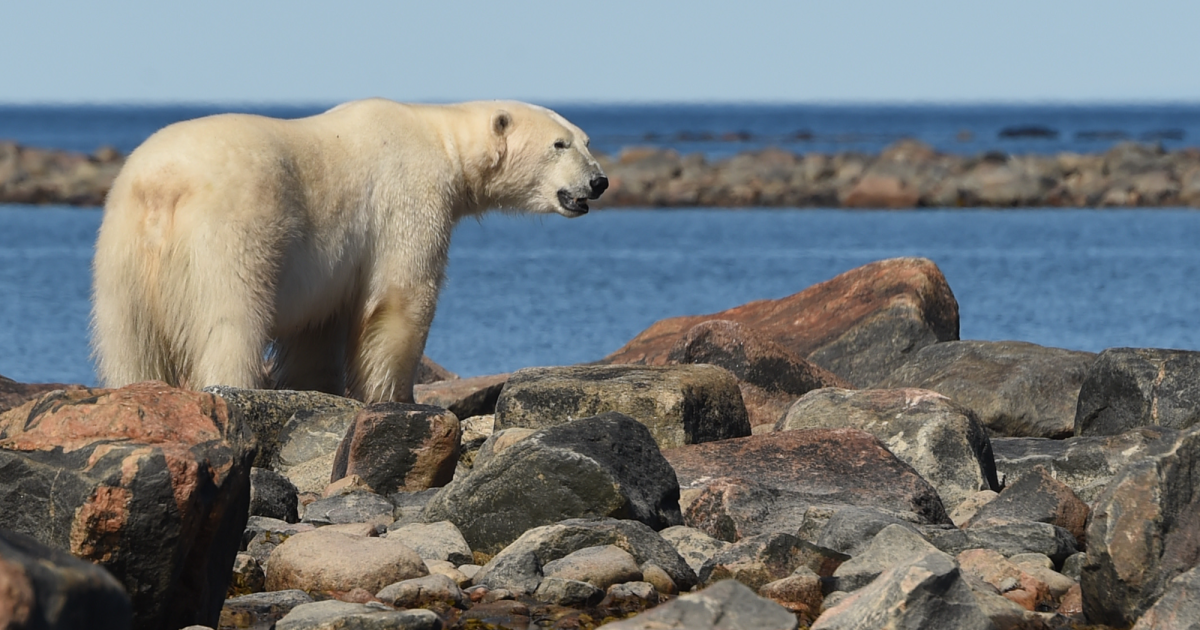
吉尔克里斯特还亲眼目睹了气候变化导致的海冰退缩如何迫使北极熊在绒鸭正伏在蛋上孵化的时节登上陆地。“那些熊就像悠闲吃草的奶牛在牧场上漫步,饿了就停下来吃(蛋),”他说。而银鸥无法将绒鸭从巢中赶走,便学会了在绒鸭离开时吃掉北极熊漏掉的蛋。
Gilchrist was also on hand to witness how receding sea ice, brought on by climate change, forced polar bears onto land just when the eiders were sitting on their eggs. “The bears were like grazing cows leisurely moving through a pasture, stopping to feed [on eggs] whenever they were hungry,” he said. And herring gulls, which can’t force an eider off its nest, learned to eat the eggs that the bears had missed while the eiders were away.
加拿大野生动物管理局科学家珍妮弗·普罗文彻及其同事发现,尽管在米蒂维克筑巢的绒鸭体内寄宿着超出预期的胃肠道蠕虫和吸虫群落——这些寄生虫受益于气温升高——但这些寄生虫减少了鸭子对汞和铅等污染物的暴露。寄生虫似乎会吸收并清除绒鸭组织中的污染物。这一点意义重大,因为汞和铅正在北极许多地区因永久冻土融化而渗滤出来,可导致鸭子繁殖失败,而且对以鸭子为食的人类也可能有害。因纽特人体内的汞含量高于加拿大普通人群。
Canadian Wildlife Service scientist Jennifer Provencher and her colleagues discovered that even though the eiders nesting in Mitivik hosted larger-than-expected communities of gastrointestinal worms and flukes, which benefit from warming temperatures, the parasites reduced the ducks’ exposure to contaminants such as mercury and lead. The parasites appear to absorb and clear contaminants from eider tissues. This is significant because mercury and lead, which are leaching from melting permafrost in many parts of the Arctic, can result in reproductive failure in ducks, and they can be harmful to humans who rely on ducks for food. The Inuit have higher levels of mercury than the general Canadian population.
其他研究人员发现,绒鸭与一些其他暴露于致命疾病的动物一样,最终对禽霍乱产生了免疫力。“如果我们没有在那里,我们永远无法记录下这一切,”吉尔克里斯特说。他表示,他几乎不怀疑米蒂维克研究人员所发现的大部分情况正在北极其他地区发生。
Other researchers found that eiders, like some other animals exposed to deadly disease, eventually developed an immunity to avian cholera. “Had we not been there, we would never have been able to document any of this,” said Gilchrist, who says he has little doubt that most of what Mitivik researchers discovered is happening in other parts of the Arctic.
过去,原住民猎人曾报告加拿大北极地区发生了剧烈变化,例如象牙鸥数量急剧下降;虎鲸进入该地区并捕杀独角鲸和弓头鲸;灰熊向北迁徙,与北极熊交配并产生杂交后代。但对于因纽特猎人足迹难及的广袤地区,若不派遣科学家实地考察,几乎无法说明那里正在发生什么。在加拿大北极地区,大约有15万人生活在一片面积约为美国本土48州一半大小的区域。其中只有一小部分人生活在北极圈以北。
In the past, Indigenous hunters have reported dramatic changes in the Canadian Arctic, such as sharp declines in ivory gull numbers; orcas moving into the region and killing narwhal and bowhead whales; and grizzly bears migrating north, mating with polar bears, and producing hybrids. But it is almost impossible to say what is going on in the vast areas that are too far afield for Inuit hunters without putting scientists in the field. In Arctic Canada, there are approximately 150,000 people living in an area that is about half the size of the lower 48 states. Only a fraction of these people lives above the Arctic Circle.
加拿大环境与气候变化部未回应有关资金削减以及米蒂维克研究停止的提问。该部门在一份声明中表示,其“致力于生物多样性和物种丰度的长期保护”,并指出专家们正在与地区政府和原住民组织合作开展新的研究项目,并利用新技术帮助追踪和了解鸟类及其他动物,包括北极熊。
Environment and Climate Change Canada did not respond to questions about funding cuts and the cessation of research in Mitivik. In a statement, the department said it is “committed to the long-term conservation of biological biodiversity and abundance,” noting that experts are working on new research programs with territorial governments and Indigenous organizations, and with new technologies to help track and understand birds and other animals, including polar bears.
由于缺乏资金,确定加拿大北极熊的生存状况正变得困难,甚至不可能。
Determining how polar bears are faring in Canada is becoming difficult, if not impossible, because of a lack of funding.
尽管如此,阿尔伯塔大学科学家安德鲁·德罗谢指出,加拿大对北极熊研究的支持正处于历史最低水平。他过去40年间在挪威、加拿大和阿拉斯加开展过北极熊研究。他表示,由于政府资金缺乏,确定加拿大北极熊的状况正变得越来越困难,甚至不可能。加拿大拥有全球19个北极熊种群中的13个。
Still, Andrew Derocher, a University of Alberta scientist who has conducted research over the past 40 years on polar bears in Norway, Canada, and Alaska, notes that support for polar bear research in Canada is at an all-time low. Determining how polar bears are faring in Canada—which is home to 13 of the world’s 19 polar bear populations—is becoming increasingly difficult, he says, if not impossible, because of a lack of government funding.
“除了西哈德逊湾的长期监测和詹姆斯湾一个由私人基金会资助的项目外,我们基本上已经停止了所有研究,”他说。“现在加拿大几乎没有任何其他北极熊研究。”鸟类学家马克·马洛里在加拿大野生动物服务局工作期间,曾花费12年在加拿大北极地区的候鸟筑巢点开展研究,但他离开了那份工作,前往阿卡迪亚大学担任研究主席,部分原因是极地地区研究成本高昂,以及为获得持续资金而进行的无休止挣扎。
“We’ve pretty much stopped any research beyond the long-term monitoring in Western Hudson Bay and a project in James Bay” funded by a private foundation, he says. “There is almost no other research on polar bears in Canada now.”Ornithologist Mark Mallory spent 12 years conducting research at migratory bird nesting sites across the Canadian Arctic while working for the Canadian Wildlife Service, but he left that job for a research chair at Acadia University in part because of the high cost of conducting research in the polar regions and the endless struggle to secure consistent funding.
马洛里仍然对北极正在发生的事情非常感兴趣,但多年的野外工作以及担任该期刊联合主编的经历,让他对科学家在试图弄清气候变暖如何影响野生动物时所面临的挑战有了更广阔的视角。
Mallory is still very much interested in what is happening in the Arctic, but his years in the field and as co-editor-in-chief of the journal have given him a broader perspective on the challenges scientists face when trying to figure out how a warming climate is affecting wildlife.
他说:“没有哪位可信的科学家会否认,在长期监测上的投入不足。但更大的问题是,对于我们已经知道正在发生的情况,采取的行动不够……我们真的认为,再多10年或20年显示分布范围向北收缩、窝卵数减少或物种变得更瘦弱的数据,就能改变政客或公众的想法吗?”吉尔克里斯特理解马洛里对拒绝就气候变化采取行动的各国政府的不满,但他——像许多北极研究人员一样——仍然认为,与因纽特伙伴合作开展长期监测至关重要。
“No credible scientist would deny that not enough is being invested in long-term monitoring,” he says. “But the bigger problem is not enough is being done to act on what we know is happening…Do we really think 10 or 20 more years of data showing ranges shrinking north, or clutch sizes reducing, or skinnier species is going to change anything in the minds of politicians or the public?”Gilchrist appreciates Mallory’s frustrations with governments that refuse to act on climate change, but he—like many Arctic researchers—still believes that long-term monitoring with Inuit partners is essential.
他说:“仍然应该有人身处大自然中,监测野生动物和自然环境,并量化正在发生或没有发生的变化。”
“Somebody should still be out in nature monitoring wildlife and the natural environment, and quantifying changes that are occurring or not occurring,” he said.
他不知道米蒂维克岛的绒鸭最终是否会回来,也不知道它们是否找到了更安全的筑巢区域。由于在卡克绍克图克开展作业成本高昂,而且遇到北极熊的几率增加,吉尔克里斯特现在将研究重点放在巴芬岛的一个地点,那里工作成本更低,熊也更少。
He doesn’t know whether the eiders of Mitivik Island will eventually return or whether they have found safer areas to nest. Because of the high costs of operating at Qaqsauqtuuq and the increased odds of running into polar bears, Gilchrist is now focusing his research at a site on Baffin Island, where it is cheaper to work and where there are fewer bears.