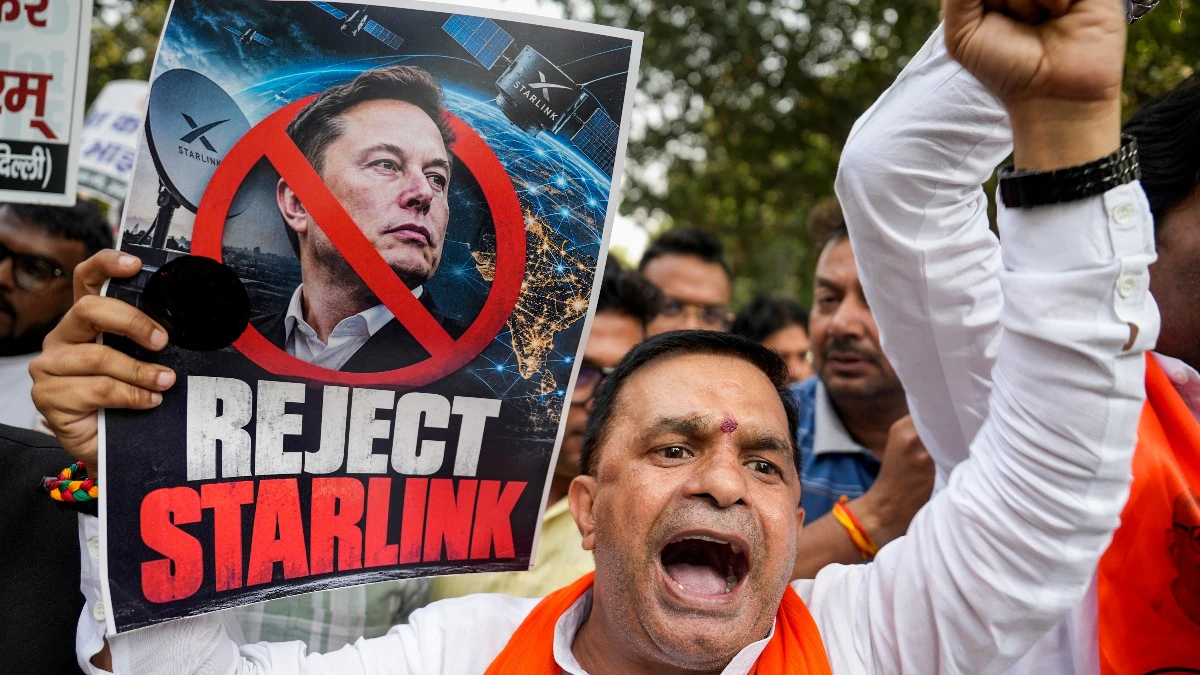
星链(Starlink)老板埃隆·马斯克将他与穆克什·安巴尼(Mukesh Ambani)领导的吉奥(Jio)之间的较量,定性为争夺印度卫星互联网市场的战斗。但印度裔美国记者法里德·扎卡里亚(Fareed Zakaria)表示,他的言论时机不当。原因如下。
Starlink boss Elon Musk has framed his fight with Mukesh Ambani-led Jio as a battle for India's satellite internet market. But his remarks are ill-timed, says Indian-American journalist Fareed Zakaria. Here's why.
特斯拉(Tesla)和星链的老板埃隆·马斯克选择了一个错误的时机来对印度说教。10月7日,这位世界首富指责不具名的印度“寡头”封锁星链,以维护他们对市场的“垄断性扼杀”,并称这是“针对印度人民的犯罪”。一天后,他点名了穆克什·安巴尼,在X平台上发问:“安巴尼是印度的真正老板吗?”然而,更深层的故事可能超越了马斯克和安巴尼之间的竞争。
Tesla and Starlink boss Elon Musk has picked the wrong moment to lecture India. On October 7, the world's richest man accused unnamed Indian "oligarchs" of blocking Starlink to protect their "monopolistic chokehold" over the market, calling it a "crime against the people of India". A day later, he named Mukesh Ambani, asking on X, "Is Ambani the real boss of India?" The bigger story, however, might go beyond the rivalry between Musk and Ambani.
就在马斯克发推文几天后,信实吉奥(Reliance Jio)备受期待的首次公开募股(IPO)即将到来,这些推文的时机引发了指控,称他试图破坏此次IPO。记者兼专栏作家法里德·扎卡里亚则认为,马斯克可能误读了一个更大的转变——对美国日益增长的不信任。这位印裔美国记者表示,这种不信任在一定程度上是由对华盛顿安全承诺的怀疑,以及总统唐纳德·特朗普向巴基斯坦军队总司令、元帅阿西姆·穆尼尔(Asim Munir)伸出橄榄枝所驱动的。
While the timing of Musk's tweets, just days before Reliance Jio's much-anticipated IPO, fuelled allegations that he was trying to sabotage the IPO, journalist and columnist Fareed Zakaria argued that Musk might have misread a larger shift — the growing distrust of America. The Indian-American journalist said that the distrust was driven in part by doubts over Washington's security commitments and President Donald Trump's outreach to Pakistan's military chief, Field Marshal Asim Munir.
在他主持的有线电视新闻网(CNN)每周国际事务节目《法里德·扎卡里亚环球广场》(Fareed Zakaria GPS)上,他认为马斯克误读了印度的情绪,在印度,对美国的信任似乎正在减弱。扎卡里亚说:“马斯克并不明白,在印度以及世界大部分地区,对美国的信任正在崩塌。”
On his CNN weekly international-affairs show Fareed Zakaria GPS (which stands for Global Public Square), he argued that Musk misread the mood in India, where trust in the United States is seemingly weakening. "Musk did not understand that in India, as in much of the world, trust in America is collapsing," Zakaria said.
10月10日,马斯克辩称,星链必须保持价格实惠以吸引印度客户。他在X平台上写道:“显然,如果星链在印度的价格太贵,就没有人会买,因此太空探索技术公司(SpaceX)需要制定实惠的价格。”他补充说,竞争将为普通印度人提供更多选择,从而使他们受益,哪怕这意味着安巴尼的利润减少。两天前,印度政府已经拒绝了马斯克的指控。
On October 10, Musk argued that Starlink would have to keep its prices affordable to attract Indian customers. "Obviously, if Starlink is too expensive in India, no one will buy it, so SpaceX will need to make pricing affordable," he wrote on X. He added that competition would benefit ordinary Indians by giving them more choices, even if it meant lower profits for Ambani. The Indian government had rejected Musk's allegations two days earlier.
在10月8日的一份声明中,通信部表示,其拥有针对卫星通信的“公平且非歧视的授权框架”。该部补充说,针对三家持牌运营商——星链(Starlink)、信实Jio(Reliance Jio)以及巴蒂电信(Bharti Airtel)支持的欧洲通信卫星公司OneWeb(Eutelsat OneWeb)——的安全评估正在进行中。通信部称,有关该框架或其适用是不公平的或具歧视性的说法“毫无根据且出于误解”。
In a statement on October 8, the Ministry of Communications said it had a "fair and non-discriminatory authorisation framework" for satellite communications. It added that security assessments were underway for all three licensed operators, Starlink, Reliance Jio and Bharti Airtel-backed Eutelsat OneWeb. The ministry called the suggestion that the framework or its application was unfair or discriminatory "baseless and misconceived".
许多人指称:马斯克的攻击赶在Jio首次公开募股(IPO)之际马斯克对安巴尼(Ambani)的公开攻击恰好发生在Jio平台(Jio Platforms)寻求约1060亿至1080亿美元估值的IPO前夕,这引发了广泛猜测,认为这些言论旨在关键时刻打击对该发行项目的信心。
MUSK'S ATTACKS TIMED WITH JIO IPO, ALLEGE MANY The timing of Musk's public attacks on Ambani — coming just days before Jio Platforms' IPO targeting a valuation of around $106–108 billion — prompted widespread speculation that the remarks were intended to dent confidence in the offering at a critical moment.
许多用户明确以这种方式看待这些攻击。一位观察人士写道:“埃隆·马斯克是在攻击穆克什·安巴尼,以打压Jio的IPO,这是对星链的直接竞争。”另一个人问:“埃隆试图在Jio的IPO前夕针对信实。这是在试图阻挠什么吗?”第三个人质疑这些评论是否是“试图推开外国投资者和散户投资者参与IPO”,而其他人则称这个时机“可疑”。
Many users explicitly framed the attacks this way. One observer wrote that "Elon Musk was attacking Mukesh Ambani to Hammer the JIO IPO, direct competition to Starlink." Another asked, "Elon trying to target reliance right before JIO's IPO. Attempting to hamper something?" A third questioned whether the comments were "an attempt to pushing away foreign investors and retail investors participation in IPO," while others called the timing "fishy".
类似的发帖将这波攻击描述为旨在“破坏Jio的IPO”或在路演和认购窗口期到来之前制造负面情绪的努力。
Similar posts described the barrage as an effort to "sabotage the Jio IPO" or create negative sentiment ahead of the roadshow and subscription window.
新闻报道也屡屡强调这与IPO的时间接近,从而加深了这样一种看法:即便没有证实存在因果关系,这些推文也有影响投资者心理的风险。信实随后对竞争表示欢迎,并指出其自身的卫星计划面临与星链相同的审批,而该IPO最终吸引了强劲的需求。法里德·扎卡里亚:对美国的信任正在消失然而,对法里德·扎卡里亚(Fareed Zakaria)而言,这场争端不仅仅是两位亿万富翁之间的冲突,它反映出人们对美国实力及控制它的人的信心正在大范围丧失。
News coverage also repeatedly highlighted the proximity to the IPO, reinforcing the perception that the tweets risked influencing investor psychology even if no causal link was proven. Reliance later welcomed competition and noted that its own satellite plans faced the same clearances as Starlink, while the IPO ultimately drew strong demand. TRUST IN US IS DISAPPEARING: FAREED ZAKARIA For Fareed Zakaria, however, the controversy was beyond a clash between two billionaires, reflecting a wider loss of confidence in American power and the people who control it.
“美国的实力曾经令人敬畏,但美国的信任是无价的。这种信任正在消失,”他在节目中说。
"American power was formidable, but American trust was priceless. That trust is disappearing," he said on his show.
分析人士在马斯克10月发表言论的很久之前,就已指出印美关系中信任的侵蚀。2025年7月,外交政策评论员、“亚洲集团”合伙人阿肖克·马利克指出,两国伙伴关系处于“自20世纪90年代中期以来最艰难的时期”,并补充说“信任已经减少”,特朗普总统的信息“损害了华盛顿和新德里多年来对美印伙伴关系进行的谨慎、跨党派的培育”。
Analysts had already flagged the erosion of trust in the India-US relationship well before Musk's October comments. In July 2025, foreign-policy commentator and partner at The Asia Group, Ashok Malik, observed that the partnership was "in its toughest spot since the mid-1990s", adding that "trust has diminished", and that President Trump's messaging had "damaged many years of careful, bipartisan nurturing of the US-India partnership in both capitals".
近一年后的2026年6月,印度前外秘尼鲁帕马·梅农·拉奥指出了一系列不断累积的信号——包括特朗普的言论、七国集团(G7)较为冷淡的表象,以及总理莫迪公开强调全球“信任赤字”——并得出结论认为,“印美关系热烈激昂的阶段可能正在结束”。她写道,这种关系正在变得“更加正常、更加具交易性,或许也更加困难”。
Nearly a year later, in June 2026, former Indian Foreign Secretary Nirupama Menon Rao pointed to a series of accumulating signals — including Trump's remarks, cooler G7 optics, and Prime Minister Modi's public emphasis on a global "shortage of trust" — and concluded that "the exuberant phase of India-US relations may be ending". The relationship, she wrote, was becoming "more normal, more transactional, and perhaps more difficult".
这些早期的评估表明,马斯克与安巴尼之间的争端上演时,对美国的信任已经日渐式微。
These earlier assessments suggest that Musk's spat with Ambani played out at a time when trust in America was already wearing thin.
特朗普走近巴基斯坦的穆尼尔正在损害信心:扎卡里亚扎卡里亚指出,长期以来依赖美国提供安全的国家对华盛顿的怀疑与日俱增。他辩称,就印度而言,唐纳德·特朗普总统对巴基斯坦的处理方式损害了美国几十年来对新德里进行跨党派接触所建立起来的信心。
TRUMP'S PROXIMITY TO PAKISTAN'S MUNIR DAMAGING CONFIDENCE: ZAKARIA Zakaria pointed to the growing scepticism towards Washington among countries that have long relied on the US for security. In India's case, he argued, President Donald Trump's approach to Pakistan has damaged the confidence built over decades of bipartisan American outreach to New Delhi.
扎卡里亚说,印度人看着特朗普向巴基斯坦的实际统治者、陆军元帅阿西姆·穆尼尔靠拢。他说,他们(印度人)还看到了美国总统对乌克兰战争的处理方式,其中对星链军事用途的限制引发了人们对依赖私营控制的美国卫星网络所带来风险的质疑。
Indians have watched Trump move closer to Pakistan's de facto ruler, Field Marshal Asim Munir, Zakaria said. They [Indians] have also watched the US president's handling of the Ukraine war, where restrictions on the military use of Starlink have raised questions about the risks of depending on a privately controlled American satellite network, he said.
扎卡里亚提出了一个直接关乎印度国家安全的诘问:“如果印度再次与巴基斯坦陷入危机,它还会希望自己的武装力量完全依赖于一个由特朗普和马斯克控制的美国卫星系统吗?”对美国信任的担忧并不局限于印度。皮尤研究中心的一项调查发现,在接受调查的35个国家中,有26个国家对中国的看法比对美国更为正面。在韩国,对美国持正面看法的人数比例从2024年的77%下降到今年的45%。在日本,这一比例从70%左右跌至大约一半。
Zakaria posed a question with direct implications for India's national security: "Were India to find itself in another crisis with Pakistan, would it want its armed forces to be utterly dependent on a US satellite system controlled by Trump and Musk?" The concern of American trust is not limited to India. A Pew Research Centre survey found that China was viewed more favourably than the US in 26 of 35 countries surveyed. In South Korea, favourable views of the US fell from 77% in 2024 to 45% this year. In Japan, they dropped from 70% to around half.
与此同时,欧洲国家增加了国防开支,并加大了减少对华盛顿依赖的力度。加拿大一直在寻求与中国建立更紧密的经贸关系,并加强与欧洲的联系,而一些海湾地区的美国伙伴则对美军基地是否能让他们更安全提出了质疑。
Meanwhile, European countries have increased defence spending and stepped up efforts to reduce their dependence on Washington. Canada has sought closer commercial ties with China and stronger links with Europe, while some US partners in the Gulf have questioned whether American military bases make them safer.
扎卡里亚警告称,信任的削弱可能会带来远超外交分歧的后果。几十年来,德国、日本和韩国等国一直依赖美国的核保护伞,而不是发展自己的核武器。
Zakaria warned that weakening trust could have consequences far beyond diplomatic disagreements. For decades, countries such as Germany, Japan and South Korea relied on the American nuclear umbrella rather than developing their own nuclear weapons.
如果美国的防务承诺变得不再那么可靠,这种克制可能会减弱。扎卡里亚援引《华盛顿邮报》的一篇报道称,一项调查发现,65%的韩国人支持拥有核武器,而沙特阿拉伯也没有排除谋求核武器的可能性。
That restraint could weaken if US security commitments become less dependable. A survey found that 65% of South Koreans supported acquiring nuclear weapons, while Saudi Arabia has not ruled out pursuing them, according to a Washington Post report cited by Zakaria.
扎卡里亚说:“唐纳德·特朗普认为他是在让美国的盟友支付他们自己的账单。”他补充说:“他最终可能会让他们自己制造炸弹。”对马斯克而言,眼前的争端关乎进入印度的卫星互联网市场,但扎卡里亚的论点是,这位亿万富翁的对抗发生在一个美国影响力已不再理所当然的时刻,在这个时刻,国家安全关切可能会压倒更廉价技术的承诺。
"Donald Trump believes he's making America's allies pay their own bills," Zakaria said, adding, "He may end up making them build their own bombs." For Musk, the immediate dispute was about entering India's satellite internet market, but Zakaria's argument is that the billionaire's confrontation has unfolded at a moment when American influence can no longer be taken for granted, and when national security concerns might outweigh promises of cheaper technology.