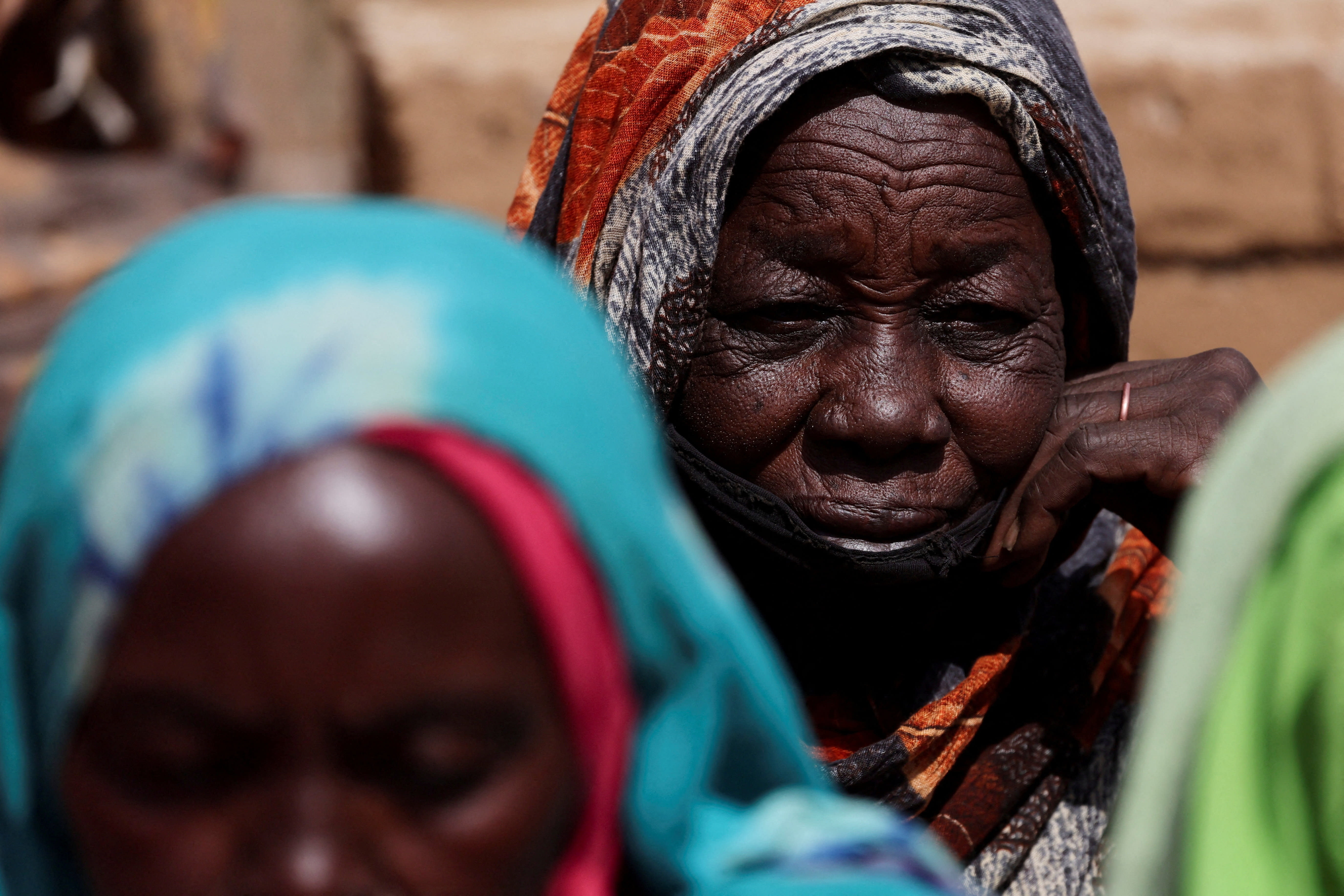
艾哈迈德·叶海亚9岁时逃离了苏丹北达尔富尔村庄的战时袭击。混乱中他与大部分家人失散,走了好几天,才抵达乍得这座偏远城镇外一个尘土飞扬的难民营。艾哈迈德的弟弟萨达姆·伊斯梅尔也到了营地,一同到来的还有一位年幼的堂弟阿尔哈迪·萨利赫。他们的许多其他亲属则四散逃亡或惨遭杀害。
Ahmad Yahya was 9 years old when he fled a wartime attack on his village in North Darfur, Sudan. Separated from most of his family amid the chaos, he walked for days before reaching a dusty refugee camp outside this remote town in Chad. Ahmad's little brother Sadam Ismail also made it to the camp, as did a young cousin, Alhadi Saleh. Many of their other relatives scattered or were killed.
那是2003年的事。迫使这些男孩流离失所的残酷达尔富尔战争早已正式结束,但冲突仍在持续发酵,三年前苏丹又爆发了一场大规模内战。艾哈迈德、萨达姆和阿尔哈迪至今仍住在难民营里他们长大的那些房子里,艾哈迈德如今还在那里抚养着自己的两个儿子。他们是众多沦为难民的苏丹人中的一员,在这个世界上最贫穷的国家之一成为了永久难民。
That was in 2003. The brutal Darfur war that displaced the boys officially ended long ago, but conflicts continued to simmer, and a major civil war erupted in Sudan three years ago. Ahmad, Sadam and Alhadi are still living in the same houses where they grew up in the refugee camp, and Ahmad is now raising two boys of his own there. They are among the vast numbers of Sudanese who have become perpetual refugees in one of the world's poorest countries.
自最新的苏丹战争——敌对军事派别之间的冲突——爆发以来,已有约97.4万人逃入乍得,使苏丹难民总数达到140万。在最早一批人到来的一代人之后,他们既没有返回苏丹的途径,也无法在原地建立稳定的生活,更无处可去。
Since the latest Sudan war broke out – a clash between rival military factions – some 974,000 people have fled into Chad, bringing the total Sudanese refugee population to 1.4 million. A generation after the first of these people arrived, there is no path for them to return to Sudan, to build a stable life where they are, or to go anywhere else.“We don't have work here,” said Ahmad, now 32. “We don't have any money. We can't stay like this.”
“我们在这里没有工作,”现年32岁的艾哈迈德说,“我们没有任何钱。我们不能这样下去。”永久与无常伊里迪米营地绵延约三平方英里,位于乍得东部一片半干旱平原上。援助机构每周送水一到两次。食物匮乏,一些家庭仅靠谷物维生。艾哈迈德和妻儿,以及随他来到营地的母亲和两个姐妹,住在一座沙色砖砌院落里,有多间房间和一个接待客人的空间。
Permanence and impermanenceThe Iridimi camp sprawls across roughly three square miles on a semi-arid plain in eastern Chad. Aid agencies deliver water once or twice a week. Food is scarce, with some families subsisting only on grain. Ahmad and his wife and children, along with his mother and two sisters who joined him at the camp, live in a sand-colored brick compound, with multiple rooms and a space to welcome guests.
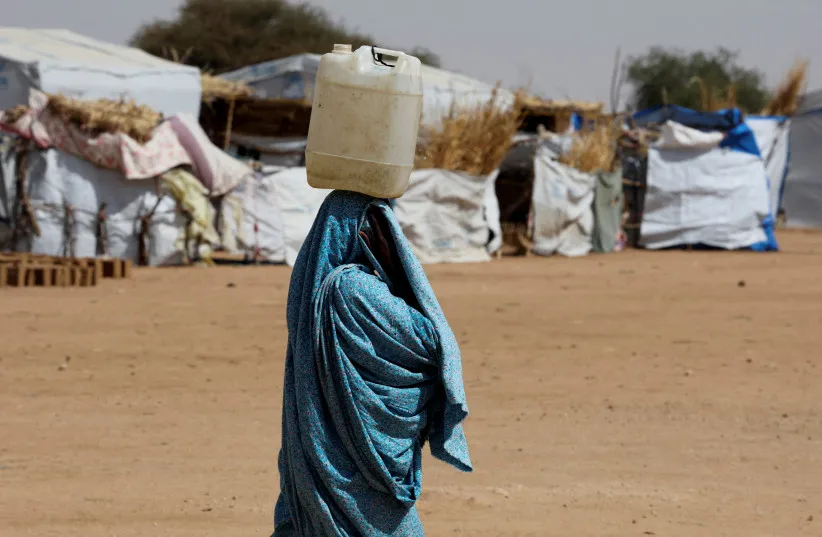
每年雨季过后,他们都会修补墙壁。这家人精心维护的砖房和他们仅有的一袋贴着褪色援助机构标签的高粱,映照出他们自逃到乍得以来一直生活在其中的那种永久与无常交织的感受。
Each year, after the rainy season, they patch the walls. The family's carefully tended brick house and their single bag of sorghum with faded aid-agency labels reflect the sense of permanence and impermanence they have lived with since fleeing to Chad.
与大约30万其他逃离达尔富尔战争的人一样,艾哈迈德、他的兄弟和表弟本以为可以安全避难一段时间,等和平恢复后就返回苏丹。然而,他们却在困境中年复一年地滞留。他们的处境并非乍得独有。据联合国难民署估计,在2025年底全球3600万难民中,约有70%的人被困在已持续五年或更久、且看不到解决希望的状况中。
Like about 300,000 others who escaped the Darfur war, Ahmad, his brother and his cousin thought they would shelter safely for a brief time and return to Sudan when peace was restored. Instead, they have been stuck in limbo year after year. Their predicament is not unique to Chad. An estimated 70% of the world's 36 million refugees at the end of 2025 were trapped in situations that have dragged on for five years or more with no resolution in sight, according to the UN refugee agency's estimates.
在艾哈迈德、萨达姆和阿尔哈迪抵达乍得的23年里,对该国的人道主义援助起伏不定,无法跟上持续——且不断恶化——的紧急状况。据ALNAP称,经通胀调整后,过去20年对乍得的总体人道主义资金翻了一番。ALNAP是一个由人道主义组织组成的网络,汇编来自联合国以及其他公共和私人来源的数据。根据联合国数据,同期难民人口增长了六倍。
In the 23 years since Ahmad, Sadam and Alhadi arrived in Chad, humanitarian aid to the country has fluctuated, unable to keep pace with an enduring – and worsening – emergency. Total humanitarian funding to Chad has doubled over the last 20 years, adjusted for inflation, according to ALNAP, a network of humanitarian groups that compiles data from the UN as well as other public and private sources. The refugee population has increased sixfold over the same period, according to UN data.
援助紧缩之际,全球难民危机正在更广泛地加剧。据联合国数据,过去五年被迫离开家园的人数——包括难民、寻求庇护者和境内流离失所者——上升了33%,达到1.18亿。与此同时,据ALNAP数据,全球人道主义资金下降了20%,降至330亿美元。加剧这一下降的是ALNAP估计美国政府2025年削减的74亿美元全球人道主义援助——这一年美国总统唐纳德·特朗普开始其第二个总统任期。美国是乍得最大的单一捐助国,去年大幅削减了对该国的资金。
The aid squeeze comes amid a broader global refugee crisis. The number of people forcibly displaced from their homes, including refugees, asylum-seekers, and internally displaced people, rose 33% in the last five years to 118 million, according to the UN. Meanwhile, global humanitarian funding dropped 20% to $33 billion, according to ALNAP. Exacerbating the decline is the $7.4 billion in cuts to global humanitarian aid that ALNAP estimates the US government made in 2025, the year that US President Donald Trump began his second term as president. The US, the single largest donor to Chad, slashed its funding to the country last year.
根据ALNAP的数据,2025年美国向乍得提供了1.17亿美元,较前一年的峰值下降了65%。美国国务院一位发言人表示,特朗普政府在2026财年已支出1亿美元用于应对乍得的需求,并称“美国致力于结束苏丹的可怕冲突”。数十年的流离失所对艾哈迈德、萨达姆和阿尔哈迪来说,时断时续的人道主义援助管道暴露了救援项目的局限——这些项目本是为应对临时危机而设,而非为支撑持续数十年的流离失所。
In 2025, the US gave Chad $117 million, a 65% drop from its peak the year before, according to data from ALNAP.A spokesperson for the US State Department said the Trump administration has spent $100 million in fiscal year 2026 to respond to needs in Chad and that the “United States is committed to ending the horrific conflict in Sudan.”Displacement for decadesFor Ahmad, Sadam and Alhadi, the sputtering pipeline of humanitarian aid shows the limits of relief programs that were created to address temporary crises, not to sustain displacement that lasts decades.
伊里迪米营地没有足够的水井来支撑其激增的人口,半沙漠地形也几乎长不出植被。包括艾哈迈德及其亲属在内的一些长期居民,开始在几公里外一条季节性溪流的干涸河床附近耕种小块土地,种植高粱、小米和其他作物。但今年的严重干旱意味着,在9月和10月雨季结束时,这家人颗粒无收。这迫使艾哈迈德及其大家庭像成千上万的其他人一样,几乎完全依赖众多国际机构的救济。
There are not enough wells in the Iridimi camp to support its exploding population, and the semi-desert terrain yields little vegetation. Some of the longer-term residents, including Ahmad and his relatives, started farming tiny plots of land near the dry bed of a seasonal stream several kilometers away, growing sorghum, millet and other crops. But severe drought this year meant the family had no harvest at the end of the rainy season in September and October. That forced Ahmad and his extended family, like thousands of others, to rely almost entirely on handouts from a web of international agencies.
在乍得,粮食援助主要以现金支付的形式由联合国世界粮食计划署发放,该机构与其他人道主义组织一起在当地开展工作,后者主要提供医疗和其他支持。世界粮食计划署结合使用向难民手机账户的电子转账以及更传统的代金券和纸币。一些机构还直接发放食品。这些不是电子表格上的百分比。它们意味着没有送达的餐食。
In Chad, food aid is distributed mostly in the form of cash payments from the UN World Food Programme, which operates in the area along with other humanitarian groups that primarily provide medical and other support. The WFP uses a combination of electronic transfers to refugees' mobile accounts as well as more traditional vouchers and paper money. Some agencies also hand out food directly. These aren't percentages on a spreadsheet. They mean meals not delivered.
没有建造的住所。没有得到治疗的儿童。根据对乍得该机构工作人员的采访,由于资金短缺,世界粮食计划署被迫在2026年初开始减少发放款项。
Shelters not built. Children not treated. The WFP was forced to start reducing disbursements at the start of 2026 due to funding shortages, according to interviews with agency staff in Chad.
在乍得,一个家庭每月的全额配给是8000中非法郎(合14美元);艾哈迈德说,他四口之家现在只能领到相当于7美元的配给,根本买不起市场上的任何东西。粮食援助减少,再加上干旱和人口膨胀,重创了难民营的非正式经济。当地市场上仍然可以买到糖、油和高粱等主食,其中一些是从邻国尼日尔和利比亚用卡车运来的。
A full monthly ration for a household in Chad is 8,000 Central African francs (USD$14); Ahmad said his family of four now gets the equivalent of $7 and cannot afford to buy anything at the market. The falloff in food aid combined with the drought and swelling population have battered the refugee camp's informal economy. Staples like sugar, oil and sorghum can still be found at the local market, some of it trucked in from neighboring Niger and Libya.
艾哈迈德说,过去三个月里,市场价格飞涨。他说,一加仑食用油要3000中非法郎,约合5美元,是夏天价格的两倍,他家根本买不起。难民营市场上,一家曾经盈利的牌铺老板说,现在已不再向人们收取打牌费用,只要求他们付茶钱。根据对营内人员的采访,如今有闲钱光顾手机、星链网络和面包店铺的居民越来越少。
In the past three months, Ahmad said, prices in the market have soared. A gallon of cooking oil is 3,000 CFA, or about $5, twice what it was in the summer and unaffordable for his family, he said. In the camp's market, a once-profitable card-playing shop has stopped charging people to play and now only asks them to pay for tea, the owner said. Fewer residents have money for shops that sell cell phones, Starlink access, and bread, according to interviews with people at the camp.
艾哈迈德33岁的表弟阿尔哈迪刚结婚不久,他靠兼职修手机或借朋友的机动三轮车拉人来维持生计。但他说,由于流通中的现金减少,几乎没什么活可干。“我们过去只能靠自己,但今年不一样了,”阿尔哈迪说。他和妻子住在离艾哈迈德家不远的一所房子里。由于家里共用的农田今年颗粒无收,他们只能靠上月一家援助机构送来的一袋高粱熬粥度日。
Ahmad's cousin Alhadi, 33 and newly married, has tried to make ends meet with part-time work repairing cell phones or driving people on a motorized rickshaw he borrows from a friend. But with less cash in the system, there is little work to be had, he said.“We used to rely only on ourselves, but this year is different,” said Alhadi, who lives with his wife in a house not far from Ahmad's. Because the family's shared farm plot produced nothing this year, they subsist on a stew made from the bag of sorghum that an aid agency delivered last month.
“没什么能给孩子们的,没有好东西给他们吃,”艾哈迈德说。只有最脆弱的人组成营地的成排建筑诉说着苏丹冲突的历史,也记录着人道主义机构竭力跟上的艰难:像艾哈迈德及其亲属这样最早的达尔富尔难民大多已建起砖房。逃离当前战争的难民则住在间距整齐的木头或金属建筑里,屋顶是闪亮的铁皮,这些房屋由援助组织成批建造。
“There is nothing to give to our kids, no good food to give them,” Ahmad said. Only the most vulnerableThe rows of structures that make up the camp tell the history of the Sudan conflict and the struggle of humanitarian agencies to keep up: Most of the original Darfur refugees, like Ahmad and his relatives, have built houses of brick. Refugees who fled the current war live in evenly-spaced wood or metal buildings with shiny tin roofs, constructed en-masse by aid organizations.
但在营地的边缘,许多新到者只分到覆着塑料布的简易住所,几乎无法抵御无情的烈日。2026年9月,联合国难民署关于伊里迪米及邻近的古代拉内营地的难民数据库登记人数为94,718人。伊里迪米营地距苏丹边境约50英里,由联合国难民机构和非政府组织于2004年设立。在乍得东部四个与苏丹接壤的省份散布着约30个难民营,伊里迪米是其中第四古老的营地。
But at the camp's edges, many new arrivals are given only plastic-covered shelters that offer little protection against the relentless sun. In September 2026, a UNHCR database of refugees at Iridimi and its adjacent camp Goudrane registered a population of 94,718. Iridimi, which lies about 50 miles from the Sudan border, was established in 2004 by the UN refugee agency and non-governmental organizations. It is the fourth oldest of about 30 refugee camps scattered across the four eastern Chad provinces that border Sudan.
几十年来,两国关系一直复杂,边境两侧的人们有着深厚的部落联系和紧密的家族纽带。2023年战争爆发后不久,乍得总统穆罕默德·代比正式确立了对所有难民和寻求庇护者的法律保护,包括在该国境内工作和迁徙的权利。乍得政府未回应多次置评请求,即其如何应对难民危机的挑战。世界粮食计划署一位发言人表示,该机构被迫大幅削减在乍得获得粮食援助的难民人数。
Relations between the two countries have been complex for decades, and people on both sides of the border share deep tribal connections and close family ties. Soon after the 2023 war broke out, Chadian President Mahamat Déby formalized legal protections for all refugees and asylum seekers, including the right to work and move within the country. The Chadian government did not respond to multiple requests for comment about how it is addressing the challenges of the refugee crisis. The WFP has been forced to slash the number of refugees who receive food support in Chad, an agency spokesperson said.
这位发言人说,截至10月,该机构仅向约20万被其列为“极度脆弱”的人提供每月全额口粮。这不到乍得苏丹难民总数的15%。这位发言人说,另一个“高度脆弱”类别将获得全额口粮,但每三个月才发放一次。这位发言人说,总体而言,乍得约60万难民将获得任何援助,低于今年早些时候的100万。
The agency as of October is providing full monthly rations only to about 200,000 people it classifies as “extremely vulnerable,” the spokesperson said. That is less than 15% of Chad's Sudanese refugee population. Another “highly vulnerable” category will receive full rations, but only once every three months, the spokesperson said. In all, about 600,000 refugees in Chad will get any aid at all, down from 1 million earlier this year, the spokesperson said.
世界粮食计划署乍得办事处项目负责人马克·塞克蓬表示,该机构正与政府合作,试图提高农业生产和生计项目,以帮助应对他所说的“急剧减少”的人道主义援助。今年4月,联合国难民事务高级专员公署表示,该机构及其他联合国机构只能帮助到乍得境内四成的苏丹难民。该机构与乍得政府协调应对苏丹难民危机。联合国援助负责人汤姆·弗莱彻在谈到削减时说:“这些不是电子表格上的百分比。它们意味着没有送达的餐食、没有建造的住所、没有得到治疗的儿童。”
Marc Sekpon, head of programs for WFP's Chad office, said the organization is working with the government to try to increase agricultural production and livelihood programs to help address what he called a “drastic decrease” in humanitarian assistance. In April, the UN High Commissioner for Refugees, which coordinates with the Chadian government to respond to the Sudanese refugee crisis, said it and other UN agencies are able to help only four in 10 refugees in Chad.“These aren't percentages on a spreadsheet,” said Tom Fletcher, UN aid chief, of the cuts. “They mean meals not delivered. Shelters not built. Children not treated.”In Chad's Wadi Fira province, where Iridimi is located, nearly three-fourths of Chadian children under age 5 and almost half of refugee children suffer from malnutrition, according to the Integrated Food Security Phase Classification, the world's famine monitor.
据全球饥荒监测机构“粮食安全阶段综合分类”的数据,在伊里迪米所在的乍得瓦迪菲拉省,近四分之三的5岁以下乍得儿童和近一半的难民儿童患有营养不良。艾哈迈德说,今年早些时候,他的家庭每月还能领取全额口粮,尽管他最初从达尔富尔来到这里已是20多年前。这是因为较新的难民往往被归类为更贫困者,而艾哈迈德的难民身份证上盖的是2023年——而不是他逃离达尔富尔战争的2003年。
Earlier this year, Ahmad's family was receiving full monthly rations, even though he first arrived from Darfur more than 20 years ago, he said. That's because newer refugees are often classified as needier, and Ahmad's refugee identification card is stamped 2023 – not 2003, the year of his flight from the Darfur war.
艾哈迈德2018年离开伊里迪米返回苏丹,参加了一项由联合国支持的自愿重新安置项目,每名参与者在过境时可获得600美元。但当最新战争爆发时,准军事组织快速支援部队袭击了他所居住的城市尼亚拉,他被迫于2023年回到他当初离开的伊里迪米的那所房子。联合国难民署驻乍得代表马加特·吉斯表示,该国需要一次“范式转变”,从纯粹的紧急救济转向一种将人道主义援助、长期发展和建设和平努力相结合的方式。吉斯说:“你不可能供养人们20年。你不可能提供医疗服务20年。”
Ahmad left Iridimi to return to Sudan in 2018, part of a voluntary UN-backed resettlement program that paid each participant $600 upon crossing the border. But when the latest war broke out, the Rapid Support Forces paramilitary group attacked the city where he was living, Nyala, and he was forced to return in 2023 to the very home in Iridimi that he had left. Magatte Guisse, the UNHCR representative in Chad, said the country needs a “paradigm shift” away from purely emergency relief toward an approach that combines humanitarian aid, longer-term development and peacebuilding efforts.“You cannot feed people for 20 years,” Guisse said.
20年过去了,你们应该有一套适应变化的机制。”世界的关注艾哈迈德、萨达姆和阿尔哈迪第一次抵达伊里迪米时,全世界的目光正聚焦于达尔富尔战争。当时由总统奥马尔·巴希尔领导的苏丹政府,部署了主要由阿拉伯人组成的地方民兵组织“金戈威德”(常被译为“骑马的恶魔”),以协助镇压反叛分子的叛乱——这些反叛者指责政府忽视了该地区。
“You cannot provide health for 20 years. After 20 years, you should have a mechanism for adapting.”The world's attentionAhmad, Sadam and Alhadi first arrived at Iridimi at a time when the world's attention was fixed on the Darfur war. The Sudanese government, then led by President Omar al-Bashir, deployed local, largely Arab militias known as Janjaweed (often translated as “devils on horseback”) to help crush a revolt by rebels who accused the government of neglecting the region.
美国指控金戈威德实施种族灭绝,随着乔治·W·布什政府试图斡旋结束内战,外国援助源源涌入。当时担任联合国难民署亲善大使的安吉丽娜·朱莉访问了伊里迪米和乍得的其他难民营,并会见了在当地研究营养不良问题的美国团队。乔治·克鲁尼、史蒂文·斯皮尔伯格、米娅·法罗和其他名人苏丹流离失所者筹集了数百万美元。
The US accused the Janjaweed of genocide, and foreign aid flowed as the George W. Bush administration tried to broker an end to the civil war. Angelina Jolie, then a UNHCR Goodwill Ambassador, visited Iridimi and other refugee camps in Chad and met with a US team studying malnutrition there. George Clooney, Steven Spielberg, Mia Farrow and other celebrities raised millions for Sudan's displaced.
这些名人的发言人未回应就本文置评的请求;在艾哈迈德及其兄弟和表弟抵达后的最初几年里,这波名人关注帮助维持了流入该地区的资金。从达尔富尔传出的故事令人震惊:据联合国估计,到2010年底,已有30万人死亡,超过200万人被迫逃离家园。金戈威德对非阿拉伯社区大肆破坏,包括艾哈迈德和萨达姆的家乡——北达尔富尔的科尔诺伊,以及阿尔哈迪的村庄。
The wave of attention from the celebrities, whose spokespeople did not respond to requests for comment on this story, helped keep money flowing into the region in the years just after Ahmad and his brother and cousin arrived. The stories that emerged from Darfur were horrific: By the end of 2010, according to UN estimates, 300,000 people had died and more than 2 million were driven from their homes. The Janjaweed wreaked havoc on non-Arab communities like Kornoi, Ahmad and Sadam's hometown in North Darfur, and Alhadi's village.
艾哈迈德和萨达姆不知道他们的父亲在那次袭击中如何死去,只知道他没能活下来。阿尔哈迪失去了一位叔叔和另外九名家庭成员——金戈威德武装分子袭击了他们的村庄,并放火烧了他的房子。当他抵达乍得边境时,他已经两次流离失所,他的牲畜也因干渴和寒冷而死亡。在伊里迪米,人道主义援助让这些男孩得以吃饱,他们也上了学。
Ahmad and Sadam do not know how their father died in the attack, only that he did not survive. Alhadi lost an uncle and nine other family members when Janjaweed fighters raided their village and set fire to his house. By the time he reached the Chad border, he had been twice displaced and lost his animals to thirst and cold. At Iridimi, humanitarian aid kept the boys fed, and they attended school.
但多年来,世界对达尔富尔难民的关注逐渐减弱,用于学校和其他项目的资金也随之减少。根据路透社对联合国和ALNAP历史数据的分析,并按2024年美元通胀调整后计算,2004年——即因达尔富尔战争而资金首次大幅增加的那一年——政府和私人捐助者为难民提供了每人1257美元。到去年,这一数字已降至371美元。国际救援委员会是一家在乍得支持难民超过20年的非政府组织,该组织表示,公共和私人资金的减少迫使其缩减服务,包括在伊里迪米营地的服务。
But the world's interest in Darfur's refugees waned over the years, along with funding for schools and other initiatives. In 2004, the year funding first took off in response to the Darfur war, government and private donors provided $1,257 per refugee, according to a Reuters analysis of historical UN and ALNAP figures, adjusted for inflation in 2024 dollars. By last year, the figure had fallen to $371. The International Rescue Committee, a non-governmental organization that has supported refugees in Chad for more than 20 years, said declines in both public and private funding has forced it to scale back services, including at Iridimi camp.“Every year we have less and less,” said Alain Rusuku, IRC's Chad director.
“我们每年得到的越来越少,”国际救援委员会乍得主任阿兰·鲁苏库说。“与此同时,难民越来越多,营地也越来越多。”随着战斗持续,苏丹家庭继续越境逃往乍得。控制政府的苏丹军队正在与快速支援部队作战,后者是一支由阿拉伯人领导、从金戈威德民兵发展而来的武装力量。这场战争是关于国家控制权及其财政资源的权力斗争,已成为地区引爆点,双方战斗人员都被指控犯有暴行。
“Meanwhile there are more refugees and more camps.”Sudanese families continue to flee across the border to Chad as the fighting rages on. The Sudanese army, which controls the government, is battling the RSF, an Arab-led militia that grew out of the Janjaweed. The war, a power struggle over control of the country and its financial resources, has become a regional flashpoint with combatants on both sides accused of atrocities.
苏丹政府和快速支援部队的发言人未回应置评请求。寻求更好的生活艾哈迈德、萨达姆和阿尔哈迪采取了不同的策略,试图应对长期流离失所。阿尔哈迪说,他将继续努力寻找工作。28岁未婚的萨达姆已多次进行危险且高风险的尝试,试图在别处寻找新生活。他说,他曾两次试图前往欧洲,两次都被埃及当局逮捕。其中一次被捕后,他在埃及监狱中度过了10个月。
Spokespersons for the Sudan government and the RSF did not respond to requests for comment. Seeking a better lifeAhmad, Sadam and Alhadi have pursued different strategies to try to cope with their long-term displacement. Alhadi said he will continue to try to find work. Sadam, 28 and unmarried, has made several dangerous and high-risk attempts to find a new life elsewhere. He tried twice to journey to Europe and was arrested by Egyptian authorities both times, he said. After one arrest, he spent 10 months in an Egyptian jail.
他知道成功渡海的机会渺茫,这需要经历一场横跨地中海的危险船只之旅。“这是一条死亡之路,”他说。
He knows chances are slim for a successful crossing, which requires a dangerous journey by boat across the Mediterranean.“It's a journey of death,” he said.
今年春天,他穿越全国行程1200公里(700英里)来到与利比亚和尼日尔接壤的边境,做矿工和挖战壕的苦力。
This spring, he traveled 1,200 km (700 miles) across the country to the border with Libya and Niger to work as a laborer, mining and digging trenches.
艾哈迈德是唯一一个曾试图返回苏丹的人,他说即使战争明天结束,他也不会再回去。他已经尝试过一次,失去了所建立的一切,不打算第二次失去。
Ahmad, the only one to ever attempt a return to Sudan, says he would not go back again – even if the war ended tomorrow. He has already tried once, lost what he built and does not intend to lose a second time.
但他表示:“如果我找到其他任何可以去的地方,明天我就会带着家人走。”
But, he said: “If I found any other place to go, tomorrow I would go with my family.”