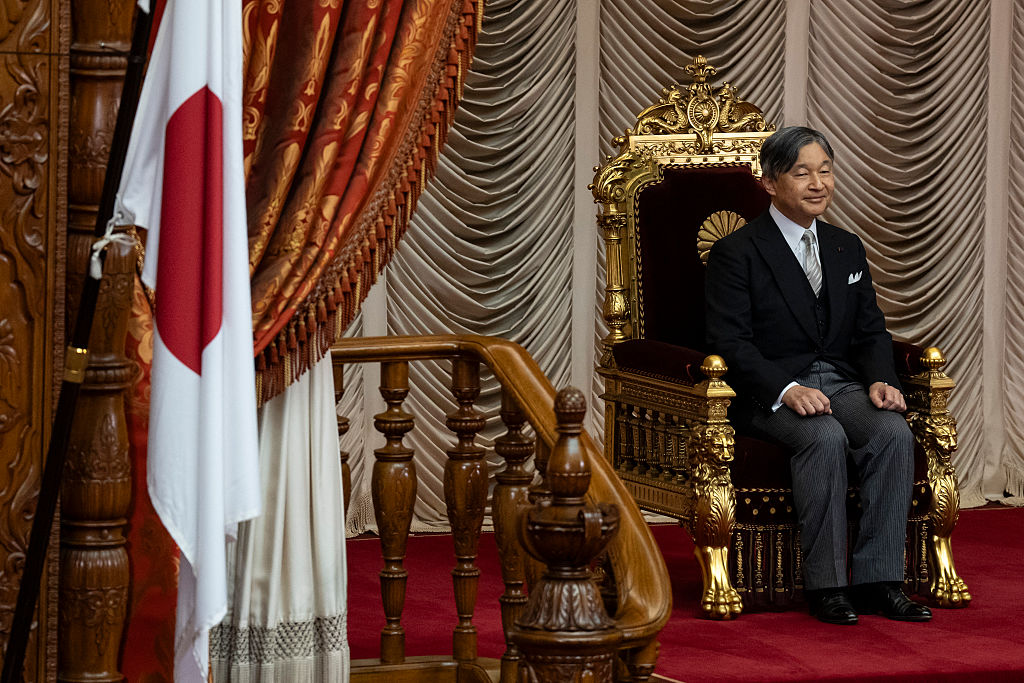
日本国会议员正在对延续逾千年的世袭君主制进行改革,以期在皇室规模不断缩小的背景下维持其存续。
Japanese lawmakers are reforming the country’s more-than-a-millennia-old continuous hereditary monarchy in an effort to keep it alive amid a shrinking imperial family.
7月通过的日本《皇室典范》修正案于周六生效。其中一项修正案允许日本公主即使与非皇室成员结婚也能保留皇室身份,但其未来子女不被视为皇室成员。另一项修正案显然是以迂回方式维护父系继承制:皇室成员可以收养原宫家的男性,这些被收养者的未来男性后代可被视为合法皇位继承人。
Amendments to Japan’s Imperial House Law that passed in July took effect on Saturday. One allows Japanese princesses to keep their royal status even if they marry non-royals, though their future children are not considered royals. The other amendment is an apparent roundabout way to preserve patrilineal succession: members of the royal family may adopt a male from former imperial branch families, and those adoptees’ future male offspring can be considered legitimate successors to the throne.
这些修订旨在扩大未来有资格继承皇位的人选范围,同时强化将女性排除在皇位继承人之外的安排。包括日本首位女性首相高市早苗在内的坚定保守派曾多次主张维持这一安排,反对改变。
The revisions aim to expand the future pool of eligible heirs to the throne while reinforcing the shutting out of women from leading the Japanese monarchy, which staunch conservatives including the country’s first female Prime Minister, Sanae Takaichi, have repeatedly advocated against upending.
在修订生效前,德仁天皇只有少数几位可能的继承人:其弟秋筱宫,之后是他20岁的侄子悠仁亲王,再之后是90岁的叔父常陆宫亲王。
Before the revisions took effect, Emperor Naruhito only had a few viable successors: his younger brother Akishino, followed by his 20-year-old nephew Prince Hisahito, then his 90-year-old uncle Prince Hitachi.
人选范围过小引发了人们对日本皇室未来的担忧。日本公众对女性君主表示支持,表明他们更倾向于让这个著名的家族继续保有皇位。天皇唯一女儿爱子公主的支持者近几周在日本街头游行,支持她有资格成为女天皇。
The small pool had raised concerns about the future of the Japanese imperial family. The Japanese public has shown support for female monarchs, signaling a preference to keep the renowned family on the throne. Fans of Princess Aiko, the emperor’s sole daughter, have marched in Japan’s streets in recent weeks in support of her eligibility to become empress.
但高市早苗所在的自民党内的极右翼派系坚称,只有父系皇族中的男性才有资格成为天皇,这样才能维护菊花王朝的权威。这些修订最终源自自民党及其执政伙伴日本维新会去年10月签署的联合执政协议。
But extreme right-wing factions in Takaichi’s Liberal Democratic Party have insisted that maintaining only males from the male imperial line as eligible to become emperor preserves the authority of the Chrysanthemum Throne. The revisions were ultimately borne out of the coalition agreement signed in October last year by the LDP and its junior partner, the Japan Innovation Party.
虽然宫内厅表示将研究如何实施这些措施,但批评者已在研究如何推翻该政策,认为其违反了该国的反歧视法。漫画家小林善纪向政府提起诉讼,称该修正案“违宪”。专家表示,这些修正案可能会影响日本公众对皇室的看法。
While the Imperial Household Agency has said it will study how to implement the measures, critics are already studying how to turn the policy over, arguing that it violates the country’s anti-discrimination law. Manga artist Yoshinori Kobayashi filed a lawsuit against the government that called the amendment “unconstitutional.”Experts say the amendments could affect how the Japanese public views the imperial family.
“它可能会稀释一些人对皇室可能产生的亲切感或神圣感,”神田外语大学讲师杰弗里·J·霍尔对《时代》周刊表示,“因为他们更习惯于他们已经熟知的皇室成员。” 欢迎前皇族分支回归 修正案允许皇族成员收养一名年满15周岁、且是在二战后皇族精简前为男系皇族合法后裔的男性。该被收养人不得已婚或育有子女。
“It could dilute the feeling of closeness or the feeling of holiness that some people might feel towards the royal family,” Jeffrey J. Hall, a lecturer at Kanda University of International Studies, tells TIME, “because they're more used to the royals that they already know.”Welcoming back the former imperial family branches The amendments allow members of the imperial family to adopt a male who is 15 years of age or older and is also a legitimate descendant of a male member of the imperial family before it was trimmed down after World War II. That adoptee should not be married or have children.
二战后,为削减君主制产生的开支,日本皇室的若干分支于1947年放弃了皇族身份。政府官员此前表示,这11个家族约600年前分化自同一男系祖先,如今与德仁天皇的亲等至少相隔36代。
Several branches of the Japanese imperial family renounced their royal status in 1947 to cut down on costs the monarchy incurred after the war. Government officials previously said that these 11 families split from a common male-line ancestor some 600 years ago, and are now at least 36 degrees of kinship from Naruhito.
然而,被收养的男性不具备继承皇位资格——只有其符合条件的男性后代才具备资格。该法律将每30年审查一次。
However, the adopted males would not be eligible for the throne—only their eligible male offspring would be. The law would be reviewed every 30 years.
天普大学东京日本校区亚洲历史学教授杰夫·金斯顿对《时代》周刊表示,政府针对皇室继承人日益减少的问题提出的解决方案,引发了人们对潜在继承者合法性的质疑。“公众会认为这些人是合法的吗?”他说,这仍是一个悬而未决的问题,尤其是随着有关那些潜在额外皇位继承者可能是谁的报道不断出现。“君主制的问题在于,它有点基于——我不知道——一种集体持有的神话、信仰、信念;而一个香肠制造商大概不会有那种魔力。”
Jeff Kingston, a professor of Asian history at Temple University’s Japan campus in Tokyo, tells TIME the government’s offered solution to the dwindling pool raises questions about the legitimacy of the potential heirs. “Would these people be taken as legitimate by the public?” he says remains an open question, especially as reports surface about who those potential additional successors to the throne might be. “The problem of a monarchy is it’s sort of based on—I don't know—a collectively held myth, belief, faith; and a sausage maker probably isn't going to have that magic.”
神田外语大学的霍尔也认为,日本政府将很难说服公众,尤其是因为此举会引入陌生的面孔。“对日本政府来说,要基本建立一套意识形态或公关计划,让人们相信新的皇室收养者与我们熟知的其他皇室成员一样具有皇室身份,将是一个非常棘手的问题。”金斯顿表示,保守派无视国内广受欢迎的公主,提出这些修正案是为了确保日本不会出现女性主导的皇室,尽管许多日本人似乎对此并不介意,有些人甚至似乎更倾向于这种做法。过去的媒体调查显示,超过80%的日本受访者支持女性天皇。
Hall, from the Kanda University of International Studies, echoes that the Japanese government will find it difficult to convince the public, especially since the move would introduce unfamiliar faces. “It will be a very difficult problem for the Japanese government to try to basically build up an ideology or a PR program that convinces people that the new royal adoptees are just as royal as the other ones that we all know.”Snubbing the nation’s popular princess Kingston says that conservatives proposed the amendments to ensure that a female-led monarchy wouldn’t happen in Japan, even when many Japanese people appear fine with it and some even seem to prefer it. Past media surveys have shown that more than 80% of Japanese respondents favored a female emperor.
10月10日,抗议者走上东京市中心街头,呼吁就《皇室典范》展开进一步讨论,称24岁的爱子公主应该有资格继承皇位。
Protesters took to central Tokyo’s streets on Oct. 10 to call for further debates on the Imperial House Law, claiming that Princess Aiko, who is 24, should be eligible for the throne.
另一项已生效的修正案允许爱子公主和其他四位未婚公主在嫁给皇室以外的人后保留皇室身份。此前,这样做的公主会失去皇室身份,这意味着她们的孩子没有资格进入皇位继承序列;最近的例子是德仁天皇的侄女真子。真子于2021年嫁给了大学时期的男友,此后移居美国。
The other amendment that took effect allows Aiko and the four other single princesses to retain royal status if they get married to people outside the imperial family. Before, princesses who did so lost their royal status, meaning their children are ineligible for the line of succession; the most recent being Mako, one of Naruhito’s nieces. Mako married her college boyfriend in 2021 and has since moved to the U.S.
霍尔将最近的修正案形容为“非常奇怪”,并怀疑“许多日本人不会真正完全理解”这些修正案。社会调查研究中心8月的一项民意调查得出了类似的结论,认为对《皇室典范》的修订“未能获得日本公众的理解”。
Hall describes the recent amendments as “very strange” and suspects “many Japanese people won't really fully grasp” them. An August poll from the Social Survey Research Center came to a similar conclusion that the revisions to the Imperial House Law “have not gained the understanding of the Japanese public.”
虽然德仁天皇和皇室主要履行礼仪性职责,不干预国家政治,但他们甚至已暗示了自己的看法。6月,天皇表示,希望任何扩大皇室成员的决定都应获得公众支持:“我希望这将是一件能获得国民理解的事情。”
While Naruhito and the royal family have largely ceremonial duties and do not weigh in on the country’s politics, they have even hinted at what they think should be done. In June, the emperor said he hopes any decision to expand the imperial family should have public support: “I hope it will be something that gains the understanding of the people.”