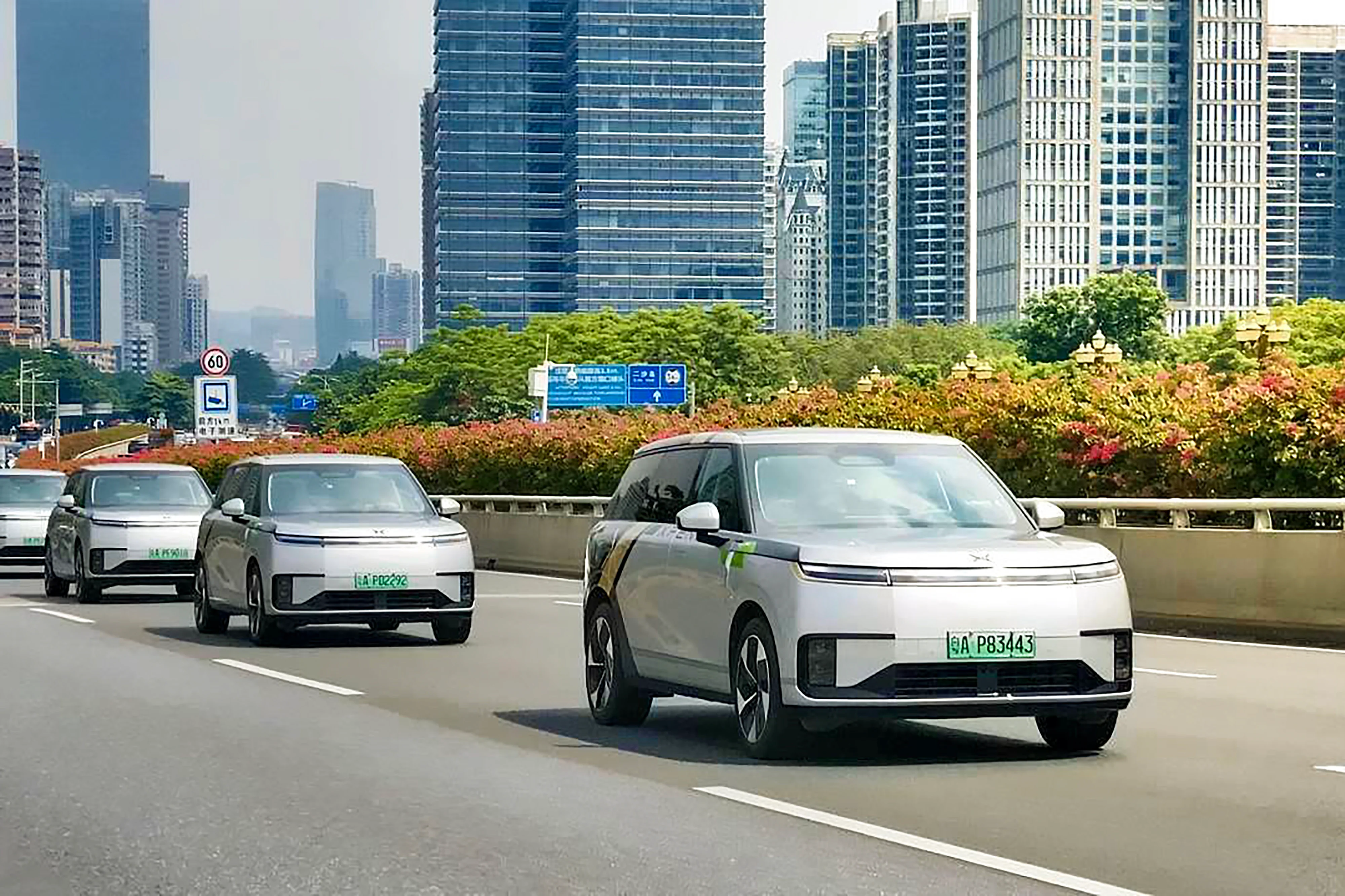
中国已向电动汽车制造商小鹏及其与大众合资的大陆公司授予新的自动驾驶许可,进一步加剧了中国自动驾驶企业与美国特斯拉之间的商业化竞争。
China has granted new autonomous-driving permission to electric vehicle (EV) maker Xpeng and a mainland joint venture of Volkswagen, intensifying the commercialisation race between China’s autonomous driving firms and US company Tesla.
小鹏表示,凭借最近正式颁发的许可证,旗下的 Yoyo 无人驾驶出租车现在可以在广东省南部首府进行“示范运营”。该许可证允许机器人出租车载客收费,被视为车队运营商在获得商业运营监管批准前的最终重大测试。
Xpeng would now be allowed to conduct “demonstration operations” of its Yoyo driverless taxis in the capital city of southern China’s Guangdong province under a licence officially granted recently, the company said on social media on Monday. The licence, which allows the robotaxis to carry paying passengers, is regarded as a final major test for fleet operators before winning regulatory approval for commercial operations.
小鹏称,此项许可将使其收集“真实世界运营验证”,并帮助完善“一套可复制的服务体系”,并补充说,其经验将“随后为全球合作伙伴提供全面解决方案,并探索大规模商业部署”。
The permission would allow Xpeng to gather “real-world operational validation” and help refine a “replicable service system”, the firm said, adding that its experience would lead to “subsequent provision of comprehensive solutions to global partners and the exploration of large-scale commercial deployment”.
小鹏被视为特斯拉的竞争者,表示其 Yoyo 机器人出租车已实现 L4(第4级)自动驾驶能力。标准组织 SAE International 将 L4 定义为能够在特定、已绘制的环境或条件下无需人工干预即可运行的车辆。
Xpeng, regarded as a Tesla challenger, said that its Yoyo robotaxi delivered level 4 (L4) autonomous driving capabilities. Standards organisation SAE International defines L4 as vehicles that can operate without human intervention within specific, mapped environments or conditions.
与此同时,大众(安徽)汽车公司周一宣布,在中国东部安徽省合肥市获得了第3级自动驾驶道路测试许可证。大众与长安汽车集团的合资企业已在该市开始了条件自动驾驶技术的真实道路测试和数据收集。
Meanwhile, Volkswagen (Anhui) Automotive Company won a Level 3 autonomous driving road test licence in Hefei, in eastern China’s Anhui province, the German carmaker announced on Monday. The joint venture between Volkswagen and JAC Automobile Group had already begun real-world road testing and data collection for the technology of conditionally automated driving in the city.
自动驾驶已成为中美两国领导者之间的新战场。根据国际能源署 5 月份的一份报告,截至 3 月份,全球市场占主导地位的两国公司分别在 11 个和 10 个城市运营商业机器人出租车服务。
Autonomous driving has become a new battlefield between leaders in China and the US. Dominating the global market, companies in the two countries were operating commercial robotaxi services in 11 and 10 cities, respectively, as of March, according to a May report from the International Energy Agency.
中国工业和信息化部已设定2030年目标,实现具备自动驾驶能力的车辆大规模应用。
China’s Ministry of Industry and Information Technology has set a 2030 goal of mass application of vehicles with autonomous driving capabilities.
在广州,小鹏的自动驾驶出租车将加入此前已获许可的阵营,包括自动驾驶技术初创企业小马智行和文远知行,以及百度和广汽集团。
In Guangzhou, Xpeng’s robotaxis will join those of previous licensees including autonomous driving technology start-ups Pony.ai and WeRide, as well as Baidu and Guangzhou Automobile Group.
特斯拉计划在今年年底前推出其Cybercab自动驾驶出租车,但预计在2027年之前,自动驾驶出租车服务不会成为这家美国巨头收入的重要贡献来源。
Tesla aims to launch its Cybercab robotaxis by the end of this year, but robotaxi services are not expected to be a significant contributor to the US giant’s revenue until 2027.
与此同时,小鹏正在推进其海外自动驾驶出租车业务。该公司董事长兼首席执行官何小鹏本月早些时候在巴黎车展上表示,公司正在与多家领先的欧洲网约车平台进行洽谈。
Meanwhile, Xpeng is pressing ahead with its robotaxi business overseas. The firm was in discussions with several leading European ride-hailing platforms, chairman and CEO He Xiaopeng said at the motor show in Paris earlier this month.
他一直积极主张从当前主流的部分驾驶自动化(即L2)直接跨越到L4。他在3月表示,这一过渡步骤将对硬件、软件和法规构成挑战。
He has been a vocal advocate for skipping from the currently prevailing partial driving automation, or L2, directly to L4. He said in March that the transitional step would pose challenges to hardware, software and regulations.
在补贴退坡和国内竞争加剧的双重挤压下,小鹏上半年净亏损同比扩大173%,至31亿元人民币(4.65亿美元)。
Squeezed by a subsidy pullback and intensified domestic competition, Xpeng’s first-half net loss widened by 173 per cent year on year to 3.1 billion yuan (US$465 million).
根据摩根士丹利7月发布的一份研究报告,全球自动驾驶出租车行业有望在2040年前成为一个价值1万亿美元的市场,百度、小鹏和文远知行等中国参与者将与全球领导者特斯拉和Waymo一道,成为区域领跑者。
The global robotaxi sector was on track to become a US$1 trillion market by 2040, according to a Morgan Stanley research note published in July, with Chinese players like Baidu, Xpeng and WeRide primed to be regional front-runners alongside global leaders Tesla and Waymo.
该银行预计,在硬件成本降低、人工智能快速进步和法规更加明确的支撑下,自动驾驶出租车服务到2028年将能够覆盖车辆的运营成本,为2030年实现规模化商业运营奠定基础。
Backed by lower hardware costs, rapid advances in artificial intelligence and clearer regulations, the bank expected robotaxi services to be able to cover the operating costs of vehicles by 2028, setting the stage for scaled commercial operations by 2030.