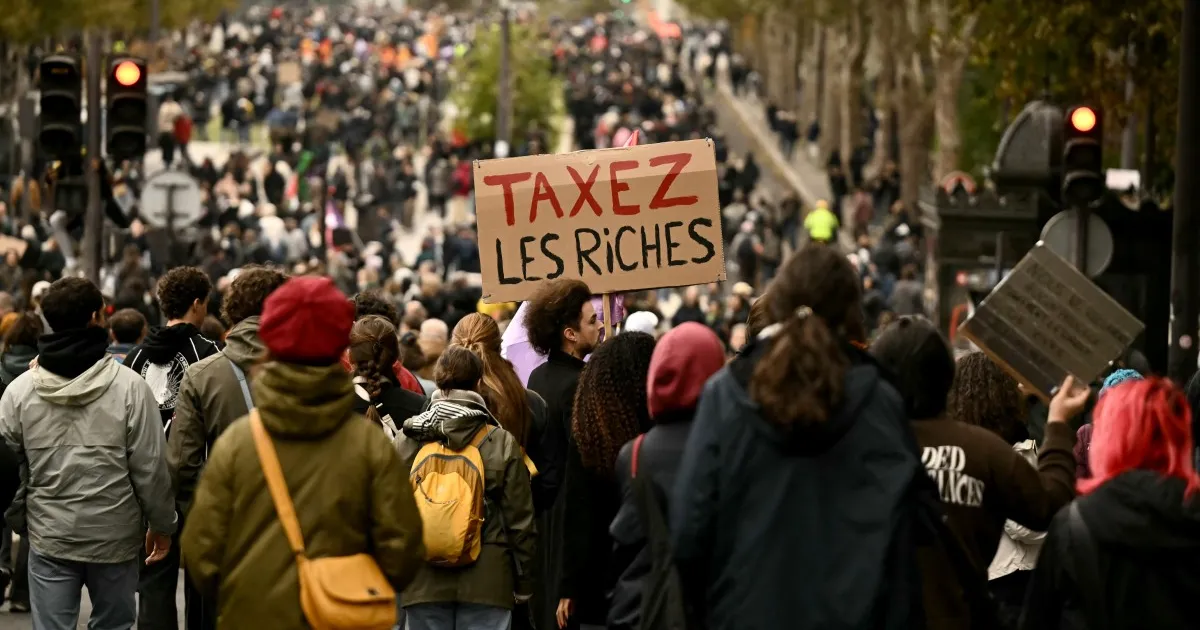
法国年轻人周末继续在全国范围内抗议,要求改善教育设施并争取光明未来,以应对国内不断上涨的生活成本。
Young people in France continued their nationwide protests over the weekend, demanding better education facilities and a promising future amid the rising cost of living in the country.
法国内政部表示,周六全国有41万人参加抗议,其中巴黎11万人,政府一直难以解决学生主导的抗议活动所提出的问题。
France’s Ministry of Interior said 410,000 people protested nationwide on Saturday, including 110,000 in Paris, as the government has struggled to address the issues raised by the student-led protests.
法国此前还因生活成本高昂和反对法国总统埃马纽埃尔·马克龙的经济政策,经历了从2018年开始持续近两年的抗议浪潮。那些由“黄背心”运动发起的抗议要求政府解决日益加剧的经济不平等、提高福利和公共服务水平、并向富人征税。
France was also roiled by nearly two years of protests beginning in 2018 over the high cost of living and opposition to French President Emmanuel Macron’s economic policies. Those protests, which were led by the Yellow Vests movement demanded that the government address the rising economic inequality, boost welfare and public services, and tax the rich.
随着年轻抗议者走上街头,许多旧有诉求依然未得到满足。那么,为什么法国政客无法解决国家面临的问题?以下是我们了解的情况:法国年轻人现在为什么抗议?
As the young protesters take to the streets, many of the old demands remain unfulfilled. So, why have French politicians been unable to address the issues facing the country? Here’s what we know: Why are young people in France protesting now?
法国青年主导的抗议活动于上个月爆发,缘于学校条件恶化、更广泛的经济焦虑以及对政府削减预算的反对。
The youth-led protests in France erupted last month amid deteriorating conditions in schools, broader economic anxieties and opposition to government budget cuts.
抗议始于9月中旬,当时高中生因教室拥挤(通常每间32至35名学生)、缺勤教师未获替补、以及校舍基础设施破旧而封锁校园。
The protests began in mid-September after high school students blockaded campuses over overcrowded classrooms (often 32–35 pupils per room), unreplaced teacher absences, and dilapidated building infrastructure.
抗议者挥舞着写有“我们要建设未来,而非忍受未来”等标语的标语牌,表达对公共资源和国家投资不断萎缩的不满。
Protesters have waved placards reading statements like “We have a future to build, not to endure”, as they expressed frustration with shrinking public resources and state investment.
教师也加入了学生抗议的行列,抗议薪资过低。根据经济合作与发展组织(OECD)发布的《2026年教育概览》报告,法国教师的平均薪资低于德国等其他欧洲国家的同行。
Teachers have also joined the students protesting over low salaries. French teachers are paid less on average than their counterparts in other European countries like Germany, according to the Organisation for Economic Co-operation and Development’s Education at a Glance 2026 report.
法国中小学教师的税前年薪为41,968欧元(约合46,900美元),而德国同行的这一数字为69,453欧元(约合77,700美元)。社会税收、高额养老金缴费以及不断上涨的生活成本吞噬了他们的月收入。
School teachers in France earn a gross salary of 41,968 euros ($46,900) per annum compared with 69,453 euros ($77,700) for their German counterparts. Social taxes, high pension contributions and the rising cost of living eat into their monthly income.
始于学校资源问题的局部罢工,随后牵涉进工会和公务员,抗议活动已演变为一场更广泛的经济与政治危机。
What started as a localised strike over school resources has since drawn in trade unions as well as civil servants, and the protests have evolved into a broader economic and political crisis.
这源于对政府拟议的540亿欧元(约合600亿美元)2027年预算削减开支与增税方案的不满,该方案包括冻结公务员薪资。
This is due to discontent over the government’s proposed 54-billion-euro ($60bn) package of cost-cutting and tax measures for the 2027 budget, which includes civil servant salary freezes.
在贫困率处于数十年高位、生活成本持续上涨的背景下,美国和以色列对伊朗的战争更加剧了这一局势,学生和青年担心承担公共开支削减的主要冲击。
Students and youth fear bearing the brunt of public spending reductions amid a multidecade high in poverty rates and rising costs of living, exacerbated by the United States-Israel war on Iran.
据《Le Media TV》记者、前法国国会议会助理阿明·努西介绍,由于政府资金流向他处,公立高中的状况十分严峻。
Currently, according to Amine Snoussi, a journalist for Le Media TV and a former parliamentary assistant at the French National Assembly, the condition of public high schools is dire since government money is being spent elsewhere.
“学生们在寒冷、肮脏的楼房里上课,其中一些甚至滋生老鼠。在一些学校,缺编教师超过六个月未得到补充。而这一切发生的同时,数以千计的教学岗位被削减,公共资金却持续流向私立学校。这就是引爆导火索的原因,”他对半岛电视台表示。政府如何回应?
“Students are studying in cold, dirty buildings, some of them infested with rats. In some schools, absent teachers haven’t been replaced for over six months. And all of this is happening while thousands of teaching jobs are being cut, and while public money keeps flowing to private schools. That’s what lit the fuse,” he told Al Jazeera. What has been the government’s response?
法国政府通过实施宵禁并在全国部署警察镇压抗议者,回应了这场大规模抗议。
The French government has responded to the mass protests by imposing curfews and deploying police across the country to crack down on protesters.
马克龙总统指责极左翼团体试图“推翻共和国”,并威胁要追究参与暴力者的责任。周五,这位法国领导人自抗议爆发以来首次会见了学生运动代表。
President Macron has blamed ultra-left groups for trying to “bring down the Republic” and threatened accountability for those involved in violence. On Friday, the French leader met representatives of the student movement for the first time since the protests began.
但会议未能缓和紧张局势,学生代表呼吁进一步动员,直至政府提出具体行动。
But the meeting failed to defuse tensions, with student representatives calling for further mobilisation until the government presents concrete actions.
周一,马克龙在访问马赛期间表示,他已“要求政府回应这场抗议运动根源处的合理诉求”。
On Monday, during a visit to Marseille, Macron said he has “asked the government to address the legitimate demands at the root of this protest movement”.
据法国媒体报道,政府预计还将宣布对法国全国在线大学招生平台“Parcoursup”进行调整。为什么法国政府难以回应抗议者的诉求?
The government is also expected to announce changes to Parcoursup, France’s national online university admissions platform, according to French media reports. Why is the French government struggling to address protesters’ demands?
分析人士称,由于严重的财政危机和计划中的预算削减导致该国教育预算下降,法国政府难以回应学生的诉求。
Analysts say the French government is struggling to address students’ demands due to a severe fiscal crisis and planned budget cuts, which have led to a drop in the country’s education budget.
据法国经济学家、世界不平等实验室联合主任吕卡·尚塞尔公布的数据,“法国高等教育、学生生活和科研的公共预算(相对于法国学生总数,扣除通胀因素后)自2017年以来下降了20%。”法国政府为预算削减进行了辩护。
According to data published by French economist and co-director of the World Inequality Lab Lucas Chancel, “The public budget for higher education, student life, and research (relative to the total number of students in France, once inflation is taken into account) has decreased by 20 percent since 2017.”The French government has defended the budget cuts.
10月7日,法国总理塞巴斯蒂安·勒科尔努在向全国发表的讲话中承认,“年轻人的愤怒并非凭空而来”,并承诺政府将在10月底前提出应对危机的计划。
In an address to the nation on October 7, French Prime Minister Sebastien Lecornu acknowledged that “the anger among young people didn’t come out of nowhere” and promised the government would present a plan to address the crisis by the end of October.
法国总理还要求其部长们核查开支,因为法国国家债务已膨胀至约3.6万亿欧元(约合4万亿美元),相当于该国国内生产总值(GDP)的119%。
The French prime minister has also asked his ministers to check spending as France’s national debt has ballooned to about 3.6 trillion euros ($4 trillion), which is equivalent to 119 percent of the country’s gross domestic product (GDP).
然而,比总债务更令市场担忧的是法国不断扩大的赤字,预计2026年将达到GDP的5.4%——远高于欧盟略高于3%的平均水平。这是政府支出超过其收入的金额。
Of greater concern to markets than the total debt is France’s growing deficit, however, which is expected to reach 5.4 percent of GDP in 2026 – far above the European Union average of just more than 3 percent. This is the amount by which a government’s spending exceeds its income.
但在一份报告中,法国经济学家、教授托马斯·皮凯蒂指出,虽然公共债务有所增加,但该国的私人财富也已从“GDP的300%增长至600%,且极度集中在最富有的金融财富手中”。
But in a report, French economist and professor Thomas Piketty noted that while public debt has increased, the country’s private wealth has also grown from “300 percent to 600 percent of GDP, with extreme concentration among the wealthiest financial fortunes”.
他补充道:“换句话说,法国从未如此富有。需要解决的问题仅仅是分配问题。”法国存在财富分配问题吗?
“In other words, France has never been richer. The problem to solve is simply one of distribution,” he added. Does France have a wealth distribution problem?
法国的收入不平等程度相对较低至中等,但财富再分配一直是一个有争议的议题,尤其是在左翼政治团体中。
France has relatively low to moderate income inequality, but wealth redistribution has been an issue of debate, particularly in left-wing political groups.
法国著名经济政策智库OFCE于2026年1月的一份评估显示,占人口四分之一的60岁及以上人群,拥有该国60%的财富(非金融和金融财富)。政府资金的很大一部分用于偿还社会保障开支。
People aged 60 and older, who form a quarter of the population, own 60 percent of the country’s wealth (non-financial and financial), a January 2026 review by prominent French economic policy think tank OFCE. A huge chunk of government funds go to service social security.
路透社本月早些时候看到的一份政府报告还指出,一些法国部委预算的近三分之一用于支付退休公务员的养老金,这挤占了教育和其他优先领域的支出。
A government report seen by the Reuters news agency earlier this month also noted that nearly one-third of some French ministries’ budgets pay for the pensions of retired civil servants, which reduces spending on education and other priorities.
斯努西告诉半岛电视台,财富分配问题一直是当前法国政治的核心。
Snoussi told Al Jazeera that the wealth distribution question has always been central to current French politics.
他说:“马克龙被称为‘富人的总统’是有原因的。他总是支持富人,从未能在阶级间创造出一种平等形式。”
“Macron is called the rich people’s president for a reason. He always supports rich people and has never managed to create a form of equality between classes,” he said.
马克龙因削减财富税而被贴上“富人总统”的标签。他也因旨在实现经济现代化和创造就业的经济政策而面临批评。他决定征收燃油税引发了2018年所谓的“黄马甲”抗议,这是一场寻求政府干预以解决不平等问题的草根运动。
Macron has been branded “the president of the rich” for cutting the wealth tax. He has also faced criticism for his economic policies aimed at modernising the economy and creating jobs. His decision to impose a fuel tax triggered the 2018 so-called Yellow Vests protests, a grassroots movement seeking government intervention to address inequality.
批评人士称,他的政策导致财富向上再分配,并影响了工薪阶层。但马克龙为其政策进行了辩护,特别是他在财富税上的决定,称迫使富人离开该国无助于帮助穷人。
Critics say his policies resulted in redistribution of wealth upward and affected the working-class population. But Macron has defended his policies, particularly his decision on wealth tax, saying that forcing the wealthy out of the country won’t help the poor.
“我不相信这种法国式的嫉妒心理,它认为‘有富人存在,那就向他们征税,我们大家就会过得更好’,”他在2017年接受《纽约时报》采访时表示。
“I don’t believe in this French jealousy which says, ‘There are rich people; let’s tax them and we will all feel better,’” he told The New York Times in a 2017 interview.
法国枫丹白露欧洲工商管理学院(INSEAD)经济学教授安东尼奥·法塔斯对半岛电视台表示:“法国的再分配体系比其他欧洲国家更强——至少也是相似的。”
Antonio Fatas, a professor of economics at INSEAD in Fontainebleau, France, told Al Jazeera: “France has a more redistributive system than other European countries – at least similar”.
他解释说,再分配是一套税收和转移支付项目,将收入从高收入者重新分配给低收入者。法塔斯表示,真正的问题更为深层。
He explained that redistribution is a set of programmes of taxes and transfers that redistribute income from high-income individuals towards lower-income individuals. The real issue, Fatas said, is deeper.
他说:“法国的增长多年来一直受限。在低增长的情况下,不难想象部分民众对所见到的进步感到不满,这导致了对政府支持或再分配形式的解决方案的诉求。”
“France’s growth has been limited for years. With low growth, it is not hard to imagine parts of the population that are unhappy with the progress they see, and this leads to demands for a solution in the form of government support or redistribution,” he said.
法国目前面临巨大的财政压力,其年度预算赤字预计将达国内生产总值(GDP)的5.4%,远高于欧盟3%的标准上限。该国仍严重依赖公共部门,国家支出约占其GDP总额的57%——其中包括高达14%专门用于工人养老金。
France is currently facing significant fiscal stress, with its annual budget deficit forecast at 5.4 percent of its GDP, well above the standard European Union ceiling of 3 percent. The country also remains heavily backed by its public sector, with state expenditures consuming roughly 57 percent of its total GDP – including a notable 14 percent allocated strictly towards worker pensions.
法塔斯补充道:“假设是外面有人足够富有,可以被征税。虽然我可以想象法国采用更累进的制度,但必须警惕这些看似解决方案的局限性。”那么政府该如何应对?
“The assumption is that someone out there is rich enough that they can be taxed. While I can imagine in a more progressive system in France, one has to be careful about the limitations of these apparent solutions,” Fatas added. So how should the government respond?
在为法国《世界报》撰写的观点专栏中,皮凯蒂写道,重新投资教育和医疗等领域应成为政府的优先事项。
In his opinion column for the French newspaper Le Monde, Piketty wrote that reinvesting in sectors like education and health should be the government’s priority.
他写道:“今天重新投资这些领域,不仅仅关乎地区间或社会阶层间的平等,”他强调,这种再投资将有助于经济以更少的资源创造更大的产出。斯努西持有相似观点。他说:“政府面临一个简单的选择:投资,或让位。”
“Reinvesting in these sectors today is not simply a matter of equality between regions or social classes,” he wrote, highlighting that such reinvestment would help an economy produce greater output by using fewer resources. Snoussi shared a similar view. “The government has a simple choice: invest, or step aside,” he said.
“但真正的问题是,马克龙究竟是否想要一条出路。还是说他希望局势恶化,好借助警力和司法镇压来粉碎这场运动?” 法塔斯教授指出,虽然法国民众希望政府做很多好事,但重要的是要确定哪个领域最需要资金优先投入。
“But the real question is whether Macron even wants a way out. Or is he hoping the situation gets worse, so he can crush the movement through police and judicial repression?”Fatas, the economics professor, noted that while there are a lot of good things people in France want the government to do, it is important to prioritise which sector requires funding.
“法国的政府支出在发达经济体中最高,因此几乎没有空间靠单纯增加开支来摆脱困境。
“The government spending [in France] is the largest among advanced economies, so there is little room to just spend the way out of this.
“法国在改革决策上陷入政治瘫痪,这就是他们比其他国家处境更艰难的原因,”他补充道。
“France faces a political paralysis when it comes to reform decisions, and this is the reason why they are in a more difficult situation than others,” he added.