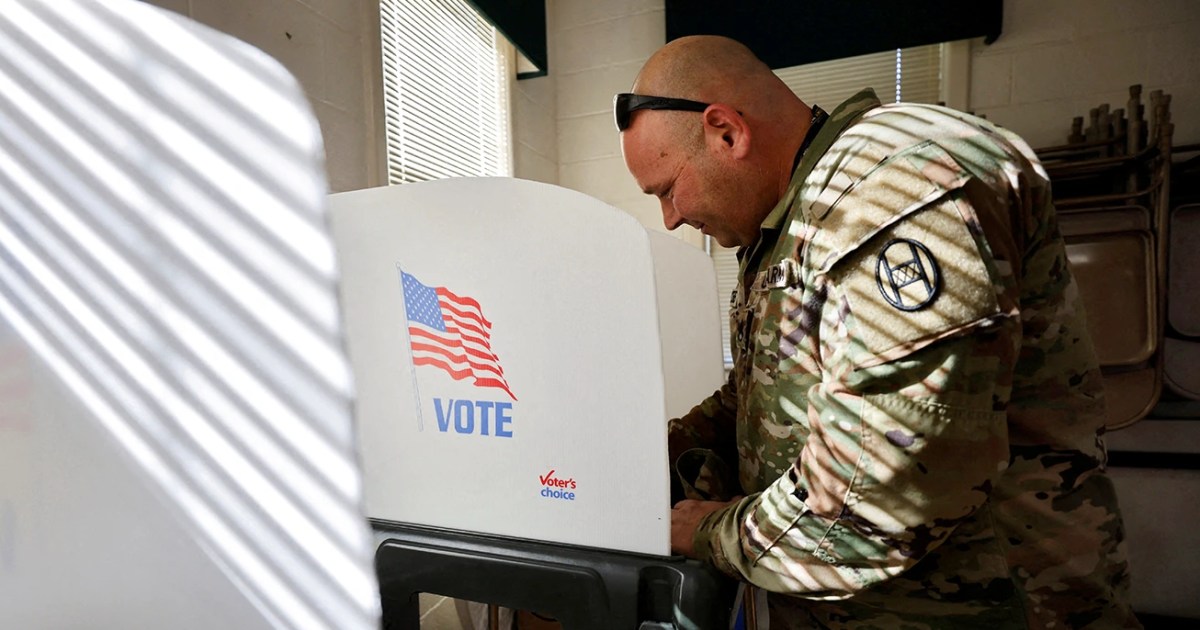
国防部长皮特·赫格塞斯一直在给部队放假一天去投票,但这些选票可能不会像赫格塞斯希望的那样对共和党有利。
Defense Secretary Pete Hegseth has been giving troops a day off to vote, but those votes may not help Republicans as much as Hegseth would like.
随着11月的中期选举临近,这位部长正在加大力度动员投票,敦促现役军人投出自己的一票。
The secretary is urging service members to cast their ballots as he ramps up efforts to turn out the vote ahead of November’s midterm elections.
但现役军人历史上极低的投票率,加上对与伊朗战争的不满,可能会浇冷赫格塞斯对军队投票倾向的期待——前提是军人真的去投票的话。
But historically low voter turnout among active-duty military members and frustrations over the war with Iran may put a damper on Hegseth’s hopes for how the military will vote —- if its members vote at all.
本月初,赫格塞斯下令所有指挥官实施为期一天的“停飞/停训”,给部队一天时间参加美国大选投票。
Earlier this month, Hegseth ordered a one-day “stand down” to all commanders to give their troops a day to vote in the U.S. elections.
“每一位战士都应有机会投出自己的一票,并确信这张票会被计算在内。让我们的国家继续做自由之地、勇敢者的家园,”赫格塞斯在X平台发布的一段视频中说。“去登记,去投票。”赫格塞斯在敦促部队投票时,并未指示他们投给谁。
“Every warrior deserves an opportunity to cast his or her ballot and be confident that it will be counted. Keep our nation the land of the free and the home of the brave,” Hegseth said in a video on X. “Get registered and vote.”Hegseth did not direct troops how to vote as he urged them to cast their ballots.
军人选民长期以来被视为高度倾向共和党的选民群体,但考虑到实际投票的现役军人寥寥无几,情况未必如此。
Military voters have largely been characterized as a constituency highly favorable to Republicans, but that isn’t necessarily the case, given how few service members actually cast ballots.
“如果他认为这只是让士兵去投票,而且他对他们可能怎么投没有什么想法,他会这么做吗?”陆军老兵、哥伦比亚大学国际与公共事务教授杰森·登普西问道,他专攻军队人口统计和文官与军队关系。“他只是一个不尊重正常程序和军队独立性的人,”登普西说。
“Would he [Hegseth] do this if he thought that it was just about soldiers getting to vote and if he didn’t have some idea of which way they might go?” asked Jason Dempsey, an Army veteran and professor of International and Public Affairs at Columbia University who specializes in military demographics and civil-military relations. “He’s just not somebody who respects the normal processes and the independence of the military,” Dempsey said.
考虑到低投票率和微弱的胜败差距,对共和党的支持率可能比赫格塞斯希望的要低。
Support for Republicans might be lower than Hegseth hopes when low turnout combined with slim margins are taken into consideration.
“军队的关键在于,他们来自美国公众,因此他们带有与同胞相同的政治倾向和偏好,”登普西说。
“The key with the military is always, they come from the American public and so they bring the predispositions and proclivities towards politics that their fellow citizens do,” said Dempsey.
邓普西表示,种族和性别等人口统计学特征比军人身份更有可能影响军人的投票倾向,但他指出,高级军官在历史上倾向于投票给共和党。军队中近20%是黑人,远高于美国普通人口的比例,邓普西指出,这些军人过去更有可能投票给民主党。
Dempsey says that demographics like race and gender are much more likely to influence a servicemember’s vote more than the fact that they are in the military, but he notes that senior officers have historically leaned toward voting Republican. Almost 20% of the military is Black, much higher than the American general population, and Dempsey notes that these servicemembers have been more likely to vote Democratic in the past.
今年11月的选举正值军人对海格塞斯和特朗普的领导层及指令提出越来越多担忧之际,其中包括五角大楼内部基督教民族主义的抬头、特朗普在全美各大城市使用国民警卫队以及军事行动中可能存在的非法命令。
This November’s elections come as service members are also raising a growing list of concerns about Hegseth’s and Trump’s leadership and directives, including the rise of Christian nationalism within the Pentagon, Trump’s use of the National Guard in cities across the U.S. and possibly illegal orders in military campaigns.
随着特朗普和海格塞斯继续向中东派遣创纪录部署的部队,该届政府的政策可能会成为那些本来可能会放弃投票的军人的投票动力。
And as Trump and Hegseth continue to send troops to the Middle East on record-breaking deployments, the administration’s policies could become a motivating force for troops who might otherwise sit out the election.
“他们想要服从领导,他们想要听从指挥,他们是国防的坚定信仰者,也会服从部署,但他们只是不相信领导们知道自己在做什么,”《士兵投票》(该书记录了美国军人在服役远离家乡时如何获得投票权的历史)一书的作者、退役海军上校唐纳德·因博迪(Donald Inbody)说。
“They want to follow leaders, and they want to do what they’re told, and they’re strong believers in defense and will go on deployments, but they just don’t believe that the leaders know what they’re doing,” said retired Navy Capt. Donald Inbody, author of “The Soldier Vote,” a history of how American service members gained the right to vote while serving away from home.
今年3月,“蓝色之星家庭”组织联系了大约200个军人家庭,发现81%的人报告中东冲突带来了不断加剧的压力,其中43%的人报告承受了“极大的压力”,这主要是由安全担忧、部署变动以及对局势升级的恐惧所驱动的。
In March, the organization Blue Star Families reached out to about 200 military families and found that 81% reported elevated stress from the Middle East conflict, with 43% reporting “a great deal of stress,” driven by safety concerns, deployment changes and fear of escalation.
海格塞斯的整顿日(stand-down day)是应对一个长期挑战的另一种方式:促使军队参与投票。
Hegseth’s stand-down day is another way to address a persistent challenge: getting troops to vote.
长期以来,该国130万现役军人的投票率一直低于平民。根据联邦投票协助计划发布的一份报告,在2024年大选中,43%的现役军人投了票。相比之下,根据美国人口普查局的数据,2024年所有美国公民的投票率为65%。此外,军旅生活使年轻人的投票率问题更加复杂。
The nation’s 1.3 million active-duty military members have historically turned out to vote in lower numbers than civilians. Forty-three percent of active-duty service members cast a ballot in the 2024 general election, according to a report published by the Federal Voting Assistance Program. That’s compared with the 65% of all U.S. citizens who voted in 2024, according to the U.S. Census Bureau. Plus, military service compounds a youth turnout problem.
根据国防卫生局的数据,在大约132万现役军人中,36.8%的人年龄在25岁以下,60.3%的人在30岁以下,76.7%人在35岁以下。部队的基础是年轻选民,而这一人口群体的投票率本来就很低。
Of about 1.32 million active-component members, 36.8% were under age 25, 60.3% were under 30, and 76.7% were under 35, according to Defense Health Agency data. Troops start from the baseline of young voters, a demographic with already low turnout.
随后,投缺席选票的后勤挑战将投票率拉低至仅凭年龄所能预测的水平以下。
The logistical challenges of casting an absentee ballot then push participation below what age alone would predict.
专家表示,海格塞斯的停职指令的时机使得军人几乎没有时间获取、填写并寄回选票,以确保其被计入。
Experts say the timing of Hegseth’s stand-down directive leaves little time for service members to obtain, fill out and return their ballot in time for it to be counted.
英博迪表示,军人需要提前计划才能让他们的选票被计入。那些直到10月停职期间才索取选票的军人面临着紧张的邮寄往返时间。
Inbody said that service members needed to plan in advance to have their vote counted. Service members who didn’t request a ballot until the October stand-down face a tight round-trip by mail.
英博迪称,时任总统巴拉克·奥巴马于2009年签署成为法律的《军人及海外选民赋权法案》要求各州在9月19日之前——即11月3日选举日前45天——向军人和海外选民发送所申请的选票。
The Military and Overseas Voter Empowerment (MOVE) Act, which was signed into law by President Barack Obama in 2009, requires states to send requested ballots for military and overseas voters by Sept. 19 — which was 45 days before the Nov. 3 election, Inbody said.
英博迪说:“你基本上必须提前做很长时间的规划,不仅要收到选票,还要及时将其寄回。”
“You basically have to plan really far in advance to not only receive the ballot, but then also mail it in time to get it back,” Inbody said.
“缺席选票可能在一周内送到他们手中。然后他们需要填写选票并将其寄回,同时假设寄回可能需要两周时间。因此,在45天里,你已经用掉了三周。”
“The absentee ballot will probably get to them within a week. Then they need to fill the ballot out and get it back, and assume that maybe it takes two weeks for it to get back. So there, you’ve eaten up three weeks of your 45 days.”