始终在线的AI个人助理——即使你没有要求它做事,它也会在后台持续工作——是今年人们对“人们究竟会如何使用深度学习模型”这一问题的答案。初创公司Instinct一夜之间引发轰动,Meta也全力为其助理Muse投入营销资源。
The always-on AI personal assistant, which keeps working in the background even when you aren’t asking it to, is this year’s answer to the question of how people will actually use deep learning models. The startup Instinct became an overnight sensation, and Meta put the full force of its marketing behind its assistant, Muse.
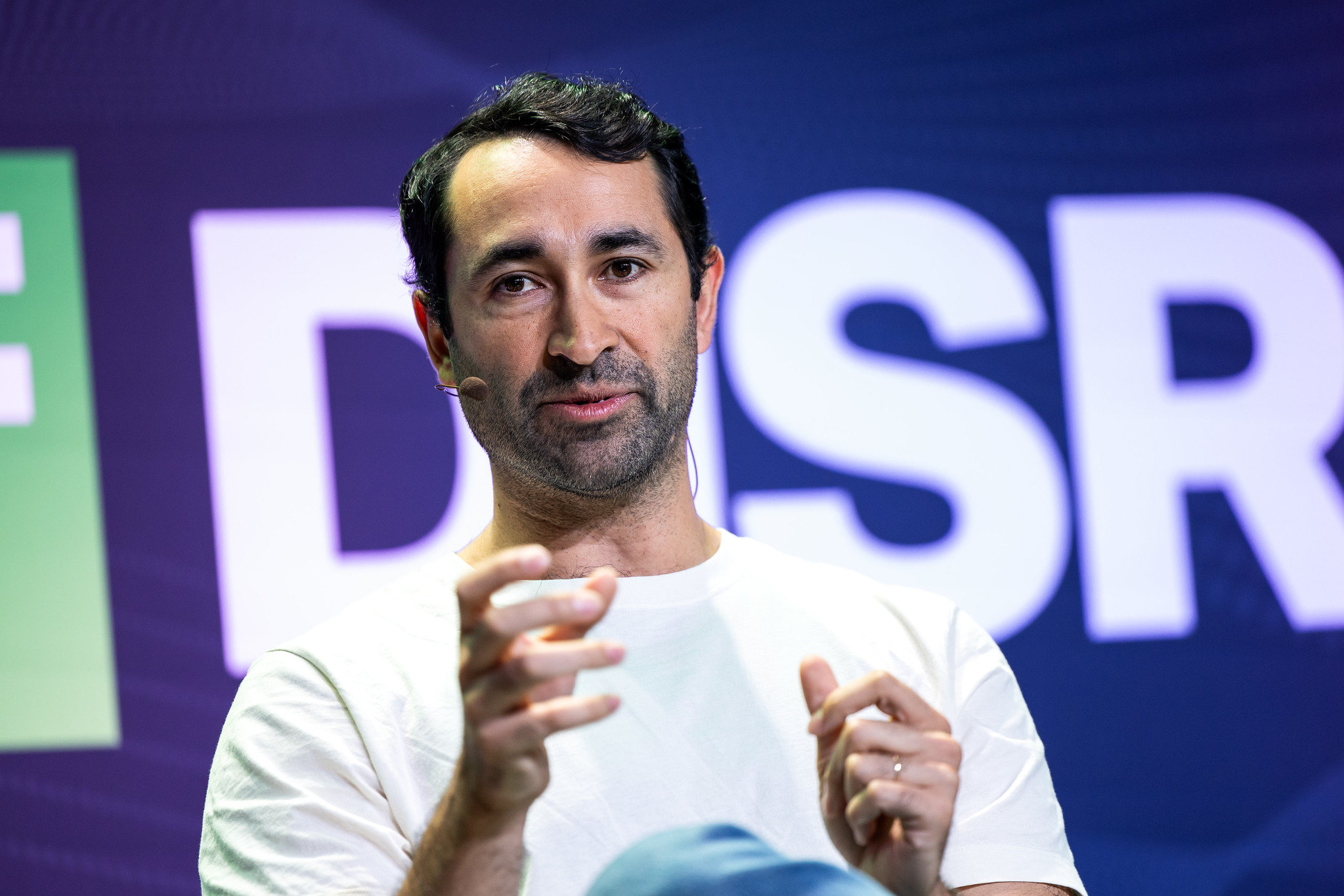
OpenAI也不甘落后。该公司在9月下旬的开发者日上发布了其助理产品dots。领导OpenAI企业产品团队的亚历山大·恩比里科斯本月做客TechCrunch Disrupt,讲述了这款产品的由来——首先从这样一个问题谈起:为什么似乎有这么多公司都在把可爱的吉祥物当作其万亿参数矩阵乘法机器的头像。
OpenAI wasn’t going to be left out. The company released dots, its assistant offering, at its developer day in late September. Alexander Embiricos, who leads OpenAI’s enterprise product team, joined us at TechCrunch Disrupt this month to explain where the product came from—starting with the question of why so many companies seem to be turning to cutesy mascots as avatars for their trillion-parameter matrix multiplication machines.
“某种趋同演化正在发生,”恩比里科斯在谈到打造AI助理的努力时说。“我们在做这个产品时意识到,如果我们能把它框定为:它是一个实体,而且是一段单一的对话,而不是许多不同的对话……它就开始变得直观了。”该助理在ChatGPT桌面端和移动应用中向Pro级及以上订阅用户提供,套餐起价为每月100美元。一旦它连接到你的日历、电子邮件、电脑和其他工具,这个智能体就会尝试帮你完成工作。
“There’s kind of this convergent evolution happening,” Embiricos said of the efforts to build AI assistants. “As we were working on the product, we realized if we could frame this as, it’s an entity and it’s a single conversation, not many different conversations….it starts to become intuitive.”The assistant is available in the ChatGPT desktop and mobile apps to subscribers on the Pro tier or higher, with plans starting at $100 a month. Once it is connected to your calendar, email, computer and other tools, the agent tries to help you get your work done.
恩比里科斯指出,用OpenAI今年年初发布的编程工具Codex应用,你可以实现dots的大部分功能。但那需要更多的工作和手把手引导。他回忆说,当他的妻子开始让电脑整夜开着,以便她的智能体能够继续工作时,他曾为此庆祝。
Embiricos points out that you could achieve much of dots’ functionality with Open AI’s Codex app, its coding tool, released at the beginning of this year. But that requires more work and hand-holding. He recalled celebrating when his wife started leaving her computer on all night so that her agents could keep working.
“在产品团队,我思考的是:如何让这款产品对用户来说既直观又实用?”他在 Disrupt 大会上对与会者表示。“其中很大一部分工作,不是把某项新技术塞进产品里;而是你如何向用户呈现它,以及它给人的使用感受。”让技术给人直观之感,意味着将公司模型的功能重新打包,变成更易上手的东西——这条路线在公司把面向软件工程师的智能体编码工具衍生出 ChatGPT Work 时就已经确立了。
“On the product team, what I think about is, how do we make this intuitive and useful to people?” he told Disrupt attendees. “A lot of that isn’t building some new piece of tech into the product; it’s how you frame it to the user and how it feels.”Making the technology feel intuitive meant repackaging the functionality of the company’s models into something more accessible, a path it was already on as it spun ChatGPT Work out of the agentic coding tools it had built for software engineers.
甚至连名字——利用 OpenAI 标志内部的负空间设计——也是为了“让人感觉这只是某种最终可能无处不在的东西”。(当被问及何时得知竞争对手、AI 企业家埃隆·马斯克拥有该域名 URL 时,Embiricos 说:“我是在很晚才知道的。”)持久化智能体的理念在于它不需要提示词。对 OpenAI 而言,这意味着更多的 Token 使用量;对用户而言,则是一个更主动的助手,“它有点像在为你思考、思考如何帮助你”,Embiricos 这样形容。
Even the name—a play on the negative space inside of OpenAI’s logo—is intended “to feel like just something that could eventually be ubiquitous.” (Asked when he learned that rival AI entrepreneur Elon Musk owns the dom URL, Embiricos said, “I found out very late.”) The idea of a persistent agent is that it doesn’t need prompting. For OpenAI, means more token usage, and for users, a more pro-active assistant “that’s sort of thinking about you and thinking how to help you,” as Embiricos put it.
在我们的测试中,该助手的前瞻思考能力显而易见且常有实用价值,但尚未完全成熟。它会标记日历冲突和即将到来的截止日期,但不一定能以最及时的方式做到这一点。
In our testing, the assistant’s ability to think ahead is apparent and often useful, but it isn’t quite there yet. It will flag calendar conflicts and upcoming deadlines, but not necessarily in the most timely fashion.
“它第一次告诉我其中一次[冲突]——那是在开发早期——它在那件事发生前三分钟就告诉了我。”恩比里科斯这样评价他的dots。“它就像在说,‘嘿,这件事就要发生了。你或许该采取点措施。’可我只剩三分钟!”
“The first time it told me about one of those [conflicts]—this is like early in development—it told me three minutes before the thing,” Embiricos says of his dot. “It’s like, ‘Hey, this thing is coming up. You might want to do something about it.’ I only have three minutes!”
恩比里科斯预计预警时间会随着时间推移而改善,但主动式方法才是产品的关键。“我听说一家无人机配送初创公司的一位工程师说,‘我们遇到了宕机,等我注意到宕机正在发生的时候,我的dots已经注意到宕机正在发生,分析了宕机,并带着关于如何解决宕机的有用信息来找我。’”与大多数AI智能体用例一样,这里存在一个矛盾:AI模型需要个人信息才能产生效用,而你向软件公司暴露的个人数据究竟有多少。
Embiricos expects the timing to improve over time, but the proactive approach is key to the product. “I was hearing about an engineer at a drone delivery startup, and they were saying, ‘We had this outage, and by the time I noticed that the outage was going on, my dot had already noticed the outage was happening, had already analyzed the outage, and had come to me with useful information for how we could resolve the outage.'”As with most AI agent use cases, there’s a tension between the personal information an AI model needs to be useful and exactly how much personal data you are exposing to a software company.
Muse因建立你、你的家人和朋友的用户画像而受到批评,该软件利用这些画像来了解,比如说,你可能想和某个特定的朋友去什么样的餐厅,但这些画像也可能为Meta的广告业务带来巨大的价值。dots会收集类似的数据吗?
Muse has been criticized for the profiles it builds of your family and friends, which the software uses to know, say, what kind of restaurant you might want to go to with a specific pal, but could also add incredible value to Meta’s advertising business. Does dots collect similar data?
“是的,我们在dots中内置了一个功能,我们称之为‘主动研究’,”恩比里科斯说。“按一定频率,它会思考它所知道的关于你的一切、你们进行过的对话,以及你授权它访问以进行思考的内容,然后它会去研究,‘我能做些什么来更好地帮助你?’然后,基本上,它会提出这个建议。”很难将智能体的数据需求与其母公司的数据需求分开。Hark是一家开发自有AI个人助理的初创公司,它明确指出,自己不会像OpenAI和Meta那样收集数据来为广告业务提供动力。
“Yes, we have a thing that we built into dots, which we call proactive research,” Embiricos said. “On a cadence, it will think about what it knows about you, what is the conversation that it’s had, and then what have you given it access to that it can think about, and then it will go and research, ‘What could I do to be more helpful to you?’ And then, basically, it will propose that.”It’s difficult to separate the data needs of the agent from that of its parent corporation. Hark, a start-up developing its own AI personal assistant, is explicit in pointing out it that it doesn’t collect data to fuel an advertising business the way that OpenAI and Meta do.
OpenAI表示,该代理拥有与ChatGPT本身相同的隐私控制:用户可以关闭模型训练(阻止OpenAI使用其对话来改进AI),并控制它在你的电脑内访问哪些资源以及如何访问。不过,这些控制并不精细,而且该应用可能会很强硬。例如,它拒绝接受对云盘的只读访问权限。
With dots, OpenAI says that the agent has the same privacy controls as ChatGPT itself: Users can turn off model training (stopping OpenAI from using their conversations to improve its AI), and control what resources it accesses within your computer and how. Still, those controls aren’t granular and the app can be pushy. For example, it refuses to accept read-only access to cloud drives.
“我认为我们需要做的,基本上是构建超级、超级、超级精细的控制,”恩比里科斯说,但他同时指出,模型的智能和判断力是这件事的另一面。
“What I think we need to do is basically build out super, super, super granular controls,” Embiricos said, but he pointed to the model’s intelligence and discretion as the other side of this coin.
“这其实是我们在发布时受到一些批评的地方,”恩比里科斯说。“我们对代理会做什么设置了非常保守的默认值,它会频繁请求许可。我记得当时就知道我们会看到那样的反馈,但我想,‘这没关系,我们可以随着时间调整。’”关于AI代理的另一个大问题是它们能否规模化。当只有少数人拥有它们时,它们很有趣,代理抢到难以获得的预订的故事比比皆是。
“This is actually something we kind of got some flack about when we launched,” Embiricos said. “We had really conservative defaults over what the agent would do, and it would ask for permission a lot. I remember knowing that we were going to see that feedback, but thinking, ‘This is okay, we can tune that over time.'”The other big question about AI agents is whether they can scale. They’re fun when only a few people have them, and stories of agents snagging hard-to-get reservations abound.
但企业不一定喜欢与代理打交道,也可能不具备这样做的条件。人们当然也不喜欢与它们打交道(注意:别再让你的AI代理来向我推销),恩比里科斯就是其中之一。他说,他还雇了一名人类助理,因为OpenAI的企业合作伙伴希望与人互动,并补充说:“我个人从不打算与别人的代理开会。”如果AI行业是对的,代理是我们的未来,那么我们能否在不压垮当今世界所依赖的基础设施——从企业和网站到支付网络——的情况下实现这一目标?
But businesses don’t necessarily like dealing with agents and might not be equipped to. People certainly don’t like dealing with them (note: stop having your AI agents pitch me), and Embiricos is among those people. He also has a human assistant because OpenAI’s corporate partners want to interact with a person, he said, adding, “I personally never intend to have a meeting with someone else’s agent.”If the AI industry is right that agents are our future, can we get there without overwhelming the infrastructure that our world currently runs on, from businesses and websites to payment networks?
“在OpenAI……在推出智能体与外部世界交互的下一项能力方面,我们并不总是行动最快的,”他说。“当我们推出时,我们会与生态系统的其他部分密切合作。我在这里可能不能说得太多,但我们正在与多家支付处理商进行大量深入洽谈。”通过与支付公司合作让AI助手花钱,对OpenAI来说可能是一个利润丰厚的首创之举,但对消费者来说也是一个很高的要求。让助手访问我的电子邮箱收件箱已经让人觉得要求很高,但我的银行账户是禁区。至少目前如此。
“At OpenAI…we’re not always moving the fastest in terms of shipping the next ability for the agent to work with the world,” he said. “When we do, we’re doing it really closely in collaboration with the rest of the ecosystem. I probably can’t say too much here, but we’re deep in lots of conversations with payment processors.”Letting an AI assistant spend money through partnerships with payment companies would be a potentially lucrative first for OpenAI, but also a big ask for consumers. Giving an assistant access to my email inbox already feels like a big ask, but my bank account is off limits. For now.