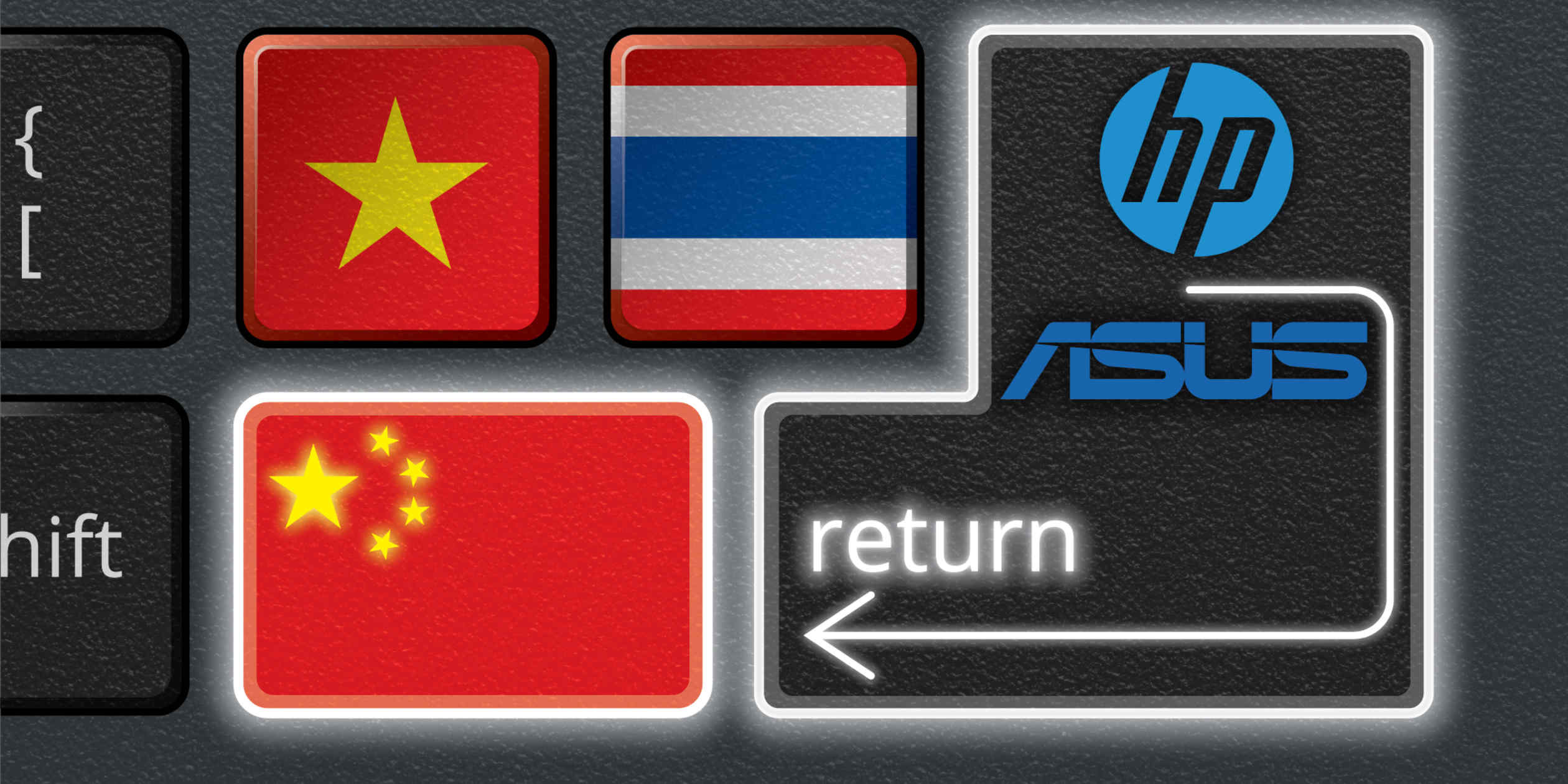
台北讯 —— 包括美国惠普、台湾华硕和宏碁在内的主要个人电脑制造商,正通过将部分生产从泰国和越南转回中国,并启用新一代代工厂商,来应对零部件成本飙升的问题。
TAIPEI -- Leading PC makers, including HP of the U.S. and Asus and Acer of Taiwan, are combating soaring component costs by shifting some production from Thailand and Vietnam back to China and using a new generation of contract manufacturers.
多位消息人士向《日经亚洲》透露,随着材料清单成本上涨,且人工智能需求导致内存和存储器出现严重短缺,PC制造商正寻求更高的制造效率。中国仍是生产电脑的最佳选择,拥有经验丰富的劳动力、更低的价格,以及完整的供应链生态系统,能够全面获取零部件。
Multiple sources told Nikkei Asia that the PC makers are seeking greater manufacturing efficiency as their bill of materials rises, with demand from artificial intelligence causing acute memory and storage shortages. China remains the best option for making computers, with its experienced workforce, lower prices and a complete supply chain ecosystem that can offer full access to components.
据消息人士称,这些PC制造商正转向知名度较低的中国承包商,因为它们的大型竞争对手越来越多地被利润更高的AI数据中心服务器订单占据产能。排名第三的美国戴尔,在联想和惠普之后,据称也在评估类似的举措。
The PC makers are turning to lesser-known Chinese contractors whose larger rivals have become increasingly occupied with higher-margin orders for AI data center servers. Dell of the U.S., the third-largest PC maker behind Lenovo and HP, is also evaluating a similar move, according to the sources.
“这一举措确实是由成本压力驱动的,”一位芯片行业高管表示,其公司向所有主要PC制造商供货。“不仅是存储芯片,其他组件的价格也大幅上涨,PC制造商发现越来越难以消化这些涨幅。他们将部分生产转回中国,并与更多中国代工厂合作,主要是因为后者能提供极具竞争力的价格。”
"The move is really driven by cost pressures," said a chip industry executive whose company supplies all major PC makers. "Prices for not only memory chips but also other components have risen so sharply that PC makers are finding it increasingly difficult to absorb the hikes. They are shifting some production back to China and working with more Chinese contract manufacturers mainly because they can offer highly competitive pricing."
“如果成本环境不改善,他们可能会将更多生产转回中国。”这一转变标志着全球科技供应链“中国+1”多元化战略目前出现了部分逆转,该战略曾因美中紧张关系导致贸易限制,将部分生产从中国转移至东南亚其他国家。据《日经亚洲》2023年首次报道,戴尔曾是最早要求供应商避免使用中国制造组件、并积极将生产转移至越南的PC制造商之一。惠普随后跟进,设定了将多达70%的生产移出中国的目标。如今,对AI基础设施的爆发式需求正在重塑行业的优先事项。
"They could move even more production back to China if the cost environment does not improve." The shift marks a partial reversal for now of the global tech supply chain's "China+1" diversification strategy, which moved some production from China to other Southeast Asian countries as U.S.-China tensions led to trade restrictions. Dell had been among the first PC makers to ask suppliers to avoid China-made components and aggressively shift production to Vietnam, as Nikkei Asia first reported in 2023. HP followed suit, setting a target of moving up to 70% of its production outside China. Now, explosive demand for AI infrastructure is reshaping the industry's priorities.
惠普、戴尔和华硕未回应《日经亚洲》就其计划置评的请求。宏碁发言人表示:“我们动态调整供应链运营,以增强韧性并保持竞争力。与多家制造商和供应商合作、保持动态的策略多年来始终一致。”
HP, Dell and Asus did not respond to Nikkei Asia requests for comment on their plans. A spokesperson for Acer said: "We dynamically adapt our supply chain operations to strengthen resilience and maintain competitiveness. Our strategy to work with multiple manufacturers and suppliers, and to stay dynamic, has been consistent over the years."
全球PC代工行业数十年来一直由台湾的广达电脑、仁宝电子、英业达和富士康主导,它们是英伟达、苹果、惠普和戴尔的关键供应商。但随着这些企业转向利润和增长机会更大的AI数据中心服务器,中国新兴代工厂商如立讯精密、华勤技术和龙旗科技已介入填补空白。华勤和立讯精密已是关键的智能手机代工组装商,也正涉足为中国国内需求制造服务器。
The global PC contract manufacturing industry has for decades been dominated by Taiwan's Quanta Computer, Compal Electronics, Inventec and Foxconn, key suppliers to Nvidia, Apple, HP and Dell. But as they have shifted to AI data center servers that provide greater revenue and growth opportunities, emerging Chinese contract manufacturers such as Luxshare, Huaqin Technology and Longcheer Technology have stepped in. Huaqin and Luxshare, already key contract smartphone assemblers, are also venturing into building servers for domestic Chinese needs.
据三位知情人士透露,作为关键iPhone组装商的立讯精密已成立立讯联合——与六合集团合资的PC设计与制造合资企业——并在过去一年赢得了惠普、戴尔和华硕的订单。
Luxshare, a key iPhone assembler, has established LuxPC Union -- a PC design and manufacturing joint venture with Sixunited Group -- and has won orders from HP, Dell and Asus over the past year, according to three sources familiar with the matter.
一位直接了解立讯联合情况的高管表示:“立讯联合成立约两年前,但过去一年业务大幅好转,许多新订单来自希望从东南亚回流中国制造的全球领先PC企业。”
"LuxPC was formed some two years ago, but in the past year, business turned very good with many new orders coming from leading global PC companies that wish to return to China from Southeast Asia for manufacturing," an executive with direct knowledge of LuxPC said.
除了高效的流程和训练有素的劳动力,中国代工厂商还能获取国产内存芯片,而此时PC制造商在全球芯片短缺的背景下,议价能力下降,难以获得足够芯片。
In addition to efficient processes and a well-trained workforce, Chinese contract manufacturers can access domestically made memory chips at a time when PC makers are losing bargaining power to secure enough chips amid a global shortage.
“这些中国代工厂一直在告诉潜在客户和电脑制造商,与它们合作可能是获得中国产存储芯片更好渠道的一个不错选择,”电脑产业链的一位供应链经理对《日经亚洲》表示。“它们正在将自己推销为一个良好的替代选择,甚至可以帮助理顺供应链。”两位直接知情人士透露,华勤、龙旗等新兴企业的代表今年更频繁地拜访惠普、华硕、宏碁等主要PC制造商,因为它们的大型竞争对手正日益忙于完成AI数据中心服务器的订单。
"These Chinese contract manufacturers have been telling potential clients and computer makers that working with them could be a good option for securing better access to Chinese-made memory chips," a supply chain manager in the computer ecosystem told Nikkei Asia. "They are marketing themselves as a good alternative to even help sort out the supply chain." Representatives of emerging companies such as Huaqin and Longcheer have been targeting major PC makers, including HP, Asus and Acer, with more frequent visits this year, as their larger rivals are increasingly busy fulfilling orders for AI data center servers, two people with direct knowledge said.
一台惠普笔记本电脑(最右侧)在台北2026年Computex展会上展出。这家美国PC制造商正将部分生产从越南和泰国迁回中国。
An HP laptop, far right, is seen on display at the 2026 Computex show in Taipei. The U.S. PC maker is moving some production back to China from Vietnam and Thailand.
“对于这些中国厂商中的许多来说,它们更先进的竞争对手大多转向AI服务器,这正为它们创造成长的黄金机遇,”一家向惠普、戴尔、华硕和联想供货的供应商高管对《日经亚洲》表示。“它们派遣代表吸引更多国际知名PC制造商合作,提供更低价格,因为它们知道所有这些厂商目前都在为各类零部件的涨价而苦恼。”
"For many of these Chinese players, the fact that most of their more advanced rivals are turning to AI servers is creating golden opportunities for them to grow," an executive from a supplier to HP, Dell, Asus and Lenovo told Nikkei Asia. "They are sending representatives to attract more internationally renowned PC makers to work with them, offering lower prices as they know all these players are now struggling with price hikes of various components."
中国长期以来一直寻求通过进军高端电子产品来升级制造业。该国已拥有强大的智能手机生态系统,拥有小米、OPPO、vivo、华为和传音等多个有竞争力的品牌,占据全球手机市场近60%的份额。在PC行业,中国的影响力较小,尽管其最大玩家联想在第三季度出货量占全球PC四分之一,据研究机构Omdia数据。非中国公司,包括惠普、戴尔、苹果、华硕、三星电子和宏碁,主导着其余市场。
China has long sought to upgrade its manufacturing industry by moving into higher-end electronics. The country already boasts a powerful smartphone ecosystem, accounting for nearly 60% of the global handset market with multiple competitive brands, such as Xiaomi, Oppo, Vivo, Huawei and Transsion. It has a smaller presence in the PC industry, although its largest player, Lenovo, shipped one in four of the world's PCs in the third quarter, according to research firm Omdia. Non-Chinese companies, including HP, Dell, Apple, Asus, Samsung Electronics and Acer dominate the rest of the market.
“仅 DRAM [内存芯片] 价格一年内就飙升了至少八倍……更别提 CPU [中央处理器]、印制电路板和无源元件的成本也都在攀升,”一家游戏 PC 厂商的高管表示。“既然 PC 关税问题被暂停了,我们当然又把目光转向了中国制造,”他补充道,指的是去年 PC 和笔记本电脑获豁免、免征美国的高额关税。
"Prices of DRAM [memory chips] alone soared at least eight times higher in a year ... Not to mention costs of CPUs [central processing units], printed circuit boards and passive components are all climbing," said an executive with a gaming PC maker. "Since the tariff issues on PCs are being suspended, of course we are turning our eyes to make-in-China again," he added, referring to the exemption of PCs and laptops last year from steep U.S. tariffs.
据 Omdia 数据,全球 PC 出货量在 7 至 9 月季度同比暴跌 21%,该机构预测第四季度将再跌 24%,因零部件供应紧张持续。
Global PC shipments plunged 21% year on year in the July-to-September quarter, according to Omdia, which forecast a 24% drop for the fourth quarter as the squeeze on components persists.
Omdia 报告称,定义为售价 500 美元至 699 美元的主流 PC,其物料清单 (BOM) 成本在 2025 年第一季度为 435 美元,但到 2026 年第三季度飙升至 699 美元,推高了售价。售价低于 500 美元的入门机型零部件成本在同期从 275 美元激增至 471 美元。
The bill of materials for mainstream PCs defined as costing from $500 to $699 in the first quarter of 2025 was $435 at that time, but soared to $699 in the third quarter of 2026, Omdia reported, pushing up selling prices. Parts for entry models costing less than $500 surged from $275 to $471 over the same periods.
Counterpoint Research 预测第四季度出货量将下跌 27%,并认为 2027 年市场将大体持平。“AI PC、高端显示器和差异化产品将创造机会,但赢家将是那些能将创新与有竞争力的定价、供应链管控以及对消费者和企业极具吸引力的价值相结合的厂商,”高级分析师 Minsoo Kang 表示。
Counterpoint Research predicts a 27% drop in shipments in the fourth quarter and sees the market being broadly flat in 2027. "AI PCs, premium displays and differentiated products will create opportunities, but the winners will be those that combine innovation with competitive pricing, supply-chain discipline and compelling value for consumers and businesses," said senior analyst Minsoo Kang.
台湾的宏碁已将更多采购职责交给其中国大陆代工厂,让它们采购包括处理器和内存芯片在内的零部件,作为一种“轻度介入”措施以减轻内部采购负担。
Taiwan's Acer has handed more procurement responsibilities to its Chinese contract manufacturers to source components, including processors and memory chips, as a "light touch" measure to ease in-house procurement burdens.
一家为宏碁、惠普、戴尔等供货的芯片开发商高管表示:“在某些情况下,中国电子制造商现在在不同 PC 型号使用哪些芯片上,拥有比宏碁等较小 PC 厂商更多的话语权和控制权。”
"In some cases, Chinese electronics manufacturers now have more say and control over which chips they are using in different PC models than those smaller PC makers such as Acer," said one executive at a chip developer supplying Acer, HP, Dell and others.
“惠普、戴尔、联想、华硕也纷纷效仿,启动了类似的中低端PC项目,让中国代工厂承担更多零部件采购责任,”另一位PC公司高管表示。“通过与它们分担这类关键责任,有助于中国代工厂的崛起,尤其是那些传统的中国二线供应商,如纬创资通和长城。”
"HP, Dell, Lenovo, Asus also followed suit and opened similar mid-to-entry level PC projects to let Chinese contract manufacturers shoulder more component procurement responsibilities," said another executive with a PC company. "By sharing this kind of critical responsibility with them, it helps the rise of Chinese contract manufacturers, especially those traditional second-tier Chinese suppliers like Weibu Information and Great Wall."
据《日经亚洲》采访的多位供应链高管透露,东南亚将继续作为科技行业“中国加一”战略的目的地,以确保长期供应链韧性,因为他们不认为美中关系会显著改善。然而,在中国和东南亚之间来回转移生产,将代表为客户在华外建立新生产线的科技供应商面临的一个“磨合期问题”。
Southeast Asia will remain a strategic China+1 destination for the tech industry to ensure long-term supply chain resilience, according to Nikkei Asia interviews with multiple supply chain executives, as they did not think Washington-Beijing relations would improve significantly. However, back-and-forth production shifts between China and Southeast Asia would represent a teething problem for tech suppliers that have built new production lines outside China for their customers.
“我们在泰国为PC客户建了两条新产线,现在他们正把大量订单转回中国……那两条产线尚未盈利,我也不知道他们何时会把订单加回来,”一家PC键盘零部件供应商的经理说。
"We built two new production lines in Thailand for the PC clients and now they are moving substantial orders back to China ... Those two lines have not yet turned profitable and I don't know when they will add the orders back," said a manager at a PC keyboard component supplier.
“对于广达、富士康这类科技供应商而言,它们有大量AI服务器订单要完成,所以影响较小,可能也不太在意PC订单的流失……但对于在AI领域布局较小的小型供应商来说,任何变化都可能对它们产生‘蝴蝶效应’,”一家顶级PC和智能手机零部件供应商的高管表示。
"For those tech suppliers like Quanta and Foxconn, they have a lot of AI server orders to fulfill, so it is less impactful and they probably care less about losing orders in PCs ... but for smaller suppliers who have a smaller presence in AI, any changes could have a butterfly effect on them," said an executive with a top PC and smartphone component supplier.
业内人士透露,美国领先的PC和笔记本电脑制造商戴尔也在评估将部分生产转回中国。
Leading U.S. PC and laptop maker Dell is also evaluating moving some of its production back to China, industry sources told Nikkei Asia.
Counterpoint供应链分析师林恩·伊万表示,代工厂自身进军PC领域,是在应对零部件成本上涨的影响。
Ivan Lam, a supply-chain analyst at Counterpoint, said contract manufacturers themselves were responding to the effects of increased component costs in making their move into PCs.
他说:“中国领先的本土智能手机(组装商)受到内存涨价危机的严重冲击,它们一直在尝试通过其他领域增加收入;个人电脑是一个不错的选择,尽管生产个人电脑并不能带来巨额收入或利润。总体而言,我们预计个人电脑制造商今年和明年都不会增长,但中国大陆(代工制造商)从明年起可能会有更多新机型出货。”林还表示,中国受益于完善的电子元器件生态系统,这种生态系统在其他地方难以复制。
"Chinese leading domestic smartphone [assemblers] have been greatly impacted by the memory price hike crisis, and they have been trying to increase revenues in other sectors; PCs are a good one, although making PCs does not gain them huge revenue or margins," he said. "Overall, we are not expecting PC makers to grow this year and next year, but Chinese mainland [contract manufacturers] can have more new model shipments starting next year." Lam added that China benefits from a well-established electronics components ecosystem that is difficult to replicate elsewhere.
“虽然主要品牌采购的CPU、GPU(图形处理器)和内存通常由全球领先供应商提供,但中国的供应链在其他组件方面仍具有明显优势,包括外围组件和结构件。这是其他地区尚无法与中国能力匹敌的领域。”
"While CPUs, GPUs [graphics processing units] and memory sourced by major brands are typically supplied by leading global vendors, China's supply chain retains a distinct advantage in other components, including peripheral components and structural parts. This is an area where other regions have yet to match China's capabilities."