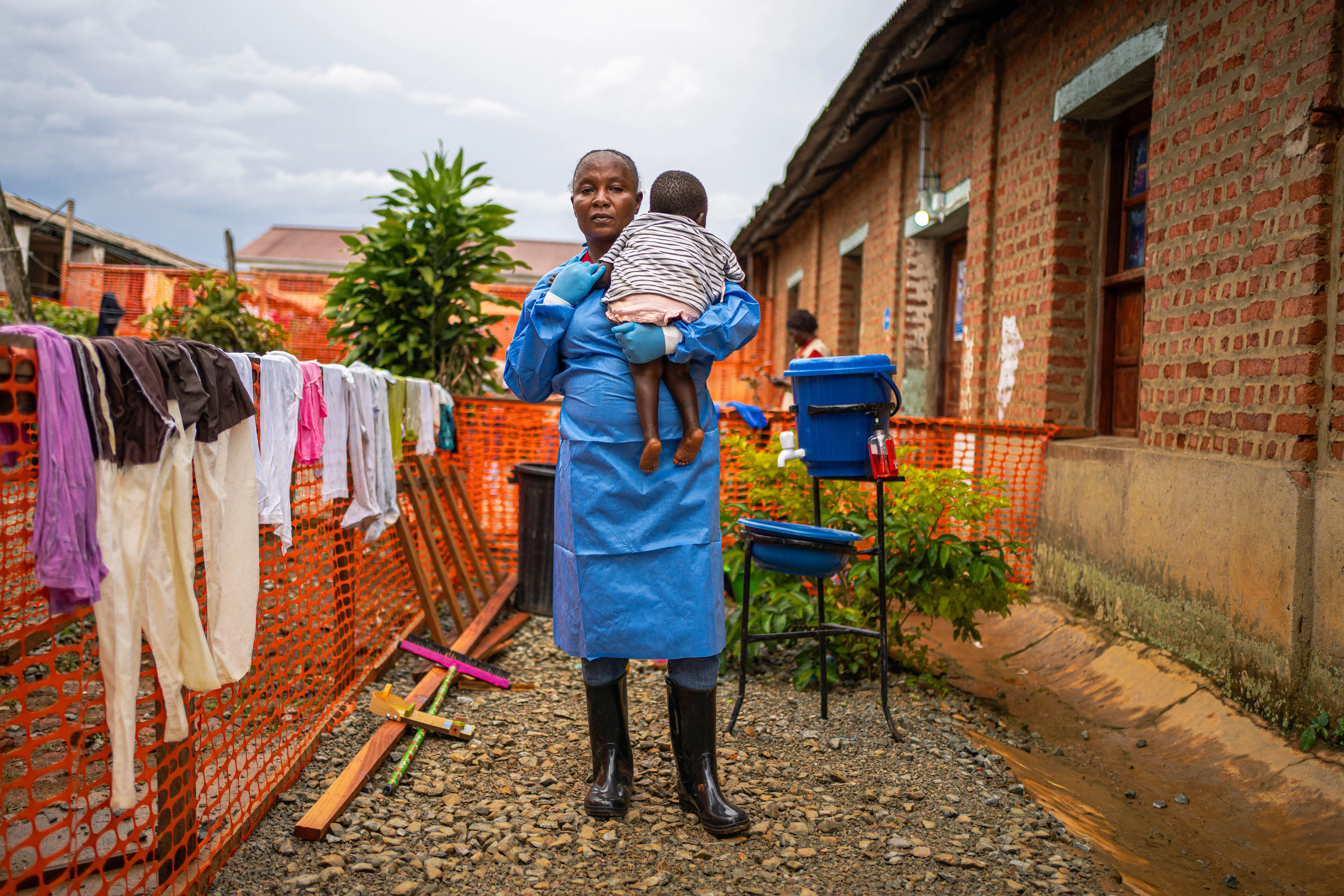
在刚果民主共和国蒙布瓦卢,一名由联合国儿童基金会支持的托儿所护理员玛丽·巴基库拉,在一家收容埃博拉孤儿的紧急托儿所工作。
Marie Bakikula, a caregiver at a UNICEF-supported nursery in Mongbwalu in the Democratic Republic of Congo, works at an emergency nursery for Ebola orphans.
Marie Ruwet/AFP/via Getty Images史上传播最快的埃博拉疫情又越过了一个严峻的里程碑。根据刚果民主共和国政府的最新数据,自5月首次宣布疫情以来,已有超过1万人感染。
Marie Ruwet/AFP/via Getty Images The fastest spreading Ebola outbreak in history has surpassed another grim milestone. More than 10,000 people have been infected since the outbreak was first declared in May, according to the latest government figures from the Democratic Republic of Congo.
“这是一个我们都没料到会这么快越过的里程碑,”国际救援委员会代理埃博拉应对主任凯蒂·托马斯-坎菲尔德说。“在如此短的时间内就有1万人感染埃博拉,实在令人震惊,”她说,并指出在2014至2016年西非疫情的这个阶段,仅有约4000人感染。但那次较早的疫情仍拥有最高的病例数——超过2.8万例。
"It's a milestone that we're all surprised to be passing this quickly," says Katie Thomas-Canfield, interim Ebola response director for the International Rescue Committee. "10,000 people affected by Ebola in such a short period is really staggering," she says, noting that at this point in the West Africa outbreak of 2014-2016, only about 4,000 people had been infected. But that earlier outbreak still has the highest case count — more than 28,000 cases.
当前疫情也是地理范围最广的一次,从尼日利亚蔓延至肯尼亚。其死亡人数位居第二,近5000人死亡,而此前那次疫情的死亡人数超过1.1万。
The current outbreak is also the largest ever in geographic scope, spanning Nigeria to Kenya. It is second in the death toll, with nearly 5,000 deaths compared to the previous toll of over 11,000.
本次疫情中死亡者约有三分之一是儿童。5岁以下儿童免疫系统尚未发育成熟,受到的打击尤为严重——约四分之三的感染者已经死亡。
About a third of those who've died in this outbreak have been kids. Children under 5, with their developing immune systems, are hit especially hard — roughly three out of four infected have died.
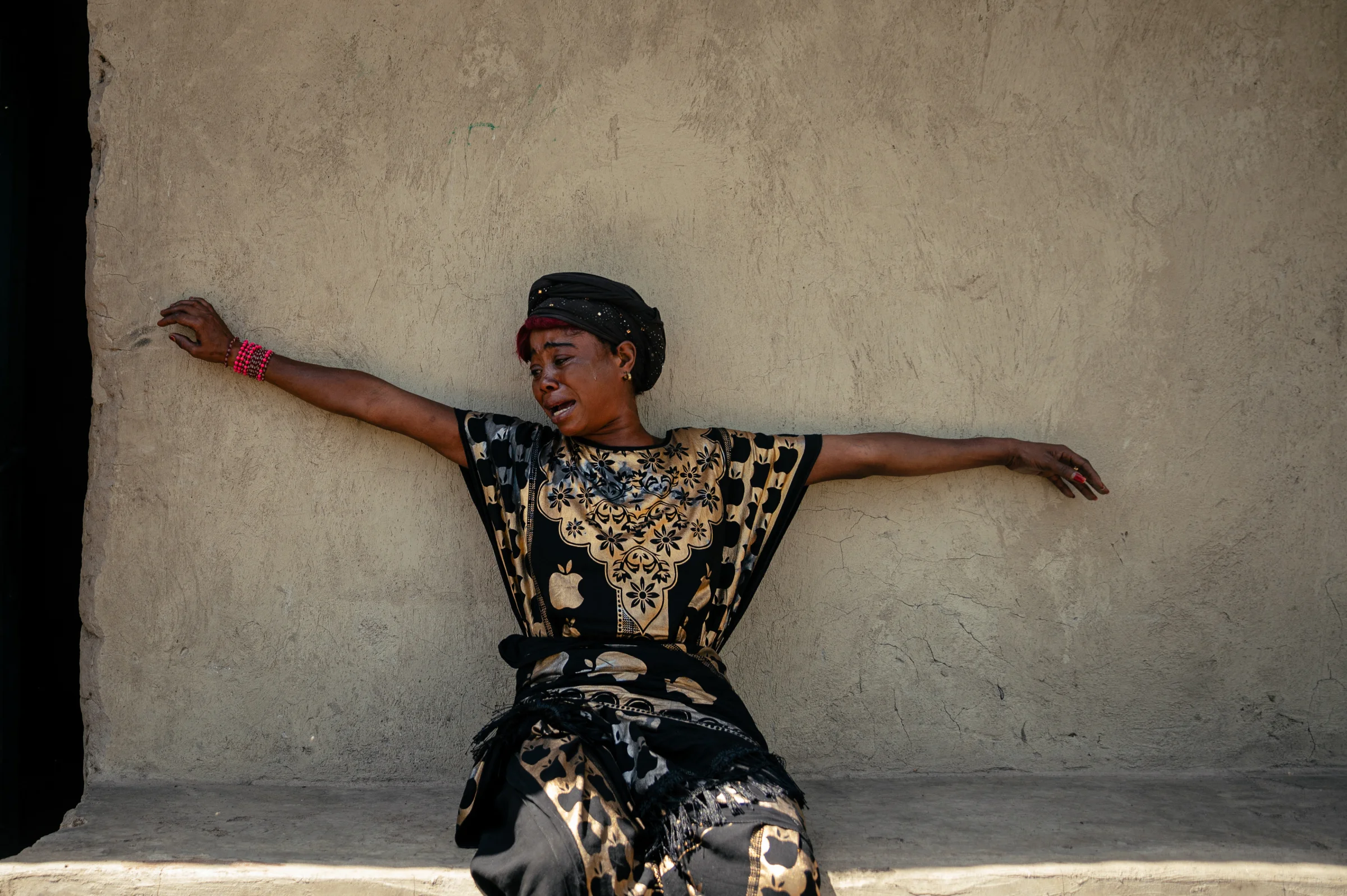
“每一个数字背后,都是一条被打断的生命、一个哀悼的家庭、一名承受压力的医护人员,以及一个寻求安慰的社区,”世界卫生组织非洲区域主任穆罕默德·贾纳比在上周的新闻发布会上说。“我们必须更早接触到人们,把安全的救治送到更近的地方,在恐惧成为生存障碍之前加强信任。”一名妇女哀悼一位疑似死于埃博拉的亲属。
"Behind every figure is a life interrupted, a family mourning, a health worker under pressure and a community seeking reassurance," said Mohamed Janabi, regional director for the World Health Organization Africa, at a press conference last week. "We must reach people earlier, bring safe care closer, and strengthen trust before fear becomes a barrier to survival." A woman mourns the loss of a relative suspected of having died from Ebola.
Jospin Mwisha/AFP/via Getty Images以下是关于2026年疫情的一些关键问题。为什么疫情会如此迅速地变得如此严重?
Jospin Mwisha/AFP/via Getty Images Here's a look at some of the key questions about the 2026 outbreak. Why has the outbreak become so bad so fast?
部分答案在于病毒何时开始传播的不确定性。虽然疫情于5月正式宣布,但更近期的证据表明,病毒很可能在2月或3月就已开始传播。
Part of the answer lies in uncertainty over when the virus started circulating While the outbreak was officially declared in May, more recent evidence suggests the virus likely started spreading in February or March.
“事情在社区中未被发现这么长时间,这意味着我们一开始就处于劣势,”托马斯-坎菲尔德说。多种因素共同导致了延误。
"That's a really long time for things to be undetected in communities, and that means we started at a disadvantage," says Thomas-Canfield. A confluence of factors contributed to the delay.
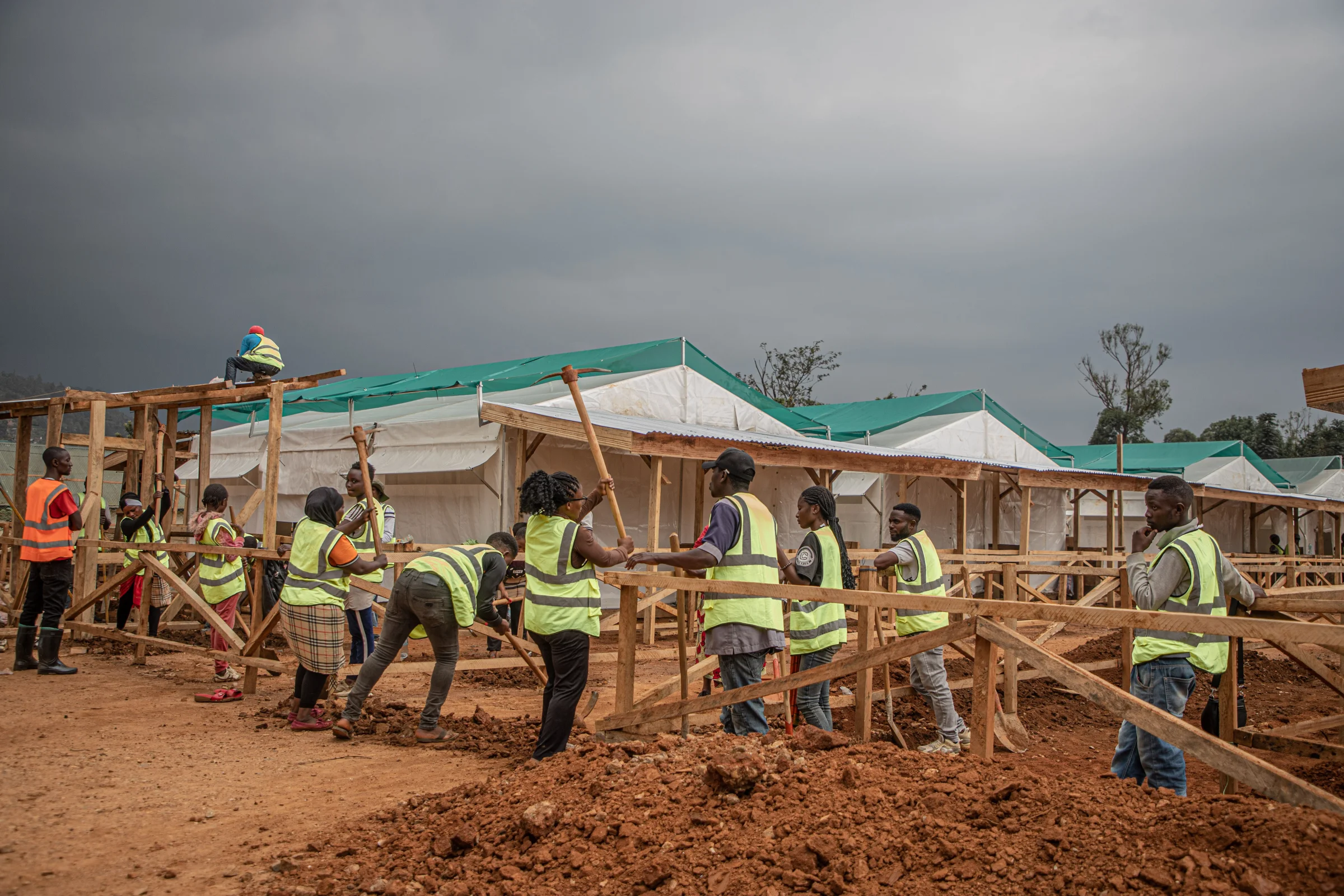
首先,此次疫情由一种较为罕见的埃博拉病毒——本迪布焦型——引起。现有检测方法并未针对这一型别进行校准,导致延误。此外,刚果(金)东北部这一地区偏远且饱受冲突困扰。波士顿大学的传染病医生纳希德·巴德利亚表示,美国削减对外援助可能也拖慢了疾病监测工作。工人们在刚果民主共和国北基伍省贝尼地区建造埃博拉治疗中心。
First, there's the fact that a rarer species of Ebola is behind the outbreak — Bundibugyo. Existing tests weren't calibrated for this species leading to delays. What's more, this region of northeastern DRC is remote and beset by conflict. And U.S. cuts to foreign aid may have slowed disease surveillance efforts, says Nahid Bhadelia, an infectious disease physician at Boston University. Workers build an Ebola treatment center in Beni territory of North Kivu Province, the Democratic Republic of the Congo.
新华社/盖蒂图片社 “在最初那些日子里,种种迹象表明这将是一条艰难的道路,需要国际合作,”巴德利亚说。与以往的埃博拉疫情相比,国际合作与支持的到来更为缓慢。
Xinhua News Agency/via Getty Images In those early days, "the writing was on the wall that this would be a hard road and it would need international cooperation," says Bhadelia. International cooperation and support have been slower in coming than in previous Ebola outbreaks.
例如,2014年,来自世界各地的医护人员前往西非支援应对工作。巴德利亚就是其中之一。
In 2014, for example, healthcare workers from around the globe traveled to West Africa to bolster the response. Bhadelia was one of them.
巴德利亚表示:“我认为,由于美国的政策,即使美国人患病也可能不被允许回国,因此进入刚果(金)的美国或其他国家的医护人员明显减少了很多。”这与上一次大规模疫情暴发时的政策不同。“这意味着很大一部分负担正由刚果(金)和区域内的医护人员承担。”
"I think you are seeing a lot less American or other healthcare workers coming into DRC because of U.S. policy that Americans may not be allowed back even if they're sick," says Bhadelia. That's different from the policy in the prior major outbreak. "That means that a lot of the burden is being carried by DRC and regional healthcare workers."
尽管世界各地承诺提供资金,包括美国承诺的超过8.8亿美元,但一些一线医护人员表示,这些资金到位缓慢。托马斯-坎菲尔德说:“此次应对行动可获得的资金规模,确实只是我们上一次应对行动时的一小部分。我认为国际团结的程度也低了很多。”在肯尼亚卫生当局加强埃博拉筛查措施之际,一名肯尼亚卫生部官员在肯尼亚与乌干达边境为一名旅客测量体温。
Despite pledges of funding from around the world, including more than $880 million from the U.S., some health workers on the ground say that money is slow to materialize. "The scale of financing that's available for this response is really a fraction of what it was in our previous response," says Thomas-Canfield. "I think the degree of international solidarity has been a lot less." A Kenyan Ministry of Health official checks the temperature of a traveler on the Kenya-Uganda border as health authorities step up Ebola screening measures, On October 12, Kenya reported its first-ever Ebola death — a Kenyan man who had been living in the Democratic Republic of Congo died after returning to the country.
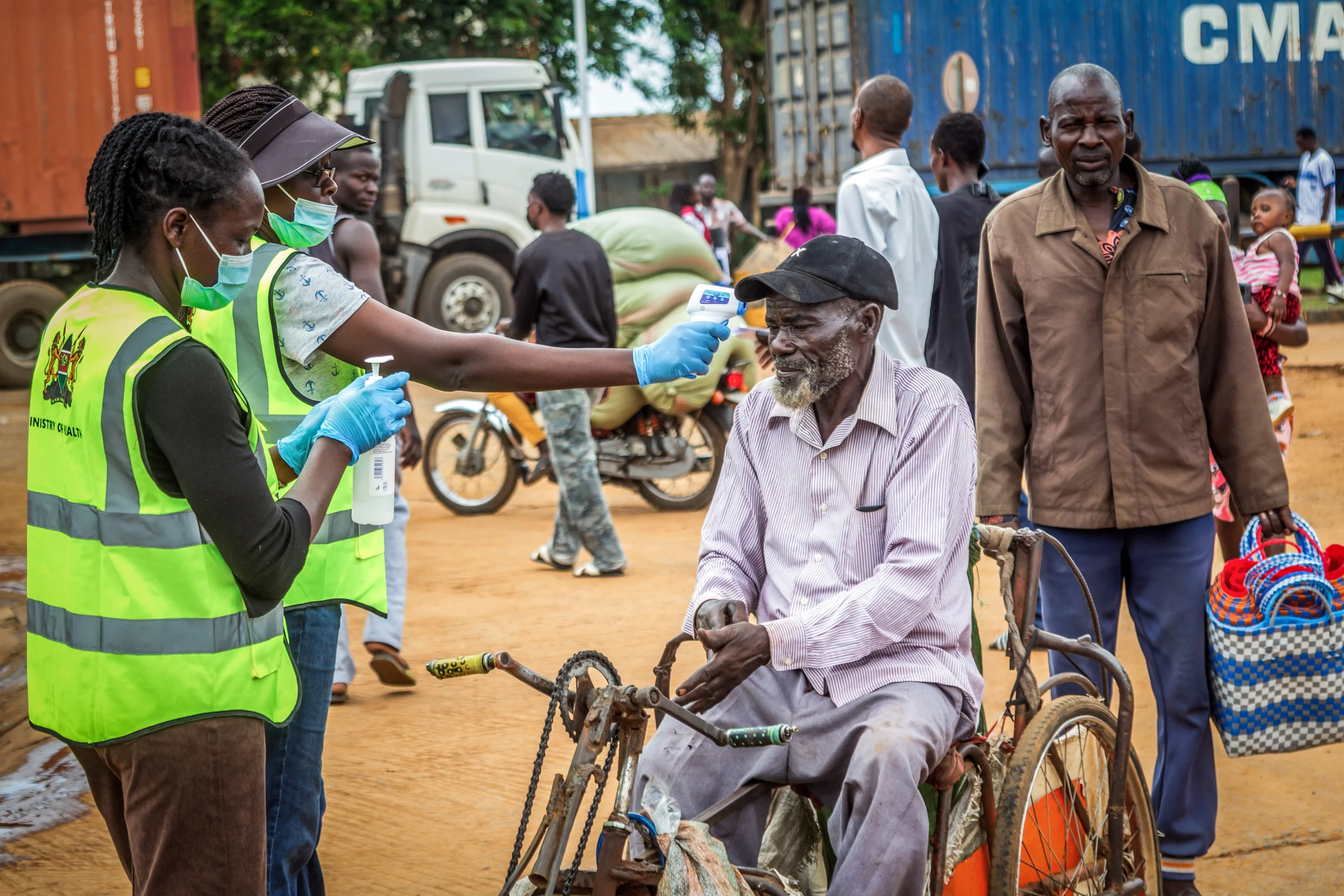
10月12日,肯尼亚报告了该国首例埃博拉死亡病例——一名此前居住在刚果民主共和国的肯尼亚男子在返回肯尼亚后死亡。布莱特·埃莫贾/法新社/盖蒂图片社 我们是否正在取得进展?
Bright Emoja/AFP/via Getty Images Are we making progress?
过去几个月,当地的应对工作有所改善。目前已有二十多个诊断实验室和50多个治疗中心。
The response on the ground has improved over the past several months. There are now two dozen or so diagnostic labs and more than 50 treatment centers.
联合国儿童基金会埃博拉全球事件经理道格拉斯·诺布尔说:“我们的埃博拉治疗床位已接近2000张,因此取得了很大进展。”尽管如此,大约三分之二的死亡发生在社区,而不是治疗中心——这表明人们没有在出现症状时主动就医。诺布尔说,这一数字几个月来一直居高不下,要想控制住疫情,这一情况必须得到改善。
"We're up toward almost 2,000 treatment beds for Ebola, so there's been a lot of progress," says Douglas Noble, global incident manager for Ebola at UNICEF. Nonetheless, roughly two-thirds of deaths are occurring in the community, not in treatment centers — a sign that people are not coming forward with symptoms. That figure has been stubbornly constant for months and needs to improve for the outbreak to get under control, says Noble.
人们不寻求治疗的部分原因可能是,本迪布焦型埃博纳病毒感染初期症状可能显得轻微。“发烧、头痛、身体酸痛等症状,都是该地区最常见、且大多可治疗的地方性疾病的症状,”托马斯-坎菲尔德说。他说,感染埃博拉的人可能直到为时已晚才决定去就医。许多一线医护人员表示,更大的障碍是社区的不信任。
Part of why people aren't seeking care may be that Bundibugyo infections can seem mild at first. "Things like fever, headache, body ache, they're all symptoms of the most common and largely treatable endemic diseases in the region," says Thomas-Canfield. Those who are infected with Ebola may not decide to seek treatment until it's too late, he says. A bigger hurdle, say many healthcare workers on the ground, is community distrust.
国际救援委员会10月的一项调查发现,在北基伍省——当前的热点地区——85%的受访者表示,对社区响应人员的不信任使他们不愿寻求治疗。
October survey from the International Rescue Committee found that 85% of respondents in North Kivu — a current hotspot — say that distrust of community responders is keeping them from seeking care.
“我们一直在与各种谣言和各种错误信息作斗争,”国际救援委员会的托马斯-坎菲尔德说。许多社区成员怀疑埃博拉是否真实存在,或者认为响应人员只是想赚钱。还有人质疑,为什么团队只为埃博拉而来,却不为困扰该地区的其他疾病——如疟疾或伤寒——而来。
"We're constantly fighting different kinds of rumors, different kinds of misinformation," says Thomas-Canfield of the International Rescue Committee. Many community members question whether Ebola is real or believe responders are just trying to make money. Others wonder why teams come for Ebola and not other diseases that afflict the region, like malaria or typhoid.
社区卫生工作者正在努力重建这种信任。“我确实认为,在我们能够建立较长期存在的地区,我们更有能力应对,”托马斯-坎菲尔德说。但病毒正在迅速蔓延到新的卫生区。她说,从零开始建立信任很难。在冲突地区尤其如此,那里的战斗使工作难以开展,武装团体还在积极散布虚假信息。
Community health workers are working hard to rebuild that trust. "I do think that in areas where we've been able to establish a longer-term presence, we're better able to respond," says Thomas-Canfield. But the virus is rapidly spreading to new health zones. Building trust from scratch is hard, she says. That's especially true in conflict zones, where fighting makes it hard to work, and armed groups actively sow disinformation.
当信任度低时,人们不会寻求治疗,也不会与试图发现新病例并隔离其接触者的卫生官员合作。大约80%的新病例仍然来自卫生官员雷达之外的人群。传染病医生巴德利亚说,在这一比例下降之前,疫情将仍然处于失控状态。
When trust is low, people don't seek care or engage with health officials trying to find new cases and isolate their contacts. Roughly 80% of new cases are still coming in from people who weren't on health officials' radar. Until that rate goes down, the outbreak will remain out of control, says infectious disease doctor Bhadelia.
她指出本月尼日利亚和肯尼亚的病例,以此证明这一点。她说:“我们在邻国看到的零星病例,是刚果民主共和国疫情扩大的信号。”虽然每日病例数似乎已趋于平稳,她认为在许多地区病毒仍在未被发现的情况下传播。“目前仍完全失控。”是否有希望通过埃博拉疫苗或更好的治疗手段来降低病例数?
She points to the cases in Nigeria and Kenya this month as proof of that point. "The sporadic cases that we're seeing in neighboring countries is a sign of the growth in DRC," she says. While daily case counts seem to be plateauing, she says there's likely many regions where the virus is spreading undetected. "It's so far out of control." Is there any hope that an Ebola vaccine or better treatments could tamp down numbers?
目前尚无针对布迪布古约株埃博拉病毒的获批疫苗或治疗药物。虽然有几种正在研发,但距离在本次应对中使用仍相距甚远。
No vaccine or treatment is licensed for the Bundibugyo species of Ebola. Several are in the works but all far from being used in this response.
已有一种埃博拉疫苗,名为Ervebo,但它针对的是该疾病的另一株。该疫苗尚未广泛使用,医护人员在八月底开始接种,研究人员刚刚启动了一项临床试验,命名为Tumaini(斯瓦希里语“希望”之意),旨在测试Ervebo对布迪布古约株的疗效。如果证实有效,“那将是惊人的,能够产生影响,”Bhadelia说。但她提醒,疫苗和新疗法并非灵丹妙药。
There is an existing vaccine for Ebola. It's called Ervebo, but it targets a different species of the disease. It hasn't been widely deployed, but healthcare workers began receiving the vaccine in late August and researchers just started a clinical trial, dubbed Tumaini after the Swahili word for hope, aimed at testing how well Ervebo works against Bundibugyo. If it proves effective, "that would be amazing, that could make a difference," says Bhadelia. But she cautions that vaccines and new treatments are not a silver bullet.
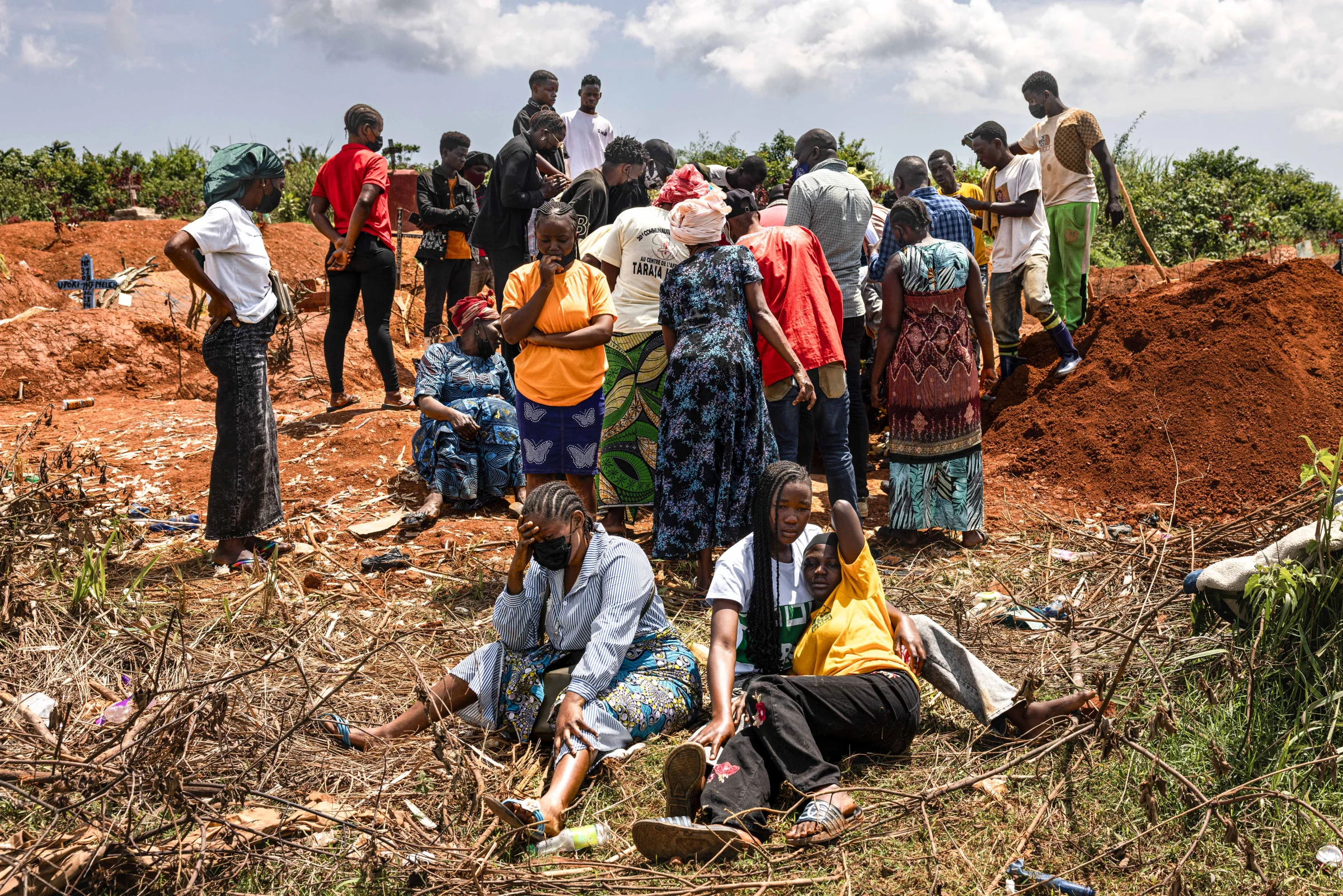
一名死于埃博拉的患者被埋葬在刚果民主共和国东部伊图里省蒙布瓦卢的墓地。
A person who died of Ebola is buried at a cemetery in Mongbwalu, Ituri province, eastern Democratic Republic of Congo.
Michel Lunanga/Getty Images “有针对性的医学对策是必要的,但并不足够,”她说。这些干预措施需要与基础公共卫生措施相结合,例如追踪新感染者的所有密切接触者,并对感染者进行隔离和治疗。她表示,改进这些策略需要更多的工作和资源,并担心所需的支持可能来不及。
Michel Lunanga/Getty Images "Targeted medical countermeasures are necessary, but they are not sufficient," she says. These interventions need to be coupled with basic public health measures, like tracing all the contacts for a newly infected person and isolating and treating those who are stricken. Improving these strategies takes more work and resources, she says, and she worries that the needed support may not come fast enough.
她说:“此时此刻,最让我害怕的问题是,国际社会会不会把目光移开,忘记刚果民主共和国?”“我担心资金会枯竭,担心我们不会再持续关注一场公共卫生灾难,而这场灾难此刻比人们意识到的要更深、更大。”
"In this moment, the question that scares me more than anything is will the international community turn its eyes and forget about DRC?" she says. "I am worried the funding will dry out, that we will not keep paying attention to a public health disaster that is much deeper and bigger in this moment than people realize." For stories about life in our changing world, to NPR's Global Health newsletter.