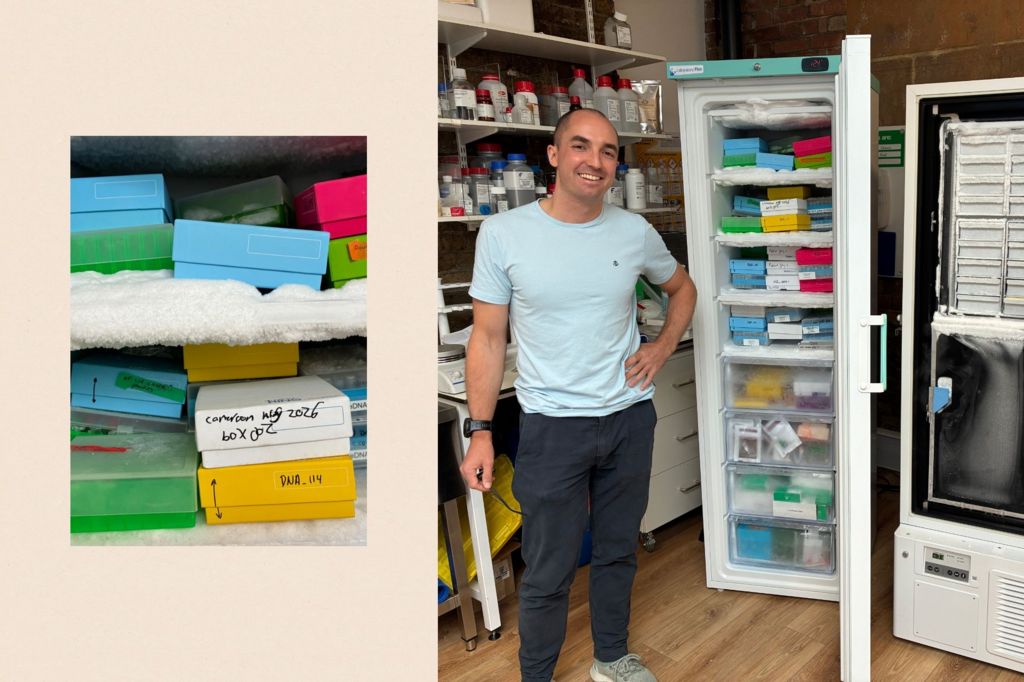
数学争议加剧了人们对人工智能削弱科学的担忧人工智能已经取得了一些令人惊叹的科学发现。但现在,人们开始质疑其准确性作者:Pallab Ghosh在伦敦市中心的一座前手表工厂里,一排排白色冷冻柜嗡嗡作响。内部:数十个装有条形码玻璃管的小盒子,合计包含一千亿基因。该设施的联合创始人奥利弗·文斯博士表示,仅两盒的存储信息量就可能是整个互联网文本的十倍。
The maths bust-up fuelling fears that AI is undermining science AI has made some awesome scientific discoveries. But now, questions are being raised about its accuracy By Pallab Ghosh A bank of white freezers hums away at a former watch factory in central London. Inside: dozens of small boxes with barcoded glass tubes, collectively containing one hundred billion genes. Just two boxes may hold 10 times more information than all the text on the internet, says Dr Oliver Vince, the facility's co-founder.
他的公司Basecamp Research计划收集尽可能多的DNA,以打造一种能够“说生物语言”的人工智能,方式类似于美国和中国科技公司通过抓取网络上的书面材料来创建大型语言模型(LLM),后者是当前人工智能系统的基础。
His firm, Basecamp Research, plans to collect as much DNA as possible to create an artificial intelligence that can speak the language of biology, in the same way that US and Chinese tech firms have hoovered up written material online to create Large Language Models (LLMs), the basis of current AI systems.
文斯和许多企业界及学术界的研究者一样,认为人工智能将为科学研究注入强大动力。但与此同时,它也日益伴随争议。
Vince, like many in business and academic research, believes AI will supercharge scientific research. But increasingly, it also comes with controversy.
上个月,ChatGPT的开发者OpenAI称已解决了数学界的一个重大未解难题——与著名的纳维-斯托克斯方程相关的难题。该公司表示,其人工智能代理在88小时内破解了该问题。负责该奖项的机构称该难题“显然已经得到解决”,但审查工作仍需时间。
Last month, OpenAI, the creator of ChatGPT, said it had solved one of maths' great unsolved problems, relating to the famous Navier–Stokes equations. The company said its AI agents had cracked it in 88 hours. The body that runs a prize for whoever can solve the problem said it had "apparently been settled", but that its review would take time.
然而,在宣布之前数小时,纽约大学数学家特里斯坦·巴克马斯特公开表达了担忧。他与日间受竞争公司Anthropic雇佣的数学家勒文特·阿尔波格组建了一个独立团队。
But hours before the announcement, Tristan Buckmaster, a mathematician at New York University, went public with concerns. He formed an independent team with Levent Alpöge, a mathematician employed by day by the rival company Anthropic.
他们一直在朝同一目标努力,并将草稿保存在OpenAI的编码工具Codex中。巴克马斯特称,他的合作者被告知他们的进展消息已经“传到”OpenAI,尽管他未说明具体渠道。他询问其存放在Codex中的研究是否可能被用于OpenAI的工作,但强调自己“并未指责任何人”。
They had been working towards the same goal, and kept their drafts in OpenAI's coding tool, Codex. Buckmaster said that his co-researcher was tipped off that news of their progress had "reached" OpenAI, though he did not specify how. He asked whether his research, stored in Codex, could have fed into OpenAI's own work, though he stressed he was "not accusing anyone of anything".
OpenAI表示,在公司公布之前,公司内部任何人(无论是人类还是AI)都没有看到其他团队的工作。最初该公司表示,虽然可能性不大,但不能“排除”其产品使用中的匿名数据可能帮助改进了模型。几天后,该公司表示,巴克马斯特在公告前两个月的Codex提示词“不可能以任何方式影响系统”。
OpenAI said that nobody at the company, human or AI, saw the other teams' work before it was published. Initially it said that while unlikely, it could not "rule out" that anonymised data from use of its products may have helped improve its models. Days later, it said Buckmaster's Codex prompts from the two months before the announcement "could not have influenced the system in any way".
这是一个复杂的故事;我们仍不完全清楚发生了什么。但它凸显了AI在科学中使用的一个日益严重的问题。通常,这些话会让我们联想到机器人制造可怕的基因工程病毒或化学武器来消灭人类的画面。但还有一个更微妙的问题没有引起同样引人注目的关注:AI可能削弱人们对科学过程的信任,引发对研究新颖性和准确性的质疑。
It's a complicated story; we still don't fully know what happened. But it highlights a growing issue about the use of AI in science. Usually, those words make us conjure up images of robots building terrible genetically-engineered viruses, or chemical weapons, to wipe out humanity. But there's a more subtle problem that hasn't attracted the same headline-grabbing attention: that AI could undermine faith in the scientific process, raising questions about the novelty and accuracy of research.
还有另一个担忧。众所周知,像Claude或Gemini这样的AI聊天机器人有时会幻觉出根本不真实的东西。它们会告诉你一部从未存在过的电影,或者一句从未说过的话。现在有证据表明,这种情况在科学中越来越普遍。人们担心,最终将很难将真正的科学发现与AI生成的虚构内容区分开来。
And there's another concern. It's well known that AI chatbots like Claude or Gemini can sometimes hallucinate things that simply aren't true. They will tell you about a film that never existed, or a quote that was never said. Now there is evidence that this is increasingly happening in science. Eventually, it's feared, it will become difficult to separate true scientific discovery from AI-generated fiction.
而所有这些都可能威胁侵蚀——如果不是摧毁的话——科学研究赖以立足的基石:信任。“分水岭时刻”一个威胁是针对科学期刊——科学诚信的守护者——它们被认为未能应对AI生成的扭曲信息海啸。
And all of this could threaten to erode - if not explode - the rock on which scientific research rests: trust. A 'watershed moment' One threat is to scientific journals, the guardians of scientific integrity, which are seen to be failing to deal with a tsunami of AI-generated distortions.
“生成式AI基本上扰乱了整个科学过程,”科学记者达尔米特·辛格·乔拉说,他十年来一直报道研究不端行为。
"Generative AI has basically disrupted the whole scientific process," says Dalmeet Singh Chawla, a science journalist who has spent a decade reporting on research misconduct.
他告诉BBC,出版商的诚信工作人员——负责审核投稿准确性和可靠性的人员——将需要“大幅增加(人数和工作力度),才能应对这场斗争”。他说:“目前来看,他们似乎并没有做到。”表面上看,人工智能似乎正是推动科学研究的理想工具。科学家要处理海量信息。例如,望远镜和粒子加速器会收集数十亿个数据点——数量之大,人脑难以理解。人工智能可以从周围的平淡数据中挑出科学亮点。
He tells the BBC that publishers' integrity staff - the people who screen submissions for accuracy and reliability - will need to "drastically increase [in number and effort] if they're anywhere near the fight". He says: "Right now, it seems like they're not." On the face of it, AI seems just the right tool to power scientific research. Scientists deal with huge amounts of information. Telescopes and particle accelerators, for example, collect billions of data points – too large for the brain to comprehend. AI can pick the scientific highlights from the surrounding humdrum.
科学人工智能的典范是总部位于英国的谷歌DeepMind公司,该公司在2020年解决了生物学最大的难题之一:生物体内的蛋白质如何折叠成精确的形状。
The poster child of scientific AI is the UK-based firm Google DeepMind, which in 2020 solved one of biology's biggest problems: how proteins in living things fold into their precise shapes.
这听起来可能很枯燥,但蛋白质是让生命运转的微型机器,它们折叠成的形状决定了它们能做什么;从构建细胞、对抗感染,到帮助形成身体的组织和器官。
It may sound dull, but proteins are the tiny machines that make life work, and the shapes they fold into determine what they can do; from building cells and fighting infection to helping form the tissues and organs of the body.
在人工智能出现之前,科学家必须在实验室进行耗时的实验。后来,谷歌DeepMind开发了一种名为AlphaFold的人工智能模型,仅在一年内就准确预测了2亿个蛋白质折叠结构。
Before AI, scientists had to conduct time-consuming experiments in the lab. Then, Google DeepMind developed an AI model called AlphaFold that accurately predicted 200 million protein folds in just one year.
同等的实验工作如果要在实验室完成,将需要数亿年。该公司将结果免费提供给研究人员。DeepMind负责人和该项目首席科学家均被授予诺贝尔化学奖。大家纷纷热情拥抱。
The equivalent experimental work would have taken hundreds of millions of years in laboratories. The firm gave the results away for free to researchers. The head of DeepMind and the project's lead scientist were both awarded the Nobel Prize for Chemistry. It was big hugs all round.
领导DeepMind科学工作的普什米特·科利博士告诉我,AlphaFold可以被视为一个“分水岭时刻”。
Dr Pushmeet Kohli, who leads DeepMind's science work, told me that AlphaFold could be seen as a "watershed moment".
围绕人工智能工作的质疑 但在其他地方,人工智能在科学中的应用也伴随着炒作指控。一些计算机模型被指夸大其研究结果的重要性,而监督这些模型的人类研究人员随后在缺乏足够怀疑精神的情况下相信了其中一些说法。
Questions over AI's work But elsewhere, the use of AI in science has come with accusations of hype. Some computer models are accused of exaggerating the significance of their findings, with the human researchers that oversee them then believing some of the claims without enough scepticism.
例如,DeepMind 在 AlphaFold 取得成功后,将目光转向预测新材料的结构。这项工作可能推动更优电池、更廉价太阳能电池以及不依赖稀土元素的电子元件的开发。(理论上,没人再需要为开采权争论不休,格陵兰也将免受入侵之虞。)DeepMind 的一个模型生成了该公司宣称的 200 多万种新晶体结构,并称这是 “近 800 年的知识” 一次性发布。其中,约 38 万种被认为足够有希望,值得在实验室中合成。
Basking in its success over AlphaFold, for example, DeepMind turned its attention to predicting the structure of new materials. The work could lead to the development of better batteries, cheaper solar cells and electronic components that are not dependent on rare earth elements. (In theory, no-one would need to argue about mining rights ever again, and Greenland would be safe from invasion.) A DeepMind model came up with what the firm claimed were more than two million new crystal structures, announced as "nearly 800 years worth of knowledge" released in one go. Of those, some 380,000 were considered promising enough to make in a laboratory.
但随后,加州大学两位化学家发出了警示信号。Anthony Cheetham 和 Ram Seshadri 通读了这些所谓新晶体的随机样本。他们在《Chemistry of Materials》(化学材料)期刊撰文总结称,“迄今未发现任何引人注目的新化合物”,认为其中许多只是 “已知材料的微不足道的改良”。他们的结论并非认为该方法错误,而是结果需要人类化学家更多的审查和验证。
But then came a warning sign from two chemists at the University of California. Anthony Cheetham and Ram Seshadri went through a random sample of the supposed new crystals. Writing in the journal Chemistry of Materials, they concluded that they had "yet to find any strikingly novel compounds", arguing that many were "trivial adaptations of known materials". Their verdict was not that the method was wrong, but that the results need more scrutiny and validation from human chemists.
DeepMind 予以驳回,称已对每种化合物进行了新颖性测试。公司辩称,仅因结构看似熟悉就予以否定,忽略了要点:置换单个原子正是当今许多最实用材料的诞生途径,从手机元件到防晒霜皆是如此。研究 “垃圾”至少在这些案例中,科学大多是真实的,问题仅在于 AI 可能夸大了其重要性。
DeepMind rejects the charge, saying it tested each compound for novelty. Dismissing a new structure for looking familiar misses the point, the company argues: swapping a single atom is how many of today's most useful materials arrived, from phone components to sunscreen. Research 'slop' In those cases, at least, the science was mostly real and the issue was just AI potentially exaggerating its importance.
可以说,更令人担忧的是,科学期刊面临被所谓 AI “垃圾” 污染的风险日益加大 —— 即由计算机而非人类科学家撰写研究,导致出现虚假引用和幽灵论文。
Arguably of even greater concern is the growing risk that scientific journals will become polluted with so-called AI "slop" - where a computer, not a human scientist, is writing the research, leading to fake citations and phantom papers.
2024年,根特大学计算机科学家德米特里·科巴克教授在100多万篇生物医学研究论文中搜索了生成式AI写作所用大语言模型(LLM)偏爱的“触发词”。他的团队发现,到去年12月,近90%的论文带有AI痕迹。AI检测技术并不完美;某些形式的软件曾将18世纪80年代撰写的《美国宪法》判定为“AI生成”。但科巴克仍对这种明显的AI使用规模感到震惊。他告诉《自然》杂志:“无论LLM可能存在什么偏见,都会突然渗透进(科学)文献中。”科巴克只是众多担心AI正在慢慢扼杀科学期刊的研究人员之一。
In 2024, computer scientist Prof Dmitry Kobak, of Ghent University, searched more than a million biomedical research papers for trigger words favoured by the LLMs that generate AI writing. His team found that by December last year, nearly 90% had AI fingerprints on them. AI detection technology is not perfect; some forms of the software have labelled the US Constitution, written in the 1780s, as "AI-generated". But still, Kobak said he was shocked by the scale of apparent AI use. There is a risk, he told Nature, that "whatever bias the LLM may have will just suddenly permeate the (scientific) literature". Kobak is among many researchers who worries that AI is slowly killing scientific journals.
这至关重要:研究论文是科学进步的命脉。当一项发现被发表后,世界另一端的另一个团队可能会获得资助,在该成果基础上继续研究。
And it matters: research papers are the lifeblood of scientific advance. When a discovery is published, another team in another part of the world might obtain funding to build on the results.
同行评审流程——即研究论文在发表前由其他科学家审查——也正在受损。
The process of peer review - in which research papers are checked by other scientists before they are published - is also being compromised.
斯坦福大学韦欣·梁和詹姆斯·祖领导的团队分析了提交给四大计算机科学会议的审稿报告,发现高达17%的文本已被语言模型大幅修改。
A team led by Weixin Liang and James Zou at Stanford University analysed referee reports submitted to four major computer science conferences, and found up to 17% of the text had been substantially modified by a language model.
科学论文诚信的一个关键环节是,首席科学家列出早期研究,以证明他们的工作确实具有新颖性。这些被称为引文。康奈尔大学一个独立团队发现,研究人员正在使用AI编撰引文,而AI正在捏造虚假研究,去年约有14.7万篇幽灵研究被引用。
A critical part of a scientific paper's integrity involves lead scientists listing earlier research in order to show what they have done is genuinely new. These are called citations. A separate team at Cornell University found that researchers were using AI to compile citations, and that it was inventing bogus research, with around 147,000 pieces of phantom research cited last year.
如果AI继续以这种方式扭曲学术过程的诚信,研究人员将被引入歧途,公共资金将被浪费,有效研究的成果——如新药或绿色技术——将放缓甚至根本无法实现。“科研级AI”一些科学期刊出版商,如爱思唯尔,正在采取措施以遏制这场日益加剧的信任危机。
If AI continues to distort the integrity of the academic process in this way, then researchers will be sent up blind alleys, public money will be wasted, and the fruits of valid research - such as new drugs or green technologies - will be slowed or not realised at all. 'Research-grade AI' Some publishers of scientific journals, such as Elsevier, are taking steps to avert this growing crisis of confidence.
爱思唯尔的研究诚信团队已开发出约100个信号,用于标记论文以便进行更严格的人工审查。《自然》期刊禁止使用AI生成的图像,并告知审稿人切勿将手稿上传至AI系统。科学家分享早期研究成果的网站arXiv规定,提交捏造参考文献的研究者将被禁用一年。
Elsevier's research integrity team has developed some 100 signals that flag a paper for closer human scrutiny. Nature's journals forbid AI-generated images and tell referees never to upload a manuscript into an AI system. The website arXiv, where scientists share their early-stage results, bans researchers for a year if they submit invented references.
爱思唯尔副总裁萨拉·梅恩教授是该公司致力于探索如何在研究中负责任地使用AI的人员之一。她说:“我们所谓的‘研究级AI’将侧重于确保研究人员处于主导地位。”
Prof Sarah Main, an Elsevier vice-president, is among those at the firm trying to work out how to responsibly use AI in research. "What we're calling research-grade AI would focus on ensuring the researcher is in the driving seat," she says.
随着AI代理处理来自粒子加速器、宇宙和自然界的海量数据,我们如何知道它们的处理是否正确?
As AI agents process the mass of data emerging from particle accelerators, the cosmos and the natural world, how do we know they are getting it right?
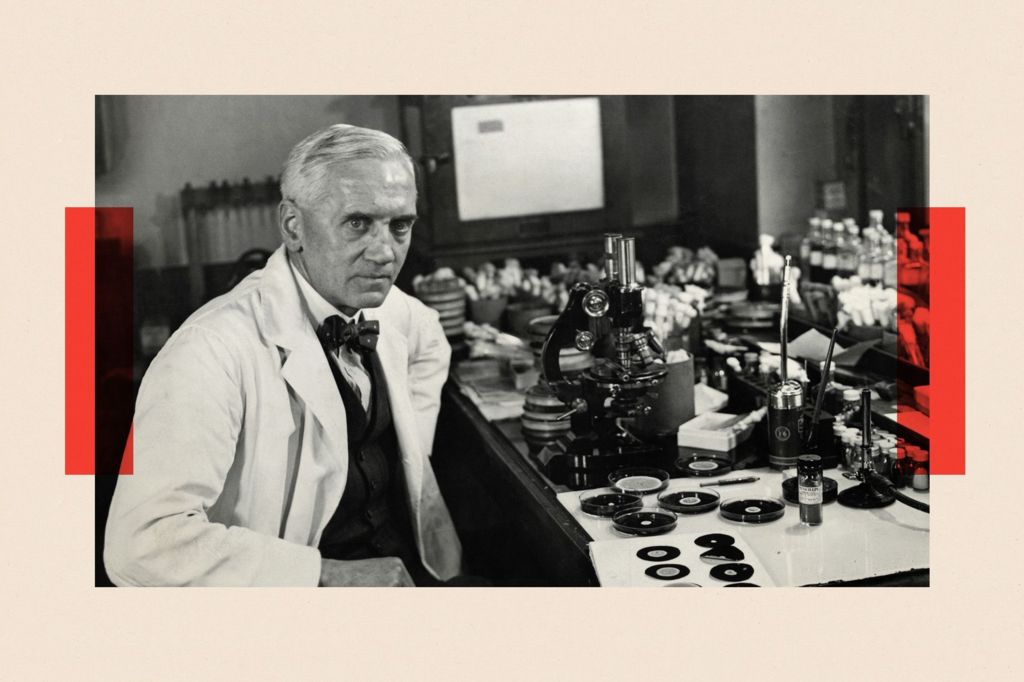
还有一个令人担忧的问题:我们如何知道AI代理没有将重要结果当作异常值予以忽略?青霉素、放射性以及被称为脉冲星的怪异恒星的发现,都源于本可能被忽略的异常结果。人类的直觉将它们转化为上世纪一些最重大的科学时刻。AI真的能复制那种偶然发现的惊喜感和人类的独创性吗?
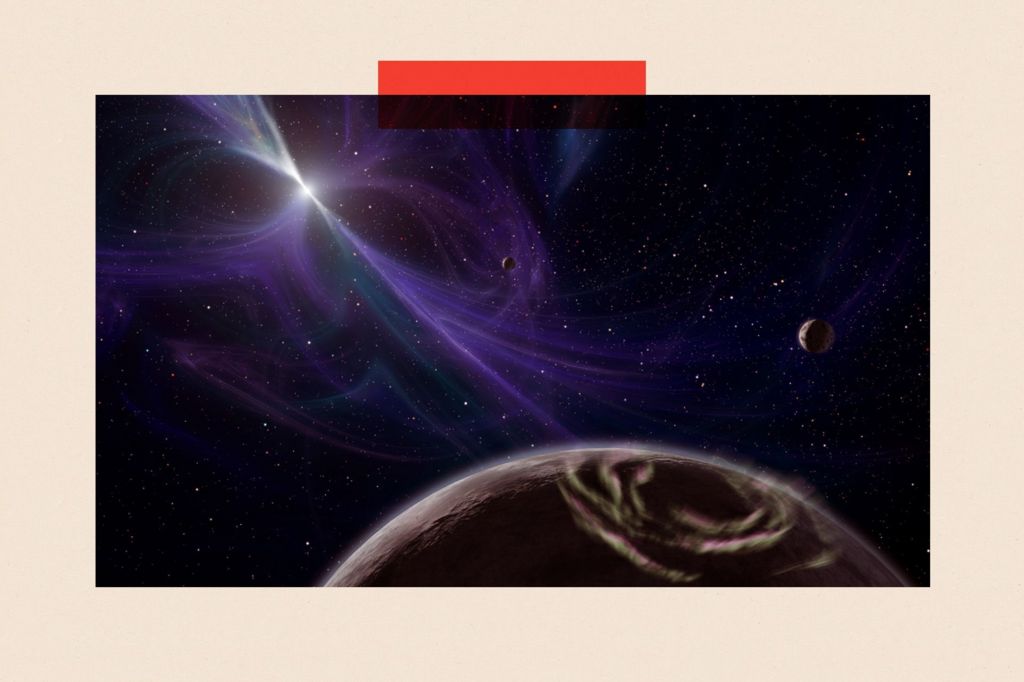
And there's another worrying question: how do we know that AI agents are not dismissing an important result as an anomaly? The discoveries of penicillin, radioactivity and weird stars called pulsars all came from odd results that could easily have been dismissed. Hunches by humans made them into some of the biggest scientific moments of the last century. Can AI really replicate that sense of serendipity and human ingenuity?
DeepMind的Kohli认为,答案不是背弃AI。他告诉我,那“就像说你应该在不使用计算器的情况下进行计算”。但他接受应该有人为护栏:“如今的智能体并不完美。必须有人承担问责。”
Kohli of DeepMind does not think the answer is to turn our backs on AI. That would be "like saying you should be computing without using calculators", he told me. But he accepts there should be human guardrails: "The agents today are imperfect. Somebody has to take accountability."
他的测试标准很简单:“你必须理解智能体做了什么,并且必须承担责任。你不能只规定问题,让机器写论文并当作真理提交。”奥地利维也纳生物中心的Andrea Pauli教授遵循了这一标准。她在一个至今无人能答的问题上花了近10年:精子是如何进入卵子的。负责任地使用AI帮助她找到了答案。她的实验室在斑马鱼卵子表面发现了一种蛋白质,这指向了一种允许精子进入的“锁钥机制”。
His test is a simple one: "You have to understand what the agent has done, and you have to take responsibility. You can't just specify the problem and let the machine write the paper and submit it as true." Prof Andrea Pauli of the Vienna BioCenter in Austria has followed that test. She spent almost 10 years on a question no-one has yet been able to answer: how a sperm gets into an egg. Responsible use of AI helped her toward an answer. Her lab found a protein on the surface of zebrafish eggs which pointed to a lock-and-key mechanism for allowing the sperm in.
在一片AI科学垃圾的汪洋中,她的案例带来了希望。它表明AI是可以提供帮助的。
Hers is a case for hope, in a sea of AI scientific slop. It shows that AI can help.
这也是一个关于人类的故事。在我参观的那家位于伦敦前钟表工厂的实验室Basecamp成立不久后,其联合创始人Oliver Vince因白血病住院(现已康复)。这激励他开发一个更有希望治愈癌症的AI系统。他说,这可能行不通,但值得一试。“我们有一条技术上可行的治愈癌症的路径,”他说。
This is also a story about humans. Soon after the formation of Basecamp - the lab I visited in a former London watch factory - its co-founder, Oliver Vince, was ill in hospital with leukaemia (from which he has recovered). It motivated him to develop an AI system that stood a better chance of curing cancers. It might not work, he says, but it's worth a shot. "We have a technically feasible path to curing cancer," he says.
这不是Vince的承诺,而是一个方向。最大的问题是,AI是将科学带向那里,还是悄无声息地侵蚀其赖以建立的基石。
Not a promise from Vince, but a direction. The big question is whether AI carries the science there, or quietly erodes the bricks it is built on.

Top是网站和应用上最佳分析的主页,提供挑战假设的全新视角和对当天最大议题的深度报道。Emma Barnett和John Simpson每周六带来他们精选的最发人深省的深度阅读和分析。here
Top is the home on the website and app for the best analysis, with fresh perspectives that challenge assumptions and deep reporting on the biggest issues of the day. Emma Barnett and John Simpson bring their pick of the most thought-provoking deep reads and analysis, every Saturday. here