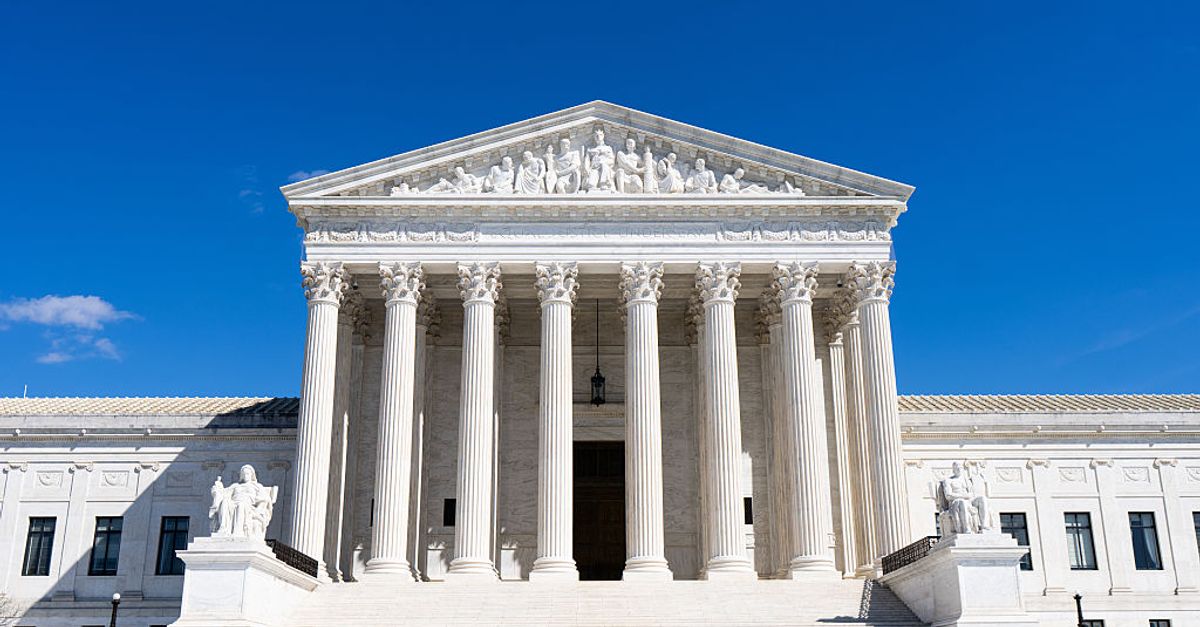
美国最高法院周二拒绝恢复拜登政府时期的一项允许移民法官暂停部分驱逐程序的规定。在一份简短的、未署名的命令中,法院驳回了三座城市和一个为移民提供法律服务的团体提出的请求,该请求旨在暂停德克萨斯州与美国司法部达成的一项协议,该协议废除了这项规定。没有记录在案的异议。
The Supreme Court on Tuesday declined to restore a Biden-era regulation that allows immigration judges to suspend some deportation proceedings. In a brief, unsigned order, the court turned down a request from three cities and a group that provides legal services to immigrants to pause an agreement between Texas and the U.S. Department of Justice that threw out the rule. There were no noted dissents.
争议的核心规定被称为“行政结案”,由司法部下属的移民审查执行办公室于2024年通过。根据该规定,移民法官可以暂停部分驱逐程序——例如,允许犯罪受害者或证人向美国公民及移民服务局(一个独立机构)寻求庇护等救济。
The regulation at the center of the dispute, which provides what is known as “administrative closure,” was adopted by the Executive Office for Immigration Review, part of the Department of Justice, in 2024. Under it, immigration judges may suspend some deportation proceedings – for example, to allow a crime victim or witness to seek relief, such as asylum, from the U.S. Citizenship and Immigration Services, which is a separate agency.
今年6月,德克萨斯州向威奇托福尔斯的联邦法院提起诉讼,该案被分配给该地区唯一的联邦首席地区法官里德·奥康纳。德州称该“行政结案”规则是“拜登-哈里斯政府破坏我国移民法运动的一部分”,并指控移民审查执行办公室无权通过该规则。德州写道,联邦法律要求移民法官在程序结束时“裁决一名外国人是否可被从美国驱逐出境”。
In June of this year, Texas went to federal court in Wichita Falls, where its case was assigned to Chief U.S. District Judge Reed O’Connor – the only federal judge in that area. Calling the administrative-closure rule “one part of the Biden-Harris Administration’s campaign to undermine our immigration laws,” it alleged that the EOIR does not have the authority to adopt the administrative-closure rule. Instead, it wrote, federal law requires an immigration judge, at the end of a proceeding, to “decide whether an alien is removable from the United States.”
案件提起仅几小时后,司法部和德州便请求奥康纳为德州作出最终判决。司法部还请求他彻底废除该规则,并发布命令明确移民审查执行办公室未来不得通过类似规则。奥康纳当天批准了这些请求。
Just a few hours after the case was filed, the DOJ and Texas asked O’Connor to enter a final judgment for the state. The DOJ also asked him both to throw out the rule altogether and to issue an order making clear that the EOIR could not adopt a similar rule in the future. O’Connor granted those requests on the same day.
8月7日,拥有大量移民人口的三个城市——马里兰州巴尔的摩、康涅狄格州纽黑文和俄亥俄州哥伦布——以及为移民提供法律服务的拉美裔法律中心提出紧急动议,要求加入诉讼,以便在上诉时为行政结案规则辩护,而此时得克萨斯州和联邦政府都不打算这样做。奥康纳以他们缺乏起诉的法律权利(即诉讼资格)为由,驳回了他们的请求。他尤其驳回了这些城市的论点,即取消该规则会给它们造成经济损失,因为其纳税人可能被驱逐出境。
On Aug. 7, three cities with large immigrant populations – Baltimore, Maryland; New Haven, Connecticut; and Columbus, Ohio – and Centro Legal de la Raza, which provides legal services to immigrants, filed an emergency motion to join the case so that they could defend the administrative-closure rule on appeal, when neither Texas nor the federal government intended to do so. O’Connor denied their request on the ground that they lacked a legal right to sue, known as standing. In particular, he rejected the cities’ contention that the elimination of the rule would cost them money because their taxpayers are likely to be deported.
随后,这些挑战者向美国第五巡回上诉法院提出请求,要求阻止得克萨斯州与司法部之间的合意判决,从而在上诉期间恢复行政结案规则,但该法院驳回了他们的请求。
The challengers then went to the U.S. Court of Appeals for the 5th Circuit, which rejected their request to block the consent judgment between Texas and the Department of Justice and thereby reinstate the administrative-closure rule while their appeal continued.
10月9日,挑战者向最高法院提起诉讼,称该同意协议是“恶劣串通”的产物,并请求大法官介入。他们的律师、来自“民主前进”组织的约书亚·萨尔兹曼(Joshua Salzman)辩称,允许该同意协议继续有效可能产生广泛影响。他写道:“如果通过这种公开串通获得的判决被允许继续生效,任何机构都可以通过宣称其不愿为不受青睐的法规辩护,并立即接受全国性救济,来规避管辖行政机构的联邦法律的严格规定。”
On Oct. 9, the challengers came to the Supreme Court, calling the consent agreement the product of “egregious collusion” and asking the justices to step in. Their attorney, Joshua Salzman of Democracy Forward, argued that permitting the consent agreement to stand could have widespread implications. “If a judgment procured through such open collusion is allowed to remain in effect,” he wrote, “any agency can avoid the strictures of the” federal law governing administrative agencies “by advertising its unwillingness to defend a disfavored regulation and by immediately acquiescing to nationwide relief.”
美国司法部长D·约翰·绍尔(D. John Sauer)敦促最高法院维持该协议,他辩称挑战者要求暂停奥康纳法官裁决的请求“试图不当地利用一起关于”挑战者介入案件努力的“明确争端,将其转化为对法院批准该协议实质内容的深远攻击。”德克萨斯州方面则告诉大法官们,暂停奥康纳法官的裁决“将恢复地区法院宣布为非法的规则,重燃德克萨斯州所称的财政和主权损害,并动摇实际当事方已接受的最终判决。”案件提交完毕四天后,法院未发表评论,驳回了挑战者的请求。
Urging the Supreme Court to leave the agreement in place, U.S. Solicitor General D. John Sauer contended that the challengers’ request to pause O’Connor’s ruling “attempts to improperly leverage a clear-cut dispute over” the challengers’ efforts to join the case “into a far-reaching attack on the merits of” the court’s approval of the agreement. For its part, Texas told the justices that putting O’Connor’s ruling on hold “would revive a rule the district court declared unlawful, renew the fiscal and sovereign injuries Texas alleged, and unsettle a final judgment accepted by the actual parties.”Four days after the case was fully briefed, the court denied the challengers’ request without comment.
推荐引用:Amy Howe, Court declines to restore Biden-era regulation allowing some deportation proceedings to be suspended, SCOTUSblog (Oct. 27, 2026, 12:49 PM)
Recommended Citation: Amy Howe, Court declines to restore Biden-era regulation allowing some deportation proceedings to be suspended, SCOTUSblog (Oct. 27, 2026, 12:49 PM),