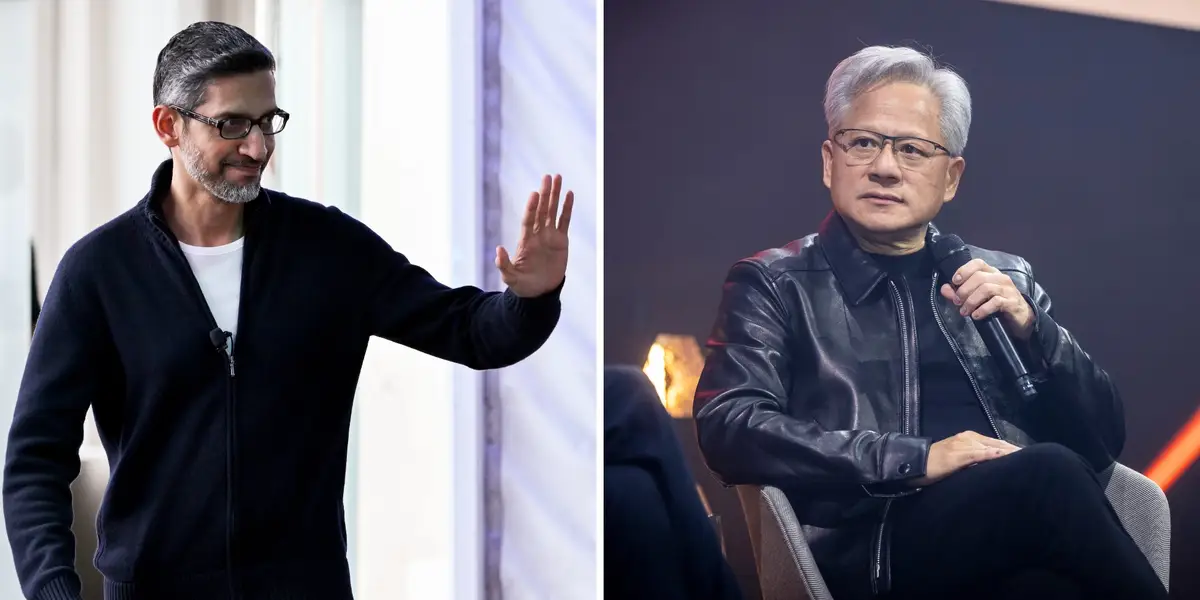
今年早些时候,英伟达首席执行官黄仁勋淡化了其他公司研发竞争性人工智能芯片的威胁,其中包括谷歌。“没有Anthropic,TPU又怎么会有任何增长呢?”他在接受播客主持人Dwarkesh Patel采访时说,指的是谷歌的定制芯片。“这100%是因为Anthropic。”情况已不再如此。周二,谷歌和甲骨文宣布了一项重磅交易,谷歌的TPU(Tensor Processing Units,张量处理单元)将从明年起向甲骨文云客户提供。
Earlier this year, Nvidia CEO Jensen Huang downplayed the threat of other companies building competing AI chips, including Google. "Without Anthropic, why would there be any TPU growth at all?" he said in an interview with podcaster Dwarkesh Patel, referring to Google's custom chips. "It's 100% Anthropic." That is no longer the case. On Tuesday, Google and Oracle announced a blockbuster deal that will see Google's TPUs, short for Tensor Processing Units, made available to Oracle cloud customers from next year.
正如两家公司在联合公告中强调的,这是谷歌TPU首次在其自身平台之外的超大规模云平台上提供。Anthropic并非英伟达唯一需要担心的对象。OpenAI目前有一个软件工程师职位空缺,负责优化其模型以适配TPU,而《The Information》周二报道称,OpenAI计划从谷歌购买TPU。与此同时,多位分析师预测,随着越来越多的公司采用多芯片策略来分散风险,谷歌的TPU业务即将爆发——这为谷歌和其他公司进一步侵入英伟达的领地提供了机会。
As the companies underscored in a joint announcement, it's the first time Google's TPUs have been offered on a hyperscaler's platform beyond its own. Anthropic isn't the only one Nvidia should be worried about. OpenAI currently has a job listing for a software engineer to optimize its models for TPUs, and The Information reported Tuesday that OpenAI plans to buy TPUs from Google. Meanwhile, several analysts have predicted Google's TPU business is about to explode as more companies hedge their bets with a multichip strategy — providing an opening for Google and others to further move onto Nvidia's turf.
尽管如此,英伟达的芯片业务仍远超其他所有人,包括谷歌,而谷歌也是英伟达GPU的大客户。然而,谷歌的AI芯片——该公司十多年前开始研发,用于驱动搜索和其他产品——可能即将腾飞。Anthropic本周提交的IPO文件显示,该公司计划在2026年4月至2033年7月期间,在谷歌算力上花费1145亿美元。虽然文件未说明其中有多少将专门用于TPU,但其估计,从谷歌和其他提供商处购买TPU算力的支出将在1250亿至1500亿美元之间。
Despite this, Nvidia's chip business still eclipses everyone else's, including Google, which is also a big customer of Nvidia's GPUs. Yet Google's AI chips, which the company began building more than a decade ago to power search and other products, might be poised for takeoff. In its IPO paperwork filed this week, Anthropic said it planned to spend $114.5 billion on Google compute between April 2026 and July 2033. While it didn't say how much of that would be going to TPUs specifically, it did estimate spending between $125 billion and $150 billion for TPU capacity from Google and other providers.
在同一份文件中,Anthropic还表示,除了使用英伟达和谷歌的芯片外,还在使用亚马逊的Trainium芯片和AMD的GPU。总而言之,这可能正是英伟达最担心的噩梦场景正在成为现实。
In the same filing, Anthropic said it's also using Amazon's Trainium chips and AMD's GPUs, in addition to chips from Nvidia and Google. All told, this might be Nvidia's nightmare scenario coming true.
如果公司越来越多地采用多芯片策略,可能会削弱英伟达的定价权。谷歌拒绝置评,英伟达和OpenAI未回应置评请求。
If companies are increasingly using a multichip strategy, it could hamper Nvidia's pricing power. Google declined to comment, and Nvidia and OpenAI did not respond to requests for comment.
谷歌的TPU业务可能才刚刚起步。日本银行集团瑞穗(Mizuho)本月发布的研报预测,TPU营收将在2026年达到280亿美元,2027年达到670亿美元。瑞穗称,到2028年这一数字可能高达1000亿美元,而TD Cowen分析师约翰·布莱克利奇(John Blackledge)预测可能达到1380亿美元,占谷歌云2028年营收的34%。这一数字仍远不及英伟达,后者仅上一季度营收就报告为962亿美元,市场周三反应平淡,其股价持平。
Google's TPU business may only be getting started. In notes published this month, Japanese banking group Mizuho projected TPU revenue of $28 billion for 2026 and $67 billion in 2027. Mizuho said Google could see that number reach as high as $100 billion in 2028, while TD Cowen's John Blackledge projected it could reach $138 billion, accounting for 34% of Google Cloud's 2028 revenue. That number is still dwarfed by Nvidia, which reported $96.2 billion in revenue in the previous quarter alone, and the market reacted with a shrug on Wednesday as its share price stayed flat.
不过,一些分析师认为市场低估了谷歌,尤其是随着更多公司寻求减少对英伟达GPU的依赖。“我们认为,谷歌的TPU硬件业务正成为一个实质性更大的机会,远超目前共识预期所反映的水平,”瑞穗分析师在10月18日发布的研报中写道,并补充称,直接出售TPU——而非从谷歌自有数据中心租赁——可能缓解谷歌激进的资本支出。
Some analysts, though, think the market is underestimating Google, especially as more companies look to reduce their reliance on Nvidia's GPUs. "We believe Google's TPU hardware business is emerging as a materially larger opportunity than what is currently reflected in consensus estimates," Mizuho analysts wrote in a note published October 18, adding that selling TPUs outright — rather than renting them from Google's own data centers — could ease Google's aggressive capex spending.
即便该支出继续飙升——目前没有迹象显示脚会从油门上移开——美国银行分析师称,与同行相比,谷歌的大手笔投入看起来“相对高效”,因为TPU持续为公司自身的AI工作提供动力。
And even if that spending continues to soar — and right now, there are no signs the foot is coming off the accelerator — analysts at Bank of America said Google's cash-splashing looks "relatively efficient" compared to its peers, as TPUs continue to power the company's own AI efforts.
对谷歌而言,这是十多年来在芯片投资上的回报,这些芯片最初旨在让搜索更智能。瑞穗本月还表示,随着AI代理蚕食谷歌的核心搜索业务,TPU业务也可能成为某种缓冲。
For Google, it's the payoff of a decade-plus investment in silicon that was originally designed to make Search smarter. It could also act as something of a buffer against damage to its core search business as AI agents eat Google's lunch, Mizuho also said this month.