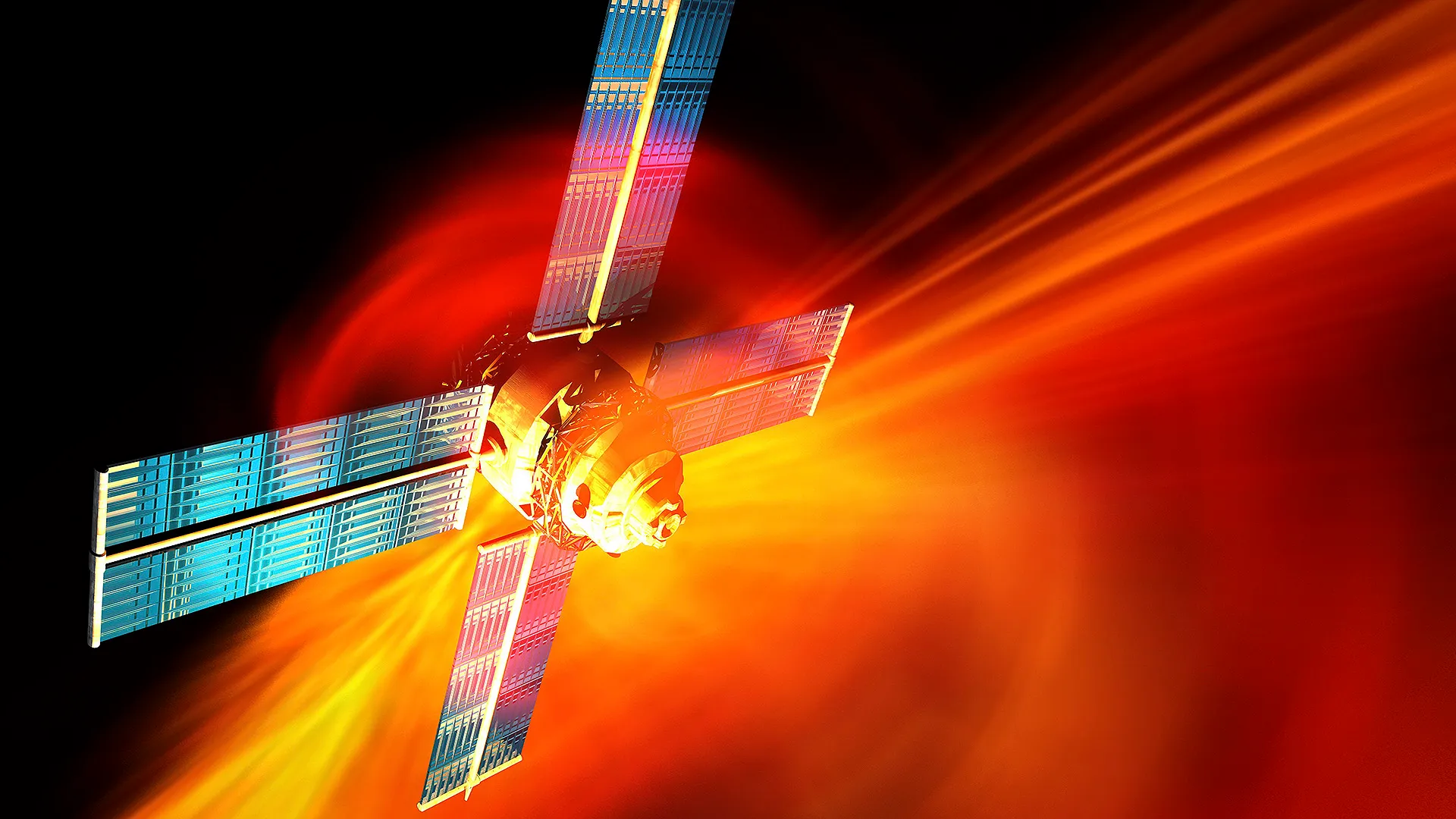
据国防情报局(DIA)一份新报告称,到本世纪末,中国可能利用基于空间的定向能武器威胁卫星。这将为北京的武库增添一种危险的新反卫星(ASAT)能力,而其武库已包括能够干扰、降级或损坏卫星的地基定向能武器。该报告于周一发布,再次展示了未来的前景,因为太空冲突的可能性只会继续增加。
By the end of the decade, China could threaten satellites with space-based directed energy weapons, according to a new report from the Defense Intelligence Agency (DIA). This would add a dangerous new anti-satellite (ASAT) capability to Beijing’s arsenal, which already includes ground-based directed energy weapons that can disrupt, degrade, or damage satellites. The report, released Monday, offered another glimpse into what is to come as the potential for conflict in space only continues to grow .
这份非密级的DIA报告主要基于公开源信息,截止日期为7月。其发布旨在详述中国、俄罗斯以及新兴大国伊朗和朝鲜对全球在太空领域利益构成的日益增长的威胁。该报告的发布正值美国对自身反卫星能力变得越来越公开之际。例如,上个月,美国军方官员首次承认美国在轨拥有武器。
The unclassified DIA report is based largely on open-source information, with a cutoff date of July. It was published to detail growing threats from China, Russia and emerging powers Iran and North Korea to global interests in the space domain. The report’s release also took place as the U.S. is becoming increasingly open about its own ASAT capabilities. Last month, for instance, U.S. military officials acknowledged for the first time that America has weapons in orbit .
报告《太空安全挑战》解释称:“解放军可能认为定向能武器是理想的反太空系统,因为它们能对卫星造成可逆和不可逆两种效果。”“到2020年代末,中国可能部署基于空间的定向能系统和功率更高的地基定向能系统,能够威胁更高轨道上的卫星。”
“The PLA probably considers DEWs [directed energy weapons] ideal counterspace systems because they can cause both reversible and nonreversible effects against satellites,” the report, titled Challenges to Security in Space , explains. “By the late 2020s, China may field space-based directed energy systems and higher-powered ground-based directed energy systems capable of threatening satellites in higher orbits.”
报告未提供关于中国正在开发激光、高功率微波、粒子束还是这些能力组合的具体细节。我们已联系该机构寻求更多信息,但未立即收到回复。
The report did not provide specifics about whether China is developing lasers, high-powered microwaves, particle beams or a combination of these capabilities. We have reached out to the agency for more information but did not immediately receive a response.
可逆攻击包括干扰卫星信号或暂时致盲其光学系统的努力。后者可通过激光眩目器等设备实现。
Reversible attacks include efforts to jam satellite signals or temporarily blind their optics. The latter can be done with devices like laser dazzlers .
美国国防情报局(DIA)报告称,2021年中国人民解放军媒体“断言激光武器正步入黄金时代;它们引用致盲(即暂时使传感器失明)作为激光武器众多作战用途之一。”
DIA reported that in 2021 the People’s Liberation Army media “asserted that laser weapons were entering a golden age; they cited dazzling (i.e., temporarily blinding a sensor) as one of the many operational uses of laser weapons.”
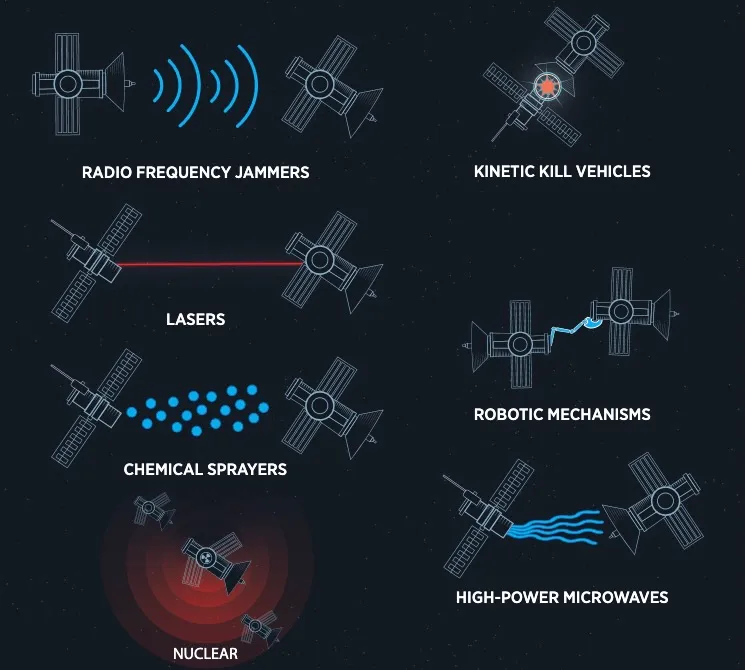
不可逆攻击会造成永久性损伤。这也可能涉及一系列彻底毁灭性选项,从定向能攻击——用激光在卫星上烧穿一个洞,或用高功率微波辐射烧毁其精密系统——到向其太阳能电池板喷洒气溶胶颜料,再到直接上升拦截,甚至在太空引爆核武器。利用另一颗卫星对卫星进行物理篡改是另一种选项。
Non-reversible attacks cause permanent damage. It could also involve a range of fully destructive options from directed energy attacks that burn a hole in a satellite using a laser or frying its delicate systems using a high-power microwave emissions to spraying its solar panels with aerosol pigment to direct-ascent intercepts and even nuclear weapon detonations in space . Physically tampering with the satellite using another satellite is another option.
一张展示一颗卫星在轨道上可能攻击另一颗卫星的各种方式的信息图。(美国国防情报局)中国在轨道上的存在近年来大幅扩张。报告指出,截至2026年7月,北京的情报、监视和侦察(ISR)卫星舰队“包含510多套系统,自2018年以来增加了两倍多。虽然这些侦察卫星许多表面上隶属于商业和民用任务,但其能力的两用性质以及中国可能的军民融合政策,意味着它们收集的数据或图像可供解放军使用。”
An infographic showing the various ways one satellite might attack another in orbit. (DIA) China’s presence in orbit has been dramatically expanding in recent years. The report pointed out that as of July 2026, Beijing’s intelligence, surveillance and reconnaissance (ISR) satellite fleet “contained more than 510 systems, having more than tripled since 2018. While many of these ISR satellites are ostensibly affiliated with commercial and civil missions, the dual-use nature of their capabilities and possibly the Chinese military-civil fusion policies means the data or imagery they collect can be used by the PLA.”
中国还在拓展新概念能力,如航天飞机发展,我们昨天基于国防情报局报告的细节曾在一篇报道中重点介绍了其能力。
China is also expanding its capabilities to new concepts like spaceplane developments, which we highlighted in a story about their capabilities yesterday based on details from the DIA report.
除了可能部署在卫星上,定向能武器也可能被加装到航天飞机上,后者的运行方式比卫星更难预测,即使仅用于实验角色或有限能力组合。
In addition to possibly being placed on satellites, DEWs could also potentially be added to spaceplanes, which can operate in a less predictable fashion than satellites, even if just for experimental roles or limited capability sets.
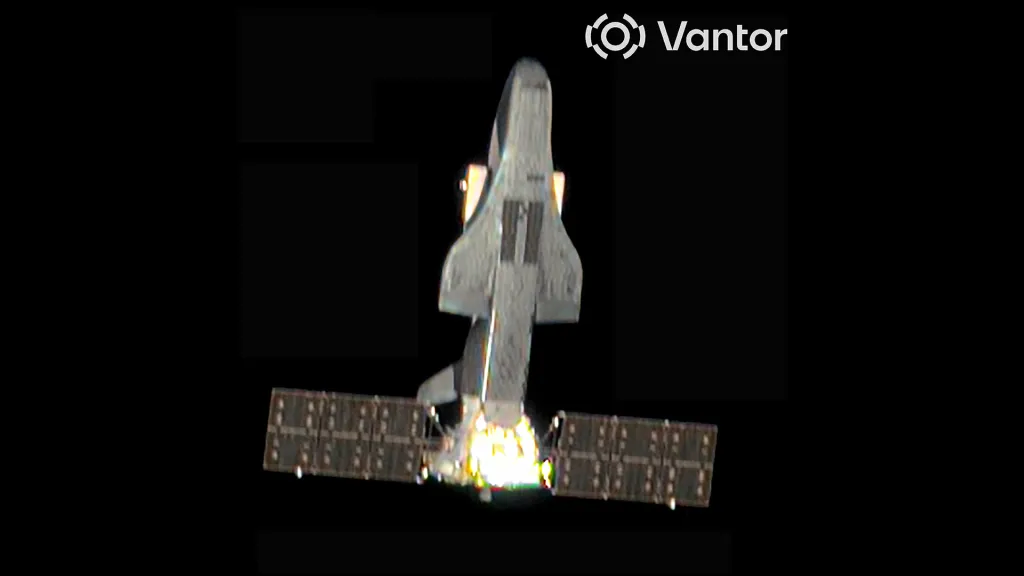
一架可重复使用的中国航天飞机。(卫星图像 ©2026 Vantor.) Vantor尽管细节稀少,但报告重申了一个现实:中国学术界多年来一直在致力于空间武器研发。
A reusable Chinese spaceplane. (Satellite image ©2026 Vantor.) Vantor Though thin on details, the report reiterated the reality that China’s academia has been working toward space-based weapons for years.
美国国防情报局解释称:“至少自2006年以来,政府关联学者一直在研究与空间动能武器相关的航空航天工程技术——这类武器用于从轨道上攻击地面、海上或空中目标。中国的空间动能武器研究包括再入方法、有效载荷分离、运载器以及用于瞄准目的的转移轨道。”
“Since at least 2006, government-affiliated academics have investigated aerospace engineering technologies associated with space-based kinetic weapons—a class of weapon used to attack ground, sea, or air targets from orbit,” the DIA explained. “China’s space-based kinetic weapons research included methods of reentry, separation of payload, delivery vehicles, and transfer orbits for targeting purposes.”
美国国防情报局指出,解放军的反卫星武器理论在很大程度上“将这些系统描述为对抗外部势力介入地区冲突的有效威慑手段,或作为管控冲突升级的一种方法。”然而,如果中国选择先发制人,首要和主要目标之一将是美国及其盟友依赖的、用于空间感知和通信的卫星。正如我们多次解释的那样,即使是针对这些空间基础设施的可逆攻击,也可能对美军有效开展战斗行动的能力产生重大影响。
Much of the PLA’s ASAT doctrine “characterizes the systems as useful deterrents against external involvement in a regional conflict or as a method to manage conflict escalation,” the DIA proffered. However, should China opt to strike first, one of the first and main targets would be satellites the U.S. and allies rely on for space-based sensing and communications. As we have often explained , even reversible attacks against any of this space-based infrastructure could have major impacts on the U.S. military’s ability to effectively conduct combat operations.
美国国防情报局报告指出,迄今为止,中国公开已知的空间反卫星能力集中在能够接近并捕获其他卫星的卫星上,我们过去曾对此进行过报道。在其中一个案例中,一颗中国卫星于2022年被观测到抓住另一颗卫星,将其从正常的地球同步轨道拉入“超级墓地漂移轨道”。这一机动引发了关于此类设计用于接近其他卫星以进行检查或操纵的卫星潜在应用的疑问,并加剧了人们对中国航天计划整体的日益担忧。
The DIA report noted that to date, China’s publicly known space-based ASAT capabilities center on satellites that can approach and grab others, which we have written about in the past . In one such instance, a Chinese satellite was observed in 2022 grabbing another satellite and pulling it out of its normal geosynchronous orbit and into a “super-graveyard drift orbit.”The maneuver raised questions about the potential applications of these types of satellites designed to maneuver close to other satellites for inspection or manipulation and added to growing concerns about China’s space program overall.
本月早些时候,一颗俄罗斯卫星“宇宙-2612”号可能距离“ICEYE-X36”卫星仅约85英尺(26米),这一事件凸显了卫星已能对其他卫星构成的威胁。“ICEYE-X36”是一颗在美国注册的卫星,属于商业影像提供商ICEYE公司,当时正在向乌克兰提供影像。虽然未检测到接触或损坏,但该事件引发了担忧,即俄罗斯卫星可能故意甚至无意中损害了ICEYE卫星。您可以在下方观看此次相遇部分过程的延时视频。
The threat satellites can already pose to others was highlighted earlier this month, when a Russian satellite, Kosmos 2612, may have passed within approximately 85 feet (26 meters) of ICEYE-X36. That is a U.S.-registered satellite belonging to commercial imagery provider ICEYE that was providing imagery to Ukraine. While no contact or damage was detected, the incident raised concerns that the Russian satellite could have harmed the ICEYE one purposely or even inadvertently. You can see a time-lapse video of part of that encounter below.
今早首次穿越南美上空、部分多云天气下,ICEYE-X36(编号59103)与COSMOS 2612(编号68762)相遇过程的短延时片段。pic.twitter.com/t8RhwmKcV4— s2a systems (@s2a_systems) 2026年10月18日在讨论能够攻击其他在轨物体的太空武器及其可能造成的影响时,应当注意到,这一领域固有的特性使得在发生任何形式攻击时,归因变得极其复杂。卫星确实会发生故障,有时后果灾难性,但并不总能确定原因。因此,归因困难可能会延迟必要的反应,甚至无意中引发反应。
Short time-lapse of part of this morning’s first pass of ICEYE-X36 (59103) and COSMOS 2612 (68762) over South America under partly cloudy skies. pic.twitter.com/t8RhwmKcV4 — s2a systems (@s2a_systems) October 18, 2026 When it comes to discussing weapons in space capable of attacking other on-orbit objects and the effects they could impose, it should be noted that this domain inherently creates complications when it comes to attributing any form of attack , should one occur. Satellites do malfunction, sometimes with catastrophic results, but it is not always possible to determine the cause. As a result, the challenge in attributing an event could delay a response, if needed, or spark one inadvertently.
正如我们此前报道,1月,“一颗2014年发射的俄罗斯检查卫星似乎意外解体。7月底左右,仅发射约四个月的中国侦察卫星‘遥感五十号02星’也在轨道上解体。9月13日,美国冷战时期的‘法拉三号’间谍卫星(也称为USA 32)遭遇类似命运。撰写本文时,尚无确凿证据表明这些事件中的任何一起是敌对行动而非某种事故造成的。”
As we previously reported , in January, “ a Russian inspector satellite launched in 2014 appeared to break up unexpectedly. Sometime around the end of July, the Chinese reconnaissance satellite Yaogan 50-02 , which had only been launched some four months earlier, also broke up in orbit. On Sept. 13, a similar fate befell the U.S. Cold War-era Farrah III spy satellite , also known as USA 32. At the time of writing, no firm evidence has emerged to indicate any of these incidents were the result of hostile action rather than accidents of some kind. ”
特别是定向能攻击,即一颗卫星攻击另一颗卫星,可能很难归因,因为它们可以在太空真空中跨越更长距离发生。据推测,它们还能让攻击卫星在相对较短的时间内打击多个目标,使其成为轨道上最具吸引力的潜在反卫星能力之一。
Directed energy attacks, in particular, from one satellite against another, may be very hard to attribute as they can happen over longer distances in the vacuum of space. They would also presumably allow the attacking satellite to engage multiple targets, even in a relatively short period of time, making it one of the most attractive potential anti-satellite capabilities on orbit.
除了谈论中国的空基反卫星能力,DIA报告还对解放军以及俄罗斯、朝鲜和伊朗的各种威胁表示担忧。
In addition to talking about Chinese space-based ASAT capabilities, the DIA report raised concerns about a wide array of threats from the PLA as well as Russia, North Korea and Iran.
报告未涉及俄罗斯的空基定向能武器计划。不过,报告确实指出,与中国一样,俄罗斯已拥有能够影响美国及盟友卫星的地基激光系统。这些系统的威胁并非理论上的。它们是中国和俄罗斯多年来针对美国采取的一系列反卫星措施的一部分。
The report did not address Russian space-based directed energy weapons plans. However, it did note that, like China, Russia does have ground-based laser systems already capable of affecting U.S. and allied satellites. The threat from these systems is not theoretical. They are part of an array of ASAT measures that China and Russia have used against the U.S. for years.
例如,早在2021年,一位美国太空军高级将领曾警告称,俄罗斯和中国每天都在对美国卫星发动“可逆攻击”,如电子战干扰、用激光暂时致盲光学传感器以及网络攻击。
For instance, back in 2021, a top U.S. Space Force general warned that Russia and China were launching “reversible attacks,” such as electronic warfare jamming , temporarily blinding optics with lasers , and cyberattacks, on U.S. satellites “every single day.”
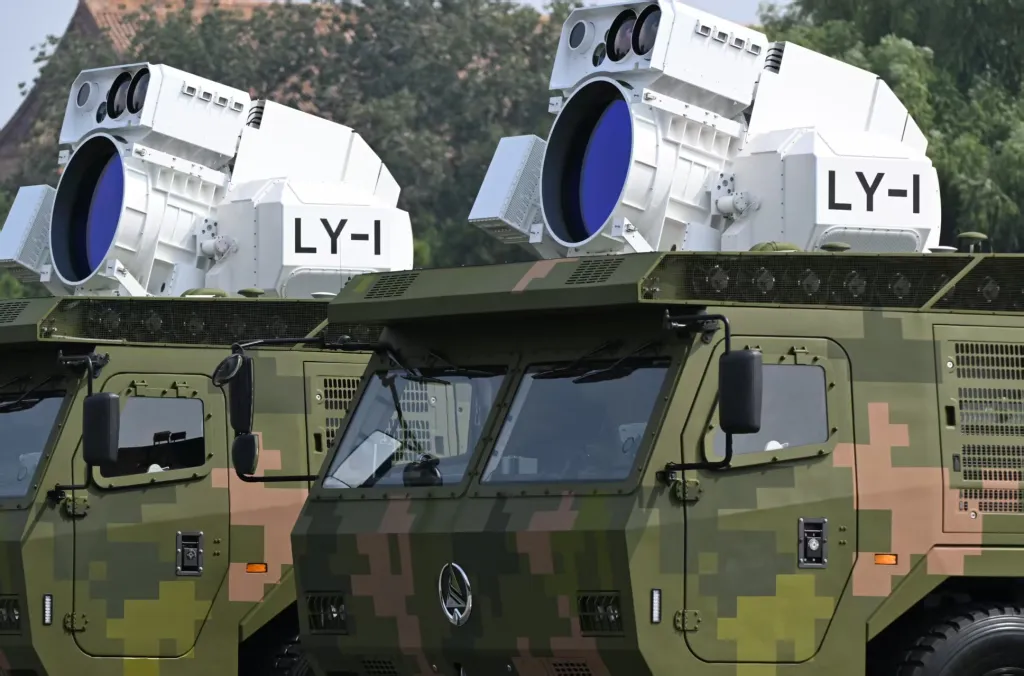
2025年9月3日,在中国北京天安门广场举行的抗战胜利阅兵式上,中国的LY-1激光武器系统正在展示。视觉中国DIA报告总结道:“中国和俄罗斯将继续追求新的和改进的反空间能力,以利用美国及其盟友被认为依赖空基资产这一弱点。”
A Chinese LY-1 laser weapon system on display at the V-Day military parade at Tiananmen Square on September 3, 2025, in Beijing, China. VCG “China and Russia will continue to pursue new and improved counterspace capabilities to exploit a perceived U.S. and allied reliance on space-based assets,” DIA’s report concluded.
DIA指出:“中国已开发并很可能将继续开发用于攻击轨道卫星的武器,以破坏、损毁和摧毁对手的空间能力。俄罗斯目前有能力利用地基和空基系统打击低地球轨道卫星,并有意开发针对更远轨道目标的系统。”
“China has developed and probably will continue to develop weapons for use against satellites in orbit to disrupt, damage and destroy adversary space capabilities,” the DIA suggested. “Russia is currently capable of targeting satellites in LEO with both terrestrial and orbital systems and is interested in developing systems for targeting more distant orbits.”
美国国防情报局警告称,在太空战方面,中国和俄罗斯并非美国唯一需要担心的对手。
China and Russia aren’t the only adversaries the U.S. should be concerned about when it comes to space warfare, the DIA warned.
该机构表示:“2026年,随着‘史诗之怒行动’的开始,美国和伊朗对彼此的太空能力采取了进攻行动,以削弱和扰乱双方的军事行动。伊朗和朝鲜将继续建设其民用、军事和太空能力,并维持各自的干扰能力。”
“In 2026, with the onset of Operation Epic Fury, the U.S. and Iran took offensive actions against each other’s space capabilities to degrade and disrupt military actions on both sides,” the agency stated. “Iran and North Korea will continue to build their civil and military and space capabilities and maintain their respective jamming capabilities.”
2025年7月2日,分配到第4电磁战中队、任务德尔塔3的美国太空军卫士在科罗拉多州彼得森太空军基地使用反通信系统(CCS)进行训练和维护。(美国太空军照片,摄影:安伯·马林斯)与此同时,美国当前天基定向能武器计划的范围尚未公开。不过,在我们去年撰写的一篇关于唐纳德·特朗普总统“金穹”导弹防御系统计划的报道中,我们指出了定向能武器在该计划中可能发挥的作用。
U.S. Space Force Guardians assigned to the 4th Electromagnetic Warfare Squadron, Mission Delta 3, conduct training and maintenance with the Counter Communications System (CCS) at Peterson Space Force Base, Colo., July 2, 2025. (U.S. Space Force photo by Amber Mullins) Meanwhile, the extent of current U.S. plans for space-based directed energy weapons is not publicly known. However, in a story we wrote last year about President Donald Trump’s plans for the Golden Dome missile shield system , we noted the role that directed energy weapons could play in that effort.
多年来,美国的天基武器计划一直笼罩在保密之中,但正如我们在本文前面提到的,这种情况在上个月发生了变化。
For years, U.S. space-based weapons plans have been shrouded in secrecy, but as we mentioned earlier in this story, that changed last month.
在美国空军与太空军协会(AFA)2026年航空、太空与网络会议上——TWZ出席了该会议——空军部长特洛伊·梅因克在主旨演讲中作出重磅承认,披露目前已有在轨武器部署,用于保护美国在太空的利益。
During his keynote speech at the Air & Space Forces Association’s (AFA) 2026 Air, Space & Cyber Conference , at which TWZ was in attendance, Secretary of the Air Force Troy Meink made a bombshell admission , disclosing that there are on-orbit weapons now deployed to protect America’s interests in space .
梅因克拒绝透露这些武器的具体类型。然而,无论它们是什么,这些武器都支持“太空控制”任务集,美国太空军已直接向TWZ分享了有关该任务集的更多细节。
Meink declined to offer any details about what kinds of weapons they were. However, whatever they are, these weapons support a Space Control mission set, and the U.S. Space Force shared additional details about that directly with TWZ .
“空间控制涵盖了争夺和控制空间领域所需的任务领域——运用动能和非动能手段,通过干扰、降级甚至必要时摧毁的方式影响对手能力,”一位太空军发言人告诉我们。“这些能力可根据作战司令部的指令,用于进攻和防御目的。美国军事行动遵守国际法,包括《外层空间条约》和《武装冲突法》。”
“Space control encapsulates the mission areas required to contest and control the space domain – employing kinetic and non-kinetic means to affect adversary capabilities through disruption, degradation and even destruction, if necessary,” a Space Force spokesperson told us. “These capabilities can be employed for offensive and defensive purposes at the direction of combatant commands. U.S. military operations are conducted in compliance with international law, including the Outer Space Treaty and LOAC [the Law of Armed Conflict ].”
虽然国防情报局的报告并未就中国的空间定向能计划做出任何新披露,但它严厉提醒我们,这是一种在未来几年可能构成日益扩大威胁的能力。帖子 美国
While the DIA report does not make any new revelations about China’s space-based directed energy program, it serves as a stark reminder that this is a capability that could present a widening threat in the next few years. The post U.S.