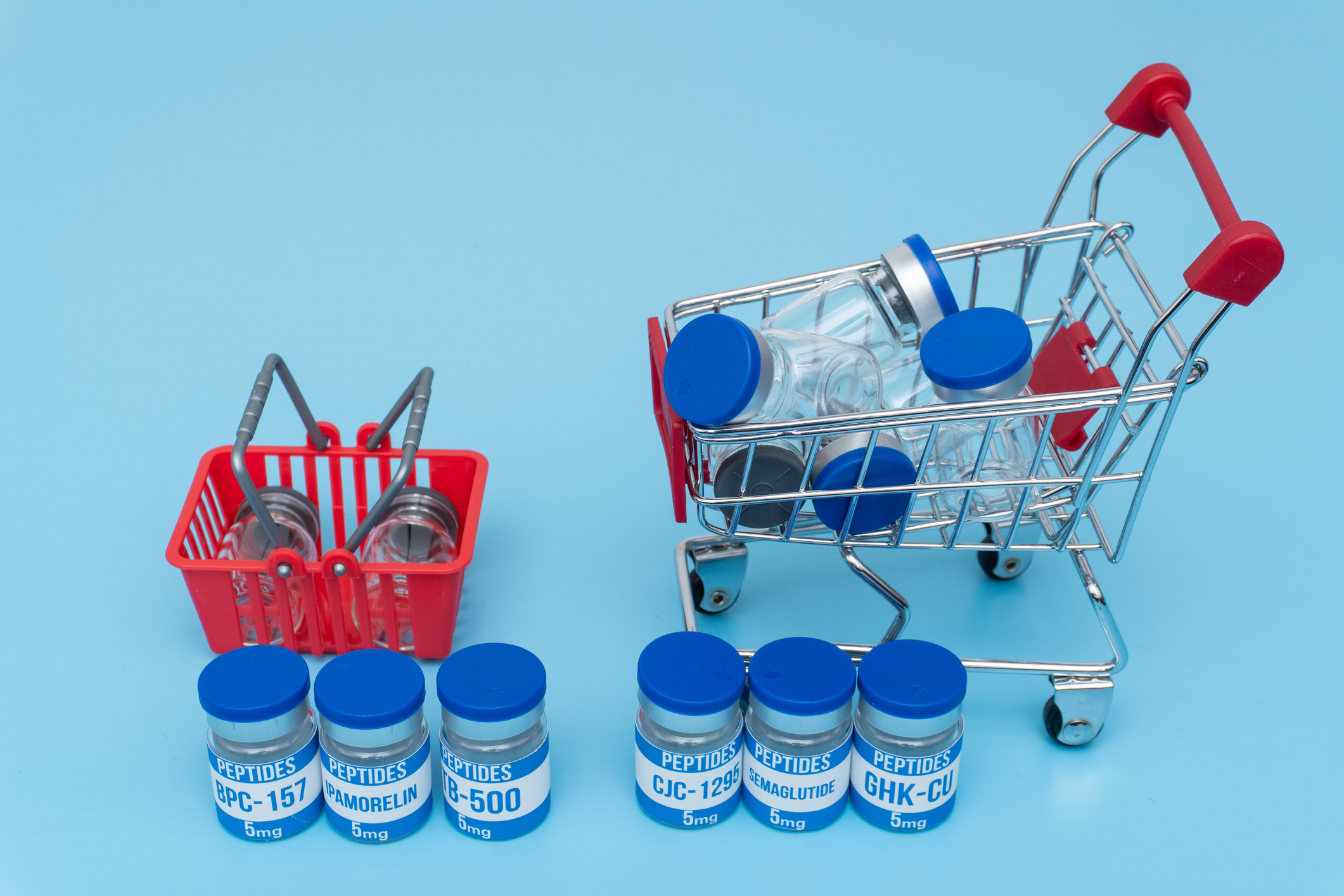
美国卫生与公众服务部(HHS)将不对向消费者配发某些未获批准肽类药物的持牌药剂师采取行动,根据10月28日在《联邦纪事》上发布的一项新政策。
The U.S. Department of Health and Human Services (HHS) will not take action against licensed pharmacists who dispense certain unapproved peptides to consumers, according to a new policy published Oct. 28 in the Federal.
肽是氨基酸短链,人们将其注射入体内。HHS部长小罗伯特·F·肯尼迪过去曾表示,他是这些未获批准药物的“忠实拥趸”,而这些药物的益处在科学上基本未获证实。
Peptides are short chains of amino acids that people inject into their bodies. HHS Secretary Robert F. Kennedy Jr. has said in the past that he is a “big fan” of the unapproved drugs, whose benefits are largely scientifically unproven.
美国食品药品监督管理局(FDA)因安全顾虑,于2023年实际上禁止了肽类药物。但FDA的一个委员会于7月召开会议,审查肽类药物的证据,并建议是否采取极不寻常的步骤——允许药房在未经科学审查的情况下配发这些药物。该委员会由新任命的成员组成,他们曾为有意推广或配发肽类药物的公司提供咨询或受雇于这些公司;尽管FDA工作人员建议反对,该委员会仍建议允许专业药房配发六种肽。
The U.S. Food and Drug Administration (FDA) essentially banned peptides in 2023 because of safety concerns. But an FDA committee met in July to review the evidence on peptides and recommend whether or not to take the highly unusual step of allowing pharmacies to dispense them absent scientific review. The committee was made up of new appointees who consulted with or were employed by companies that were interested in promoting or dispensing peptides; it recommended allowing specialty pharmacies to dispense six peptides, despite FDA staff advising against the move.
这项由肯尼迪签署的新政策称,在7月的会议之后,HHS认为在从配制药房获取使用这些肽方面存在“重大兴趣”。“因此,为扩大和改善患者获取渠道,HHS不打算对使用附录A所列肽类原料药配制药品的州持牌药房、联邦设施或持牌医生采取执法行动,”该通知称。政策称将于10月30日在《联邦纪事》上发布。附录A所列肽类为BPC-157、Epitalon、KPV、MOTS-c、Semax和TB-500——即该委员会今夏建议允许的同六种肽。
The new policy—which was signed by Kennedy—says that after the July meetings, HHS believed there was “significant interest” in the use of obtaining these peptides from compounding pharmacies. “Therefore, to expand and improve patient access, HHS does not intend to take enforcement action against a State-licensed pharmacy, Federal facility, or licensed physician compounding a drug product using a peptide bulk drug substance found in Appendix A,” the notice said. The policy said that it was going to be published in the Federal on Oct. 30. The peptides listed in Appendix A were BPC-157, Epitalon, KPV, MOTS-c, Semax, and TB-500—the same ones the committee recommended allowing this summer.
美国卫生与公众服务部(HHS)网站上另一份文件称,在审查了7月召开会议的委员会建议后,“部长已确定该政策在适当保护患者安全的同时,推进了患者的选择权和自由。”允许肽类药物复方制剂的决定,对Hims & Hers等公司是一大利好,据报道该公司一直在筹备于2026年推出肽类产品。分析师称,肽类药物市场规模可能高达33亿美元。10月28日宣布该消息后,Hims股价飙升5%。
A separate document posted on the HHS website says that after reviewing the recommendations of the committee that met in July, “the Secretary has determined that the policy advances patient choice and freedom while appropriately protecting patient safety.”The decision to allow the compounding of peptides is a boon for companies like Hims & Hers, which had reportedly been preparing to offer peptides in 2026. Analysts have said the market for peptides could be as high as $3.3 billion. Hims stock shot up 5% after the Oct. 28 announcement.
美国肽类医学学会主席Lee Rosebush在一份声明中表示,这一举措“代表了消除不安全灰色和黑色市场、通过合法的医生监管护理恢复患者安全获取渠道的关键一步”,该学会是一个新成立的倡导团体。
The move “represents a vital step toward eliminating the unsafe gray and black markets, restoring safe patient access through legitimate, physician-supervised care,” said Lee Rosebush, chair of the American Academy of Peptide Medicine, a new advocacy group, in a statement.
其他公共卫生专业人士对该决定发出警报,称这允许复方药房在缺乏科学证据的情况下配发这些药物。“美国消费者不应被当作小白鼠,”美国安全有效药物组织首席政策官Fred Mills在一份声明中说。“既能推进患者安全,又能保障合法药物获取,但这不是办法。”在7月的听证会上,包括公共利益科学中心在内的消费者倡导团体曾辩称,允许肽类药物跳过严格的、基于证据的FDA批准流程将是前所未有且对消费者危险的做法。
Other public-health professionals raised alarm about the decision, which they say allows compounding pharmacies to dispense these medications absent scientific evidence. “American consumers should not be treated like guinea pigs,” said Fred Mills, chief policy officer for Americans for Safe and Effective Medicines, in a statement. “It is possible to advance both patient safety and access to legitimate medicines, but this is not it.”At the July hearings, consumer advocacy groups including the Center for Science in the Public Interest had argued that allowing peptides to skip a rigorous evidence-based FDA approval process would be unprecedented and dangerous to consumers.
许多医生已公开反对允许肽类药物进行配制。“此处考虑的肽类药物属于未经测试、特性不明的实验性药物,不应被允许用于配制产品中,”乔治城大学医学中心药理学与生理学教授阿德里安·富格-伯曼博士在7月会议的公众发言环节表示,并提醒委员会,曾有两名女性在拉斯维加斯的一个节日活动中接受肽类注射后需要紧急救治。
Many physicians have spoken up against allowing peptides to be compounded. “The peptides under consideration here are untested and poorly characterized experimental drugs that should not be allowed in compounded products,” said Dr. Adriane Fugh-Berman, a professor of pharmacology and physiology at Georgetown University Medical Center, at the public comment portion of the July meeting, reminding the committee that two women had required emergency treatment after receiving peptides at a Las Vegas festival.
批评人士还对人们转向配制药房获取未经测试的药物表示担忧。配制药房通常用于根据医生的特定处方调配药物,但近年来,它们大量生产GLP-1类药物(注:胰高血糖素样肽-1受体激动剂),供寻求省钱的患者使用。沃尔ters Kluwer Health公司的药剂师兼合规解决方案临床项目经理安妮·兰伯特表示,肽类药物的热潮将给配制药房带来更大压力,迫使其为远程医疗网站快速生产药物。
Critics also expressed concern that people were turning to compounding pharmacies for untested drugs. Compounding pharmacies are often used to fill specific prescriptions from a doctor, but in recent years, they have mass-produced drugs like GLP-1s for patients looking to save money. The peptide boom will put even more pressure on compounding pharmacies to quickly make drugs for telehealth sites, said Annie Lambert, a pharmacist and clinical program manager for compliance solutions at Wolters Kluwer Health.
她在一份声明中说:“配制药物可以也应该发挥合法的临床作用,从医院到家庭输液,再到在药物短缺时填补空白。但它不能替代FDA批准的制造工艺,而这一区别正是当前许多风险所在。我担心的是,涌入这一领域的药房会急于赚钱,而不是确保满足所有要求,从原料采购、设施条件到员工培训和无菌测试。”新通知发布后不久,多家远程医疗网站已开始推销这六种肽类药物,每种价格在每月199美元至249美元不等。
"Compounding can and should play a legitimate clinical role, from hospitals to home infusion to filling gaps during drug shortages. But it is not a substitute for FDA-approved manufacturing, and that distinction is where a lot of today's risk sits,” she said in a statement. “My concern is that pharmacies rushing into this space will move to make a dollar faster rather than make sure they meet every requirement, from ingredient sourcing and facilities to staff training and sterility testing.”Shortly after the new notice was published, a number of telehealth websites were already marketing the six peptides, each for a price of anywhere from $199 to $249 a month.