分析人士指出,日本希望看到一个更团结、更积极主动的东南亚,因为日本视东盟为应对日益加剧的大国竞争的屏障,而对华盛顿长期印太战略的不确定性加深了东京对该地区未来的担忧。
Japan wants a more united and proactive Southeast Asia as it sees Asean as a bulwark against an intensifying great-power rivalry, analysts say, while uncertainty over Washington’s long-term Indo-Pacific strategy has deepened Tokyo’s concerns about the region’s future.
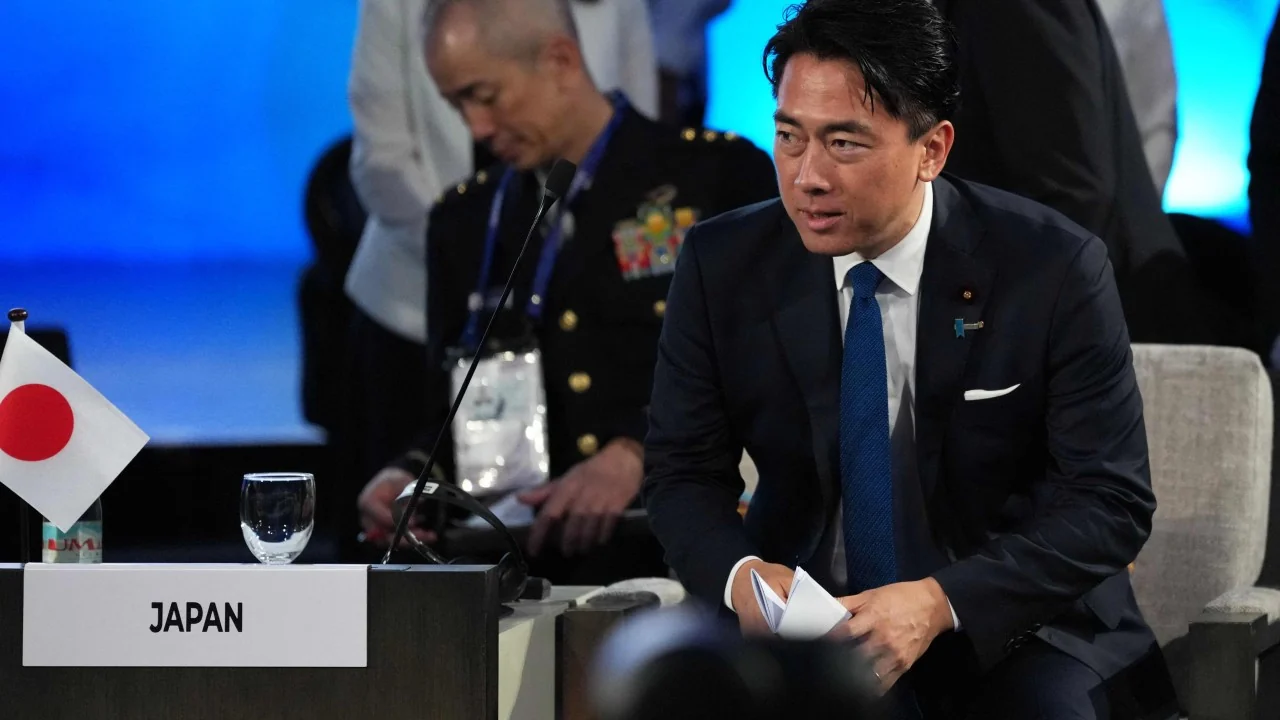
日本防卫大臣小泉进次郎周三敦促东南亚国家加强对新兴安全威胁的集体应对,警告称安全环境“急剧恶化”,地区军事平衡发生变化,增加了“危险误判”的风险。
Japanese Defence Minister Shinjiro Koizumi on Wednesday urged Southeast Asian nations to strengthen their collective response to emerging security threats, warning of a “rapidly deteriorating” security environment and shifts in the regional military balance that raised the risk of “dangerous miscalculations”.
“这些危机不仅仅是适应变化,它们相互重叠、相互放大,”小泉在菲律宾宿务举行的东盟日本防长非正式会议上表示。
“These crises do not merely adapt. They overlap and amplify one another,” Koizumi said at the Asean-Japan Defence Ministers’ Informal Meeting in Cebu.
他敦促东南亚国家联盟维护其团结、中心地位和韧性,并称该集团必须能够克服分歧、设定优先事项,同时与外部伙伴基于共同议程采取行动。
He urged the Association of Southeast Asian Nations to protect its unity, centrality and resilience, and said the bloc must be able to overcome differences and set its priorities while acting on a common agenda with external partners.
“团结意味着尽管存在分歧仍共同合作。中心地位意味着设定地区议程并吸引外部伙伴围绕该议程。韧性意味着在危机中保持基本职能和自主性完好无损,”小泉说。
“Unity means working together despite differences. Centrality means setting the region’s agenda and drawing external partners around it. Resilience means keeping essential functions and autonomy intact in a crisis,” Koizumi said.
该防长还提议更新日本、东盟及集团外伙伴在新兴安全领域的合作,例如人工智能技术、无人系统以及关键海底基础设施保护。“当挑战发生变化时,合作也必须随之改变,”他说。
The defence minister also proposed updating cooperation between Japan, Asean and partners outside the bloc in emerging security areas such as artificial intelligence technology, unmanned systems, and the protection of critical undersea infrastructure. “When challenges change, cooperation must change with them,” he said.
观察人士称,小泉的言论反映了日本将东盟视为更大战略竞争的舞台,同时也视其为推动整个地区务实合作的锚定力量。
Koizumi’s remarks reflect Japan’s perception of Asean as a theatre for greater strategic rivalry, as well as an anchor that enables practical cooperation across the region, observers say.
“小泉的言论表明,日本认为地区力量平衡正在结构性地向不利于现状的方向转变,并担心灰色地带胁迫可能因误判而升级,”新加坡南洋理工大学拉惹勒南国际问题研究院副研究员苏莎拉(Sarah Soh)对《亚洲周刊》(This Week in Asia)表示。
“Koizumi’s remarks show that Japan sees the regional balance shifting structurally against the status quo and fears that grey-zone coercion could escalate through miscalculation,” Sarah Soh, an associate research fellow at the S. Rajaratnam School of International Studies, told This Week in Asia.
“在此背景下,日本视东盟为规范性锚点、一个让所有大国保持参与的包容性平台,以及务实合作的伙伴。”苏莎拉说,虽然小泉分享了日本对地区安全环境恶化的评估,并隐晦提及中国,但他的演讲“主要集中在扩大务实合作、在灾害、供应链和能源方面建设地区韧性,并重申东盟的团结与核心地位”。
“Against this backdrop, Japan sees Asean as a normative anchor, as an inclusive platform that keeps all major powers engaged, and as a partner for practical cooperation.”While Koizumi shared Japan’s assessment of a deteriorating regional security environment, with implicit references to China, his speech “focused largely on expanding practical cooperation and building regional resilience in disasters, supply chains, and energy, alongside a reaffirmation of Asean unity and centrality”, Soh said.
“总体而言,该演讲基调适度,不太可能让东盟成员国感到不安。”哈德逊研究所非常驻研究员长尾聪(Satoru Nagao)表示,东盟可能成为美中权力博弈的舞台,正如冷战时期的中欧是美苏博弈的舞台一样。
“On balance, the speech strikes a measured tone and is unlikely to unsettle Asean member states.”Satoru Nagao, a non-resident fellow at Hudson Institute, said Asean could become a theatre for a US-China power game, much like Central Europe during the US-Soviet Cold War.
“如今,东南亚位于美中之间,由许多小国组成。这意味着它可能成为美中之间的‘中欧’,”总部位于东京的长尾聪说,并补充道,这一情景凸显了东盟团结的重要性。
“Today, Southeast Asia lies between the US and China and is made up of many small countries. This means it could become the ‘Central Europe’ between the US and China,” the Tokyo-based Nagao said, adding that the scenario highlighted the importance of Asean unity.
德拉萨大学国际关系讲师唐·麦克莱恩·吉尔(Don McLain Gill)同意,在华盛顿对印太地区长期战略存在不确定性的背景下,“让东南亚更具韧性、觉醒和主动性,最符合日本的利益”。
Don McLain Gill, an international relations lecturer at De La Salle University, agreed that it was in “the best interests of Japan to have a more resilient, aware and proactive Southeast Asia” amid the backdrop of uncertainty over Washington’s long-term strategy for the Indo-Pacific.
吉尔说:“对日本而言,它将竭力鼓励东南亚开始更主动地思考其未来,以及成员国如何需共同努力,依据国际法维护现状。”他补充道,日本可在维护地区秩序方面,充当东南亚的锚点和可靠伙伴。
“For Japan, it would do its best to encourage Southeast Asia to begin thinking more proactively about its future and how its members need to work together to maintain the status quo, according to international law,” Gill said, adding that Japan could serve as an anchor and a reliable partner for the region in keeping the order intact.
新加坡南洋理工大学拉惹勒南国际研究院防务与战略研究所高级研究员、海军与海事项目协调员许家良表示,小泉的言论反映了日本对东南亚长期以来的兴趣,并补充说,这种言辞是东京一贯的立场。
Collin Koh, a senior fellow and coordinator of naval and maritime affairs projects at the S. Rajaratnam School of International Studies’ Institute of Defence and Strategic Studies, said Koizumi’s remarks reflected Japan’s long-standing interest in Southeast Asia, adding that the rhetoric was an enduring one for Tokyo.
许家良说:“这本质上是强调印太地区各次区域之间的相互依存关系。而这当然涉及东南亚以及东北亚。”
“It is essentially an emphasis on the interdependence across the subregions of the Indo-Pacific. And that, of course, pertains to Southeast Asia alongside Northeast Asia,” Koh said.
许家良指出,虽然小泉强调了日盟防务合作的必要性,但东京“非常清楚东南亚本身并非一个整体”。
While Koizumi emphasised the need for Japan-Asean defence cooperation, Tokyo “would be quite cognisant of the fact that Southeast Asia itself is not a monolithic body”, Koh noted.
许家良说:“东盟远非一个拥有能让日本与东盟作为一个机构开展更紧密防务与安全合作的那种体制的整体”,并指出更具体的措施通常发生在双边和小多边层面。
“Asean is far from a monolithic body with the sort of institutions that will enable much closer defence and security cooperation between Japan and Asean as an institution itself,” Koh said, noting that more concrete measures would usually happen at the bilateral and minilateral levels.
关于日本提出加强与东盟及其他外部伙伴在人工智能、无人系统和海底电缆等新兴安全领域的合作,分析人士警告说,东盟可能无法匹配日本的能力。
Regarding Japan’s proposal to boost cooperation with Asean and other external partners in emerging security areas such as AI, unmanned systems and sea cables, analysts warn that Asean may not be able to match Japan’s capacity.
苏说,东盟很可能欢迎这一想法,因为它在这些领域与日本有共同关切,但可能将合作定性为建设韧性而非威慑,并在引入外部伙伴问题上谨慎行事。
Asean was likely to welcome the idea as it shared Japan’s concerns in these areas, but could frame the cooperation as building resilience rather than deterrence and move cautiously on involving external partners, Soh said.
她说:“大多数成员国也缺乏保护海底电缆或大规模使用人工智能和无人系统的技术和经验。因此,东盟很可能原则上支持日本的方向,但会缓步推进,实际进展在很大程度上取决于日本的支持和技术。”
“Most member states also lack the technology and experience to protect undersea cables or use AI and unmanned systems at scale. Asean is therefore likely to support Japan’s direction in principle but proceed slowly, with practical progress depending largely on Japanese support and technology,” she said.
长尾说,虽然日本在人工智能和无人系统方面尚未很好地发展自己的能力,但在海底电缆技术方面却表现出色。
While Japan had not developed its own capabilities well in AI and unmanned systems, it excelled in its technology for undersea cables, Nagao said.
“日本担心的是,由于人工智能和无人系统的成本因素,中国在这些领域占据主导地位,”长尾说,并补充称,东京可以利用其在该地区积累的善意,因为日本已进行多项投资以提升东南亚的能力。
“Japan’s concern is China’s domination in these areas because of the cost of AI and unmanned systems,” Nagao said, adding that Tokyo could leverage its goodwill in the region from having made several investments to improve Southeast Asia’s capabilities.
许说,海底电缆基础设施仍是该地区的一个脆弱点,可能是日亚合作最相关的领域。
Koh said undersea cable infrastructure remained a vulnerability for the region and could be the most relevant area of Japan-Asean cooperation.
“从某种意义上说,东南亚是世界海洋之间的门户和互联枢纽,那些海底电缆都经过这里。所以纯粹由于地理因素,这确实给东盟带来了一定优势,”许说。
“In a way, Southeast Asia is a gateway and interconnection between the world’s oceans where those undersea cables pass through. So certainly it gives Asean a certain advantage purely due to geography,” Koh said.
不过,各国能力差异巨大,难以建立一个将成员国凝聚在一起的框架,“主要是因为并非所有国家都能拿出实质性的东西来共同商议”,许说。
However, individual countries’ capacities varied widely, making it difficult to establish a framework to bring member states together “largely because not all of them might be able to offer anything substantial to the table”, Koh said.
“所以这很可能是一种相当不平衡的贡献模式,大多数国家可能会被边缘化,”许说,但他仍对任何初步磋商抱有希望,认为这可能“此后催生出更实质性的合作”。
“So it could well be a pretty lopsided type of contribution where they might be sidelined for the most part,” Koh said, but remained hopeful that any initial discussions could “spawn off more substantial cooperation thereafter”.