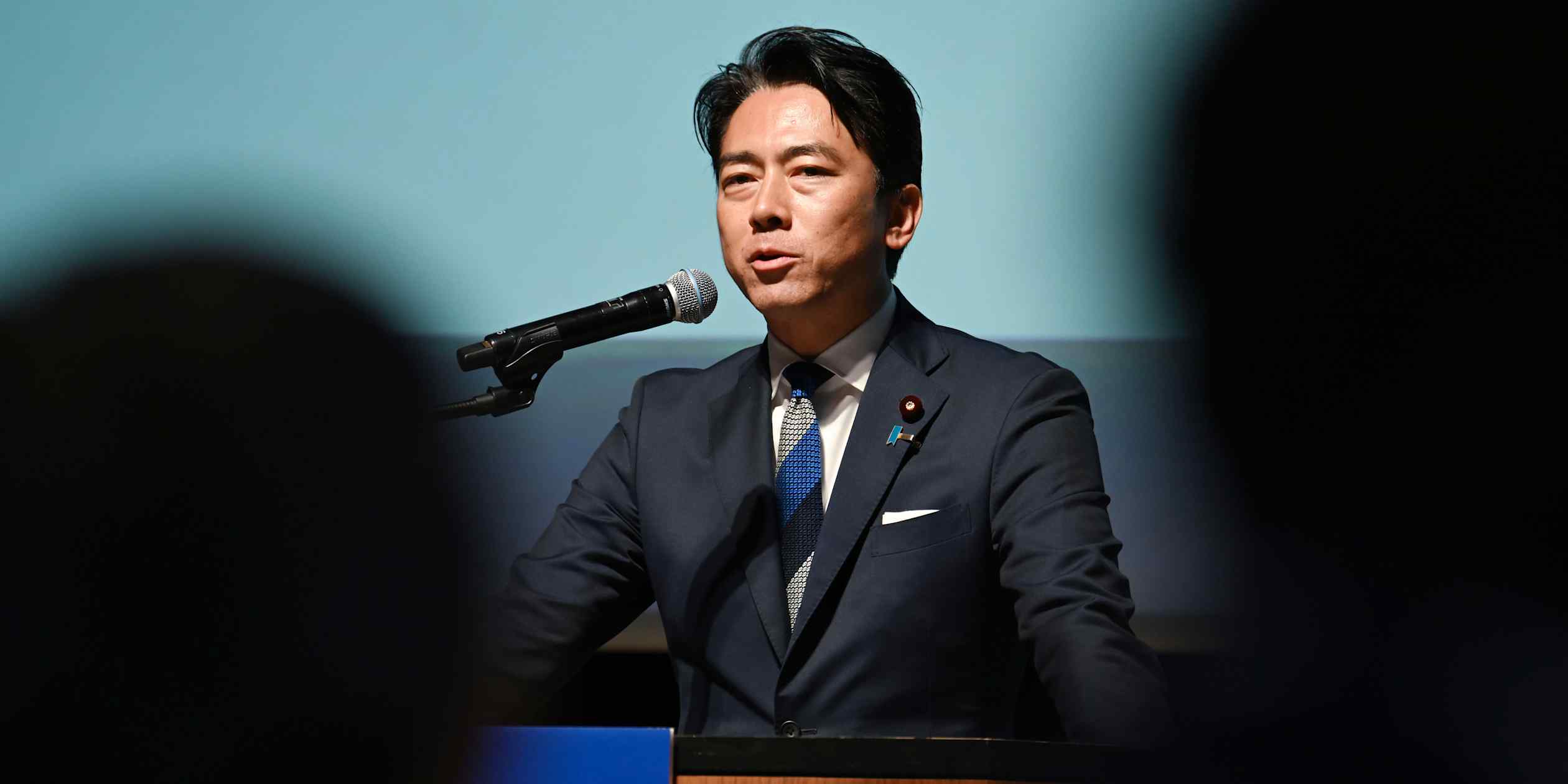
东京——日本防卫大臣表示,日本将从根本上调整国防研究的方式,以加快威胁探测和决策速度。
TOKYO -- Japan's defense minister said the country will fundamentally restructure how it approaches its defense research to speed up the detection of threats and decision-making.
小泉进次郎在东京由战略与国际研究中心(CSIS)与《日经》共同主办的一场安全研讨会上表示,日本目前的防卫研究机构是按舰船、航空系统等领域划分的,今后将转向以功能为基础的结构。
Speaking at a security symposium in Tokyo cohosted by the Center for Strategic and International Studies (CSIS) and Nikkei, Shinjiro Koizumi said Japan's defense research institutes, which are currently organized into areas such as naval vessels and air systems, will shift to a function-based structure.
小泉说:“我们必须能够比对手更快地探测威胁、做出决策并采取应对。为此,我们将加强人工智能、网络、指挥控制以及信息通信等对现代战争至关重要的领域的研发能力,从以平台为基础的结构转向按功能组织的结构。”
"We need to be able to detect threats, make decisions and respond faster than our adversaries. To that end, we will strengthen R&D capabilities in areas critical to modern warfare, such as AI, cyber, command and control, and information and communications, shifting from a platform-based structure to one organized by function," Koizumi said.
他还谈到,日本需要建立“强大的国防工业”,将其视为不可或缺的国家能力和与印太地区各国开展切实合作的基础。
He also touched on the need for Japan to build a "strong defense industry" as an indispensable national capability and a foundation for tangible cooperation with countries across the Indo-Pacific region.
小泉以一家日本无人机初创企业为例,说明严重依赖国防合同的企业难以从国内金融机构获得融资,在现行规则下被迫转向外国风险投资。
Koizumi cited a Japanese drone startup as an example of how companies that rely heavily on defense contracts struggle to secure funding from domestic financial institutions, forcing them to turn to foreign venture capital under Japan's current rules.
他说:“如果这种结构持续下去,日本将无法发展自己的国防工业。”
"If this structure persists, Japan will not be able to develop its own defense industry," he said.
日本开发银行已于5月实际上解除了对武器制造商融资的禁令,允许其向生产防卫装备的企业提供贷款和投资,而不再限于此前被限制在所谓“五类非致命用途”之外的类别。这一变化是在政府政策转变之后发生的。
The Development Bank of Japan effectively lifted its ban on financing weapons manufacturers in May, allowing it to provide loans and investments to companies producing defense equipment outside previously restricted categories known as the five non-lethal purposes. The change follows a shift in government policy.
日本计划今年最终完成对“国家安全保障战略”及其他两份安全相关文件的修订。小泉进次郎补充说,一个关键概念是“拒止性威慑”。他说:“我们不会主动发起攻击,但我们必须具备拒止任何针对我们的威胁的能力。鉴于当前的全球安全环境,我们绝不能允许任何人低估日本,或低估日美同盟的实力。”
Japan is due to finalize revisions to its "National Security Strategy" and two other security-related documents this year. Koizumi added that the one key concept is "deterrence by denial." "We will not initiate attacks, but we must have the capability to deny any threat directed at us. Given the current global security environment, we must not allow anyone to underestimate Japan, or the strength of the Japan-U.S. alliance," Koizumi said.
他表示,随着日本人口减少,预计到2035年日本自卫队将减少4万人,到2045年将减少约9万人。
He said that as Japan's population declines, Japan's Self-Defense Forces are projected to have 40,000 fewer personnel by 2035 and around 90,000 fewer by 2045.
“即使在这种情况下,我们也必须确保日本的防卫能力不被削弱,并保持我们真正需要的能力。我们需要保留所有选项,继续讨论,并打造一个能够有效应对我们所面临挑战的防卫省和自卫队。”美国参谋长联席会议前主席、现任战略与国际问题研究中心(CSIS)首席执行官约瑟夫·邓福德10月23日在东京举行的2026年CSIS/日经研讨会上发表讲话。
"Even under these circumstances, we must ensure that Japan's defense capabilities do not weaken, and that we maintain the capabilities we truly need. We need to keep all options on the table, continue the debate and build a Defense Ministry and Self-Defense Forces that can effectively address the challenges we face." Joseph Dunford, former chairman of the U.S. Joint Chiefs of Staff and now CEO of the Center for Strategic and International Studies (CSIS) speaks at the CSIS/Nikkei Symposium 2026 in Tokyo on Oct. 23.
周五早些时候,退役海军陆战队上将约瑟夫·邓福德表示,人工智能可以为日美同盟面临的许多挑战提供部分解决方案。
Earlier Friday, retired Marine Corps Gen. Joseph Dunford said that artificial intelligence could offer a partial solution to many of the challenges the Japan-U.S. alliance faces.
这位前参谋长联席会议主席提到乌克兰在与俄罗斯的战争中日益使用人工智能每天操控数千架无人机,他说:“人工智能将赋予我们同盟前所未有的信息处理能力,以与相关事态相匹配的速度作出决策,并增强我们的威慑能力。”现任CSIS首席执行官的邓福德还强调,必须确保人工智能的使用不会损害武力必须依照美国价值观和武装冲突法来使用的原则。
Referencing the growing use of AI by Ukraine to fly thousands of drones a day in its war with Russia, the former chairman of the Joint Chiefs of Staff said: "Artificial intelligence is going to give our alliance unprecedented ability to process information, make decisions at the speed of relevance and enhance our deterrence capability." Dunford, now the CEO of CSIS, also stressed the importance of ensuring that the use of AI does not undermine the principle that force must be employed in accordance with U.S. values and the law of armed conflict.
他还谈到美国政府与人工智能领先开发商Anthropic之间围绕人工智能使用问题的争议。今年早些时候,美国国防部试图取消安全防护措施,并要求自由访问Anthropic的人工智能代理Claude,但该公司以担心大规模监控以及可能制造完全自主武器为由予以拒绝。此后,五角大楼停止使用Anthropic的产品,转而与谷歌和OpenAI等其他科技公司合作。
He also touched on the dispute over the use of AI between the U.S. government and Anthropic, a leading developer of the technology. Earlier this year, the U.S. Department of Defense sought to remove safety guardrails and gain open access to Claude, Anthropic's AI agent, but the company refused, citing concerns over mass surveillance and the possible creation of fully autonomous weapons. The Pentagon has since stopped using Anthropic products,g deals with other tech companies such as Google and OpenAI.
邓福德说:“国防部与Anthropic之间的争论实际上在于,Anthropic希望确保自己能够了解并控制国防部如何使用人工智能,而国防部不希望Anthropic对人工智能的使用拥有否决权。”
"The debate between the department and Anthropic really is that Anthropic wants to ensure that they have visibility and control over how the department uses artificial intelligence, and the department doesn't want Anthropic to have a veto [over] how artificial intelligence is used," Dunford said.
关于日美同盟及其对中国日益增长的影响力的应对,他说:“我们对印太战略格局的共同理解,以及我们应对这一战略格局挑战的目标充满信心,我们从未如此紧密。”
Regarding the Japan-U.S. alliance and its response to China's growing influence, he said, "With confidence [in] the common understanding of the strategic landscape in the Indo-Pacific and in our objectives in addressing the challenges of the strategic landscape, we've never been closer."