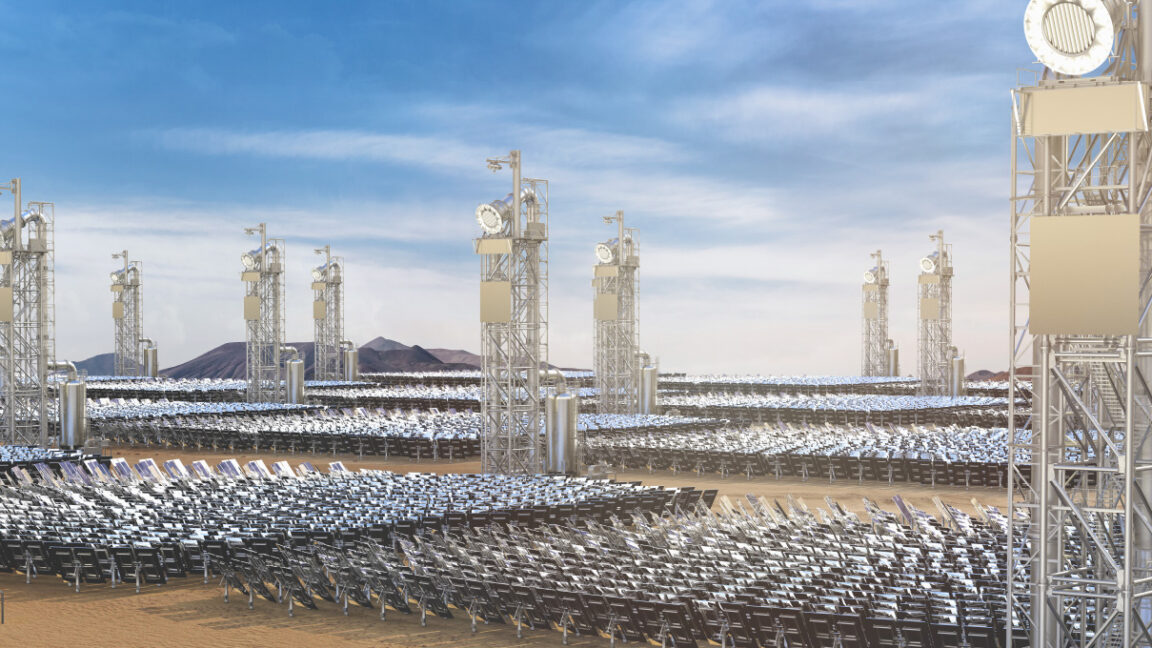
与直接将光子转化为电能不同,聚光太阳能利用反射镜将阳光转化为热能,再用于驱动传统发电涡轮机。直到大约十年前,人们仍有理由认为聚光太阳能前景光明,因为热能储存技术的改进使其成为全天候发电的一种方式。
Rather than directly converting photons into electricity, concentrated solar energy uses mirrors to turn sunlight into heat, which can then be used to drive traditional generating turbines. Up to about a decade ago, there was a case to be made that concentrated solar energy had a bright future, as improvements in heat storage had turned it into a way to generate power around the clock.
然而事与愿违。虽然聚光太阳能的成本已降至足以与核电竞争,但光伏电池板的价格大幅下跌,使太阳能电池板成为大多数地区最便宜的电力来源。目前,如果你拥有一个适合发电的太阳能场地,光伏电池板的经济性很难被超越。
It wasn't to be. While concentrated solar costs fell enough to compete with nuclear power, the price of photovoltaics plunged, making solar panels the cheapest source of power in most locations. Currently, if you have a good site to generate solar power, then the economics of PV panels are hard to beat.
这使我们不得不建设一系列其他设施——通常是电池和天然气设施——来应对夜间需求或天气导致的电力短缺。但一家小公司承诺,它可以帮助避免建设单独的备用设施。其版本的聚光太阳能系统设计为,化石燃料备用系统与太阳能一侧共享大部分发电硬件。
That has left us needing to build a mixture of other facilities—typically batteries and natural gas facilities—to handle overnight needs or weather-driven shortfalls. But a small company is promising that it can help avoid the need to build a separate facility. Its version of concentrated solar is designed so that a fossil-fueled backup system shares most of the generating hardware with the solar side.