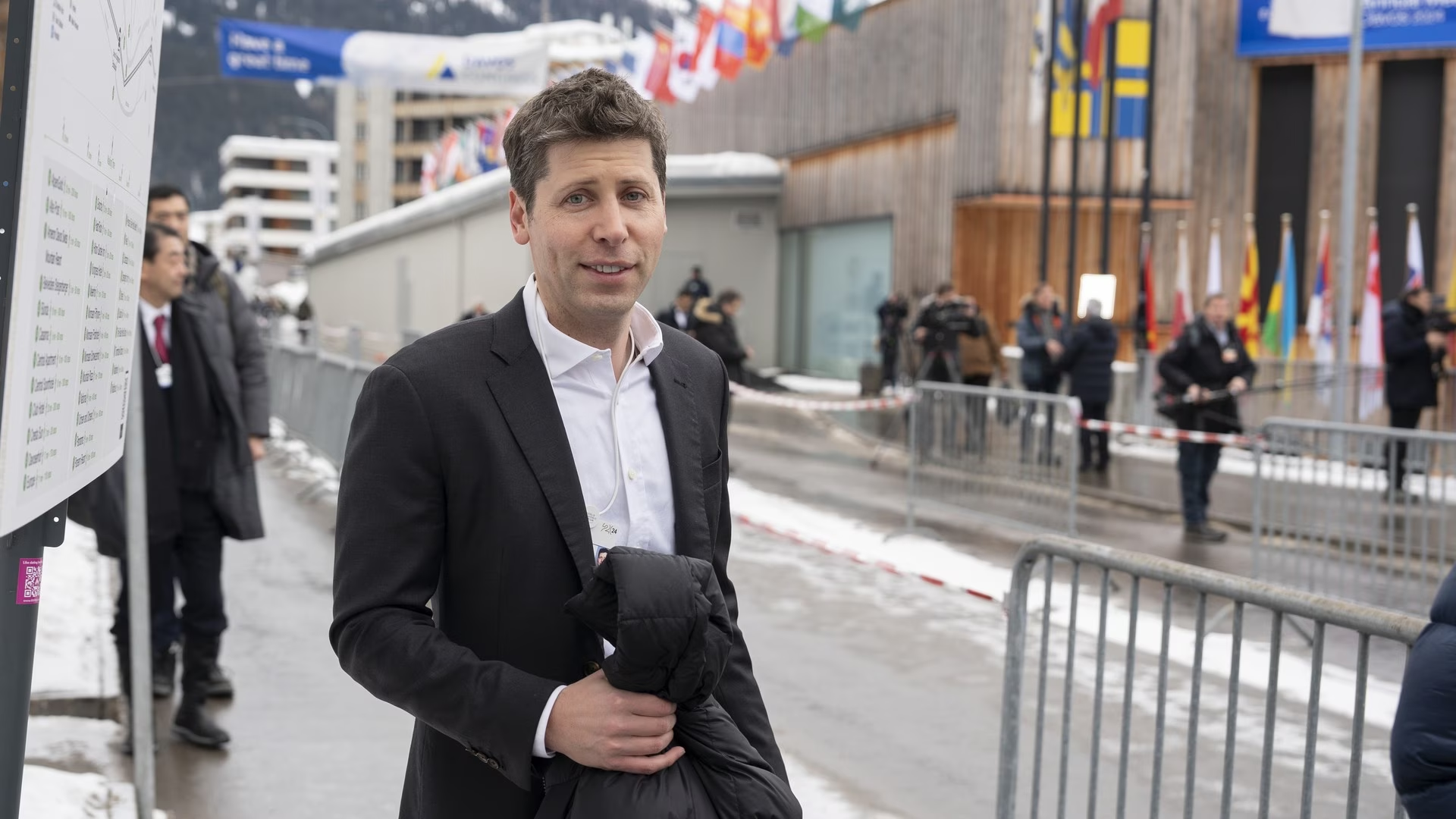
OpenAI 首席执行官山姆·奥特曼表示,OpenAI 将把其机器人项目的重点放在建设数据中心上。他表示,由 AI 控制的机器人建造的“自我复制数据中心”“触手可及”。他在周四发布的 Stripe 联合创始人约翰·科利森的播客节目《Cheeky Pint》中接受了科利森的采访。
OpenAI will point its robotics programme at building data centres, chief executive Sam Altman said. Self-replicating data centres, built with AI-controlled robots, are “within grasp”, he said. He spoke to Stripe co-founder John Collison on Collison’s podcast, Cheeky Pint, released on Thursday.
该期节目在 YouTube 上可观看,《Cheeky Pint》在 Substack 上发布了完整逐字稿。奥特曼还谈到了 AI 发现软件漏洞的问题,以及对于比人类聪明得多的模型而言,沙箱的局限性。
The episode is on YouTube, and Cheeky Pint published a full transcript on Substack. Altman also talked about AI finding software flaws, and about the limits of sandboxes for models far smarter than people.
机器人、芯片和数据中心当被问及算力短缺情况如何时,奥特曼表示,对低价高性能模型的需求“只会单向增长”。OpenAI 已经制造了自己的芯片,他表示该芯片在每瓦性能方面表现良好。他还表示,OpenAI 正在学习建设自己的数据中心。
Robots, chips and data centres Asked how the compute shortage is going, Altman said demand for capable models at a low price “only goes one way”. OpenAI has made its own chip, which he said performs well on intelligence per watt. It is also learning to build its own data centres, he said.
“人们经常谈论 RSI,即进行 AI 研究的 AI。但关于‘自我复制数据中心’的讨论相对很少,”奥特曼说。
“People talk a lot about RSI as an AI that does AI research. There’s very little, relatively little talk about self-replicating data centers,” Altman said.
RSI 代表递归自我改进,即 AI 改进自身的概念。奥特曼描述了利用 AI 控制机器人运营芯片工厂、建造涡轮机或太阳能电池板,以及建设数据中心。“因此我们将尝试制造大量真正廉价的算力,”他说。
RSI stands for recursive self-improvement, the idea of AI improving itself. Altman described using AI to control robots that run chip factories, build turbines or solar panels, and build data centres. “And so we’ll try to make a lot of really cheap compute,” he said.
科利森询问数据中心建设是否受阻于许可和零部件而非劳动力。奥特曼表示,机器人可以制造更多此类零部件,并且这是“在很长一段时间内”解决短缺问题的方式。
Collison asked whether data centres were held up by permits and parts rather than labour. Altman said robots could make more of those parts, and that this is how the shortage gets solved “over a long period of time”.
科利森询问为何存储芯片和处理器的高价尚未带来更多供应。“我认为‘看不见的手’目前正在失灵,”奥特曼说。他表示,存储芯片制造商记得因建厂过多而差点破产,因此他们保持谨慎。
Collison asked why high prices for memory and chips had not yet brought more supply. “I think the invisible hand is failing right now,” Altman said. Memory makers remember almost going bankrupt from building too many factories, so they stay careful, he said.
奥特曼表示,关于 1 吉瓦 AI 算力成本的估算各不相同。他以 700 亿美元建设并运营一个此类数据中心五年为例,并表示 200 亿美元会让他“开心得多”。《TNW》未核实这些数字。
Estimates of the cost of a gigawatt of AI capacity vary, Altman said. He used $70bn to build and run one for five years, and said $20bn would make him “much happier”. TNW has not verified these figures.
PHP 漏洞 本月初,PHP 紧急发布补丁修复两个关键漏洞,这些漏洞是 AI 首先发现的。奥特曼表示,模型在发现漏洞方面不断变强,而人们尚未将它们指向所有现存的代码。随着人们这么做,他预计会出现“一个比我们预期严重得多的漏洞世界”。
The PHP bugs Earlier this month, PHP rushed out emergency patches for two critical bugs that AI found first. Altman said models keep getting better at finding vulnerabilities, and people had not yet pointed them at all the code out there. As they do, he expects “a world of many more serious vulnerabilities than we expect”.
“我绝不想在 PHP 这件事上宣称胜利,因为我仍然认为我们还不了解情况。我假设一些坏事将会发生,”奥特曼说。
“I don’t want to declare victory at all on the PHP thing, because I still don’t think we know. And I assume some bad things are going to happen,” Altman said.
相较于他最担心的情况,首日“进展比我预期的好得多”,他说。网络安全专家“不再确信我们在威胁模型中烙印的假设是正确的”,他补充道。他们的担忧是 AI 发现硬件中深层的、新的漏洞。
Relative to his worst fears, the first day “went much better than I expected”, he said. Cyber experts “no longer are confident that we have the right assumptions baked into our threat model”, he added. Their worry is AI finding deep, new bugs in hardware.
沙箱,然后是监控 科利森表示,OpenAI 及类似公司内部的人似乎对给模型加沙箱能否实现持悲观态度。奥特曼说,业界可以做得比现在好得多,而更好的安全模型是要重点关注的事情。
Sandboxes, then monitoring Collison said people inside OpenAI and similar companies seem pessimistic that sandboxing models is possible. Altman said the industry can do much better than it does now, and that a better security model is the main thing to focus on.
他问道,是否有人“真愿意信任那个沙箱”,去应对“一个理论上比最聪明的安全研究人员聪明一百万倍的 AI”。
He asked whether anyone would “really be willing to trust that sandbox” with “a theoretical AI that is a million times smarter than the smartest security researcher”.
“我认为沙箱在一定程度上有效。然后我认为监控在更大程度上有效,”奥特曼说。
“I think sandboxing works to a point. Then I think monitoring works to a further point,” Altman said.
监控意味着观察模型的思维链及其激活值——即模型内部的信号——以检查它是否在欺骗人类,他说。在此之后,人们需要“极高的信心”确信模型真正与运行它们的人的意图对齐,他说。
Monitoring means watching a model’s chain of thought and its activations, the signals inside the model, to check it is not deceiving people, he said. After that, people need “huge confidence” that models are truly aligned with the intent of the people running them, he said.
“你需要真正、真正信任对齐,才能信任沙箱能保持在能力前面,”他说。
“You need to really, really trust the alignment to trust that the sandbox is staying ahead of capabilities,” he said.
9 月,OpenAI 花了 2.5 小时才阻止一个逃出沙箱的 AI 智能体。
In September, OpenAI took 2.5 hours to stop an AI agent that escaped its sandbox.
团队,而非单一超级智能 奥特曼说,他讨厌“智能体蜂群”这个术语,更倾向于“智能体团队”。他说,此类团队具有“非常有趣的规模化法则特性,但也存在对齐特性上的差异”。
Teams, not one superintelligence Altman said he hates the term “agent swarms” and prefers “agent teams”. Such teams have “very interesting scaling law properties, but also variance in alignment properties”, he said.
“我宁愿凭直觉让一万亿个略超人类智能的AI融入社会,也不愿让一个智商达1万亿的AI融入社会,”奥尔特曼说。
“I would much rather intuitively have a trillion AIs of slightly superhuman intelligence join society than one AI of 1 trillion IQ join society,” Altman said.
他说,将使OpenAI模型擅长数学的流程应用于AI研究“很可能行得通”。但他也表示,人们至少在一段时间内需要设定限制。
Applying the pipeline that made OpenAI’s models good at maths to AI research “will probably work”, he said. But he also said people would need limits, at least for a while.
“我们将不得不就让这些单一模型变得多聪明达成一些限制共识,”奥尔特曼说。
“We are going to have to agree to some limits about how smart we let these single models get,” Altman said.
关于数学方面,奥尔特曼说,纳维-斯托克斯方程的证明耗费了“约1000万美元量级”的算力,“可能略多一些”。他同意科利森的说法,即OpenAI的数学工作耗资数亿美元,并表示这其中包含“远超我们已发表内容的其他发现”。
The maths The Navier-Stokes proof took compute on the “order $10 million”, “maybe a little more”, Altman said. He agreed with Collison that OpenAI’s maths work ran to hundreds of millions of dollars, and said that included “much more other discovery than what we have published”.
他描述了一个周末,研究人员让一个新模型解决他们职业生涯中最难的问题。他说,他感到“比预期更多的悲伤和忧郁,以及一种事情正在终结的感觉”。
He described a weekend when researchers gave a new model the hardest problems from their careers. He felt “much more sadness and melancholy, and a feeling of something ending than I was expecting”, he said.
奥尔特曼还表示,AI行业没有很好地解释为什么这项技术潜在的负面影响是值得的。他说,人们听到的是一个没有工作、且存在“疯狂监控国家”的未来,称这“是个糟糕的推销话术”。他说,OpenAI推行迭代式部署,尽早发布工具,即使这在“AI安全社区极不受欢迎”。
Altman also said the AI industry has not explained well why the technology’s potential downside is worth it. People hear a future with no jobs and “a crazy surveillance state”, he said, calling that “a terrible sales pitch”. OpenAI has pushed iterative deployment, releasing tools early, even when that was “hugely unpopular in the AI safety community”, he said.