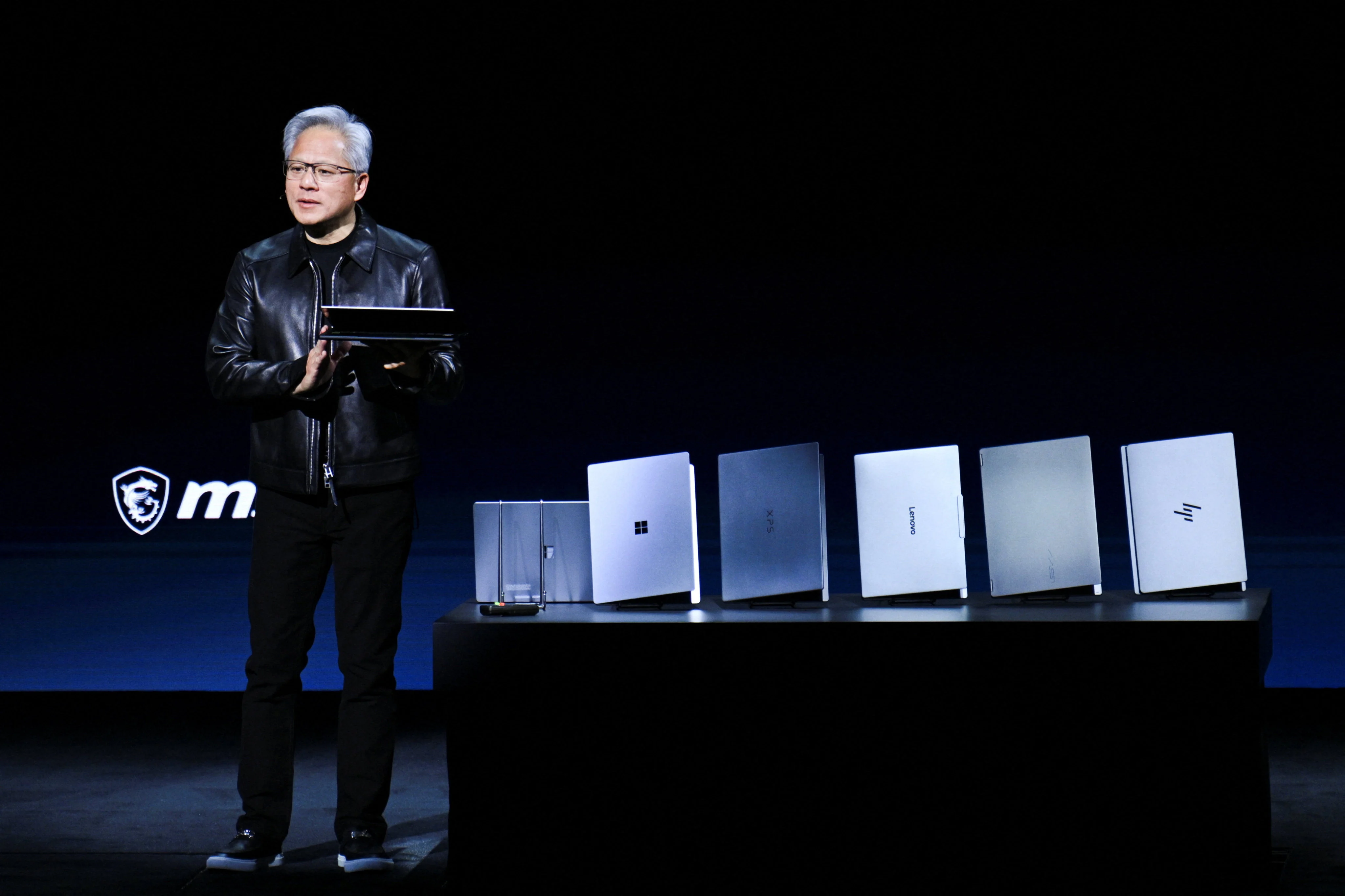
中国周五对有关美国情报部门指控一名疑似中国间谍针对英伟达首席执行官黄仁勋的报道予以抨击,称这些说法是旨在抹黑北京的“无端猜测”。
China on Friday hit out at reported US intelligence allegations that a suspected Chinese spy had targeted Nvidia chief executive Jensen Huang, dismissing the claims as “groundless speculation” aimed at smearing Beijing.
中国外交部发言人郭嘉昆在北京例行记者会上表示:“相关报道基于无端猜测,纯属对中国进行抹黑和污蔑。”
“The relevant report is based on groundless speculation and [is] purely aimed at smearing and slandering China,” Chinese foreign ministry spokesman Guo Jiakun told a regular media briefing in Beijing.
此前,《纽约时报》周四报道称,美国情报机构认定一名中国女商人——又名黄乐的爱丽丝·黄——为疑似中国情报资产,她曾接近英伟达首席执行官并试图与其建立密切的商业关系。
The pushback came after US outlet The New York Times reported on Thursday that US intelligence agencies had identified a Chinese businesswoman, Alice Huang, also known as Huang Le, as a suspected Chinese asset who had approached and tried to develop a close business relationship with the Nvidia chief.
据报道,美国机构认为,黄(新加坡数据中心公司Megaspeed的高管)一直在向北京传递信息。两位黄姓人士并无亲属关系。
US agencies believed that Huang, an executive at Singapore-based data centre firm Megaspeed, had been passing information to Beijing, according to the report. The two Huangs are not related.
报道援引了解机密情报的匿名官员的话称,Megaspeed此前曾因涉嫌帮助中国规避美国对先进半导体的出口管制而受到美国审查。
Megaspeed had previously come under US scrutiny over suspicions that the company was helping China circumvent US export controls on advanced semiconductors, the report said, citing anonymous officials with access to classified intelligence.
该新闻报道还称,美国官员最初认为英伟达的黄仁勋并不知晓该女子的涉嫌情报活动,同时没有证据显示这位英伟达首席执行官知情地向她分享了敏感信息。
The news report also said US officials initially believed Nvidia’s Huang was unaware of the woman’s alleged intelligence activities, while no evidence showed that the Nvidia chief had knowingly shared sensitive information with her.
这些指控出现之际,美国正加强对对华芯片出口的审查。华盛顿以国家安全关切为由,试图限制北京获取对训练先进人工智能模型至关重要的高端芯片。
The allegations come amid heightened US scrutiny of chip exports to China, as Washington seeks to restrict Beijing’s access to premium chips critical to training advanced artificial intelligence models, citing national security concerns.
英伟达代表周五在给《南华早报》的一份声明中表示,“Megaspeed与许多其他地区云客户并无不同”,并且“黄仁勋先生与黄女士的互动并不异常或出人意料”,因为与客户会面是首席执行官工作的一部分。
In a statement to the South China Morning Post on Friday, an Nvidia representative said that “Megaspeed has been no different than many other regional cloud customers” and that “Jensen’s interactions with Ms. Huang are not unusual or unexpected”, as meetings with customers were part of a CEO’s job.
该公司在声明中还表示,“针对这家区域云服务商的转移指控去年已受到彻底调查并被驳斥”。周五,Megaspeed未立即回应置评请求。
The company added that “the diversion allegations against this regional cloud were thoroughly investigated and debunked last year”, according to the statement. Megaspeed did not immediately respond to a request for comment on Friday.
中国曾是英伟达的重要市场,但随着华盛顿收紧对先进AI芯片的出口管制、严重限制其对华销售,这家美国芯片巨头在中国市场的经营日益艰难。
Once a major market for Nvidia, China has become increasingly difficult for the US chip giant to navigate, as Washington’s tightening export controls on advanced AI chips have severely restricted its sales to the country.
与此同时,随着北京加快实现半导体自给自足的步伐,从华为技术到摩尔线程等中国芯片制造商正在缩小与英伟达的差距。
Meanwhile, Chinese chipmakers from Huawei Technologies to Moore Threads, among others, are gaining ground on Nvidia as Beijing accelerates efforts to achieve semiconductor self-sufficiency.
总部位于北京的摩尔线程常被称为中国的“小英伟达”,该公司周三公布第三季度营收激增近1774%,达到15.5亿元人民币(合2.324亿美元)。该公司将这一增长归因于国内对用于AI模型训练和推理的图形处理器的强劲需求,这些需求来自云服务提供商、电信运营商和计算中心。
Beijing-based Moore Threads, often hailed as China’s “little Nvidia”, reported on Wednesday a nearly 1,774 per cent surge in third-quarter revenue to 1.55 billion yuan (US$232.4 million). It attributed the gain to robust domestic demand for graphics processing units used for AI model training and inference across cloud providers, telecommunications operators and computing centres.