跨国贩毒集团在菲律宾依然猖獗,尽管当局几十年来持续打击街头级贩毒者,分析人士警告称,区域供应商、资金提供者和贩运网络在很大程度上逃脱了执法打击。
Transnational drug syndicates in the Philippines continue to thrive despite decades of crackdowns targeting street-level dealers, with analysts warning that regional suppliers, financiers and trafficking networks have largely eluded enforcement efforts.
前毒品管制官员和安全分析人士表示,菲律宾的毒品贸易仍与更广泛的区域供应链紧密相连,犯罪集团依靠当地合作伙伴、海上航线和既有的分销网络,将冰毒贩运至东南亚各地。
Former drug officials and security analysts say the country’s drug trade remains closely connected to a wider regional supply chain, with criminal groups relying on local partners, maritime routes and established distribution networks to move methamphetamine across Southeast Asia.
一起在老挝挫败的、企图利用私人飞机走私价值5500万美元冰毒的案件,据称目的地为菲律宾,这使跨境贩毒活动再次受到关注,并促使众议院就涉嫌菲律宾关联展开调查。
A foiled attempt to smuggle US$55 million worth of methamphetamine aboard a private jet in Laos, allegedly bound for the Philippines, has brought renewed attention to these cross-border operations, prompting a House investigation into suspected Philippine connections.
据众议院危险药品委员会主席马克·安东尼·桑托斯(Mark Anthony Santos)引述一名不愿具名的高级警官的信息称,至少有五个跨国贩毒网络在菲律宾活动。
At least five transnational drug networks operate in the Philippines, according to Mark Anthony Santos, chairman of the House committee on dangerous drugs, who cited information from an unnamed senior police official.
桑托斯表示,中国和华裔菲律宾贩毒集团,以及墨西哥和西非贩毒集团(包括锡那罗亚集团),主导了该国的毒品黑市。
Chinese and Chinese-Filipino trafficking groups, as well as Mexican and West African drug cartels, including the Sinaloa cartel, dominated the country’s drug black market, Santos said.
桑托斯在10月22日的一份声明中说:“贩毒集团并非仅通过街头级分销运作。它们利用私人飞机、海上航线、金融中介以及各司法管辖区间的协调漏洞。即使某批货物被查获,为行动提供资金和策划的人员可能仍超出调查人员的触及范围。”
“Drug syndicates do not operate solely through street-level distribution. They exploit private aircraft, maritime routes, financial intermediaries, and gaps in coordination among jurisdictions. Even when a shipment is intercepted, the people financing and organising the operation may remain beyond the reach of investigators,” Santos said in a statement on October 22.
“当局必须超越查获货物的层面,顺藤摸瓜追查资金流向,并与外国执法部门合作,识别并瓦解贩毒背后的犯罪集团。” 在该地区活动的主要网络中,有“三哥”(Sam Gor),这是一个与冰毒贸易有关的华人犯罪集团联盟。据估计,它控制着区域毒品市场 40% 至 70% 的份额,通过合作伙伴和犯罪团伙运作。
“Authorities must look beyond intercepted shipments, follow the money, and work with foreign law enforcement to identify and dismantle the syndicates behind the drug trade.”Among the major networks operating in the region is Sam Gor, an alliance of Chinese criminal groups linked to the crystal meth trade. It is estimated to control 40 per cent to 70 per cent of the regional drug market, operating through partners and criminal groups.
菲律宾禁毒局(PDEA)局长伊萨加尼·内雷斯(Isagani Nerez)在本月初的简报会上证实,“三哥”由五大华人黑帮组成联盟:十四K(14K Triad)、竹联帮、大圈帮、新义安和和胜和,其领导人据信设在香港和台湾。
At a briefing earlier this month, Philippine Drug Enforcement Agency (PDEA) director general Isagani Nerez confirmed that Sam Gor comprised an alliance of five major Chinese triad groups: the 14K Triad, Bamboo Union, Big Circle Gang, Sun Yee On and Wo Shing Wo, whose leaders are believed to be based in Hong Kong and Taiwan.
《亚洲本周》(This Week in Asia)已向菲律宾禁毒局寻求置评。
This Week in Asia has reached out to PDEA for comment.
据报道,“三哥”也活跃于越南、柬埔寨、老挝、缅甸、泰国、新西兰、澳大利亚、韩国、日本、中国大陆和台湾。
Sam Gor is reportedly also present in Vietnam, Cambodia, Laos, Myanmar, Thailand, New Zealand, Australia, South Korea, Japan, mainland China and Taiwan.
前任禁毒官员和分析人士表示,挫败老挝那批货物运输案中显现的菲律宾关联,以及跨国贩毒集团在菲律宾的存在,反映出一个由来已久、延续数十年的问题。
Former drug officials and analysts said the potential Philippine connection to the foiled shipment in Laos, as well as the presence of transnational drug cartels in the country, reflected a long-standing problem dating back decades.
一位要求匿名的菲律宾前禁毒官员告诉《亚洲本周》:“这些关联已存在多年,特别是在冰毒贸易中,区域供货方历来依赖当地华人和菲裔华人团伙进行国内分销。”
“These connections have existed for many years, particularly in the methamphetamine trade, where regional suppliers have historically relied on local Chinese and Filipino-Chinese groups for domestic distribution,” a former Philippine drug official, who requested anonymity, told This Week in Asia.
“菲律宾的地理位置、漫长的海岸线、海上边界以及巨大的国内需求,使其容易受到这些活动的侵害。” 联合国毒品和犯罪问题办公室行动副主任杰里米·道格拉斯同意这一观点,认为菲律宾长期以来一直是非法毒品(主要是冰毒,当地称为“沙布”)的主要市场,这些毒品主要来自金三角地区,即泰国、缅甸和老挝交界、靠近鲁阿克河和湄公河的山区边境地带。
“The Philippines’ geographical location, extensive coastlines, maritime borders, and significant domestic demand make it vulnerable to these activities.”Jeremy Douglas, deputy director of operations at the United Nations Office on Drugs and Crime, agrees that the Philippines has long remained a major market for illicit drugs – mostly methamphetamine, known locally as – from the Golden Triangle, the mountainous border region where Thailand, Myanmar and Laos converge near the Ruak and Mekong rivers.
据南洋理工大学拉惹勒南国际研究学院安全研究教授罗汉·古纳拉特纳称,跨国有组织犯罪集团在菲律宾的存在和活动至少在过去10到20年间已被观察到。
The presence and activities of transnational organised crime groups in the Philippines have been observed for at least the past 10 to 20 years, according to Dr Rohan Gunaratna, a professor of security studies at the S. Rajaratnam School of International Studies at Nanyang Technological University.
他说:“我们今天看到的,很大程度上是长期在该地区活动的犯罪网络的延续与演变。”
“What we are seeing today is largely a continuation and evolution of criminal networks that have long operated across the region,” he said.
古纳拉特纳称东南亚毒品贸易生态系统“高度动态、相互关联且极具适应性”。
Gunaratna called the Southeast Asian drug trade ecosystem “highly dynamic, interconnected and adaptive”.
他说:“它通过一个区域供应链运作,不同国家在其中扮演不同角色,涵盖制造、前体化学品采购、运输、批发分销和消费等环节。”
“It operates through a regional supply chain in which different countries play different roles, from manufacturing and precursor sourcing to transport, wholesale distribution and consumption,” he said.
据古纳拉特纳称,中国跨国犯罪组织是这一生态系统中的重要行为体,其影响力远远超出直接贩运毒品的范畴。“他们的网络和商业关系使他们能够将生产设施与批发分销商及目的地市场的既有犯罪集团联系起来。” 古纳拉特纳表示,该地区主要毒品市场包括泰国、菲律宾、印度尼西亚、马来西亚和越南,尽管各国消费和贩运的规模及性质有所不同。
Chinese transnational criminal organisations are significant actors in this ecosystem as their influence extends well beyond the direct trafficking of drugs, according to Gunaratna. “Their networks and business relationships enable them to connect production facilities with wholesale distributors and established criminal groups in destination markets.”The region’s major drug markets included Thailand, the Philippines, Indonesia, Malaysia and Vietnam, Gunaratna said, although the scale and nature of consumption and trafficking varied across countries.
他说:“除东南亚以外,澳大利亚和其他亚太市场也是区域毒品供应的重要目的地。”
“Beyond Southeast Asia, Australia and other Asia-Pacific markets also remain important destinations for regional drug supplies,” he said.
据古纳拉特纳称,菲律宾的冰毒贸易历史上与由中国跨国犯罪组织控制的更广泛区域供应链有关联,其中包括与“三哥”相关的网络。
The methamphetamine trade in the Philippines has historically been connected to the wider regional supply chain controlled by Chinese transnational criminal organisations, including networks associated with Sam Gor, according to Gunaratna.
他表示,中国跨国犯罪集团在20世纪90年代菲律宾冰毒贸易的建立过程中发挥了重要作用。随着时间的推移,冰毒成为该国主要的非法毒品市场。
He said Chinese transnational criminal groups played a significant role in establishing the meth trade in the Philippines during the 1990s. Over time, methamphetamine became the country’s dominant illicit drug market.
他说:“在较高层级上,这些网络在冰毒供应的获取和转移方面发挥了重要作用,而当地的中国和菲律宾华裔犯罪集团传统上负责国内批发分销和零售网络。”
“At the higher levels, these networks have played a significant role in the sourcing and moving methamphetamine supplies, while local Chinese and Filipino-Chinese criminal groups have traditionally handled domestic wholesale distribution and retail networks,” he said.
他补充说,区域供应商和当地分销网络不一定作为一个统一的组织运作,而是通过相互关联的关系和供应安排进行合作。
Regional suppliers and local distribution networks did not necessarily work as a unified organisation, but through interconnected relationships and supply arrangements, he added.
古纳拉特纳表示,除了拥有广阔的海岸线和众多岛屿外,菲律宾薄弱的治理以及执法人员和政府官员中的腐败,为有组织犯罪集团的活动创造了机会。
Aside from its extensive coastline and several islands, the Philippines’ weak governance and corruption among law enforcement personnel and government officials created opportunities for organised criminal groups to operate, Gunaratna said.
他指出,连接菲律宾南部与马来西亚和印度尼西亚接壤海域的三宝颜-巴西兰-苏禄-塔威塔威走廊,是一个令人担忧的地区。
He pointed to the Zamboanga-Basilan-Sulu-Tawi-Tawi corridor, which connects the southern Philippines with maritime areas bordering Malaysia and Indonesia, as an area of concern.
古纳拉特纳说:“其地理条件,加上非正规海上航线以及某些地区有限的执法覆盖,为违禁品跨国流动创造了机会。”他补充说,菲律宾主要作为毒品的目的地和分销市场,偶尔也作为澳大利亚等市场的转运点。
“Its geography, combined with informal maritime routes and limited enforcement coverage in certain areas, creates opportunities for the movement of illicit commodities across national boundaries,” Gunaratna said, adding that the Philippines primarily served as a destination and distribution market for drugs, and occasionally a transshipment point for markets such as Australia.
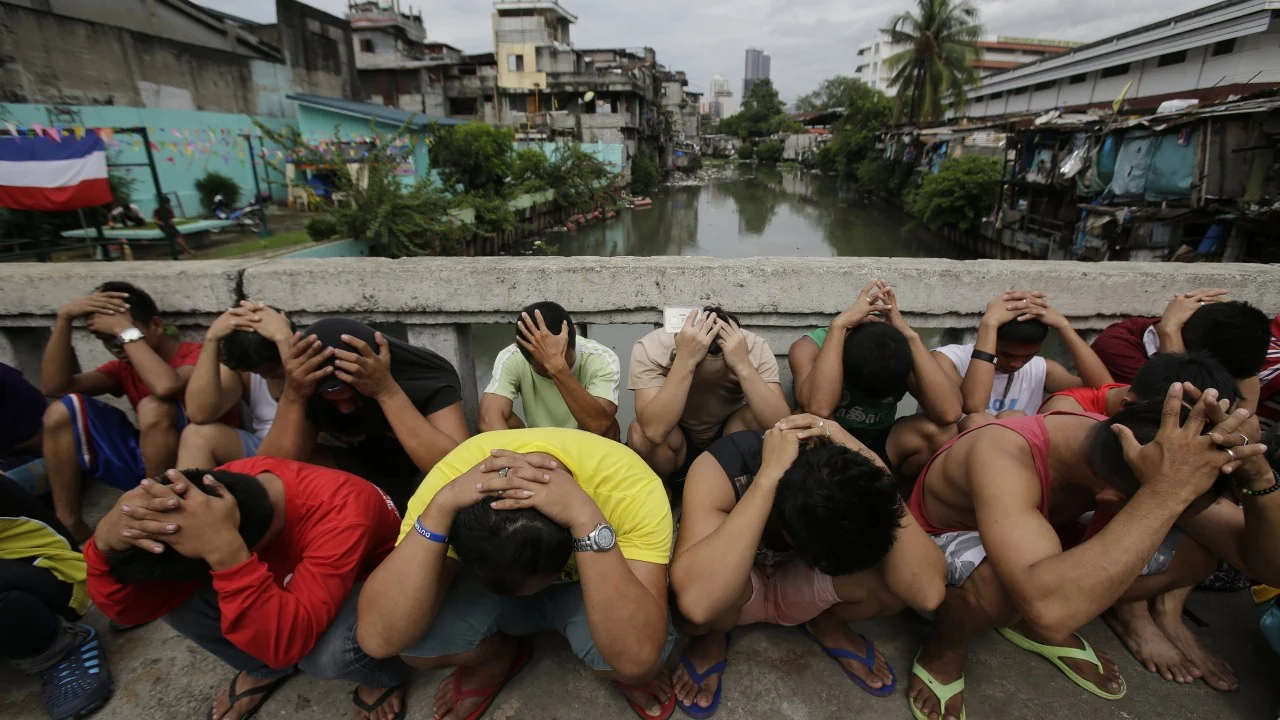
这些活动早于前总统罗德里戈·杜特尔特的政府,后者在2016年至2022年发动了一场有争议的禁毒战争,导致数千人死亡。
These operations predate former president Rodrigo Duterte’s administration, which launched a controversial war on drugs from 2016 to 2022 that left thousands dead.
但这位前禁毒官员表示,打击国内市场的较低层级参与者“并不一定意味着瓦解规模更大的区域供应链,这些供应链跨越多个司法管辖区运作”。
But targeting lower-level players in the domestic market “does not necessarily translate into dismantling the larger regional supply chains, which operate across multiple jurisdictions”, said the former drug official.
道格拉斯说:“当时毒品问题很严重,现在也很严重;区域毒品市场的基本面、使用和需求以及供应,仍然是菲律宾及其邻国仍在努力应对的重大挑战。”
“The drug problem was significant then, and it is now; the fundamentals of the regional drug market, the use and demand and the supply remain a major challenge the Philippines and [its] neighbours are still grappling with,” Douglas said.