铠侠控股公司营业利润激增22倍,并宣布派发中期股息,这得益于数据中心运营商愿意为闪存芯片支付高价。
Holdings Corp. posted a 22-fold surge in operating profit and announced an interim dividend, buoyed by data center operators’ willingness to pay big for flash memory chips.
这家总部位于东京的公司是三星电子、SK海力士和美光科技的竞争对手。该公司表示,9月当季营业利润为1.99万亿日元(127亿美元),与分析师的普遍预期一致。该公司宣布每股派发90日元的中期股息,这是其有史以来首次派息。
The Tokyo-based rival to Samsung Electronics Co., SK Hynix Inc. and Micron Technology Inc. said operating profit was ¥1.99 trillion ($12.7 billion) in the September quarter, in line with the average analyst estimate. It announced an interim dividend of ¥90 per share — its first dividend ever.
铠侠正受益于大型科技提供商激增的需求,这些需求推高了NAND闪存芯片的平均价格。对于本季度,该公司预计营业利润为2万亿日元,低于2.35万亿日元的预期。
Kioxia is benefiting from soaring demand from big tech providers that’s driving up average prices of NAND flash memory chips. For the current quarter, the company expects an operating profit of ¥2 trillion, below estimates for ¥2.35 trillion.
受Meta Platforms和亚马逊等公司利润丰厚的多年期合同的鼓舞,芯片制造商正加紧建设新的产能,以利用预计至少持续到2027年的供应短缺。铠侠正准备明年发行自己的美国存托凭证(ADR),以帮助为其与生产合作伙伴Sandisk计划未来六年在日本进行的超过5万亿日元的资本支出提供资金。彭博新闻社此前报道称,此次美国上市可能筹集至少100亿美元。
Emboldened by lucrative multiyear contracts from the likes of Meta Platforms Inc. and Amazon.com Inc., chipmakers are hurrying to build new production capacity and capitalize on shortages projected to last through at least 2027. Kioxia is preparing to float its own American depositary receipts next year to help fund the more than ¥5 trillion in capital spending it plans in Japan with production partner Sandisk Corp. over the next six years. Bloomberg News previously reported a US listing could raise at least $10 billion.
此次ADR上市旨在将铠侠的投资者基础扩大到亚洲以外,押注当前对支持人工智能服务所需硬件的需求,将盖过围绕循环融资以及数据中心狂热支出可持续性的持续质疑。
The ADR listing, aimed at broadening Kioxia’s investor base beyond Asia, is a bet that the current demand for hardware needed to support artificial intelligence services would outrun persisting questions about circular financing and the sustainability of feverish spending on data centers.
与今年早些时候上市ADR的SK海力士一样,铠侠希望通过在美国正式上市,来平抑波动性并加强与亚洲以外金融机构的合作渠道。这一努力恰逢其在国内积极回购股票:今年8月,铠侠在宣布8000亿日元回购计划10天后便完成了该计划。
Like SK Hynix, which listed ADRs earlier this year, Kioxia seeks to temper volatility and strengthen pipelines with financial institutions outside Asia through an official debut in the US. That push has coincided with aggressive share buybacks at home: In August, Kioxia completed an ¥800 billion buyback 10 days after announcing it.
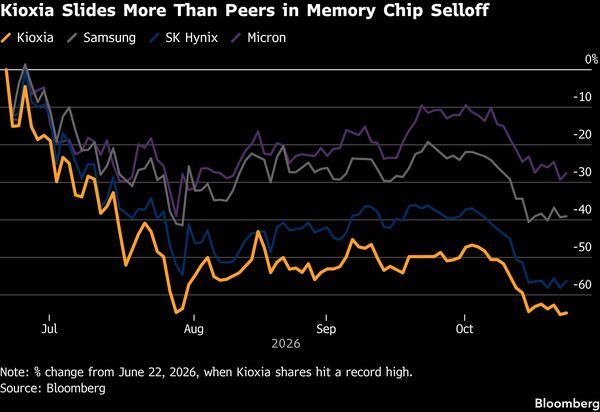
铠侠的股价已较6月峰值下跌约60%。三星和SK海力士的乐观预测本周一度提振芯片相关股票,但周五这些股票在广泛抛售中大跌。
Shares of Kioxia have tumbled around 60% from their peak in June. Samsung and SK Hynix’s bullish projections briefly boosted chip-related stocks this week, only to see them tumble in a broad selloff Friday.
铠侠多年来一直受困于包括苹果公司在内的消费电子公司需求波动,如今它押注AI将改变闪存芯片市场。尽管AI可能运行在英伟达公司等企业的图形处理器上,但它越来越依赖闪存来存储和供给这些芯片所消耗的海量数据。
Kioxia, which for years struggled with volatile demand from consumer electronics companies including Apple Inc., is betting that AI will transform the market for flash memory chips. While AI may run on graphics processing units such as Nvidia Corp.’s, it increasingly depends on flash memory to store and feed vast amounts of data those chips consume.
数据中心在铠侠业务中的占比正不断上升,该公司希望这类可靠客户最终能占其总销售额的60%以上。公司计划就2028年及以后预计出货量的一半,从超大规模云服务商那里争取长期协议,以便对需求有更大的可见度。
Data centers comprise a growing portion of business at Kioxia, which hopes that such reliable customers will eventually make up more than 60% of overall sales. The company aims to secure long-term agreements from hyperscalers for half of projected shipments for 2028 and beyond, to give it greater visibility on demand.
该公司目前正在开发新型固态硬盘,这些硬盘将更靠近AI加速器,并提供额外一层存储,以减少必须塞进昂贵的基于DRAM的高带宽内存中的数据量。
The company is now developing new solid-state drives that would sit closer to AI accelerators, and provide an extra tier of memory to reduce the amount of data that has to fit in expensive DRAM-based high-bandwidth memory.
由于资金更雄厚的竞争对手正专注于利润丰厚的HBM市场,这帮助铠侠在其高密度NAND芯片上获得了极高的利润率。SK海力士今年因其在铠侠的间接持股而大赚一笔,并继续持有可转换为这家日本芯片制造商相当规模股份的债券。
Because better-funded competitors are focusing on the lucrative HBM market, that’s helped Kioxia command astronomic margins on its high-density NAND chips. SK Hynix earned a big windfall from its indirect stake in Kioxia this year and continues to hold bonds that can be converted into a sizable stake in the Japanese chipmaker.
铠侠的NAND市场份额落后于三星和SK海力士,后两者更有条件将存储芯片与其HBM产品捆绑销售。铠侠不生产DRAM,也不涉足HBM市场。
Kioxia’s NAND market share trails those of Samsung and SK Hynix, which are better placed to bundle storage chips with their HBM products. Kioxia, which does not manufacture DRAM, is not in the HBM market.
供应紧张也为中国长江存储科技有限责任公司在传统闪存产品领域创造了机会。Counterpoint Research的数据显示,长江存储在今年第二季度的NAND出货量上超过铠侠和美光,升至第三位。
Tight supply constraints are also creating an opening for China’s Yangtze Memory Technologies Co. in conventional flash memory products. YMTC moved ahead of Kioxia and Micron to take the No. 3 slot in NAND shipment volume in the June quarter, according to Counterpoint Research.