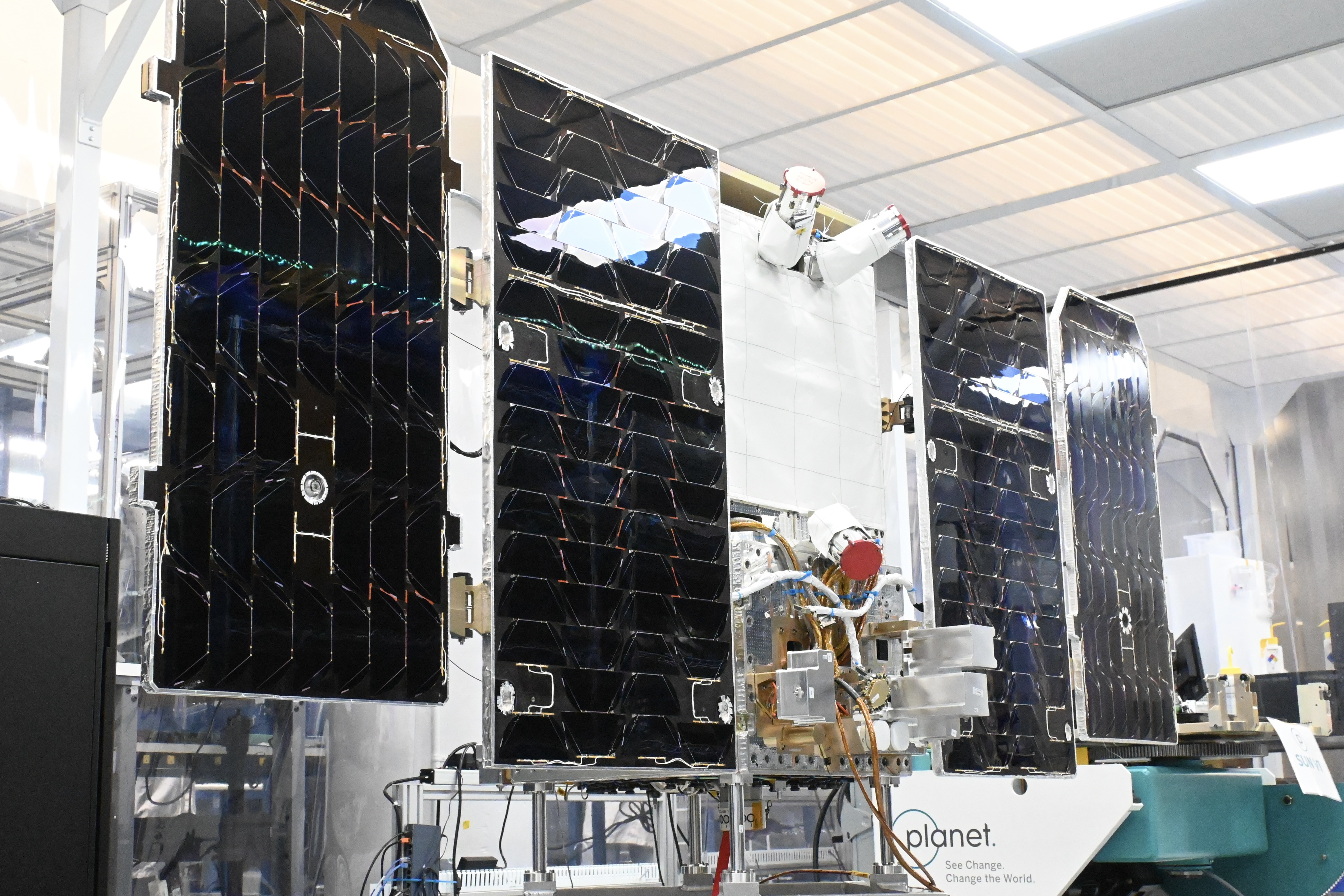
Google Suncatcher 的原型空间数据中心已上线并与地面通信,此前它于本月初与其他 100 多艘航天器一同搭乘 SpaceX 猎鹰 9 号火箭发射升空。
Google Suncatcher’s prototype space data center is online and communicating with the ground after launching earlier this month alongside more than 100 other spacecraft on a SpaceX Falcon 9 rocket.
这颗卫星搭载一颗 Google 张量处理单元 (TPU),发电功率高达 1 千瓦,旨在为未来由编队飞行的卫星在轨执行大规模推理任务铺平道路。然而,TPU 的功耗要求意味着它每次只能开启约 20 分钟,这给本已棘手的空地通信增加了难度。
The satellite, which carries a single Google Tensor Processing Unit (TPU) and generates up to 1 kW of electricity, is intended to pave the way for future networks of close-flying satellites performing large inference workloads in orbit. However, the power demands of the TPU mean it can only turn on for about twenty minutes at a time, complicating the already tricky business of space-to-ground communications.
经过约三周的调试过程,测试了卫星的各个子系统后,航天器已准备好投入工作。本周,地面工程师发送首个提示词时,要求预装在卫星上的模型 —— Google DeepMind 的 Gemma 4 —— 写一首关于身处太空的俳句。于是:蔚蓝星球在脚下 数据流静默优雅 星光滋养我核心Google 表示,曾用这些太空主题的打油诗测试该模型(他们本该找位诗人?),或许更重要的是,公司还要求航天器报告卫星周围的轨道环境状况。一位发言人告诉 TechCrunch,卫星运行正常。
After a commissioning process that tested out the satellite’s subsystems over about three weeks, the spacecraft was ready to work. When engineers on the ground sent their first prompt this week, they asked the model pre-loaded onto the satellite, Google DeepMind’s Gemma 4, to write a haiku about being in space. And thus: Blue marble below Data streams in silent grace Starlight feeds my core. Google said it tested the model with these space-themed limericks (they should have sent a poet?) and, perhaps more importantly, the company asked the spacecraft to report on the orbital conditions around the satellite. A spokesperson told TechCrunch that the satellite was operating nominally.
正在进行的测试活动将考察芯片在热应力和空间辐射环境下的表现。Google 已在地面粒子加速器中对 TPU 进行了大量测试,但现在需要了解太空辐射对其硬件的真实影响如何作用于处理器。辐射会导致 “位翻转” —— 即计算机存储中的数值发生改变 —— 进而可能在不触发典型监控工具的情况下破坏数据。
The ongoing test campaign will examine how the chips perform under thermal stress and in the space radiation environment. Google has extensively tested its TPUs in particle accelerators on Earth, but now needs to see how radiation’s real effects on their hardware in space affect their processor. Radiation can cause “bit flips”—causing a stored value in computer memory—and that in turn can corrupt data without triggering typical monitoring tools.
地面测试表明,辐射对推理工作负载的影响微乎其微,对模型训练的干扰更大,但现在 Google 团队将有机会在现实环境而非模拟中评估这些动态表现。
Testing on the ground suggested the impact of radiation would be minimal for inference workloads and more of a problem for training a model, but now the Google team will get to assess those dynamics in reality, not a simulation.
如果搭载在该航天器上的 TPU 证明性能达标,下一步将于 2027 年发射两颗搭载先进芯片的卫星。这些航天器将支持更高的发电功率,并演示星间光链路。
If the TPU onboard this spacecraft proves capable, the next step will be launching two more satellites equipped with the advanced chips in 2027. Those spacecraft will support higher power generation and demonstrate inter-satellite optical links.
在空间数据中心的各类构想中,Google 的 Starcloud 项目基本上是唯一一个计划利用卫星间的高速链路来支持连贯的分布式工作负载的项目;SpaceX 的数据中心预计也将使用激光链路,但轨道间距太远,无法有效共享处理资源。Starcloud 和 Cowboy Space 等公司预计将在单颗卫星上执行推理负载。
Google’s Starcloud project is largely alone among visions for space-based data centers in planning on high-speed links between the satellites to support coherent distributed workloads; SpaceX’s data centers are also expected to use laser links but also to orbit too far apart to share processing effectively. Companies like Starcloud and Cowboy Space expect to perform inference loads on individual satellites.
Google 和 SpaceX 的愿景紧密相连。Google 母公司 Alphabet 持有 SpaceX 的大量投资股份。而且,要发射它们的轨道数据中心,两家公司都需要 Starship——这款仍在研发中的重型运载火箭,是 Elon Musk 太空愿景的核心——实现完全且快速的可复用。
Google and SpaceX’s visions are closely linked. Alphabet, Google’s parent company, holds a significant investment stake in SpaceX. And to launch their orbital data centers, both companies will require Starship, the still-in-development heavy-lift rocket at the center of Elon Musk’s space vision, to be fully and rapidly reusable.
本月早些时候发表的一篇同行评审分析中,Suncatcher 的研究人员估计,SpaceX 需要飞行 Starship 1800 次,才能实现其在早期飞行器上所见的那种学习驱动的成本降低。Suncatcher 是典型的 Google “登月计划”项目——公司的重点在于设计在 2030 年代具有经济性的基础设施。然而,能否达成目标,可能取决于公司其他部门如何应对近期 AI 带来的压力与机遇。Google 母公司 Alphabet 本周股价暴跌,此前该公司报告称,将 AI 引入搜索业务的努力正在损害广告收入增长。
In a peer-reviewed analysis published earlier this month, Suncatcher researchers estimated that SpaceX would need to fly Starship 1,800 times to achieve the same learning-driven cost reductions it saw with its earlier vehicles. Suncatcher is a classic Google moonshot—the company’s focus is on designing infrastructure that will be economical in the 2030s. Getting there, however, may depend on how the rest of the company responds to the pressures and opportunities of AI in the near term. Alphabet, Google’s parent company, saw its stock plunge this week after reporting that efforts to insert AI into its search businesses are hurting ad revenue growth.