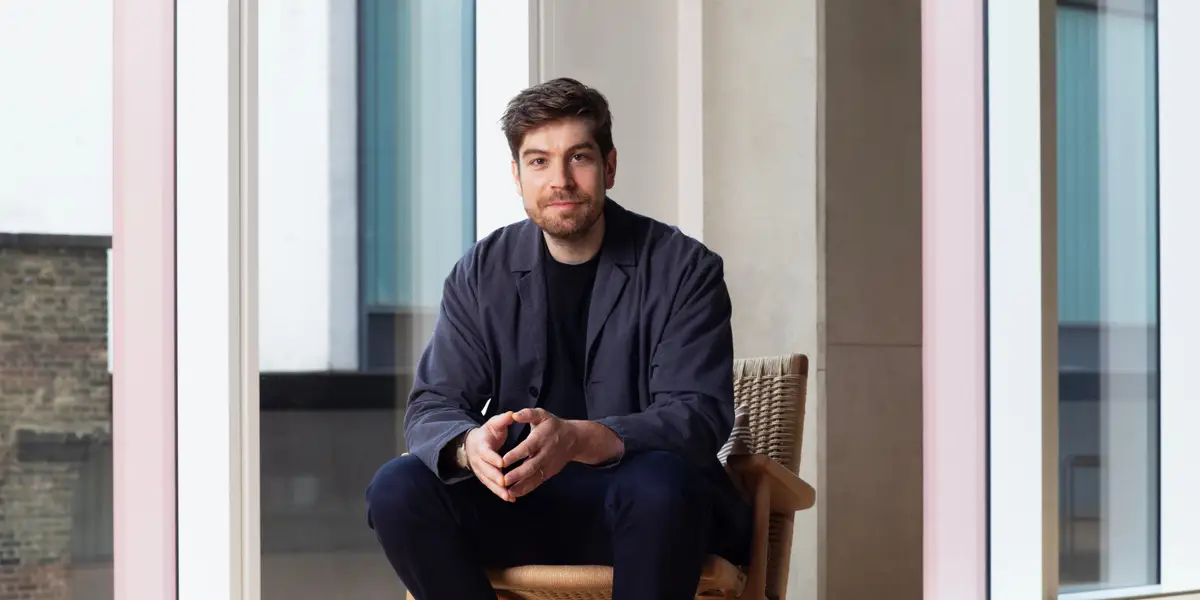
在伦敦人工智能枢纽的一间宽敞办公室里,一群研究人员正准备与人类最古老的敌人展开较量。Isomorphic Labs是谷歌深谷(Google DeepMind)分拆出的公司,也是人工智能先驱德米斯·哈萨比斯(Demis Hassabis)的心血结晶。即便以其他人工智能实验室的标准来看,它也肩负着一项雄心勃勃的使命:利用人工智能研发能够治愈癌症并使疾病成为过去的药物。
In a cavernous office in London's AI hub, a group of researchers is preparing to do battle with humanity's oldest enemy. Isomorphic Labs, a spinoff of Google DeepMind and the brainchild of AI pioneer Demis Hassabis, has an ambitious mission even by the standards of other AI labs: using AI to create drugs that could cure cancer and make disease a thing of the past.
Isomorphic公司总裁马克斯·贾德伯格(Max Jaderberg)负责在兼任首席执行官的哈萨比斯领导下管理公司的日常运营,他深知这是一个崇高的目标。即便如此,他依然镇定自若。“这是一个荒谬的说法,但我们确实能一本正经地把它说出来,”现年36岁的贾德伯格在9月份接受《商业内幕》独家采访时表示。他补充说,在过去三年里,Isomorphic员工向他汇报内部突破性进展的频率已经从每月一次加快到了每周一次。“在五年后的世界里,不可能存在所有药物不是由人工智能设计的情况,”他说。
Max Jaderberg, Isomorphic's president and the person running day-to-day operations at the company under Hassabis' aegis as CEO, knows it's a lofty goal. Even so, he is unfazed. "It's a ridiculous statement, but we really say it with a straight face," said Jaderberg, 36, who spoke to Business Insider in an exclusive interview in September. He added that the rate at which Isomorphic employees were coming to him with internal breakthroughs had accelerated from monthly to weekly in the past three years. "There's no world in five years' time, where all drugs aren't designed by AI," he said.
目前,这个目标似乎还很遥远。人工智能设计的药物已经开发了十多年,但尚未有一种获得美国食品药品监督管理局(FDA)批准,也未完成临床试验流程——这是一条漫长的监管长征,大约90%的候选药物都在此折戟。
Right now, that goal seems a long way away. AI-designed drugs have been in development for over a decade, but none have yet received FDA approval or completed the clinical trials process, a yearslong regulatory slog that around 90% of drug candidates fail.
凭借AlphaFold,Isomorphic享有先发优势。AlphaFold是由DeepMind开发的人工智能模型,为哈萨比斯赢得了诺贝尔奖,并彻底革新了蛋白质测序,为人工智能设计药物打开了大门。贾德伯格表示,Isomorphic计划利用其人工智能模型来克服许多通常会让有前景的候选药物栽跟头的障碍。
Isomorphic has enjoyed an early-mover advantage thanks to AlphaFold, the AI model developed by DeepMind that won Hassabis a Nobel Prize and revolutionized protein mapping, opening the door to AI-designed medicines. Jaderberg said Isomorphic planned to use its AI models to overcome many of the hurdles that typically trip up promising drug candidates.
该公司正在研究一种方法,利用其人工智能模型以及充沛的计算资源,来预测药物分子将如何与体内的其他所有分子发生相互作用,而如果要通过手工测试,这一过程将过于昂贵。今年2月,Isomorphic推出了一款“药物设计引擎”,该公司称该引擎在AlphaFold的基础上进行了改进。
The company is working on a method of using its models — and its plentiful supply of compute — to predict how the drug molecule will interact with every other molecule in the body, a process that would be far too expensive to test by hand. In February, Isomorphic unveiled a "drug design engine" that the company said improves on AlphaFold.
雅德伯格表示,Isomorphic 计划利用它来精确设计分子,以便患者能够接受所需的最小剂量药物。人们希望这将避免因血液中药物浓度过高积聚而引起的并发症。雅德伯格说,公司的最终目标是能够如此出色地预测分子之间的相互作用,以至于科学家在设计药物时甚至不必踏入实验室。雅德伯格表示,公司内部的药物设计工作重点是开发针对癌症、免疫系统相关疾病和炎症性疾病的突破性药物。
Isomorphic plans to use it to precisely engineer molecules so that patients can receive the minimum amount of drug needed, Jaderberg said. The hope is that this will avoid complications caused by high concentrations of the drug building up in their bloodstream. The company's ultimate goal, Jaderberg said, is to be able to predict the interaction between molecules so well that its scientists will not even have to step inside a lab while designing a drug. Jaderberg said the company's internal drug design efforts are focused on developing breakthrough drugs for cancer, conditions related to the immune system, and inflammatory diseases.
他说:“有很多公司只是说,‘这有一种临床药物,我们能否只做一点小小的改变,带来渐进式的改进,从而让我们占领一部分市场?’”雅德伯格补充道:“我认为我们看到了一个更大的机遇,那就是去攻克以前从未制造过的药物。”作为 Isomorphic 创始团队成员的雅德伯格,是在大学毕业后直接被哈萨比斯招募到 DeepMind 的。
"There's a lot of companies that just say, 'Here's a medicine in the clinic, can we just make a small change and make an incremental improvement that will allow us to capture some of that market?'" he said. "I think we see a bigger opportunity, which is to go after medicines that haven't been made before," Jaderberg added. Jaderberg, who was part of Isomorphic's founding team, was recruited by Hassabis to DeepMind straight out of university.
他最初找哈萨比斯,是希望这位投资人能投资他作为学生创立的计算机视觉初创公司,但哈萨比斯却提出直接买下这家公司,以将雅德伯格招致 DeepMind 麾下。作为一名出身于癌症研究人员和医生家庭的前工程学学生(他的祖父曾在瑞典担任心脏病专家并主持药物试验),雅德伯格于 1月晋升为 Isomorphic 的总裁,此前他曾担任首席人工智能官。
He initially approached Hassabis to be an angel investor in the computer vision startup he founded as a student, but Hassabis instead offered to buy the company outright to bring Jaderberg to DeepMind. A former engineering student from a family of cancer researchers and doctors (his grandfather ran drug trials as a cardiologist in Sweden), Jaderberg was elevated to Isomorphic's president in January, having previously served as chief AI officer.
现在,他面临着将 Isomorphic 用人工智能设计的药物从原型真正推进到应用于患者的挑战。到目前为止,Isomorphic 已与制药巨头诺华、强生和礼来建立了研究合作关系。雅德伯格表示,这家人工智能初创公司的新药物设计引擎也为公司开始在临床前试验中测试人工智能设计的药物奠定了基础,人体试验也为期不远。
Now, he faces the challenge of actually shepherding Isomorphic's AI-designed drugs from prototypes to patients. So far, Isomorphic has struck research partnerships with pharma giants Novartis, Johnson & Johnson, and Eli Lilly. Jaderberg said the AI startup's new drug design engine has also provided a foundation for the company to begin testing AI-designed drugs in preclinical trials, with human trials not far away.
贾德伯格表示:“如果我们想攻克所有疾病,你需要一个药物设计引擎,它不仅适用于某个疾病领域、某个治疗领域、某个适应症、某种类型的蛋白质,甚至某种药物模态。我们需要一个适用于所有情况的引擎。”Isomorphic的总裁拒绝透露临床试验的时间表,该公司此前曾推迟过该时间表。不过贾德伯格表示,该公司并未遇到任何新的延迟,过去一年一直在波士顿建立临床开发团队,以为这一里程碑做准备。
"If we want to solve all disease, you need a drug design engine that doesn't just work for one disease area, one therapeutic area, one indication, one type of protein, even one modality. We need something that works for everything," said Jaderberg. Isomorphic's president declined to provide a timeline for clinical trials, which the company has previously pushed back. However, Jaderberg said the company had not experienced any new delays and had been building up a clinical development team in Boston over the past year in preparation for the milestone.
即使拥有尖端的人工智能模型和充足的算力供应,Isomorphic面临的障碍依然严峻。闯过临床试验重重难关并将计算机屏幕上的概念转化为现实生活中的药物,是生物化学领域最艰巨的挑战之一。研究人员构建旨在针对特定蛋白质的分子,然后让它们经历详尽的试错过程。当药物未能如预期般在活细胞上起作用或引发意外副作用时,团队往往只能重新回到图纸前。
Even with cutting-edge AI models and a healthy supply of compute, the barrier Isomorphic faces is daunting. Navigating the clinical trials gauntlet and taking drugs from concepts on a computer screen to real-life medicines is one of the most grueling challenges in biochemistry. Researchers build molecules designed to target a specific protein, then subject them to an exhaustive trial-and-error process. Teams often end up going back to the drawing board when the drug fails to work on living cells as predicted or causes unexpected side effects.
最终,只有少数设计能够进入在动物身上进行测试的阶段。经过多年的测试,极少数的设计可能会进入人体试验。整个过程可能需要耗费十多年时间。成功的药物研究人员在其整个职业生涯中,可能只能看到一两种药物最终送达患者手中。更多的人则会一无所获。
Eventually, a few designs reach the stage where they can be tested on animals. After years of testing, a tiny selection might advance to human trials. The entire process can take over a decade. Successful drug researchers can see just one or two of their drugs make it to patients across their entire career. Many more will have none.
贾德伯格表示,候选药物面临百分之九十失败率的原因有几个。他指出,传统生物技术公司往往资金受限,因此它们不得不冒险使用明知并不完美的分子。药物分子可能会击中“脱靶”蛋白质,从而引发意料之外的副作用和毒性。然而在贾德伯格看来,失败的根本原因更为深远。他表示,失败的候选药物通常是因为它们建立在对生物学的不正确理解基础之上。
Jaderberg said there were a few reasons for the 90% failure rate drug candidates face. Traditional biotechs are often funding-constrained, he said, so they have to take a chance on molecules they know are not perfect. The drug molecule might hit "off-target" proteins that can cause unintended side effects and toxicity. In Jaderberg's view, however, the underlying reasons for failure run deeper. Unsuccessful drug candidates usually fail because they are based on an incorrect understanding of biology, he said.
他表示,构建一个真正具有革命性的药物设计引擎,需要一个能够理解蛋白质如何相互作用的综合生物学模型,以及决定细胞如何生长和死亡的逐步化学反应。“我认为这指向了一个更深层次、更长期的研究目标,我们已经在这条路上前进了。那就是如何从机制上更好地理解生物学?”雅德伯格说道。
Building a truly revolutionary drug design engine requires a comprehensive model of biology that can understand how proteins interact, and the step-by-step chemical reactions that dictate how cells grow and die, he said. "I think that points to a deeper and longer-term research goal that we're already underway on. Just how can you understand biology mechanistically better?" said Jaderberg.
尽管同型实验室雄心勃勃,但通往首批人工智能设计癌症药物的道路依然充满不确定性。递归制药公司和薛定谔公司等以人工智能为先导的药物设计初创企业曾报告其人工智能设计的药物遭遇挫折,一些备受瞩目的候选药物也未能通过一期临床试验。专家们敦促保持谨慎。生命未来研究所总监艾米莉亚·亚沃斯斯基在三月的一篇撰文中警告称,虽然人工智能擅长解决基于规则或数据丰富的问题,但生物学两者都不是。
Despite Isomorphic's ambition, the road to the first AI-designed cancer drugs is still uncertain. AI-first drug design startups like Recursion and Schrödinger have reported setbacks for their AI-designed medications, and some high-profile drug candidates have failed to move beyond Phase 1 trials. Experts have urged caution. In a March essay, Emilia Javorsky, a director at the Future of Life Institute, warned that while AI excels at solving problems that are rules-based or data-rich, biology is neither.
亚沃斯斯基批评了“科技公司首席执行官们的轻率承诺”,即他们的技术将迅速带来针对困扰人类数千年疾病的疗法。
Javorsky criticized "flippant promises by tech CEOs" that their technologies will quickly usher in treatments for diseases that have tormented humanity for millennia.
牛津大学副教授兼英国癌症疫苗人工智能与超级计算项目负责人伦纳德·李对《商业内幕》表示,人工智能改变了科学家预测分子特性和设计新药的能力。然而,他警告称,这些药物仍面临它们的“终极考验”。“药物开发依然异常艰难,充满希望的预测在面对生物学现实时往往会失败,”李说。
Lennard Lee, an associate professor at the University of Oxford and project lead for the UK's cancer vaccine AI & supercomputing project, told Business Insider that AI has transformed scientists' ability to predict molecular properties and design new medicines. However, he warned that these medicines still face their "ultimate test." "Drug development remains extraordinarily difficult, and promising predictions frequently fail when confronted with biological reality," Lee said.
牛津大学结构生物信息学教授夏洛特·迪恩表示,体内许多蛋白质具有流动的结构,即使是最先进的人工智能工具也很难对其进行建模。“我们都胸怀远大目标,这正是我们应该做的。但要证明一种药物有效,仍然是一个漫长的过程,”迪恩说。
Charlotte Deane, a professor of structural bioinformatics at the University of Oxford, said that many proteins within the body have a fluid structure that is hard for even the most advanced AI tools to model. "We all aim for the stars and that's exactly what we should be doing. But it is still a long process to show that a drug works," Deane said.
AlphaFold的成功可能已经让Isomorphic在寻找抗癌药物的竞赛中占据了先机,但在最近几个月里,Anthropic和OpenAI都公布了各自的药物研发计划。4月,OpenAI发布了GPT-Rosalind,这是一个专为缩短从药物发现到获批时间而构建的前沿人工智能模型,并宣布与制药巨头诺和诺德和莫德纳建立合作伙伴关系。10月,这家ChatGPT的制造商表示,它已收购了人工智能驱动的药物开发平台Orchestra Bio,交易金额未予披露。
The success of AlphaFold may have given Isomorphic an early lead in the race to discover cancer-beating drugs, but both Anthropic and OpenAI have unveiled their own drug-discovery efforts in recent months. In April, OpenAI announced GPT‑Rosalind, a dedicated frontier AI model built to shorten the time from drug discovery to approval, and announced partnerships with pharma giants Novo Nordisk and Moderna. In October, the ChatGPT maker said it had acquired AI-powered drug development platform Orchestra Bio for an undisclosed sum.
最近透露了重磅首次公开募股计划的Anthropic本月表示,它已与六家生命科学机构合作,在整个药物研发过程中部署人工智能并加速临床试验进程。该人工智能实验室还建立了自己的内部药物研发项目,旨在针对包括罕见的儿童型肌营养不良症在内的疾病开发疗法,Anthropic的目标是最快在2028年底前开始人体试验。
Anthropic, which recently revealed plans for a blockbuster IPO, said this month it had partnered with six life sciences organizations to deploy AI throughout drug development and accelerate the clinical trial process. The AI lab has also set up its own internal drug discovery efforts that are targeting treatments for diseases, including rare childhood forms of muscular dystrophy, with Anthropic aiming to begin human trials as early as late 2028.
Anthropic首席执行官达里奥·阿莫代伊在上个月关于放开发展前沿步伐的呼吁中,将其对人工智能可能在未来五到十年内治愈大多数重大疾病的信念作为开场白,并透露他自己曾患过“早期癌症”。在8月的一篇X平台贴文中,阿莫代伊进一步阐述了这一观点。他暗示,在抗击癌症等疾病方面取得实质性进展,对于帮助人工智能实验室扭转公众对人工智能热潮日益怀疑的看法、并证明巨额资金和土地成本的合理性是必要的。
Anthropic CEO Dario Amodei made his belief that AI could cure most major diseases in the next five to 10 years the opening salvo of his call to pace the frontier last month, revealing that he had survived an "early-stage cancer" himself. In an X post in August, Amodei went further. He suggested that delivering real progress in the fight against diseases like cancer would be necessary to help the AI labs turn around the increasingly skeptical public view of the AI boom and justify the enormous cost in money and land.
阿莫代伊写道:“在这一点上,说人工智能将治愈癌症与其说具有激励作用,不如说更像是一种陈词滥调,大多数人认为这是骗人的。真正管用的做法是真正治愈癌症。”贾德伯格表示,像Anthropic和OpenAI这样都正着眼于大规模公开上市的前沿实验室,比Isomorphic对“制造炒作”和传播成果更感兴趣。“我们不想过度炒作我们正在做的事情。我们不是在试图销售软件。”
"At this point, saying that AI will cure cancer is more a cliche than it is inspiring, and most people think it is deceptive. The thing that will work is actually curing cancer," Amodei wrote. Jaderberg said that frontier labs like Anthropic and OpenAI, both of which are eyeing massive public listings, are more interested in "building up hype" and communicating results than Isomorphic was. "We don't want to over hype what we're doing. We're not trying to sell software.
“我们并不是在试图授权我们的模型。我们想要为患者制造药物,”他补充说。他说,他最终将 Isomorphic 设想为一个垂直整合的制药商,负责设计、制造药物并直接将其运送给患者;这是一个“药物研发领域的 SpaceX”。
We're not trying to license our models. We want to make medicines for patients," he added. He said he ultimately envisioned Isomorphic as a vertically integrated drugmaker that designs, builds, and ships its medicines directly to patients; a "SpaceX for drug discovery."
与竞争对手相比,Isomorphic 拥有一个巨大的优势:哈萨比斯。他在 8 月卸任 DeepMind 负责人以在 Alphabet 承担更广泛的研究角色后,依然担任该公司首席执行官。哈萨比斯在宣布其新角色的贴文中表示,他将“全力投入”在 Isomorphic 的工作,“以帮助治愈疾病”。
Isomorphic boasts one huge advantage over its rivals: Hassabis, who remains the company's CEO after stepping away from his role as head of DeepMind in August to take on a broader research role at Alphabet. In his post announcing his new role, Hassabis said he would be "leaning into" his work at Isomorphic "to help cure disease."
贾德伯格表示,Isomorphic 的组织架构没有发生变化,但他补充说,该公司已经受益于哈萨比斯的新重心。“他认为这是我们应该推进的最重要使命之一。我们已经拥有了戴米斯的大量时间来帮助我们推动这一愿景,而拥有他更多的精力对我们来说将是积极的,”贾德伯格说。
Jaderberg said there had been no change in Isomorphic's organizational structure, but added that the company was already benefiting from Hassabis' new focus. "He believes this is one of the most important missions we should be pushing. We have a ton of Demis time already to help push us on that vision, and having even more of his headspace is going to be positive for us," Jaderberg said.
贾德伯格补充说,他预计 Isomorphic 的单一目标将在人工智能业务竞争最激烈的领域——招聘——赋予其对 Anthropic 和 OpenAI 的又一优势。
Jaderberg added that he expects Isomorphic's singular goal to give it another advantage over Anthropic and OpenAI in the most hotly-contested part of the AI business: hiring.
近几个月来,Anthropic 和 OpenAI 均受到备受瞩目的离职潮冲击。两家公司的研究人员纷纷辞职,并伴随着对灾难性安全风险和人工智能引发的世界末日的戏剧性警告。
Both Anthropic and OpenAI have been rocked by high-profile departures in recent months. Researchers from both companies have quit with dramatic warnings of catastrophic safety risks and AI-driven apocalypses.
在这些离职事件发生前,贾德伯格表示,Isomorphic 为研究人员提供了一条应用人工智能的途径,这种应用将产生积极的现实世界影响。
Speaking before those departures, Jaderberg said that Isomorphic offered researchers a route to apply AI in a way that would have a positive real-world impact.
“我认为有很多 AI 科学家和工程师实际上希望看到最终的影响,并希望它是一些非常切实的、不同于我认为当前前沿实验室所提供的影响的东西,”贾德伯格说。
"I think there are a lot of AI scientists and engineers who actually want to see that final impact and want it to be something really tangible and different to what I think is being offered as impact from the current frontier labs," Jaderberg said.
“作为一个物种,我们也必须推动这项技术走向好的应用,”他补充说。
"As a species, we have to be driving this technology toward the good applications as well," he added.