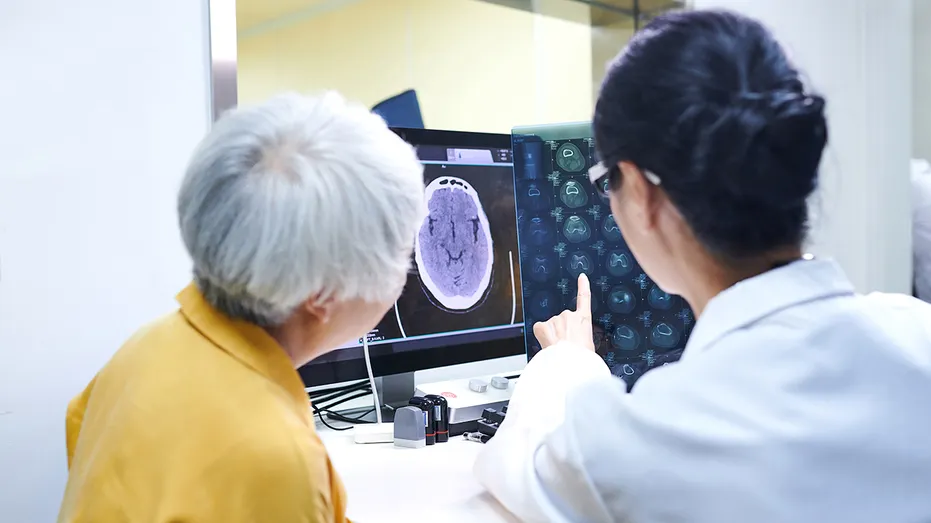
看完医生后,你是否带着更多疑问离开,而不是得到答案?也许你做过多项检查,却仍听医生说不确定是什么导致了你的症状。这种不确定性令人筋疲力尽,尤其是当你渴望得到答案时。现在,微软表示,其新的人工智能系统可能帮助医生解决医学中最棘手的诊断难题之一。而早期数据令人印象深刻。
Ever leave a doctor's appointment with more questions than answers? Maybe you've gone through several tests, only to hear that your doctor still isn't sure what's causing your symptoms. That uncertainty can be exhausting, especially when you want answers. Now, Microsoft says its new artificial intelligence system could help doctors solve some of medicine's toughest diagnostic puzzles. And the early numbers are impressive.
在10月22日发表于《科学》杂志的一项研究中,微软的人工智能诊断系统正确识别了83%的复杂病例,而能够查阅参考资料的全科医生准确率为36%。在研究的测试条件下,其准确率超过两倍。
In a study published on Oct. 22 in the journal Science, Microsoft's AI diagnostic system correctly identified 83% of complex medical cases, compared with 36% for generalist physicians who could consult reference materials. That's more than twice the accuracy under the study's testing conditions.
然而,这些数字背后有一个重要的例外。该研究是在模拟环境中进行的,医生们并非共同处理困难病例的专家。尽管如此,研究结果引发了一个关于人工智能如何改变你下次就医体验的有趣问题。
However, there's an important catch behind those numbers. The research took place in a simulation, and the doctors weren't specialists working together on difficult cases. Still, the findings raise a fascinating question about how artificial intelligence could change your next visit to the doctor.
我们的免费“CyberGuy LIVE”课程“五种更智能旅行并省钱的方法”已结束,但你仍可观看完整回放。库尔特“CyberGuy”克努特森将带你了解五种保护手机和个人信息、避免常见旅游诈骗、寻找更好优惠、节省预订费用以及利用科技让旅行更轻松、更少压力的实用方法。无需技术经验。
Our free CyberGuy LIVE class, 5 Ways to Travel Smarter and Save Money, has ended, but you can still watch the full replay. Kurt "CyberGuy" Knutsson walks you through five practical ways to protect your phone and personal information, avoid common travel scams, find better deals, save money on bookings and use technology to make your travels easier and less stressful. No technical experience is needed.
微软将其技术称为MAI诊断编排器,即MAI-DxO。该系统使用多个AI代理,协作方式类似于一组医生讨论复杂病例。AI没有立即给出答案,而是从有限的信息开始。它会提出后续问题,并考虑哪些医学检查可能有助于确定问题。随后,随着新信息的出现,其AI代理会相互挑战彼此的结论。
Microsoft calls its technology the MAI Diagnostic Orchestrator, or MAI-DxO. The system uses multiple AI agents that work together much like a panel of doctors discussing a difficult medical case. Instead of jumping to an immediate answer, the AI begins with limited information. It asks follow-up questions and considers which medical tests might help identify the problem. Then, its AI agents challenge one another's conclusions as new information becomes available.
想象一下,一名患者出现原因不明的疲劳和几项异常的实验室检查结果。医生可能会先考虑一种可能的解释,然后再安排进一步检查。微软的系统能够审视多种可能性,并随着证据的变化重新评估其初步判断。当症状在不同疾病间出现重叠时,这种方法可能特别有用。
Think about someone who has unexplained fatigue and several unusual lab results. A doctor might consider one possible explanation before ordering additional tests. Microsoft's system can examine multiple possibilities and reconsider its initial assessment as the evidence changes. That approach could prove especially useful when symptoms overlap across different diseases.
根据微软发布的研究结果,研究人员利用《新英格兰医学杂志》的304例复杂医疗病例对该技术进行了评估。这些病例往往涉及罕见疾病,甚至能难倒经验丰富的医生。结果引人注目:MAI-DxO 正确诊断了约 83% 的病例。独自工作的全科医生在可使用参考资料的情况下,准确率为 36%。若无这些资源,其准确率降至 22%。研究人员还利用历史急诊科病例测试了该系统。在那里,AI 的准确率约为 80%,而医生对照组为 47%。
According to Microsoft's published findings, researchers evaluated the technology using 304 complex medical cases from The New England Journal of Medicine . These cases often involve unusual illnesses that challenge even experienced physicians. The results were striking. MAI-DxO correctly diagnosed approximately 83% of those cases. Generalist physicians working alone achieved 36% accuracy when they could use reference materials. Without those resources, their accuracy dropped to 22%. Researchers also tested the system using historical emergency department cases. There, the AI achieved approximately 80% accuracy, compared with 47% for the physician comparison group.
在任何人开始取消医生预约之前,有必要了解这项研究的一个重要背景。对照组中的医生为全科医生,包括初级保健医生和普通内科医生。他们单独评估病例,即使在可使用医学参考资料的情况下也是如此。
Before anyone starts canceling doctor appointments, there's something important to understand about this research. The physicians in the comparison were generalists, including primary care doctors and general internists. They evaluated cases individually, even when they had access to medical reference materials.
然而,当患者出现特别棘手的医疗问题时,医院通常会会诊专科医生。这些专科医生可能会协作,在做出诊断前共同审阅更多证据。微软并未直接将其系统与医学专科医生团队进行对比。
However, hospitals typically involve specialists when patients develop particularly difficult medical problems. Those specialists may work together and review additional evidence before reaching a diagnosis. Microsoft did not directly compare its system against teams of medical specialists.
还有一个重要细节。微软的 AI 在 304 例复杂病例上接受了评估,而医生则处理了一组较小的 56 例病例,这些病例是从系统开发过程中留出的。这意味着,标题中的百分比并不代表两组完成了完全相同数量的病例。
There's another important detail. Microsoft's AI was evaluated across 304 complex cases, while physicians worked through a smaller set of 56 cases held out from the system's development process. That means the headline percentages don't represent two groups completing exactly the same number of cases.
这限制了我们对研究结果的广泛解读。研究人员还依赖现有病例,而非实时治疗患者。虽然这些病例提供了有益的挑战,但实际医疗护理可能远不可预测。
That limits how broadly we can interpret the findings. The researchers also relied on existing medical cases rather than treating patients in real time. While those cases provide a useful challenge, actual medical care can be far more unpredictable.
患者有时难以描述症状。病历可能存在缺失,体检可能揭示书面病例摘要中从未出现的线索。模拟还依赖AI系统从现有病例报告中提供信息。当某些细节不可用时,它可能生成看似合理的回答。这帮助研究人员创建诊断对话,尽管这些互动无法完全复制医生面对真实患者时遇到的不确定性。
Patients sometimes struggle to describe symptoms. Medical records may contain gaps, and physical examinations can reveal clues that never appear in a written case summary. The simulation also relied on an AI system to supply information from existing case reports. When certain details weren't available, it could generate plausible responses. That helped researchers create diagnostic conversations, although those interactions cannot fully reproduce the uncertainty doctors encounter with actual patients.
此外,做出正确诊断只是照顾某人的一部分。医生必须确定适当的治疗方案,并了解个人情况如何影响医疗决策。该研究的作者也受雇于微软,因此在医院考虑依赖该技术进行患者护理之前,独立测试尤为重要。目前,微软的结果显示该技术在受控测试条件下的表现如何。它是否能在日常患者护理中提供类似的好处,仍是一个悬而未决的问题。
Furthermore, reaching the correct diagnosis represents only part of caring for someone. Doctors must determine the appropriate treatment and understand how individual circumstances affect medical decisions. The study's authors also work for Microsoft, making independent testing especially important before hospitals consider relying on the technology for patient care. For now, Microsoft's results show how well the technology performed under controlled testing conditions. Whether it can deliver similar benefits during everyday patient care remains an open question.
你可能想知道这项技术与ChatGPT或其他已经回答医疗问题的AI助手相比如何。底层AI模型在微软的系统中起着重要作用。事实上,研究人员测试了OpenAI、Google、Anthropic及其他公司开发的模型。
You might be wondering how this technology compares with ChatGPT or other AI assistants that already answer medical questions. The underlying AI models play a major role in Microsoft's system. In fact, the researchers tested models developed by OpenAI, Google, Anthropic and other companies.

有一项发现值得关注。当研究人员使用不带微软编排系统的基本提示时,OpenAI的GPT-5正确解决了大约79%的复杂病例。添加MAI-DxO后,准确率提高到大约83%。这是一种改进,尽管底层AI模型本身表现已经非常出色。
One finding deserves attention. OpenAI's GPT-5 correctly solved approximately 79% of the complex cases when researchers used a basic prompt without Microsoft's orchestration system. Adding MAI-DxO increased accuracy to approximately 83%. That's an improvement, although the underlying AI model already performed remarkably well.
在较新的 GPT-5.5 模型上,复杂病例的提升幅度更大。微软的编排系统在该对比中将准确率从约 72% 提升至近 87%。然而,在使用最强模型处理急诊科病例时,该额外系统带来的改进甚微。这些结果表明,诊断能力在很大程度上源于强大的 AI 模型本身。微软的方法可进一步提升其性能,具体取决于模型和医疗问题。
With the newer GPT-5.5 model, the gains were larger on complex cases. Microsoft's orchestration system raised accuracy from approximately 72% to nearly 87% in that comparison. However, the additional system provided little improvement on emergency department cases using the strongest models. These results suggest that much of the diagnostic capability comes from powerful AI models themselves. Microsoft's approach can improve its performance further, depending on the model and medical problem.
与此同时,微软 AI 首席执行官穆斯塔法·苏莱曼将公司的更大雄心描述为“医疗超级智能”。该构想涉及开发能够最终在临床推理和协调方面超越当今最强医疗团队的 AI 系统。微软还在与梅奥诊所合作开发 AI 技术,未来有望帮助临床医生预判患者病情的发展。这些雄心远远超出了当前研究所展示的能力。
Meanwhile, Microsoft CEO of AI Mustafa Suleyman has described the company's larger ambition as "medical superintelligence." The idea involves developing AI systems capable of eventually exceeding today's strongest medical teams in clinical reasoning and coordination. Microsoft is also collaborating with Mayo Clinic on AI technology that could eventually help clinicians anticipate how a patient's medical condition might develop. Those ambitions extend well beyond the capabilities demonstrated in the current study.
凡是收到过令人震惊的高额医疗账单的人都知道,诊断检测费用增加有多快。微软认为,其技术最终有望帮助医生更好地决定患者实际需要哪些检测。
Anyone who has received a surprisingly expensive medical bill knows how quickly diagnostic testing can add up. Microsoft believes its technology could eventually help doctors make better decisions about which tests patients actually need.
研究期间,研究人员为诊断程序分配了估算成本,随后衡量 AI 能否在避免不必要检测的同时得出准确结论。在一种注重成本的配置中,MAI-DxO 在复杂病例上实现了约 81% 的准确率,每例估算诊断成本约为 2241 美元。使用参考资料的医生人均估算诊断成本约为 4725 美元。
During the study, researchers assigned estimated costs to diagnostic procedures. They then measured whether the AI could reach accurate conclusions while avoiding unnecessary testing. In one cost-conscious configuration, MAI-DxO achieved approximately 81% accuracy on complex cases while generating an estimated $2,241 in diagnostic costs per case. The physicians using reference materials averaged approximately $4,725 in estimated diagnostic costs.
然而,一些旨在最大化 AI 准确性的配置却产生了更高的测试成本。节省的程度部分取决于研究人员如何调整系统。重要的是要理解这些美元金额代表什么。研究人员估算的是诊断检查的成本,包括医疗检测和标准化就诊费用。这些数字并不代表患者的实际账单,也不代表运行 AI 的成本。它们是基于模拟得出的估算值,因此研究人员仍需确定这些节省在真实医院环境中是否依然成立。
However, some configurations designed to maximize AI accuracy generated higher testing costs. The savings depended partly on how researchers adjusted the system. It's important to understand what those dollar amounts represent. Researchers estimated the cost of diagnostic workups, including medical testing and standardized visit expenses. These figures do not represent actual patient bills or the cost of operating the AI. They're estimates based on the simulation, so researchers still need to determine whether the savings would hold up in real hospitals.
尽管如此,如果未来的临床试验证实了这些结果,在保持诊断准确性的同时减少不必要的程序,可能会带来显著的益处。
Nevertheless, reducing unnecessary procedures while preserving diagnostic accuracy could offer significant benefits if future clinical trials confirm the results.
下一个挑战在于超越模拟医疗案例。微软已宣布与波士顿的以色列女执事医疗中心建立合作伙伴关系,以在临床环境中评估 MAI-DxO。根据计划中的研究,同意参与的患者将继续接受标准医疗护理。他们还将与微软的 AI 系统互动,研究人员将把 AI 的建议与医生的独立评估进行比较。重要的是,医生将继续对患者治疗负责。
The next challenge involves moving beyond simulated medical cases. Microsoft has announced a partnership with Beth Israel Deaconess Medical Center in Boston to evaluate MAI-DxO in clinical environments. Under the planned research, consenting patients will continue receiving standard medical care. They will also interact with Microsoft's AI system as researchers compare its recommendations with physicians' independent assessments. Importantly, doctors will remain responsible for patient treatment.
这项研究应有助于研究人员了解 AI 在面对真实患者和繁忙医院中不可预测的情况时表现如何。与此同时,微软面临着其他追求类似目标的科技公司的竞争。谷歌最近在《柳叶刀》上发表了一项研究,涉及其自家的对话式医疗 AI 系统 AMIE。在该研究中,98 名患者在紧急初级保健预约前与谷歌的 AI 进行了互动。医生实时监控了对话,根据研究预先设定的标准,没有一次对话需要因安全原因而中断。
The study should help researchers understand how well the AI performs when it encounters actual patients and the unpredictable circumstances of a busy hospital. Meanwhile, Microsoft faces competition from other technology companies pursuing similar goals. Google recently published a study in The Lancet involving its own conversational medical AI system, called AMIE. In that study, 98 patients interacted with Google's AI before urgent primary care appointments. Physicians monitored the conversations in real time, and none required a safety-related interruption under the study's predefined criteria.
参与研究的临床医生还报告称,AI生成的信息往往能帮助他们为就诊做准备。尽管这项研究规模相对较小,但它让人们初步了解对话式AI可能如何与医生协同工作。Microsoft即将开展的临床评估将提供另一个机会,来检验这些系统是否能在受控模拟之外可靠运行。
Participating clinicians also reported that the AI-generated information often helped them prepare for appointments. Although the research was relatively small, it provided an early look at how conversational AI might work alongside doctors. Microsoft's upcoming clinical evaluation will offer another opportunity to examine whether these systems can perform reliably outside controlled simulations.
目前,Microsoft的AI诊断系统仍是一项研究技术。你不能将其作为就医的替代方案。不过,这些发现为医疗保健可能的发展方向提供了一个可能的预览。如果AI系统不断改进,你的医生最终可能会拥有一个强大的数字助手,能够审查复杂病例并提出被忽略的可能性。这对于那些花费数月时间试图了解无法解释的症状的人来说,可能尤其有帮助。
For now, Microsoft's AI diagnostic system remains a research technology. You cannot rely on it as a replacement for a medical appointment. However, these findings offer a possible preview of where health care could be headed. If AI systems continue improving, your doctor might eventually have access to a powerful digital assistant that can review difficult cases and suggest overlooked possibilities. That could be especially helpful for people who have spent months trying to understand unexplained symptoms.
AI还可能帮助临床医生更高效地评估检测结果。未来,这可能减少不必要的医疗程序,并可能缩短患者等待答案的时间。然而,准确性本身绝不应成为医院是否为患者护理采用AI的唯一决定因素。医生需要了解这些系统何时会出错。患者也有权了解其医疗数据如何被使用,以及谁审查AI生成的建议。
AI might also help clinicians evaluate test results more efficiently. In the future, that could reduce unnecessary procedures and potentially shorten the time patients spend waiting for answers. Still, accuracy alone should never determine whether a hospital adopts AI for patient care. Doctors need to understand when these systems make mistakes. Patients also deserve clear information about how their medical data gets used and who reviews AI-generated recommendations.
我们此前曾报道过,越来越多的美国人正在向AI寻求健康建议。这种日益增长的兴趣使得谨慎使用变得更加重要。如果你已经在向AI聊天机器人询问症状或医疗检测结果,请利用其回复为医生准备问题。避免将这些回复视为确诊的诊断。在将医疗记录上传到任何AI服务之前,请先了解该公司如何处理敏感的健康信息。最终,这项技术最有用的角色可能是帮助医生做出更好的决策,同时让患者参与到自己的护理中来。
We've previously reported on how more Americans are turning to AI for health advice. That growing interest makes careful use even more important. If you're already asking an AI chatbot about symptoms or medical test results, use its responses to prepare questions for your doctor. Avoid treating those responses as confirmed diagnoses. And before uploading medical records into any AI service, review how the company handles sensitive health information. Ultimately, the most useful role for this technology may be helping physicians reach better decisions while keeping patients involved in their care.
想让AI为你的健康效劳吗?观看我CyberGuy LIVE课程的免费回放,了解“AI能帮你获得更好医疗的五种方式”,我将分享为就诊做准备以及理解复杂医疗信息的实用方法。
Want to put AI to work for your own health? Watch the free replay of my CyberGuy LIVE class, 5 Ways AI Can Help You Get Better Healthcare atwhere I share practical ways to prepare for doctor visits and make sense of complicated medical information.
我对这些结果既感到兴奋,又有些不安。任何目睹过亲人经历艰难诊断的人都知道,等待答案是多么令人沮丧。如果AI能帮助医生发现他们可能遗漏的问题,我非常赞成。但我们要谨慎,不要仅凭模拟病例就宣称AI比医生更好。我想看看这项技术在真实患者身上的表现,然后再过度信任它。最让我感兴趣的是,能为医生提供另一双极其能干的眼睛。第二意见可以改变一切,而AI可以让这种意见快得多地获得。当然,保护敏感的医疗信息也必须纳入考量。
I find these results both exciting and a little unsettling. Anyone who has watched a loved one struggle through a difficult diagnosis knows how frustrating it can be to wait for answers. If AI can help doctors catch something they might otherwise miss, I'm all for it. But let's be careful about declaring AI better than doctors based on simulated cases. I want to see how this technology performs with actual patients before we put too much trust in it. What interests me most is the possibility of giving doctors another set of highly capable eyes. A second opinion can change everything, and AI could make that available much faster. Of course, protecting sensitive medical information needs to be part of the equation, too.
如果AI系统在严重医疗诊断问题上与你的医生意见不一致,你会信任谁的判断?你希望AI参与你的医疗护理吗?
If an AI system disagreed with your doctor about a serious medical diagnosis, whose judgment would you trust? Would you want the AI involved in your care at all?