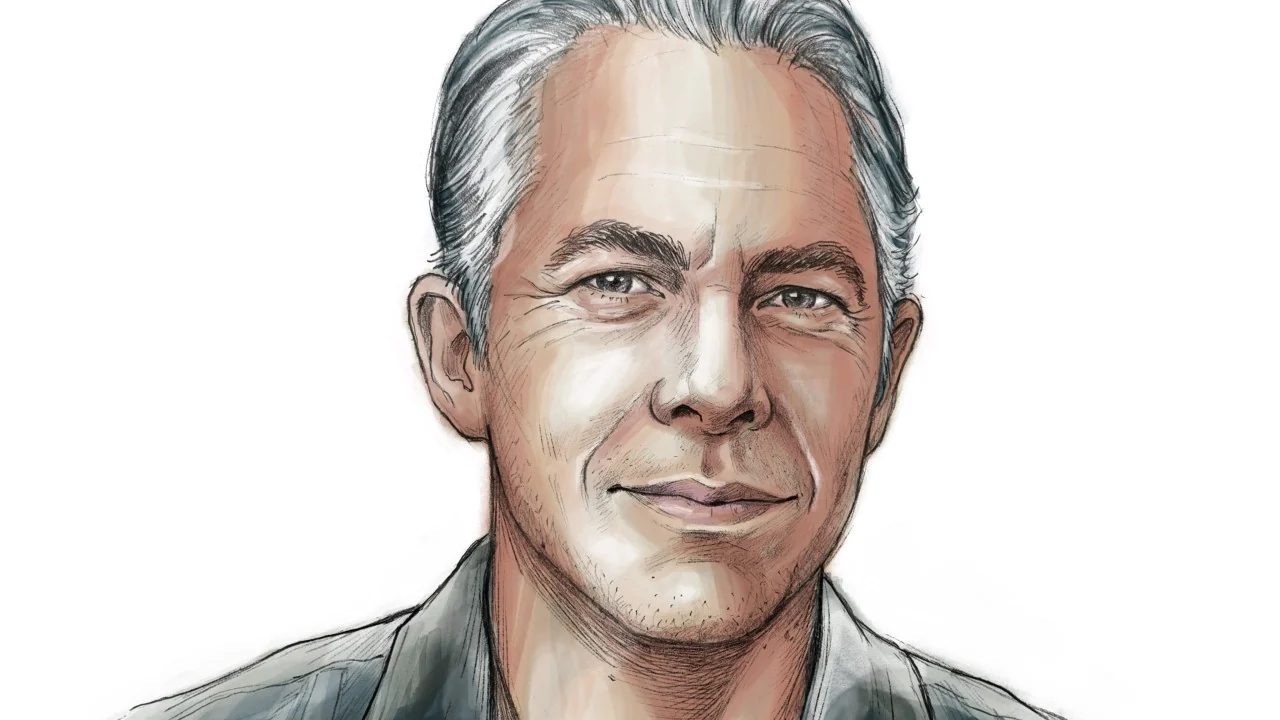
Joshua Cooper Ramo 是 Sornay(一家投资与咨询公司)的董事长兼首席执行官。此前他曾担任基辛格咨询公司首席执行官。Ramo 是新书《第七感》的作者。他在 2004 年对“北京共识”的分析,对比了西方与中国的经济发展模式。他是两本《纽约时报》畅销书的作者,现与家人居住在上海。
Joshua Cooper Ramo is chairman and CEO of Sornay, an investment and advisory firm. Previously he was CEO of Kissinger Associates. Ramo is the author of the new book . His 2004 analysis of “the Beijing consensus” contrasted the Western and Chinese economic development models. He is the author of two New York Times best-selling books and now lives in Shanghai with his family.
您从竞技特技飞行,到成为《时代》周刊最年轻的资深编辑和外籍编辑之一,又在 2000 年代初移居北京,随后从事中国高层战略咨询工作并在基辛格咨询公司任职。回首往事,是什么促使了这一转变?这些经历如何塑造了您对在相互竞争的叙事日益定义全球事务的当下,“看清真相”含义的理解?
You moved from competitive aerobatic flying and becoming one of the youngest senior and foreign editors at to living in Beijing in the early 2000s, and later into high-level strategic advisory work in China and at Kissinger Associates. Looking back, what prompted that shift? How has that experience shaped your understanding of what it means to “see clearly” at a time when competing narratives increasingly define global affairs?
我热爱记者生涯——战区采访、会见国家元首、为数百万读者撰稿的影响力。但这份工作“置身事外”的性质最终并不适合我。我报道的世界正以令人难以置信、加速的速度变化。我不想站在场边。我想有所作为。而我的性格渴望深度。我渴望满足一种好奇心:当巨大的历史力量开始运作时,那种感觉究竟如何。我想知道什么可能会崩塌,什么可能会被建立。作为记者报道硅谷时,我已见识过这种创造性毁灭的引擎在运转。我知道这种压力即将降临到整个世界。
I loved my career as a journalist – the war zones, the meetings with heads of state, the power of writing for millions of readers. But the “hands off” nature of the work did not fit me in the end. I was reporting on a world that was changing with incredible, accelerating speed. I did not want to be on the sidelines. I wanted to something. And my personality craved depth. I had a desire to satisfy a curiosity about how giant historic forces felt when they moved. I wanted to know what was likely to break and what was likely to be built. I had seen this engine of creative destruction at work while covering Silicon Valley as a journalist. I knew that pressure was coming for the world at large.
担任《时代》周刊外籍编辑期间,我曾到访中国,并感受到那里正在聚集一种潜在力量。我想靠近它。我对战争与和平的深层问题、如何避免国际关系中的悲剧感兴趣。我曾思考:我能否在美中关系中发挥作用?因此,我决定用几年时间专注于这一问题。
As foreign editor of Time I had visited China and I had a sense of a potential gathering force there. I wanted to be close to it. And I was interested in the deep question of war and peace, of how tragedy in international relations could be avoided. I wondered: Could I make a difference in US-China relations? So, I decided to devote myself to this problem for a few years.
2002 年我搬到中国时,朋友们大多觉得我疯了。我放弃了不错的职业和舒适的生活,每天花八个小时学中文,住在正处于发展期、雾霾弥漫的北京,努力适应一个我完全不懂的文化。
When I moved to China in 2002, my friends largely thought I was nuts. I walked away from a good career and a comfortable life to spend eight hours a day studying Chinese, living in the smog of developing Beijing and trying to navigate a culture I did not understand in the least.
我没有太多前景或资源。为了补充每天负担得起的那几小时中文课,我的“夜校”就是晚上坐出租车在北京兜风,一路和司机聊天,从一家星巴克开到另一家星巴克。(当时我绝想不到几年后会加入星巴克董事会。)从第一天起我就热爱这种体验。
I did not have a lot of prospects or resources. To supplement the few hours of Chinese class I could afford every day, my “night school” was riding around Beijing by taxi at night talking with the drivers as we went from one Starbucks to another. (Little did I know I would join the board of directors of Starbucks a few years later.) I loved the experience from the first day.
从纽约搬到北京前,一位朋友给了我一条建议:“双语固然重要,但双文化更重要。”即使现在,在中国生活 25 年后,我仍觉得这是极大的行动激励。
Before I moved from New York to Beijing, a friend gave me some advice: “It’s important to be bilingual, but it is more important to be bicultural.”Even now, after 25 years in China, I still find this is a great spur to action.
中国文化让我很快学会了换个角度看问题。而在中国做生意更是一次无情的教育。中国的商业生活让人瞬间感受到一个无情竞争、不断创新的经济体那种汗水淋漓、拼搏进取的激烈程度。中国人的职业道德之深厚令人叹为观止,创新精神和速度也是如此。能与朋友们一起近距离体会这些挣扎与胜利,是一堂极好的课。
Chinese culture taught me very quickly to see differently. And then doing business in China is also a merciless education. Commercial life in China is an instant hit of the sweaty, struggling intensity of a mercilessly competitive and innovative economy. The profound work ethic of the Chinese people is breathtaking, as is the innovation and the speed. To feel these struggles and triumphs up close, alongside friends, is a great education.
在中国待了几年后,亨利·基辛格——他认识我的一位大舅——聘请我负责他的中国业务。随后基辛格又邀请我出任其整个公司的副主席兼联席首席执行官,我当然欣然接受。
After I’d been in China a few years, Henry Kissinger – who had known a great uncle of mine – hired me to run his China business. Henry then asked me to become vice-chairman and co-CEO of his whole firm, which of course I accepted.
我认为可以毫不夸张地说,在整个中国历史上,没有任何一位西方人像基辛格那样,拥有如此深度的渠道和机会接触中国权力的核心运作机制。这是一次令人惊叹的学习经历。我们不仅与中国顶尖人物共同度过了数小时;更在于亨利渴望理解他所见所闻,因此那些高强度的会晤伴随着数日的深入讨论和辩论。能参与他的中国生涯、向这位大师学习,如何既能对美国怀抱热烈的爱国之情,又能对中国保持开放包容和好奇之心,是我的荣幸。
I think it’s safe to say no Westerner in all of Chinese history had the sort of access and exposure to the gears of Chinese power that Kissinger had. It was an amazing education. Not only did the two of us spend hours with top Chinese figures; it was also that Henry wanted to understand what he was seeing and hearing, so those intense meetings were paired with days of discussion and debate. It was an honour to be a part of his China life, and to learn from a master how one could be both passionately patriotic about America and also open-minded and curious about China.
与亨利相伴近20年,也加深了我的责任感。美中成为敌人真的是不可避免的吗?在他的著作《论中国》中,亨利最后阐述道,我的“共同进化”理念是唯一的出路。我的新书《共同进化:美中关系的生存之道》将这一共同进化的理念进行了详细阐述。我解释说,美中之间的选择不是谁赢谁输,而是更为严峻的抉择:在共同进化与共同灭绝之间抉择。
My nearly 20 years with Henry also deepened my feeling of responsibility. Was it inevitable that the US and China would be enemies? In his book , Henry ended by explaining that my idea of “coevolution” was the only way forward. My latest book, takes that idea of coevolution and spells it out in detail. I explain that the choice between the US and China isn’t who wins or loses, but something even more severe: between coevolution and coextinction.
2004年,您提出“北京共识”作为“华盛顿共识”的替代方案。在您的新书《共同进化:美中关系的生存之道》中,您主张美中陷入“共同进化”的关系,面临的严峻抉择是“共同进化还是共同灭绝”。过去二十年间,您的思考是如何演变的?为何您认为共同进化,而非竞争或脱钩,是理解美中关系未来最有用的框架?
In 2004 you coined the “Beijing Consensus” as an alternative to the Washington Consensus. In your new book, , you argue that the US and China are locked in a relationship of “coevolution”, with the stark choice being “coevolution or coextinction”. How has your thinking evolved over the past two decades, and why do you see coevolution, rather than competition or decoupling, as the most useful framework for understanding the future of US–China relations?
2004年撰写“北京共识”时,这是一个极其异端的观点。“经济发展只有一条道路”当时是经济学家的普遍看法。当然,我自身的教育也深受这种“华盛顿共识”自信的熏陶。我在中国所见所闻让我开始质疑这种确定性。从我踏下飞机抵达北京的第一刻起,就能真切感受到中国文化和思想的分量。
When I wrote the Beijing Consensus in 2004, it was a deeply heterodox idea. “There’s only one way to develop an economy” was the general view of economists. Certainly, my own education had been firmly informed by this “Washington Consensus” confidence. What I saw in China made me question that certainty. The weight of Chinese culture and ideas was something I could really feel, from the first moment I stepped off the plane in Beijing.
这个国家拥有数千年的政治理论与历史,不会因新思想而轻易抛弃。生活既依靠规则运行,也同样依靠人际关系运行。国家与市场的联系与西方截然不同。因此,我开始探究:通往不同类型现代性的不同路径,是否可能甚至必要。
The country had thousands of years of political theory and history that wouldn’t be shrugged off by new ideas. Life ran as much based on relationships as it did rules. The link between the state and market was completely different than in the West. So, I started to ask if different paths to different kinds of modernity might be possible and even necessary.
随着我在中国的旅行,目睹金钱的得失,一种截然不同的逻辑在运作变得清晰无比。这种逻辑并非排斥西方经济学的观点,而是要求一种不同的方法。
As I travelled [in] China, saw where money was made and lost, it became sharply obvious that a different logic was at work. Not one that rejected the ideas of Western economics, but that demanded a different approach.
我从为2008年著作研究复杂性理论的工作中,发展出了“协同进化”这一理念。那时,我认识到达尔文的逻辑或许是全科学中最强大的:一个简单的测试——你是否适应——决定生存。而压力要么消灭某物,要么迫使其进化。随后我发现了不仅是进化,而是协同进化的概念:物种可以共同合作,随时间变得更加适应。
I developed the idea of coevolution out of some work I was doing on complexity theory for my 2008 book . At that time, I came to see that Darwin’s logic was perhaps the most powerful in all of science: that a simple test – are you fit or not – decides survival. And that pressure either kills something or forces it to evolve. Then I found the idea not just of evolution but of coevolution: that species can work together to become more fit over time.
对我来说非常清楚,我们的世界正进入一个真正革命性变革的时期,一个真正的“不可想象的时代”,正如我所称。这一过程将对一切进行适应性测试。它将对我们的政治、经济、安全,甚至可能组织西方社会数百年的启蒙价值观,进行压力测试。
Well, it was super clear to me that our world was entering a period of really revolutionary change, really an “age of the unthinkable” as I called it. This process would force a fitness test on everything. It would stress-test our politics, our economics, our security and even maybe the Enlightenment values that had organised Western society for hundreds of years.
许多人喜欢将全球事务世界视为一场“你死我活”的全方位战斗。但科学向我们表明,情况并非如此。如果生命只有无情的竞争,我们至今仍生活在洞穴里,互相用棍棒敲打头颅。人类的许多进步源于互利合作。这也是城市运转、国家繁荣的原因。在极度紧张的时期,生存的适应性要求极其苛刻,物种将不惜一切代价求生。那么问题在于,美中如何实现这一点?
Many people like to see the world of global affairs as an “I live and you die” sort of battle on every front. But science has shown us that is not the case. If life were only merciless competition, we’d all still be living in caves and banging each other on the head. Much human progress has come from mutually beneficial cooperation. It’s why cities work or nations thrive. The demand to be fit in a really stressful time is so extreme that species will do whatever it takes to survive. So the question is, how might we achieve this for the US and China?
中国崛起已以西方二十年前难以预见的方式重塑了全球权力结构,然而西方媒体和政策圈常在赞美与恐慌之间摇摆,难以讲述中国的细微故事。据您所知,西方对中国崛起的理解与报道中最大的盲点是什么?记者、决策者和商业领袖如何讲述更准确、立体的中国发展图景?
China’s rise has reshaped global power structures in ways few predicted two decades ago, yet Western media and policy circles often struggle to tell nuanced stories about China, oscillating between hype and fear. Based on your experience, what are the biggest blind spots in how China’s rise is understood and covered in the West? How can journalists, policymakers and business leaders tell more accurate, multidimensional stories about China’s trajectory?
西方人需要真正努力去看待中国本来的面目,不带成见,这需要努力与谦逊。基辛格曾说:“如果你对某事的心智模型错误,你做出的每项决策都会错误。”这是一个很好的观点。西方人的问题很大程度上在于无法接受亚洲如其本色的存在:那里充斥着聪明、有抱负、充满动力的人物,拥有丰富的文化、科学与精神传统,这种传统并非优于或劣于西方,只是不同。这才是正确的框架。
Westerners need to make a real effort to see China for what it really is, with no prejudgment, and this takes effort and modesty. Kissinger used to say: “If your mental model about something is wrong, every decision you make will be wrong.”It’s a good point. So much of the problem for Westerners is just an inability to accept Asia as it is: filled with smart, ambitious, driven figures with a rich cultural, scientific and spiritual tradition that is no better or worse than the West, just different. That is the right framework.
我记得2023年在华盛顿有人自信地向我表示,中国距离发展大语言模型还差十年。这既是错误的框架,也得出了错误的结论。
I recall people in Washington confidently telling me in 2023 that China was a decade away from developing large language models. Wrong framework, wrong conclusion.
一个常见错误是只聚焦于中国生活的单一面向——政治体制、房地产市场、年轻一代问题——便以此讲述整个中国的故事,仅凭少数数据点。中国如此复杂,你可以通过选择性事实讲出任何关于中国的故事。西方“专家”四处奔走,高喊“列宁主义中国”如何解释生物技术革命、深圳夜店风潮,或以道家框架探讨人工智能意识的哲学争论。
One common error is to zoom in on a single aspect of Chinese life – the political structure, the real estate market, questions about the younger generation – and to tell a whole story of China from a few data points. China is so complex you can tell any story you want about it if you pick and choose your facts. The Western “experts” running around yelling about how Leninist China is cannot explain the biotech revolution or the Shenzhen nightclub scene or the emerging philosophical debate about consciousness of AI using a Daoist framework.
像道克·巴内特、约翰·金·法克纳德或埃兹拉·维格尔这样的外籍学者曾以学者身份接触中国,他们的著作即便数十年后仍经得起考验。他们教导我们,谦逊或许是好奇心最重要的部分,而理解中国不仅仅是一场智力游戏。
Doak Barnett or John King Fairbank or Ezra Vogel approached China as foreign scholars. Their writing holds up even decades later. They teach that humility is maybe the most important part of curiosity. And that understanding China is not just an intellectual game.
你必须感受中国。你不能从书里了解它。我担心太多对中国“关心”的所谓专家,未必真正体会到这种感觉。
You have to feel China. You cannot know it from a book. I fear too many well-intentioned “experts” on China do not always have that feeling.
或许也该尝试摒弃用西方术语标签中国情形的倾向。总是急于用西方政治术语来定义中国的情况,一直让我感到不适。
It’s probably also of some use to try to give up the inclination to use Western terms to label Chinese situations. That rush to label Chinese using Western political terms has always made me feel a bit uncomfortable.
西方思想在中文语境下能走多远,有限度。就像用足球术语来描述一场篮球比赛,感觉如何?中国分析人士若说特朗普是“汉奸制造商”,若是为了开启关于政治演变比较的讨论,或许有助于交流。但若为扁平化辩论与判断、用简化剥夺复杂性的方式来歪曲事物,那就不尽智慧,也不诚实。这对美国决策者而言极为危险。
There is a limit to how far Western ideas can take you in the Chinese context. It’s like trying to describe a basketball game using football terminology. I guess it’s as if Chinese analysts were warning that Trump is a “Hanfeizist”. If this is done in the spirit of opening a discussion about comparative political evolution, that is maybe of some use. But if it’s done to flatten debate and judgment? To distort something complex by simplifying it? Well, it’s not really intellectually honest or wise. For American policymakers it’s dangerous.
近年来,华盛顿与北京的氛围已显著暗沉。有人认为世界正进入新冷战。你认同这种表述吗?我们是否正进入美中关系全新时代,抑或这只是更长调整周期中的一个阶段?
The mood in both Washington and Beijing has darkened considerably in recent years. Some argue that the world is entering a new Cold War. Do you agree with that characterisation? Are we entering a fundamentally new era in US-China relations, or is this another phase in a longer cycle of adjustment?
虽然常有人言“进入新冷战”,但我所论述的,实质更为危险。冷战是两个意识形态迥异的国家在核平衡时代对峙,双方能力存在巨大差距。当代局势更为复杂,也更具危险性。
It’s popular to say we’ve entered a new Cold War. But what we face is, as I argue in the book, much more dangerous. The Cold War pitted two ideologically divergent nations against each other in an era of careful nuclear balance. There was a great discrepancy between the abilities of each nation. Our age is much more complex. And more perilous as a result.
中国绝非苏联的任何形态——在政治、技术、文化或历史方面皆不相同。当代武器系统更为危险:更快、更难控制、更广泛。我们也生活在全球化近40年的世界,这种长期演进留下的网络连接具有自身的演化逻辑。
China is not the USSR in any sense – not politically, technologically, culturally or historically. The weapons systems of our age are far more dangerous – faster, harder to control, more widespread. And we’re also living in a world that has been globalising for 40 years now, so that has left behind a network of connections that has its own evolutionary logic.
这意味着危险可以极其迅速地蔓延。你是你所连接的东西,在我们的时代,无论愿不愿意,我们都相互连接。
It means danger can spread super quickly. You are what you are connected to, and in our age we are all connected to each other, like it or not.
我认为我们需要跨出的一大步是停止把我们的时代称为“后冷战”时代。没有人把启蒙时代称为“后黑暗时代”。我们已经进入了一个新时期。我称之为“网络力量时代”,但不管你想怎么称呼,新的权力逻辑是我们都由我们所连接的事物定义——而围绕我们的网络由数据、人工智能和零时延连接驱动——正以前所未有的速度变化。
I think one leap we need to make is to stop calling our age the “post-Cold War” era. No one called the Enlightenment the “post-Dark Ages”. We’ve entered a new period. I have called it the “Age of Network Power”, but no matter what you want to call it, the new logic of power is that we are all defined by what we are connected to – and that web around us is, fuelled by data and AI and zero-latency connectivity – changing at unprecedented speed.
我认为我们已经进入了美中关系的新阶段。两国都有能力对对方造成重大伤害。这是新的,它引入了一个新的威慑阶段,同时也带来危险。我们正处于权力阶段转变的早期阶段,这一转变正把我们从一个稳定的均衡转向另一个。
I think we’ve entered a new phase of US-China ties. Both nations have the ability to substantially hurt the other. That is new, and it introduces a new phase of deterrence, but also of danger. We are very early in the power phase transition this is causing, in moving from one stable equilibrium to another.
尚不清楚下一个平衡点会是什么样子——而我们从科学上知道,均衡之间的转变正是最大不确定性、风险和可能性的时刻。我的观点是,我们可以转向生物学家所称的“互惠互助”新均衡,在这种均衡中,每个国家都能变得更有竞争力,并共同影响我们不断变化的世界。
It’s unclear what that next balance point will look like – and we know from science that it is the transitions between equilibria that are the moments of greatest uncertainty, risk and possibility. My point in is that we can move to a new equilibrium of what biologists call “reciprocal helpfulness” in which each nation can become more fit and together influence our changing world.
想想最近可能困扰你的任何特定恐惧——人工智能灾难、生物风险或经济危机——在每种情况下,设想一个美国和中国共同合作、持续管理这些以及其他风险,同时寻找富有成效的互联互通的世界。没有固有理由说明这不可能实现;这只是找到一条安全路径的问题。
Think of whatever particular fear might have been haunting you lately – an AI disaster, a biological risk or an economic crisis – in each case imagine a world where the US and China are working together, constantly, to manage these and other risks while also finding productive interconnection. There is no inherent reason this is not possible; it’s just a matter of finding a safe path to get there.
我认为军备竞赛和事故、种族主义和误解,这些都将在未来多年里成为美中关系的一部分。我们的问题在于如何设计一个现实且安全的共进策略,这正是本书试图概述的内容。
I think arms racing and accidents, racism and misunderstanding, these will all be a part of US-China relations for years to come. Our problem then is how to design a realistic, safe strategy to coevolve, and that is what the book tries to outline.
华盛顿许多人如今将与中国相互依存视为战略脆弱性,而非稳定之源。当初支持接触的理由是否已经失败?既然两国日益以安全、技术竞争和战略竞争来界定双边关系,政策制定者为何还应接受共同演化的框架?健康的相互依存从何处开始变成危险的依赖?
Many in Washington now view interdependence with China as a strategic vulnerability rather than a source of stability. Has the original case for engagement failed? Why should policymakers embrace a framework of coevolution when both countries increasingly define the relationship in terms of security, technological rivalry and strategic competition? Where does healthy interdependence become dangerous dependency?
今天,美中之间存在着生物学家所说的“专性互利共生”——彼此都严重依赖对方。你可以试图假装事实并非如此,假装总能设法把两国隔离开来、而各自都足够强大到可以孤立存在,但那样将需要进行可能是灾难性的调整。
Today the US and China have what biologists call “obligate mutualism” – each depends critically on the other. You can try to pretend that this is not the case, that somehow you could just wall off the two nations and each is strong enough to exist in isolation, but that would demand possibly catastrophic adjustments.
中国依赖美国提供市场、算力、教育、金融市场的约束,以及一系列对发展至关重要的其他要素。而美国依赖中国,不仅是为了关键矿产、药品或大量进口商品,也是为了人才(看看美国大多数核心人工智能研究实验室和公司里都是谁在任职)。这种相互依存并非由任何人设计,而是全球经济演化压力的结果。
China depends on the US for markets, for compute, for education, for financial market discipline and for a list of other elements essential to development. And the US depends on China not only for critical minerals or pharmaceuticals or masses of imported goods, but also for talent (look at who staff most of the essential US AI research labs and companies). It’s not like this interdependence was architected by anyone; it was a result of evolutionary pressures in the global economy.
一些美国人认为有可能“扼杀”中国人工智能发展的想法是错误的。中国和美国都从中受益。而大自然的一条教训是,当你试图拆解一个专性互利共生系统时,通常会把参与者杀死。
The idea of some Americans that it is possible to ‘strangle’ Chinese AI development is misguidedJoshua Cooper Ramo China and the US both have benefited from this. And one of the lessons of nature is that when you try to unwind a system of obligate mutualism, you usually kill the participants.
但不仅仅是这种内部动态。还因为我们的世界正被危险的危机所撼动。美国和中国就像两个在着火的房子里扭打的人。他们找错了敌人。这让我们看到,“相互依存”不是弱点;它是对新演化压力最有效的回应。
But it’s not only that internal dynamic. It’s also the fact that our world is rocking with dangerous crises. The US and China are like two guys wrestling in a house that is on fire. They are fighting the wrong enemy. This lets us see that “interdependence” is not a weakness; it’s the most effective response to new evolutionary pressure.
进化的根本问题是:你能否比威胁要杀死你的问题更快地解决问题?这对你体内的细胞而言如此,对古代西方历史中面对波斯进攻的希腊城邦而言也是如此。这也是我们面临的问题。美国和中国最好被视为解决问题的机器。它们的设计初衷是应对各自公民面临的危险与机遇。
The fundamental question of evolution is this: can you solve problems faster than they threaten to kill you? This is as true for cells in your body as it was for Greek city-states confronted with Persian attacks in ancient Western history. It’s our question too. And the US and China can best be regarded as problem-solving machines. They are engineered to address the dangers and opportunities that their citizens each face.
全球化40年的结果是,美国和中国各自拥有对方短期内无法复制的独特技能。相互依存不仅是一种稳定力量,而且至关重要,因为这意味着每个国家都将最好的想法和技能带到了威胁两国的全球稳定问题上。
The result of 40 years of globalisation is that the US and China each have distinct skills that the other cannot replicate any time soon. Interdependence is important not only as a stabilising force, but because it means each nation is bringing the best ideas and skills to problems of global stability that threaten both countries.
当今美国人对中国最大的误解是什么?中国人对美国最大的误解又是什么?
What is the biggest misconception Americans have about China today? And what is the biggest misconception Chinese people have about the United States?
美国人完全没有意识到中国人民有多么勤奋、富有创造力和精力充沛,他们愿意为繁荣与稳定付出多大的牺牲。美国人还假定中国想要“击败”美国,成为世界第一。我不确定这是否正确。
Americans have no sense of how hard-working, creative and energetic the Chinese people are, of how much they are willing to sacrifice for prosperity and stability. And they assume China wants to “beat” America and be number one in the world. I’m not sure that is correct.
中国人往往只看标题就误判美国。让美国真正令人惊叹的是自组织的力量。世界上没有哪个国家像美国这样擅长将不同群体的人——我指的不仅是国籍多元,还有男女——凝聚成高效协同的整体。美国当前的局势有许多令人担忧之处,但美国将个人自由意识与集体进取精神熔铸在一起的能力,堪称奇迹。
Chinese people often misjudge America by only looking at the headlines. What makes America honestly amazing is the power of self-organisation. No nation on earth is as good as the US at bringing diverse groups of people – I mean not only nationally diverse, but also men and women – into productive alignment. There’s a lot that is worrisome about the US situation now, but the ability of America to fuse a sense of personal freedom with a feeling for group ambition is a wonder.
如果华盛顿和北京注定要竞争,你在哪里仍看到有意义的合作空间?是否有一个领域,合作不仅是可取的,而且是不可避免的?
If Washington and Beijing are destined to compete, where do you still see meaningful scope for cooperation? Is there one area where cooperation is not just desirable, but unavoidable?
我认为必须重新构建这一框架。将竞争与合作视为非此即彼的二元选择是错误的。我们的世界充满了两者同时发生的例子。这种“合作性竞争”最常见的地方是硅谷,这绝非偶然,那里的企业极其习惯于同时进行竞争与合作。这里真正发生的是信息交换,即一种理解:知得越多、做得越多,就能让每家公司更适应未来的挑战。美中关系也是如此。
I think you have to reframe this. It’s a mistake to think of competition and cooperation as binary choices. Our world is full of examples of places where both occur at the same time. It’s no accident that the place where this kind of “coopertition” is most common is Silicon Valley, where firms are extremely comfortable competing and cooperating at the same time. What’s really going on here is information exchange, an understanding that knowing and doing more makes each company more fit for what is ahead. The same is true for the US and China.
显而易见,美中在限制核扩散、阻止危险武器扩散、维护全球金融稳定和推动环境进步等方面拥有共同利益——还有长长的一系列类似议题。但关键在于改变我们在这些领域开展工作的思维方式。如果整体关系被视为零和博弈,那么任何合作都将变得不可能。正确的选择是接受美中共同命运的现实,然后利用这种融合的“合作性竞争”,来制定应对我们这个时代危险与机遇的方针。
It is clear the US and China have a shared interest in limiting nuclear proliferation, in stopping the spread of dangerous weapons, in global financial stability and environmental progress – and a long list of similar issues. But the key is changing how we think about our work in these areas. If the overall relationship is seen in zero-sum terms, then any cooperation becomes impossible. The right choice is to accept the shared destiny of America and China and to then use that fused “coopertition” to develop an approach to the dangers and opportunities of our age.
台湾仍被普遍视为两国关系中最危险的闪点。您如何评估未来十年的风险?什么最令您担忧?
Taiwan remains widely regarded as the most dangerous flashpoint in the relationship. How do you assess the risks over the next decade, and what concerns you most?
首先,我们应该记住,导致战争的很少是最显而易见的闪点。危机无论从何处爆发,都可能失控升级。如今,美中之间存在过多潜在热点,却缺乏足够的管控努力。
First, we should remember that it’s rarely the most obvious flashpoints that lead to war. Crises can spin out of control no matter where they start. Today there are too many potential hotspots for the US and China and not enough effort to manage them.
中国历史应当让我们放心,总能找到一条安全的道路。在国际关系中,有时你希望加快事态发展,有时则希望放缓。重要的是要分清其中的区别。
Chinese history should reassure us that some safe path can be found. Sometimes in international relations there are issues where you want to speed up the situation, while in others you want to slow it down. It’s important to know the difference.
人工智能(AI)正迅速成为战略竞争的新领域。您曾表示,“不到中国亲身感受,就无法理解中国创新的激烈程度”。西方决策者和企业高管对中国AI生态系统仍存在哪些误判?美国当前的AI与中国战略最大的盲点是什么?
Artificial intelligence (AI) is rapidly becoming a new arena of strategic competition. You have said that you “cannot understand the intensity of innovation in China unless you’re there”. What are Western policymakers and executives still getting wrong about China’s AI ecosystem, and what is the biggest blind spot in America’s current AI and China strategy?
我们今天在中国看到的,我认为可以稳妥地称为AI生态系统的“全栈分叉”。我的意思是,中国AI体系的方方面面——从大语言模型(LLM)的设计方式、芯片的使用方式、系统的部署方式,甚至包括AI与人类关系的哲学或安全等领域——所有这些都正在转向一种适应中国需求和能力的路径。
What we’re seeing in China today is what I think we can safely call a “full stack fork” in the AI ecosystem. I mean that the whole Chinese AI system – from the way large language models (LLMs) are designed to how chips are used to how systems are deployed, and even in areas like the philosophy of AI-human relations or safety – all of this is shifting into an approach that suits China’s needs and abilities.
中国公司已证明自己在大语言模型开发方面是优秀的“快速跟随者”甚至“微调者”。诚然,西方人对此在很大程度上完全未察觉。这让许多严肃的美国AI界人士感到困惑。但我认为,两大生态系统之间的分裂更为根本,也更为重要。而这才是大多数美国人真正看不见的地方。
Chinese companies have proved themselves to be excellent fast-followers and even fine-tuners in LLM development. To be sure, Westerners completely missed this for the most part. It baffles many serious US AI figures. But I think the split between the two ecosystems is more fundamental and more important. And that is what is really invisible to most Americans.
另一个层面是,一个国家在AI未来能否成功,可能不那么取决于模型或技术的强弱,而更取决于一个社会吸收这些系统冲击的能力。中国社会拥有许多可能派上用场的“减震器”。
Another aspect is that success for a nation in the AI future may be less about the strength of the models or the technology, but rather about the ability of a society to absorb the shock of these systems. Chinese society has many “shock absorbers” that may be of use.
一些美国人认为可以“扼杀”中国AI发展,这种想法是误入歧途的。它也忽略了一个事实:中国AI系统正在走美国系统不会走的路径。我们可以在能效或安全等领域看到这一点,例如中国人处理这些问题的方式。在架构方面,中国基于传感器的AI系统和世界模型可能比美国系统拥有一些真正的优势。
The idea of some Americans that it is possible to “strangle” Chinese AI development is misguided. It also misses the fact that Chinese AI systems are now taking paths that US systems will not take. We can see this in areas like the way Chinese are approaching energy efficiency or safety, for example. And in terms of architecture, Chinese sensor-based AI systems and world models may have some real advantages over US ones.
甚至关于AI意识或人机关系的哲学问题,当你用道家视角等去审视时,也会呈现出不同的侧面。
Even the philosophical questions about AI consciousness or human-machine ties take on different aspects when you examine them with, say, a Daoist lens.
美国人习惯将人工智能视为与中国的竞赛。但这几乎不具备竞赛的特征:很难说清规则是什么。没有明确的终点线。何为获胜也并不显而易见。
Americans like to see AI as a race with China. But it has few characteristics of a race: it’s hard to say what the rules are. There is no clear finish line. It’s not obvious what it means to win.
一种协同演化框架将鼓励美中两国人工智能系统的相互依存,但更多地将其视为两个国家在同一个生态系统中各自建设花园。每个花园都不同;每个都为独特的国家条件而设计。
A coevolutionary framework would encourage interdependence of the AI systems in the US and China, but regard this more as two nations each building gardens in the same ecosystem. Each is different; each designed for national conditions that are distinctive.
但共享同一个更大的背景,甚至可能找到共享信息、实现契合的方式。这关乎培育,是审慎的培育,而非竞赛。
But sharing the same larger context and possibly even finding ways to share information to be fitted. This is about cultivation, and careful cultivation, not racing.
您早期的著作《复杂性与治理》和《联结》指出,领导者之所以失败,是因为他们不理解复杂性、网络,以及联结本身如何改变它所连接的对象。如今的领导者是否更善于把握这些力量,还是说我们仍在以新形式重蹈覆辙?
Your earlier books, and , argued that leaders fail because they do not understand complexity, networks and the way connection itself transforms the objects it links. Are today’s leaders any better at grasping those forces, or are we still repeating the same mistakes in new forms?
我真希望能说我在当今政治中看到了复杂性思维在发挥作用,但这实在罕见。我们必须设法让领导者用生物学术语思考,理解系统演化和变化的能力——并接受我们生活在一个复杂的世界,而非一个复杂的世界。
I wish I could say I see complex thinking at work in politics today, but it’s pretty rare. We have to find a way to get leaders to think in biological terms, to understand the ability of systems to evolve and change – and to accept that we live in a complex world, not a complicated one.
当我们说“复杂”时,指的是像喷气发动机那样,由许多部件组成但本质上可预测的事物。“复杂”系统更像一片森林——同样充满了许多要素,但它们以难以预测或管理的方式相互作用。
When we say “complicated” we mean like a jet engine, something made of lots of parts but fundamentally predictable. A “complex” system is more like a forest – also filled with lots of pieces, but interacting in ways that are hard sometimes to predict or manage.
当你接受世界本质上是生物性的,意味着你需要高度关注韧性可能崩溃的节点。但这也意味着,你真正需要找到方法来鼓励并信任系统的自我组织。
When you accept that the world is biological in nature, it means you need to pay a lot of attention to the places where resilience could break down. But it also means you really need to find ways to encourage and trust in the self-organisation of the system.
如果您能分别给特朗普总统和习近平主席各提一条降低冲突风险的具体建议,会是什么?
If you could advise President Trump and President Xi on one concrete step each to reduce the risk of conflict, what would those be?
第一步飞跃是接受共同演化框架。与其试图取代当下将美国和中国捆绑在一起的“专性互利共生”关系,正确的问题应该是“各国能做些什么,帮助双方都变得适应未来的世界?”一旦摆脱了“你死我活”的视角,就有一长串切实可行的事情可以做。
The first leap is accepting a coevolutionary framework. Rather than trying to replace the “obligate mutualism” that ties the US and China today, the right question is “What can each nation do to help both become fit for the world ahead?”Once you get out of an “I live/you die” view, there is a long list of practical things that can be done.
双方应同意共同遏制全球核武器扩散。它们应致力于为太空、网络和人工智能武器系统建立条约。它们应重振世界贸易组织或联合国等全球性机构。此外,它们还应——我们正在尝试启动一项这方面的工作——利用人工智能工具帮助管控双边关系,以避免危机。
The two should agree to help stop global nuclear weapons proliferation. They should work to establish treaties for space and cyber and AI weapons systems. They should reinvigorate global institutions such as the WTO or the UN. And they should also – and we have an effort trying to start this – use AI tools to help manage the relationship to avoid crises.
但最重要的单一具体步骤,是接受美中共同命运,并将其制度化,在我们这个时代的众多问题上建立深度工作小组。这本应是外交史上具有历史意义、极其重要的时刻。
But the single most important concrete step is to accept the shared fate of the US and China, and then institutionalise that in deep working groups on the many problems of our age. This should be a historic, important time for diplomacy.
展望2030年,请为我们描绘两个截然不同的场景:一个是共同演化奏效的场景,一个是共同演化失败的场景。决定关系走向哪条道路的关键转折点是什么?
Looking ahead to 2030, paint us two contrasting scenarios: one in which coevolution works, and one in which it fails. What are the key turning points that determine which path the relationship takes?
设想在2030年,美国和中国共同同意致力于解决世界面临的重大问题——人工智能安全、全球变暖、经济稳定、核扩散,或当下全球数十场战争。
Imagine in 2030 a world in which the US and China have jointly agreed to work on the major problems of our world – AI safety, global warming, economic stability, nuclear proliferation or the dozens of wars around the planet now.
设想双方最优秀的人才在问“我们如何共同解决这个问题”,并在关乎全球命运的这些议题上,持有一种站在谈判桌同一边的态度。与此同时,两国在科学、商业或金融领域的竞争依然激烈,但建立在能够确保真正公平竞争的规则之上。
Consider the possibility of the best minds from each nation asking “how can we solve this problem together” and taking the attitude of being on the same side of the table on these issues of global destiny. At the same time, competition between the countries in science or commerce or finance is intense, but grounded in rules that make for really fair competition.
走向共同灭绝的道路,是在这些问题上毫无合作的道路。地球持续升温,物种遭到毁灭,军备竞赛演变为冲突,各国在经济不确定性中挣扎,面临狂暴的国内政治压力,种族主义和民族主义开始定义各国彼此的看法。
The path to coextinction is one in which there is no cooperation on these issues. The planet continues to bake, species are destroyed, arms racing tips into conflict, nations struggle against economic uncertainty and face wild domestic political pressures, and racism and nationalism begin to define how each nation sees the other.
关键转折点?我认为并不存在。那句关于健康的老话——“照顾健康的最佳时间是20年前,次佳时间是现在”——此处同样适用。现在是重塑关系、构建安全体系以开启共同演化的最佳时机。每一天的流逝都意味着机会的丧失。
The key turning point? I don’t think there’s one. That old line about health, that “the best time to take care of your health was 20 years ago, the next best time is now” applies here. Now is the best time to reframe relations and build a safe system so coevolution can begin. Every passing day means lost opportunity.