在智利沙漠的山顶上,一座耗资8亿美元、由美国纳税人资助的望远镜刚刚开启了视野。
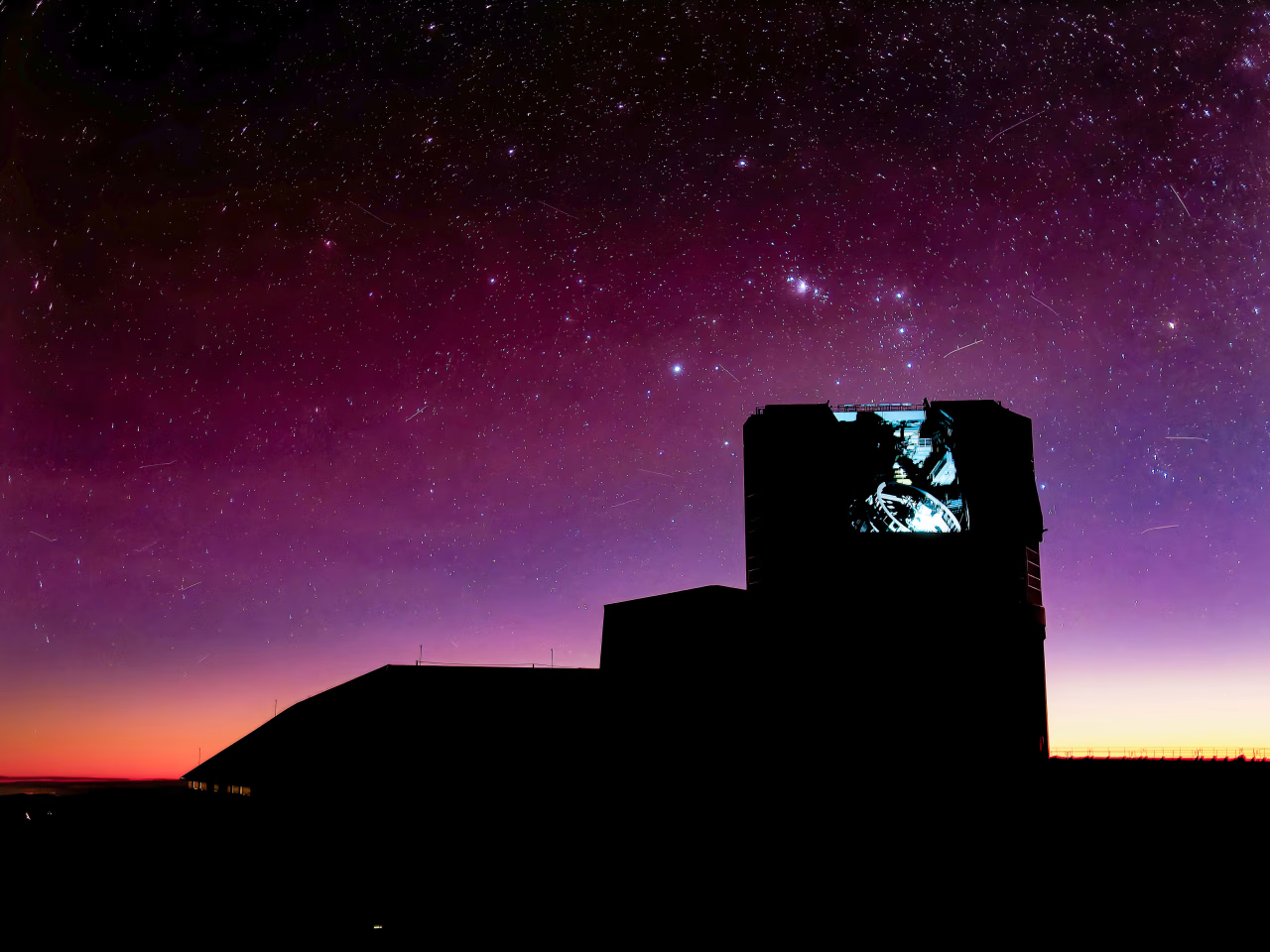
On the top of a mountain in the Chilean desert, an $800 million U.S.-taxpayer-funded telescope just opened its eye.
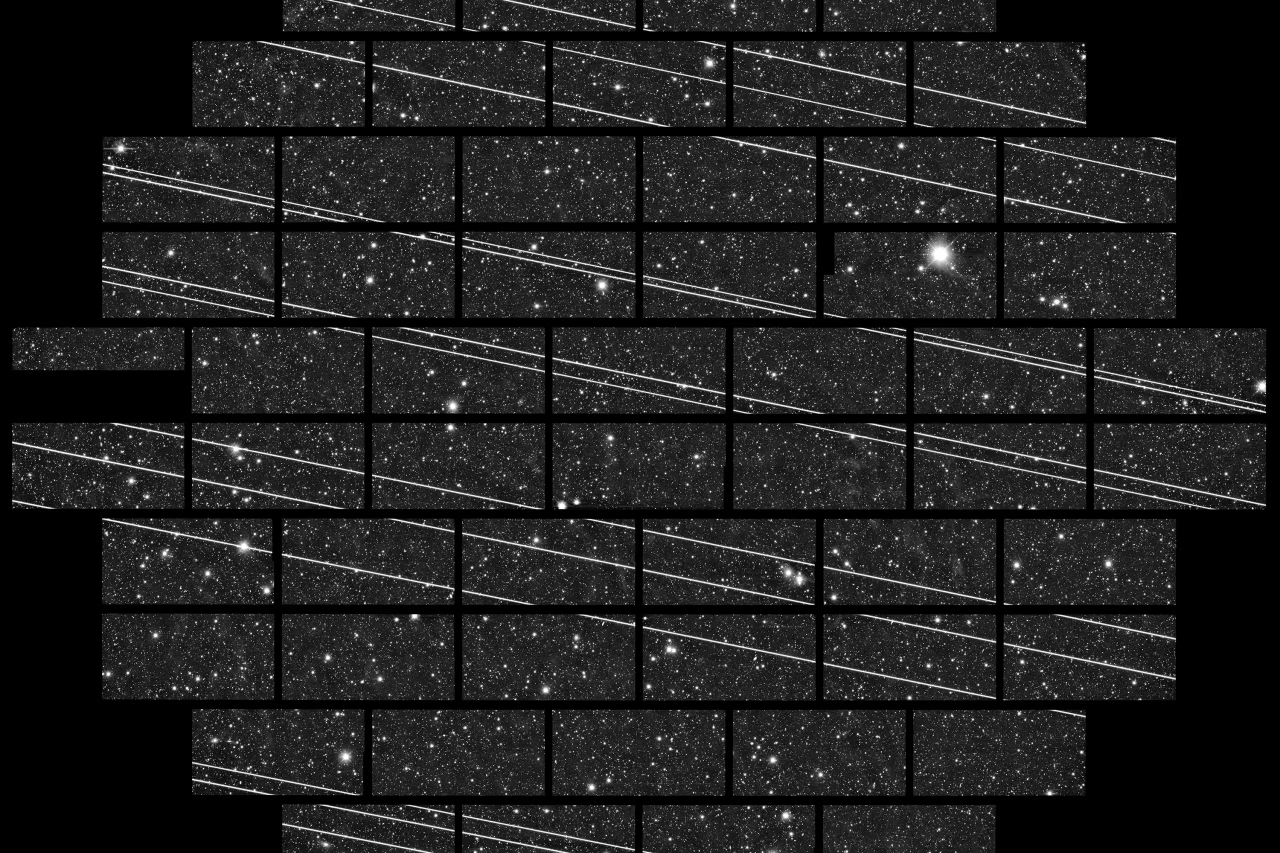
全新建成的弗拉·C·鲁宾天文台(Vera C. Rubin Observatory)本应完成一次划时代的宇宙“巡天”,打造有史以来最完整的星系、小行星、超新星和黑洞目录。但鲁宾的科学家们遇到了一个问题:高速移动、反光的卫星在他们的照片上留下了白色条纹。
The brand-new Vera C. Rubin Observatory is supposed to complete a groundbreaking “survey” of the universe, the most comprehensive catalog of its galaxies, asteroids, supernovas and black holes ever completed. But Rubin’s scientists have encountered a problem. Fast-moving, light-reflecting satellites are leaving white streaks across their photographs.
卫星的激增是对该天文台工作的一种“生存威胁”,首席科学家J·安东尼·泰森(J. Anthony Tyson)如此表示,他因绘制暗物质图谱而闻名。
The proliferation of satellites is an “existential threat” to the observatory’s work, said J. Anthony Tyson, its chief scientist, who is best known for mapping dark matter.
泰森和其他科学家警告称,这些在轨机器将使得在地球上进行天文研究变得日益困难,最终甚至会让夜空变得面目全非。
Tyson and other scientists warn that these orbiting machines will make it increasingly difficult to do astronomical research from Earth—and, eventually, will render the night sky unrecognizable.
天体物理学家乔纳森·麦克道尔(Jonathan McDowell)指出,目前轨道上活跃的卫星已超过1.7万颗,而十年前只有约1千颗。他自1957年以来记录了每一次轨道火箭发射,估计十年后卫星数量可能会超过10万颗。
Currently, there are more than 17,000 active satellites in orbit, compared with around 1,000 a decade ago, said Jonathan McDowell, an astrophysicist who has cataloged every orbital rocket launch since 1957. A decade from now, he estimates, there will probably be over 100,000.
卫星会把阳光反射回地球。随着卫星数量的增加,来自太空的光污染也将随之加剧。
Satellites reflect sunlight back to Earth. As the number of satellites grows, so too will light pollution from space.
多伦多大学副教授汉诺·莱因(Hanno Rein)在对计划中的卫星星座进行光污染建模后说:“你会在天空中看到两倍多的星星,但其中只有一半是真实的。”另一半实际上是穿过天空的卫星。
“You’d see twice as many stars in the sky,” said Hanno Rein, an associate professor at the University of Toronto who has modeled light pollution from planned satellite constellations. “But only half of them would be real.”The other half would actually be satellites transiting the sky.
目前,卫星主要用于电信。大多数卫星归星链(Starlink)所有,星链提供全球互联网连接。
Currently, satellites are mainly used for telecommunications. The majority are owned by Starlink, which provides internet connectivity around the world.
在未来,随着将物资送入太空的成本下降,越来越多的公司和政府将发射自己的卫星。蓝色起源、谷歌、Cowboy Space 等都表示计划建设轨道数据中心,这类中心可能由数十万颗卫星组成。SpaceX 称其“Starmind”轨道数据中心将拥有超过一百万颗卫星。
In the future, as it becomes cheaper to launch material into space, more companies and governments will launch their own satellites. Blue Origin, Google, Cowboy Space and others have all said they plan to build orbital data centers, which would likely consist of hundreds of thousands of satellites. SpaceX says its “Starmind” orbital data center would have over a million satellites.
目前的卫星体积并不大。星链卫星的面积约为四平方米,约相当于一张特大号床的大小。但轨道数据中心所使用的卫星将要大得多。SpaceX 在公开文件中称,其轨道数据中心所用卫星的面积可达 1,500 平方米。Cowboy Space 表示其卫星将达到 4,800 平方米,接近一个足球场的大小。
Satellites now aren’t very large. Starlink’s satellites are about four square meters in size, roughly equivalent to a king bed. But satellites involved in orbital data centers would be much larger. SpaceX said in public filings that the satellites involved in its orbital data center would be up to 1,500 square meters. Cowboy Space said its satellites would be 4,800 square meters, close to the size of a football field.
SpaceX 已自愿降低其星链卫星的亮度,泰森说。他与 SpaceX 工作人员讨论亮度缓解已近十年。另一位鲁宾科学家称,已与大约半打其他卫星公司进行过“积极对话”。
SpaceX has voluntarily mitigated the brightness of its Starlink satellites, Tyson said. He has been discussing brightness mitigation with SpaceX staffers for almost a decade. Another Rubin scientist said it has had “positive dialogues” with a half-dozen other satellite companies.
“他们非常乐于帮助,或者说在努力帮助,”他说。但他指出,星链卫星的亮度已经超过了国际天文学联合会的建议,并且肉眼即可看到。泰森没有与任何中国卫星制造商交谈。科学家们说,中国卫星有时的亮度甚至超过美国卫星。
“They’ve been very helpful, or they’re trying to be,” he said. But Starlink satellites are already brighter than International Astronomical Union recommendations and visible to the unaided eye, he said. Tyson hasn’t talked to any Chinese satellite manufacturers. Chinese satellites are sometimes brighter than American ones, scientists said.
SpaceX 未对置评请求作出回应。谷歌和蓝色起源拒绝置评。Cowboy Space 未能联系到以作置评。
SpaceX didn’t respond to requests for comment. Google and Blue Origin declined to comment. Cowboy Space couldn’t be reached for comment.
美国联邦通信委员会批准卫星项目,但并未对卫星的亮度设定任何规则。2022 年《暗夜与宁静天空工作组》报告在审查全球卫星监管时指出:“除美国一部禁止基于太空的广告的法律外,世界上没有任何法律对夜空的视觉外观进行监管”。
The FCC approves satellite projects, though it doesn’t have any rules about how bright satellites can be. “With the exception of a U.S. law preventing space-based advertising, there are no laws regulating the visual appearance of the night sky” anywhere in the world, stated a 2022 Dark and Quiet Skies Working Group report that reviewed satellite regulations across the globe.
公司计划将其轨道数据中心设为“太阳同步”,这意味着它们几乎总是被阳光照亮,雷吉纳大学副教授萨曼莎·劳勒(Samantha Lawler)说,她最近合著了一篇关于轨道数据中心光污染的论文。
Companies plan to make their orbital data centers “sun-synchronous,” which means they would almost always be illuminated by the sun, said Samantha Lawler, an associate professor at the University of Regina who recently co-wrote a paper about light pollution from orbital data centers.
这些太阳能卫星反射回地球的阳光将比其他卫星更多。劳勒估计,它们的光辉将与金星相当,而金星已经是天空中最亮的天体之一。劳勒表示,成百上千的此类卫星聚集在一起,可能在夜间的某些时段“完全淹没”银河和较暗的星星。
These solar-powered satellites would reflect even more sunlight back onto earth than other satellites do. Lawler estimates they would be as radiant as Venus, already one of the brightest points in the sky. Collectively, hundreds of thousands of these satellites would probably “completely drown out” the Milky Way and dimmer stars at certain times of night, Lawler said.
弗吉尼亚理工大学工程学教授沙恩·罗斯(Shane Ross)最近创建了一个模型,展示了从地球上看到的SpaceX轨道数据中心的样子。他的投影显示出一条由数千个明亮点组成的带,从地平线延伸到地平线,缓慢地在夜空中移动。[视频] 轨道数据中心在你的天空中会是什么样子?“这很酷,但也有点令人不安,”他说。
Shane Ross, an engineering professor at Virginia Tech, recently created a model of what SpaceX’s orbital data center would look like from Earth. His projection shows a belt of thousands of bright points, stretching from horizon to horizon, moving slowly across the night sky. [video] What would orbital data centers look like from your sky? “It’s awesome, but it’s kind of unsettling,” he said.
当他分享该投影时,反应各不相同。“有些人对此非常兴奋,”他说,“还有人说我们在破坏人类的共同遗产。”泰森及其在鲁宾天文台的同事们刚刚启动了为期十年的太空调查。现在,他担心他们可能被迫提前结束实验。卫星不仅在望远镜的照片上留下条纹,泰森还预测,卫星巨型星座将散射如此多的光,以至于整个天空都会被照亮。泰森说,最终,“天空会变得太亮,什么都做不了”。
When he shared the projection, reactions varied. “Some people were really excited about this,” he said. “Others said we were ruining some common heritage of humankind.”Tyson and his fellow astronomers at the Rubin Observatory just started their 10-year survey of space. Now, he wonders if they’ll be forced to end the experiment early. Not only do satellites leave streaks across the telescope’s photographs, but Tyson also projects that megaconstellations of satellites would scatter so much light that it would brighten the entire sky. Eventually, “the sky would be too bright to do anything,” Tyson said.