土耳其已经签署了美国关于月球的规则手册,但其首次前往月球南极的旅程——华盛顿和北京正竞相到达这一冰冷区域——可能将搭乘中国的便车。
Turkey has signed America’s rule book for the moon, but its first ride to the lunar south pole – the icy region both Washington and Beijing are racing to reach – will probably come from China.
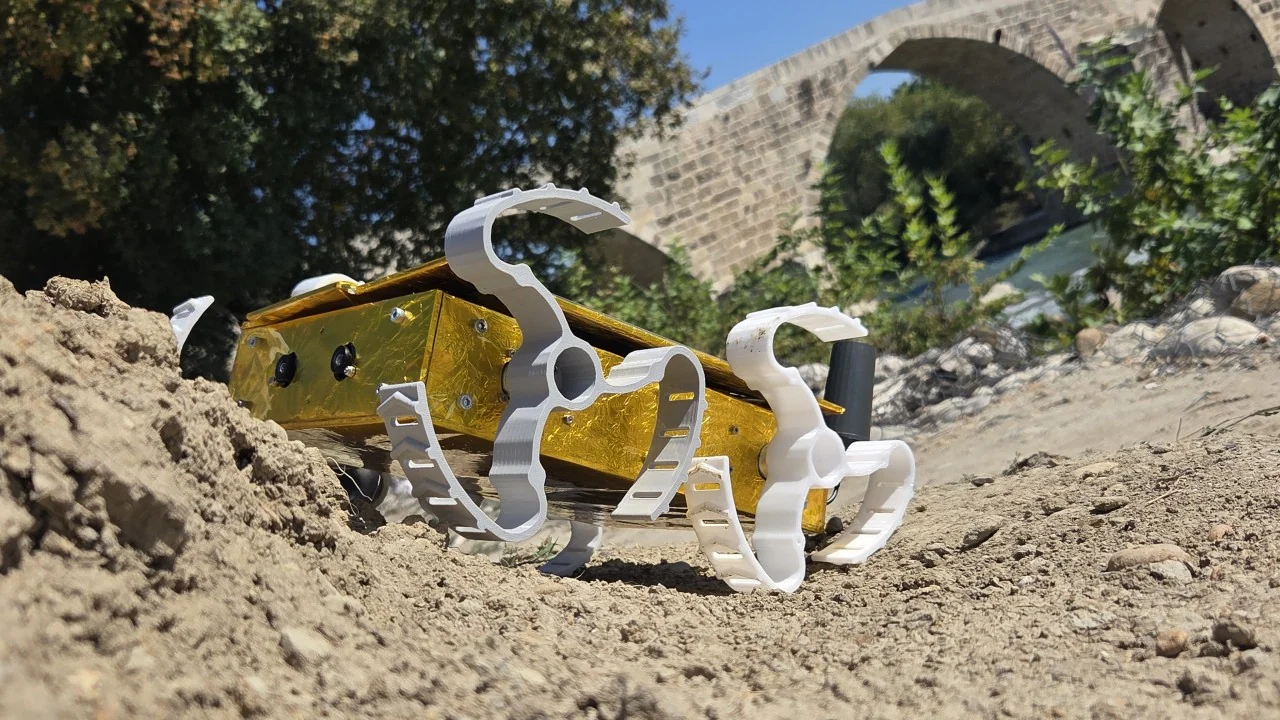
位于安卡拉的中东技术大学(METU)的120多名学生和教授团队,已经为“嫦娥八号”制造了两辆人工智能驱动的月球车原型。“嫦娥八号”是中国原本计划于2028年实施的一个探月任务。
A team of more than 120 students and professors at Middle East Technical University (METU) in Ankara has built prototypes of two AI-powered rovers for Chang’e-8, a Chinese mission originally planned for 2028.
土耳其并不是“国际月球科研站”的成员,这是一个中国计划与俄罗斯及其他合作伙伴在月球上建设的基地。今年8月,土耳其签署了美国主导的《阿尔忒密斯协定》,加入了70多个承诺遵守月球探测原则的国家的行列。
Turkey is not part of the International Lunar Research Station, a base China plans to build on the moon with Russia and other partners. In August, it signed the US-led Artemis Accords, joining more than 70 countries that have pledged to follow principles for lunar exploration.
中东技术大学校长艾哈迈德·约兹加特利吉尔表示,学术界和科学界“没有国界”,“高于一切政治紧张局势”。
METU president Ahmet Yozgatligil said that academia and science “know no borders” and “are above all political tensions”.
作为北约成员国,土耳其长期以来与两个超级大国都保持着良好关系,他说。土耳其还属于亚太空间合作组织,这是一个总部设在中国、成员包括巴基斯坦和伊朗在内的区域性组织。
As a Nato member, Turkey had long stayed on good terms with both superpowers, he said. It also belongs to the Asia-Pacific Space Cooperation Organisation, a regional group headquartered in China whose members include Pakistan and Iran.
“中国和美国都是土耳其的战略伙伴,”约兹加特利吉尔说。他的大学正就“嫦娥八号”与中国的顶尖机构合作,并与美国高校开展联合项目——但据他所知,该校没有参与美国国家航空航天局(NASA)的“阿尔忒密斯”计划。
“China and the US are both strategic partners of Turkey,” Yozgatligil said. His university works with China’s leading institutions on Chang’e-8 and runs joint programmes with American colleges – but as far as he knows, it has no projects in Nasa’s Artemis programme.
航空航天工程副教授、该项目负责人哈利勒·埃尔辛·索肯表示,随着北京对其探月计划进行重大调整,月球车的日程有所推迟,但这两辆月球车仍应在本十年结束前启程。
The rovers’ timeline had slipped as Beijing overhauled its moon programme, but the pair should still be on their way by the end of the decade, said Halil Ersin Soken, an associate professor of aerospace engineering who leads the project.
该任务于5月被暂停,此前中国决定将其机器人探测任务与载人航天任务进行整合。“最可能的情况是(发射时间)将在2029年至2030年,不会晚于那个时间,”他说。“这是我们的期望。”索肯表示,双方的合作始于2023年,当时中国国家航天局邀请外国团队为“嫦娥八号”搭载有效载荷提出建议。他的团队提交了意向书,次年,该任务的总设计师裴照宇来到他们的实验室参观。
The mission was put on hold in May, after China decided to merge its robotic and crewed programmes. “Most probably [the launch] will be 2029 to 2030, not later than that,” he said. “This is what we hope.”Soken said the partnership began in 2023, when the China National Space Administration invited foreign teams to propose payloads for Chang’e-8. His group sent in a letter of intent, and the following year Pei Zhaoyu, the mission’s chief designer, came to see their laboratory.
“他告诉我们,他的同事们的反应非常积极,”索肯说。2025年4月,这些月球车被列入为该任务挑选的10个外国项目之中,其中还包括来自意大利、俄罗斯和埃及的仪器。
“He told us that his colleagues are very positive,” Soken said. In April 2025, the rovers were named among 10 foreign projects picked for the mission, including instruments from Italy, Russia and Egypt.
尽管体型微小——每辆重量不到5公斤(11磅),大小与鞋盒差不多——但这些土耳其月球车搭载了机载人工智能(AI)“大脑”,能让它们规划自己的路线并共同绘制地形图。据索肯称,中国商业航天企业星河动力(Star Vision)正在提供该计算模块,而几乎所有其他零部件都是在本土制造的。
Though tiny – each weighing under 5kg (11lbs) and roughly the size of a shoebox – the Turkish rovers carry an on-board artificial intelligence (AI) “brain” that lets them plan their own routes and map the terrain together. Star Vision, a Chinese commercial space company, is supplying that computing module, while nearly all the other parts are made at home, according to Soken.
制造如此小型机器带来了大量的工程挑战。其中之一就是绕过崎岖的极地地形。这些机器人不使用轮子,而是靠旋转的J形腿移动,这些腿可以爬过岩石,同时保持车身足够稳定,以便摄像机捕捉到清晰的图像。
Building machines this small brings plenty of engineering challenges. One is getting around the rugged polar landscape. Instead of wheels, the robots move on spinning, J-shaped legs that can climb over rocks while keeping the body steady enough for the cameras to capture sharp images.
从着陆器上下来是另一个难关。这两辆月球车将搭载在中国的航天器侧面——距离地面约1.7米(5.6英尺)——并通过弹簧被推离。
Getting off the lander is another hurdle. The pair will ride on the side of the Chinese spacecraft – about 1.7 metres (5.6 feet) above the ground – and be pushed off by springs.
“我们必须确保它们以正确的方向着陆,”索肯说。他的团队在10月于安特卫普举行的国际宇航大会上提交的一篇论文中写道,如果其中一辆翻倒,其太阳能电池板可以将其翻回正面。
“We have to be sure that they land with the correct orientation,” Soken said. If one did tip over, its solar panel could flip it back upright, his team wrote in a paper presented at the International Astronautical Congress in Antalya in October.
为了解决这些细节问题,该团队一直依赖该项目的中国主要技术合作伙伴——北京控制工程研究所。该研究所曾制造出拍摄到2024年月球背面“嫦娥六号”着陆器照片的小型月球车,并与土耳其工程师分享了这些经验。
To work out those details, the team has relied on the Beijing Institute of Control Engineering, China’s lead technical partner on the project. The institute built the mini rover that snapped a photo of the Chang’e-6 lander on the moon’s far side in 2024, and has shared those lessons with the Turkish engineers.
这两辆月球车将在着陆器周边区域进行探测,并寻找水的迹象,这些水有朝一日可以帮助维持月球基地的运转。
The pair will explore the area around the lander and look for signs of water, which could one day help sustain a moon base.
它们的运行设计寿命约为两周,不过索肯希望让它们熬过月夜,此时温度会暴跌至零下200摄氏度(零下328华氏度)以下。
They are designed to work for about two weeks, though Soken hopes to carry them through the lunar night, when temperatures plunge below minus 200 degrees Celsius (minus 328 Fahrenheit).
目前,这些原型车正在安卡拉市内及周边的沙地上,以及中东技术大学机器人与人工智能中心的两个室内沙坑中进行测试。他说,一个填有人造月壤的新测试床正在建设中。
For now, the prototypes are being tested on sandy fields in and around Ankara and in two indoor sandpits at METU’s robotics and AI centre. A new test bed filled with simulated lunar soil was under construction, he said.
他的团队曾计划在2027年底前交付可供飞行的版本,但现在正在等待中国载人航天工程办公室的消息。
His group had planned to hand over flight-ready versions by the end of 2027, but is now waiting for word from the China Manned Space Agency.
索肯表示,无论它们何时飞向太空,这些被命名为CHERI(取自奥斯曼帝国精锐部队“耶尼切里”即土耳其新军的英文名)的月球车都将成为月球上的“前沿士兵”。
Whenever they fly, the rovers – named CHERI after the Janissaries, the Ottoman Empire’s elite troops – would be “frontier soldiers” on the moon, Soken said.