
拉丁美洲过去容易受到外部冲击的影响,但今年却基本毫发无损地度过了地缘政治动荡期。
Once prone to external shocks, Latin America has weathered this year’s geopolitical upheavals largely unscathed.
2026年初的增长将符合预期,多个国家的出口屡创新高,尽管霍尔木兹海峡关闭引发了石油冲击,但该地区主要首都的街头几乎没有出现动荡。
Growth will be in line with expectations at the beginning of 2026, exports are hitting records in several countries and the streets of the region’s main capitals have seen little unrest despite the oil shock triggered by the shutdown of the Strait of Hormuz.
事实上,在这个贸易流向重塑、大国竞相争夺战略自然资源的日益不可预测的世界里,这发挥了该地区的优势。拉丁美洲富含大宗商品,没有州际冲突,并且越来越多地转向对商业更友好的政策。花旗集团公司的专家在9月份的一份备受瞩目的报告中正确地阐述了这一机遇的基本逻辑:他们写道,拉丁美洲“正蓄势待发”。
In fact, this increasingly unpredictable world, where trade flows are being reshaped and great powers are racing to secure strategic natural resources, plays to the region’s strengths. Latin America is rich in commodities, free of interstate conflicts and increasingly turning toward more business-friendly policies. The experts at Citigroup Inc. rightly laid out the rationale for this opportunity in a noteworthy report in September: Latin America, they write, is “poised for take-off.”
然而,尽管环境对该地区有利,包括与华盛顿的关系更加融洽,但预期的繁荣仍然只是一个承诺。拉丁美洲具备了经历又一个超级周期所需的一切。但这不会很快发生。充其量,该地区预计明年和2028年的增长率约为2.5%。这就是所谓的“缺席奇迹”。
And yet, despite an environment that is working in the region’s favor, including warmer ties with Washington, the expected boom remains just a promise. Latin America has everything it needs to experience another supercycle. But it isn’t happening anytime soon. At most, the region is seen growing about 2.5% next year and in 2028. Call it the no-show miracle.
期望与现实不符的原因在于经济学教科书的另一面:微观经济学。在宏观经济学(该学科中关注国内生产总值、通货膨胀、利率和财政平衡等宏观变量的分支)方面,拉丁美洲取得了巨大的进步。通货膨胀目标制、灵活的汇率和审慎措施对该地区发挥了很好的作用,使其主要政府基本上能够通过本地市场为自己融资。在许多方面,它们的宏观经济框架越来越类似于较富裕的经济体。
The reason for the mismatch between expectations and reality lies on the other side of the economics textbook: microeconomics. In macroeconomics — the branch of the discipline concerned with big-picture variables such as GDP, inflation, interest rates and fiscal balances — Latin America has made enormous progress. Inflation targeting, flexible exchange rates and prudential measures have served the region well, enabling its main governments to finance themselves mostly through local markets. In many respects, their macroeconomic framework increasingly resembles that of richer economies.
但谈到塑造消费者、工人和公司行为的规则和激励措施时,该地区仍然痛苦地落后。真正阻碍拉丁美洲长期前景的是至今仍在该地区大部分地区占主导地位的反竞争、反生产的政策组合:从受保护的行业和国家制造的垄断到过度监管、级联税收和官僚壁垒,这些都使公司更难进行投资、创新和竞争。企业和企业家以疲弱的法律框架、腐败、勒索和不安全感的形式支付额外的代价。国际市场对拉丁美洲的兴趣几乎已经消失,股票基金消失了,公司上市数量也微乎其微。
But when it comes to the rules and incentives that shape how consumers, workers and companies behave, the region still lags painfully behind. What is really holding back Latin America’s long-term prospects is the anti-competitive, anti-production policy mix that still dominates much of the region: from protected industries and state-created monopolies to excessive regulation, cascading taxes and bureaucratic barriers that make it harder for companies to invest, innovate and compete. Firms and entrepreneurs pay an extra toll in the form of weak legal frameworks, corruption, extortion and insecurity. The interest for Latin America in international markets has all but dried up, with stock funds disappearing and minimal company listings.
这样的例子比比皆是。公证处持有者在巴西专业人士中平均申报净资产最高的人群中名列前茅,这证明了该国传奇般的官僚作风。在墨西哥,美国电话电报公司宣布退出,这提醒人们该国在创造真正竞争激烈的商业环境方面存在困难。在阿根廷,各级政府仍然有大约150种不同的税收,这是业务瘫痪的保证,尽管无政府自由主义者总统哈维尔·米莱设法取消了五项国民税收。也许我们应该把这个国家改名为“税根廷”……这些扭曲的后果可以用一个揭示性的数字来概括:0.1%。
Examples abound. Notary-office holders lead the ranking for the highest average declared net worth among Brazilian professionals, a testament to the nation’s legendary bureaucracy. In Mexico, AT&T Inc.’s announced exit is a reminder of the country’s difficulties in creating a truly competitive business environment. And in Argentina, there are still around 150 different taxes at all levels of government, a guaranteed recipe for business dysfunction, even after the anarcho-libertarian President Javier Milei managed to eliminate five national levies. Perhaps we should rename the country Taxgentina…The consequence of these distortions can be summed up in one revealing figure: 0.1%.
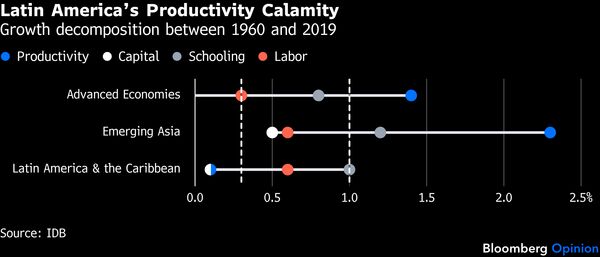
这就是拉丁美洲自1960年以来的平均年生产力增长率。我会把这个数字框起来,或者作为钱包卡片寄给该地区的每一位决策者、政府官员和政治家,因为解决这个问题是拉丁美洲未来的关键。
That’s Latin America’s average annual productivity growth since 1960. I’d frame that number or send it as a wallet card to every policymaker, government official and politician in the region, because fixing it is the key to Latin America’s future.
基本上,经过六十多年,该地区在生产东西方面的效率并没有显著提高。这就像试图在一辆卡在一档的汽车里加速一样。如果该地区能够持续将生产力增长提升到每年1%以上,或者更好的是2%,那么复合效应将改变生活水平,使拉丁美洲更接近它应得的发展水平,就像亚洲部分地区在最近几十年所做的那样。
Basically, after more than six decades, the region hasn’t become significantly more efficient at producing things. It’s like trying to accelerate in a car stuck in first gear. If the region could lift productivity growth consistently above 1% or, better yet, 2% a year, the compounding effect would transform living standards and bring Latin America much closer to the level of development it deserves, as parts of Asia did in recent decades.
但如果生产力仍然停留在其历史平均水平附近,世界上所有有利的外部条件都是不够的。
But if productivity remains stuck around its historical average, all the favorable external conditions in the world won’t be enough.
这就是为什么该地区需要一场微观经济革命,为什么更具竞争力、去监管化和充满活力的经济的倡导者需要成为它的战士。他们应该宣扬有利于大多数公民而不是特殊利益集团的框架的好处。三十年前,各国政府确信追求保障稳定宏观经济框架的优势,他们愿意付出政治代价来实现这一目标。我们现在需要顺应该地区对亲商的转变,同样努力推动微观改革。
This is why the region needs a microeconomic revolution and why the advocates of a more competitive, deregulated and dynamic economy need to become its warriors. They should preach the benefits of a framework that benefits the majority of citizens rather than special-interest groups. Three decades ago, governments became convinced of the advantages of pursuing a macroeconomic framework that guaranteed stability, and they were willing to pay the political cost to achieve it. We now need to surf the region’s more probusiness shift to push just as hard for micro reforms.
好消息是有成功的案例可以作为模板。私营养老金系统的建立使几个拉丁美洲国家能够促进储蓄,墨西哥目前在其所谓的Afores中持有的资产价值超过国内生产总值的25%,而2008年仅为4.6%。巴西的Pix支付系统帮助数百万人获得了他们的第一个银行产品,同时允许金融科技公司与老牌银行竞争。最近,米莱对官僚主义采取的强硬立场帮助长期亏损的国家航空公司阿根廷航空股份有限公司连续两年实现盈利,该公司首次缴纳了所得税。
The good news is that there are successful cases that can serve as templates. The creation of private pension systems allowed several Latin American countries to boost savings, with Mexico now holding assets worth more than 25% of GDP in its so-called Afores, compared with just 4.6% in 2008. Brazil’s Pix payment system has helped millions gain access to their first banking product while allowing fintechs to compete with established banks. More recently, Milei’s tough approach against bureaucracy helped the chronically loss-making national carrier Aerolíneas Argentinas SA post profits for two consecutive years, with the company paying income tax for the first time.
此类改革本质上是复杂的。它们通常意味着要对抗那些从需要彻底改革的系统中的现状中受益的人:受庇护的公司、强大的工会、官僚机构和有政治关系的利益集团。这正是改革它们如此困难的原因。但如果拉丁美洲想要最终摆脱低增长陷阱,这就是它需要进行的战斗。
Such reforms are intrinsically complex. They usually mean taking on the people who benefit from the way things work in the very system that needs to be overhauled: Shielded companies, powerful unions, bureaucracies and politically connected interests. That is precisely why it is so difficult to reform them. But if Latin America wants finally to break out of its low-growth trap, that is the fight it needs to have.