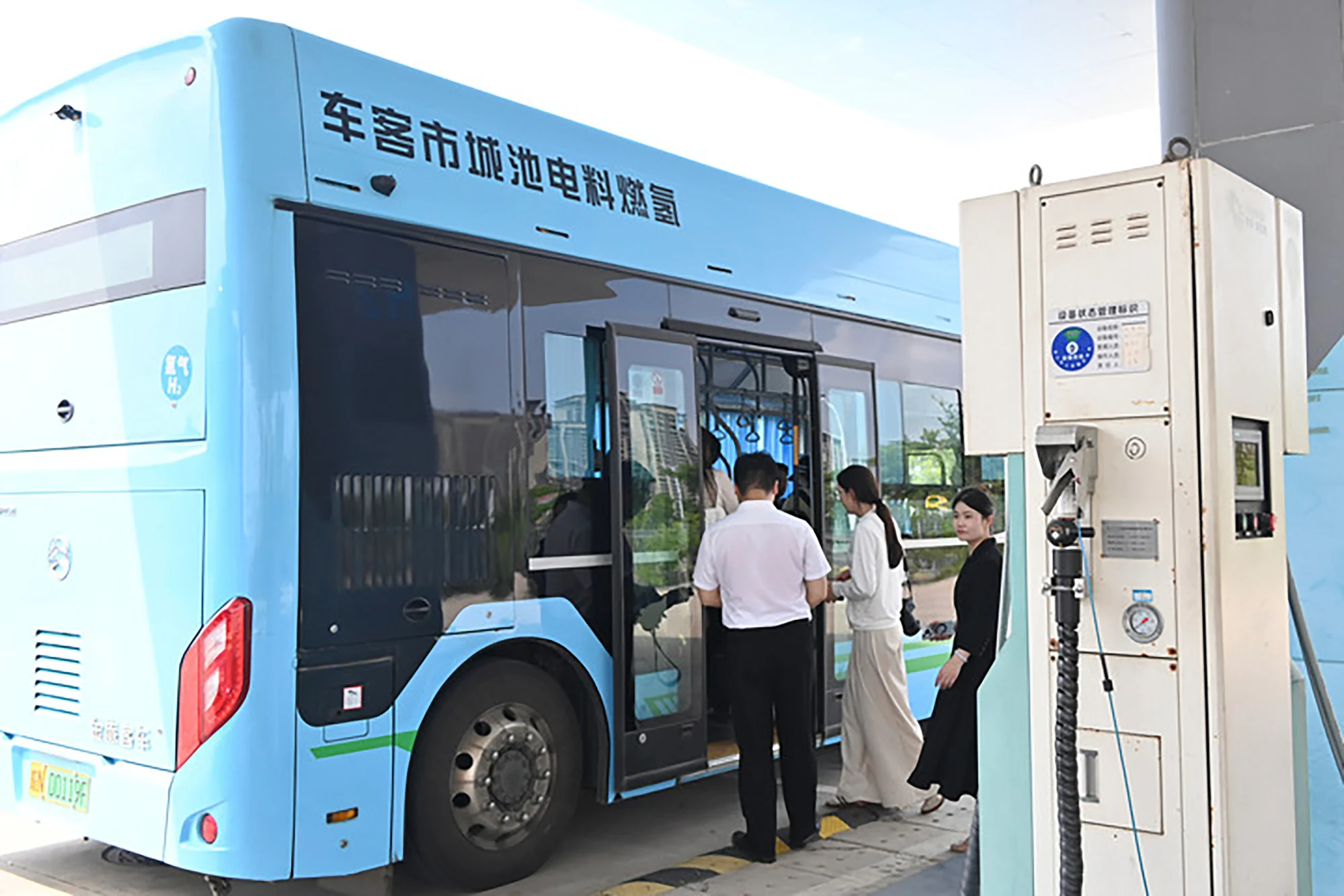
北京市政府计划到2030年,让道路上行驶的氢燃料电池汽车超过1.2万辆,并建设超过40座加氢站。这是中国在国家试点项目框架下,推动氢能作为战略能源载体以增强能源安全努力的一部分。
Beijing’s municipal government plans to have more than 12,000 hydrogen fuel cell vehicles on its roads and build more than 40 hydrogen refuelling stations by 2030, as part of China’s efforts to promote hydrogen as a strategic energy carrier to strengthen energy security under a national pilot programme.
这些目标载入于周五发布的北京市氢能产业五年规划中,重点在于扩大氢燃料电池汽车在道路运输领域的应用,包括长途货运、城市配送和客运。
The targets, set out in a five-year plan for the capital city’s hydrogen industry released on Friday, focus on expanding the use of hydrogen fuel cell vehicles in road transport, including long-haul freight, urban delivery and passenger transport.
为加速推广,北京计划通过支持龙头企业强化供应链,将燃料电池汽车及关键零部件成本降低30%以上。
To accelerate adoption, Beijing plans to cut the costs of fuel cell vehicles and key components by more than 30 per cent by supporting leading manufacturers in strengthening their supply chains.
除交通领域外,北京市还计划拓展氢能在工业领域的应用。目标是推动石化企业在炼化工艺中以氢基替代品取代传统化工原料,并全面用绿氢替代化石能源制氢。此举预计每年可减少二氧化碳排放超过30万吨。
Beyond transport, the city of Beijing also plans to expand hydrogen use in industrial applications. It aims to promote the replacement of conventional chemical feedstocks with hydrogen-based alternatives in refining processes at petrochemical companies and to fully replace hydrogen produced from fossil fuels with green hydrogen. The move is expected to reduce annual carbon dioxide emissions by more than 300,000 tonnes.
北京最新的城市级应用方案出台之际,中国正寻求通过为期四年的区域试点项目扩大氢能应用。
Beijing’s latest city-level application plan comes as China seeks to expand the use of hydrogen through a four-year regional pilot programme.
8月,中央政府公布了五大入选开展跨领域氢能广泛应用试点的主要经济区域。它们包括京津冀地区、粤港澳大湾区以及以上海为核心的长三角地区。
In August, the central government announced five major economic regions selected to pilot the wider use of hydrogen across different sectors. They include the Beijing-Tianjin-Hebei region, the Guangdong-Hong Kong-Macau Greater Bay Area and the Yangtze River Delta, anchored by Shanghai.
中国政府日益将氢能定位为关键能源,认为其可在全球地缘政治不确定性中增强能源韧性,并助力国家实现2030年碳达峰目标。
The Chinese government is increasingly positioning hydrogen as a critical energy source that could strengthen energy resilience amid global geopolitical uncertainties and help the country meet its 2030 carbon peak goal.
在2026-30年“十五五”规划中,中国将氢能列为“未来产业”,并呼吁安全有序地以非化石能源替代化石能源。
In the 2026-30 five-year plan, China identified hydrogen as a “future industry” and called for the safe and orderly replacement of fossil fuels with non-fossil energy sources.
这建立在2022年国家战略的基础之上,该战略将氢能定位为“战略性新兴产业”,并制定了到2035年的发展框架以扩大其应用。随着试点地区已获指定,地方政府开始为该计划设定具体目标。
This built on a 2022 national strategy that designated hydrogen as a “strategic emerging industry” and set out a development framework to increase its use through 2035. With the pilot regions now designated, local governments are beginning to set concrete targets for the initiative.
根据北京周五发布的路线图,该市计划到2030年将氢能产业链规模增至400亿元人民币(约合60.2亿美元),带动京津冀地区总产值突破1000亿元。
According to Beijing’s Friday road map, the city aims to grow its hydrogen industry chain to over 40 billion yuan (US$6.02 billion) by 2030, propelling the total value in the Beijing-Tianjin-Hebei region over 100 billion yuan.
广州市政府于9月下旬召开会议,官员们设定目标:在大湾区实现燃料电池汽车保有量超过1.6万辆,并新建100座加氢站。
At a meeting convened by the Guangzhou municipal government in late September, officials set a target of having more than 16,000 fuel cell vehicles on the road and building 100 additional hydrogen refuelling stations across the Greater Bay Area.
10月,上海承诺将牵头加强与吉林、内蒙古自治区等地区的合作,利用其丰富的风光资源拓展上游绿氢生产,同时在长三角地区推广下游应用,目标是实现燃料电池汽车保有量2124辆,新建21座加氢站。
In October, Shanghai pledged to take the lead in strengthening cooperation with regions such as Jilin and Inner Mongolia autonomous region, in order to expand upstream green hydrogen production by tapping their abundant wind and solar resources, while promoting downstream applications in the Yangtze River Delta, with a goal to have 2,124 fuel cell vehicles and to build 21 new hydrogen refuelling stations.
据8月发布的官方数据,截至2025年,中国氢燃料电池汽车保有量约为3.2万辆。中国还占据了全球可再生能源制氢产能的50%以上。
China had around 32,000 hydrogen fuel cell vehicles on the road as of 2025, according to official data released in August. The country also accounted for more than 50 per cent of global renewable hydrogen production capacity.