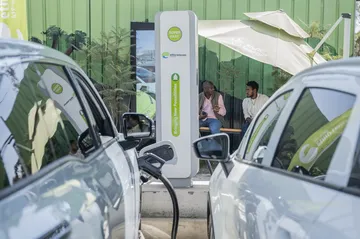
亚的斯亚贝巴的出租车司机塔德塞不再把三分之一的收入花在汽油上。他说,给他的新车充电只花掉他月收入的5%。
Tadesse, a taxi driver in Addis Ababa, is no longer spending one-third of his income on gasoline. He says charging his new electric car takes only 5% of his monthly pay.
这是埃塞俄比亚交通领域的新算法,该国向电动汽车转型的速度比世界上任何其他国家都快。在彭博原创的最新一期节目中,塔德塞等人详细讲述了这一变化是如何发生的。对这个国家及其居民来说,推动这一转变的更多是成本,而非气候。
This is the new math for transportation in Ethiopia, which is transitioning to EVs more quickly than any other country in the world. Tadesse and others break down how the change is happening in the latest installment of from Bloomberg Originals. For the country and its residents, the shift is driven more by costs than climate.
“油费实在太高了,”塔德塞谈到他的汽油账单时说,“而且涨得比我的收入还快。”他的政府也可以这么说——该国政府于2023年发生债务违约。尽管埃塞俄比亚是世界上最贫穷的国家之一,但它有两项资产特别适合电池驱动的出行:过剩的绿色能源和大量相对便宜的中国汽车。最近,它在这两方面都加大了力度。
“It just got to be too much,” Tadesse says of his gas bill, “and it outpaced my income.”The same could be said for his government, which defaulted on its debt in 2023. Though Ethiopia is one of the world’s poorest countries, it has two assets particularly suited to battery-powered driving: a glut of green energy and a tide of relatively affordable Chinese cars. Recently, it doubled down on both.
在2024年禁止进口燃油车之后,埃塞俄比亚建成了非洲最大的水电站大坝,该大坝目前供应着该国几乎全部电力。与此同时,议员们调整了贸易政策,降低了将在该国完全或部分组装的中国汽车进口关税。
After banning the import of gas cars in 2024, Ethiopia finished construction on Africa’s largest hydroelectric dam, which now supplies nearly all of the country’s power. At the same time, lawmakers retooled trade policy to lower rates for Chinese vehicle imports that would be fully or partially assembled in the country.
请注意,仍有减速带。埃塞俄比亚的充电基础设施依然薄弱,电网也不稳定;该国1.3亿居民中仍有大约一半没有可靠的电力供应。而该国北部不断升级的冲突可能威胁到的远不止这些。
Mind you, there are still speed bumps. Ethiopian charging infrastructure remains anemic and the electric grid is spotty; roughly half of the country’s 130 million residents still don’t have reliable power. And a growing conflict in the country’s north may threaten much more than that.
但根据政府数据,电动汽车数量已增长10倍,大约6%的埃塞俄比亚汽车已彻底告别汽油。
But the number of EVs has risen 10-fold, according to government data, and roughly 6% of Ethiopian cars have kicked the gas habit entirely.