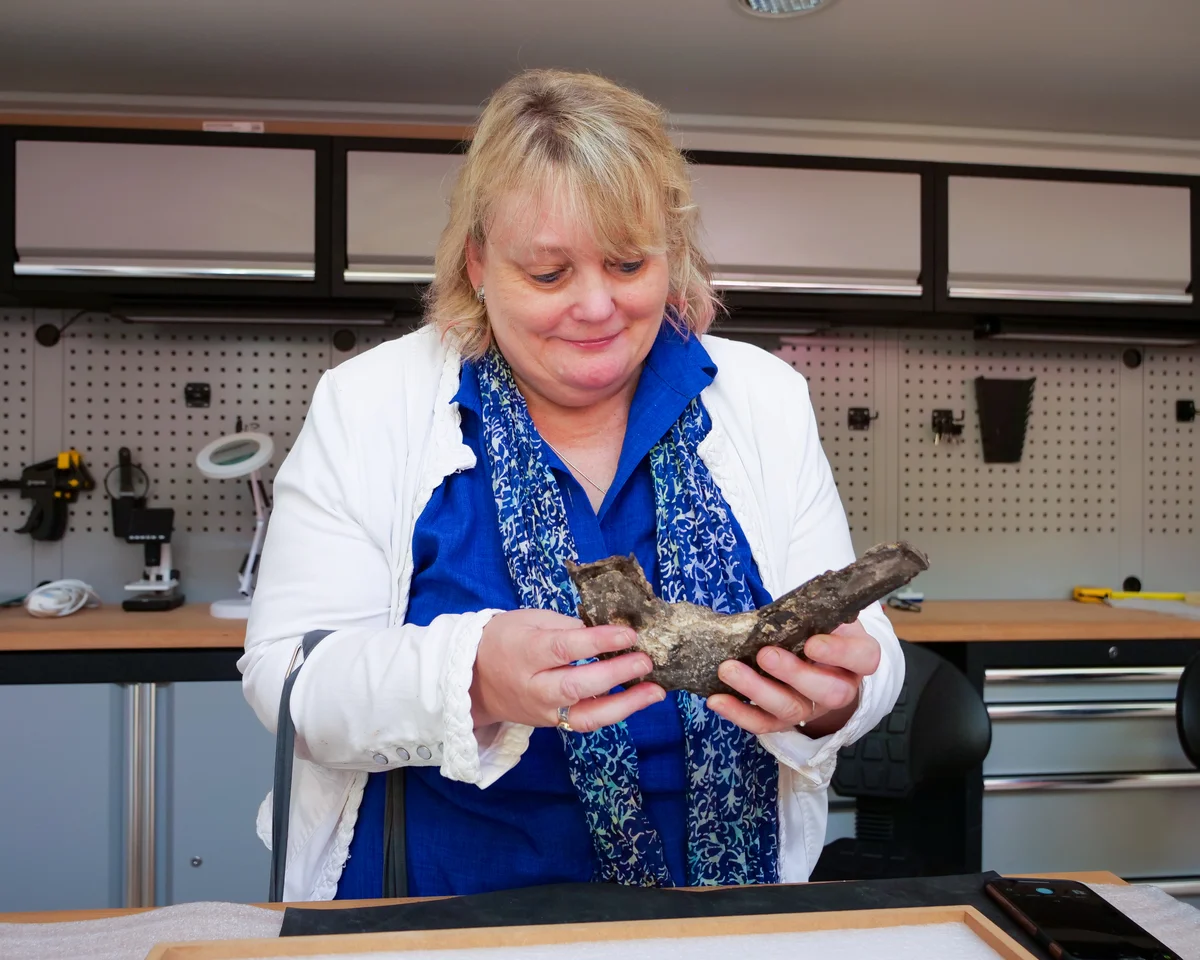
这听起来像是《侏罗纪公园》山寨版的开场:科学家在研究古老的恐龙骨骼时,发现了疑似化石化的红细胞,以及赋予这种生物血液独特深红色的分子痕迹。
It could be the opening of a Jurassic Park rip-off: scientists examining ancient dinosaur bones find what appear to be fossilised red blood cells, and traces of the molecule that gives the beast’s blood its distinctive crimson hue.
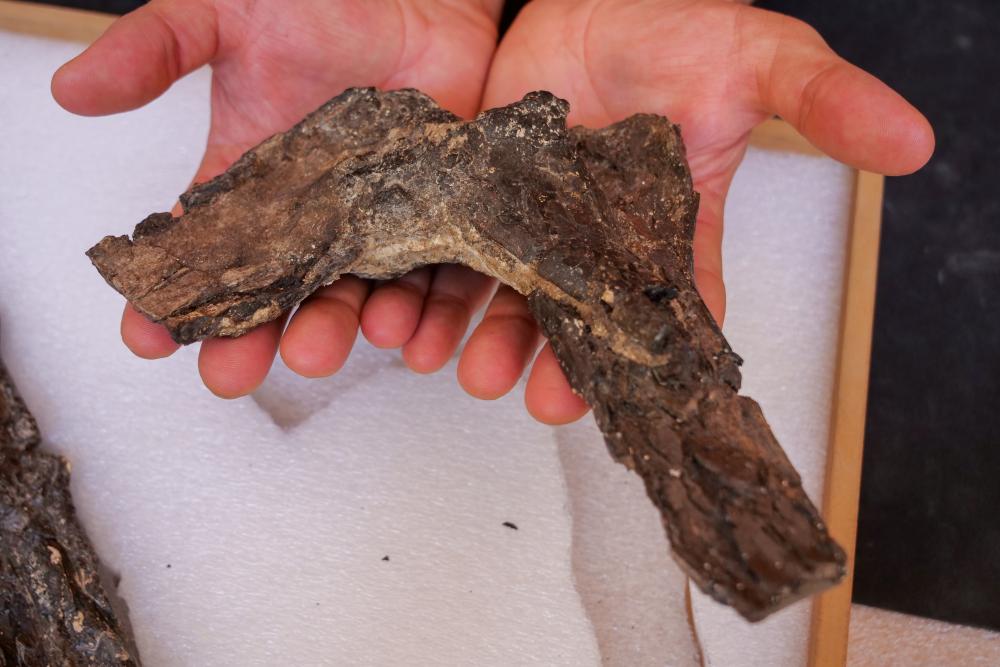
但研究人员宣称,他们在分析一种名为阿拉塔龙的小型食肉恐龙的后腿骨后,确实有了这一发现。这种恐龙生活在1.15亿年前,死于如今巴西东北部地区。
But that is what researchers are claiming to have discovered after analysing the hind leg bones of a small, meat-eating dinosaur called an Aratasaurus that lived and died in what is now north-eastern Brazil 115m years ago.
电子显微镜拍摄的恐龙骨骼图像显示,在曾经血管走行的细微通道中,存在着类似红细胞的微小圆形结构;化学检测则确认了血红素的存在,这种有机化合物使血液中的血红蛋白能够携带氧气在体内运输。
Electron microscope images of the dinosaur bones revealed small, round structures that resemble red blood cells in fine channels where blood vessels once ran, while chemical tests identified the presence of heme, the organic compound that allows haemoglobin in blood to carry oxygen around the body.
此类说法颇具争议,因为生物组织和分子分解迅速,在古老化石中往往几乎不留痕迹。但若得到证实,将为科学家开辟全新的研究途径,使他们能够探究恐龙的血液、新陈代谢甚至活动水平。
Such claims are controversial because biological tissues and molecules can break down fast, leaving little or no trace in ancient fossils. But if confirmed, it would open up entirely new avenues for scientists, allowing them to investigate dinosaur blood, metabolism and even their activity levels.
“我们看到的是恐龙原始生物学特征的矿物和分子回响,”领导研究团队的澳大利亚西部科廷大学教授克利蒂·格赖斯说,“在任何化石中都从未原位发现过具有与血红素相关独特化学特征的化石化红细胞,更不用说恐龙化石了。这是世界首例。”这具阿拉塔龙化石遗骸于2008年在一座矿山中被发现,此后一直保存在巴西国家博物馆,研究人员持续对其进行研究。在分析该恐龙后腿骨时,格赖斯发现了那些类似红细胞的结构。
“We are seeing a mineral and molecular echo of the dinosaur’s original biology,” said Prof Kliti Grice at Curtin University in Western Australia who led the research team. “Fossilised red blood cells with distinct chemistry related to heme have never been found in situ in any fossil, let alone a dinosaur. This is a world first.”The fossilised remnants of the Aratasaurus were discovered in a mine in 2008 and have since been held in the National Museum of Brazil, where researchers continue to study them. While analysing the dinosaur’s hind leg bones, Grice spotted the structures that resembled red blood cells.
当化学检测对血红素及其分解产物呈阳性反应时,科学家们怀疑他们看到的是红细胞的猜测得到了加强。检测还发现了胶原蛋白的氨基酸构建模块痕迹,胶原蛋白是结缔组织和其他组织中的关键蛋白质。
The scientists’ suspicions that they were looking at red blood cells were bolstered when chemical tests came back positive for heme and its breakdown products. Tests also found traces of the amino acid building blocks for collagen, a key protein in connective and other tissues.
如果这些结构真的是化石化的红细胞,正如研究人员所主张的那样,这就引出了一个问题:它们是如何被保存下来的。据格赖斯称,一种名为豪斯曼石的锰化合物在红细胞内部及周围形成,可能在化石化之前通过稳定红细胞而起到了辅助作用。她补充说,同一过程或许也有助于保存氨基酸。该研究发表在《美国国家科学院院刊》上。
If the structures really are fossilised red blood cells, as the researchers contend, it raises the question of how they were preserved. According to Grice, a manganese compound called hausmannite, which formed in and around the blood cells, may have lent a helping hand by stabilising them prior to fossilisation. The same process might have helped preserve the amino acids, she added. The study appears in Proceedings of the National Academy of Sciences.
这项工作已引发争论。美国北卡罗来纳州立大学的玛丽·施韦策教授曾在恐龙化石中发现血管和软组织残留,她并不相信格赖斯及其同事找到了红细胞。她怀疑的一个原因是,恐龙的红细胞本应具有“核凸起”,使其两侧呈圆顶状。格赖斯发现的结构呈凹陷状,表明它们可能是其他物质。
The work is already stoking debate. Prof Mary Schweitzer at North Carolina State University in the US, who has discovered remnants of blood vessels and soft tissues in dinosaur fossils, is not convinced Grice and her colleagues have found red blood cells. One reason for her doubt is that the dinosaur’s red blood cells should have a “nuclear bulge” making them appear dome-like on both sides. The structures Grice found are concave, suggesting they might be something else.
施韦泽对在骨骼中发现血红素和胶原氨基酸更为信服,并表示从保存极其完好的化石中还有更多东西可以了解。施韦泽补充道:“古生物学界的传统观点认为,所有内源性有机物会在一百万年或更短时间内消失,这一观点正受到常规挑战,随着技术手段更常规地应用于古生物标本,这种挑战将持续下去。”
Schweitzer was more persuaded by the discovery of heme and collagen amino acids in the bone and said there was so much more to learn from exceptionally well-preserved fossils. Schweitzer added: “The conventional wisdom in palaeontology that all endogenous organics would disappear in a million years or less is being routinely challenged, and will continue to be as technological approaches to palaeontological specimens are more routinely applied.”
这项研究引发的另一个问题是,世界各地的化石收藏中还可能潜藏着哪些其他生物材料。对此,格赖斯敦促极度谨慎,并补充说,她的工作并不意味着蛋白质或DNA等大型生物分子能在古老化石中存活下来。“任何非同寻常的主张都需要非同寻常的分析证据,”她说。“目的不是寻找《侏罗纪公园》式的DNA,而是确定深时能保存多少真实的分子信息。”“真正令人振奋的启示是,非同寻常的分子信息可能已经静静躺在世界各地的博物馆收藏中,等待我们对旧化石提出新问题,”她补充道。
Another question the research raises is what other biological material might lurk in fossils collections around the world. On this, Grice urges extreme caution, adding that her work does not imply that large biological molecules such as proteins or DNA live on in ancient fossils. “Any extraordinary claim needs extraordinary analytical evidence,” she said. “The aim isn’t to find Jurassic Park DNA, it’s to determine how much genuine molecular information deep time can preserve.”“The really exciting implication is that extraordinary molecular information may already be sitting in museum collections around the world, waiting for us to ask new questions of old fossils,” she added.