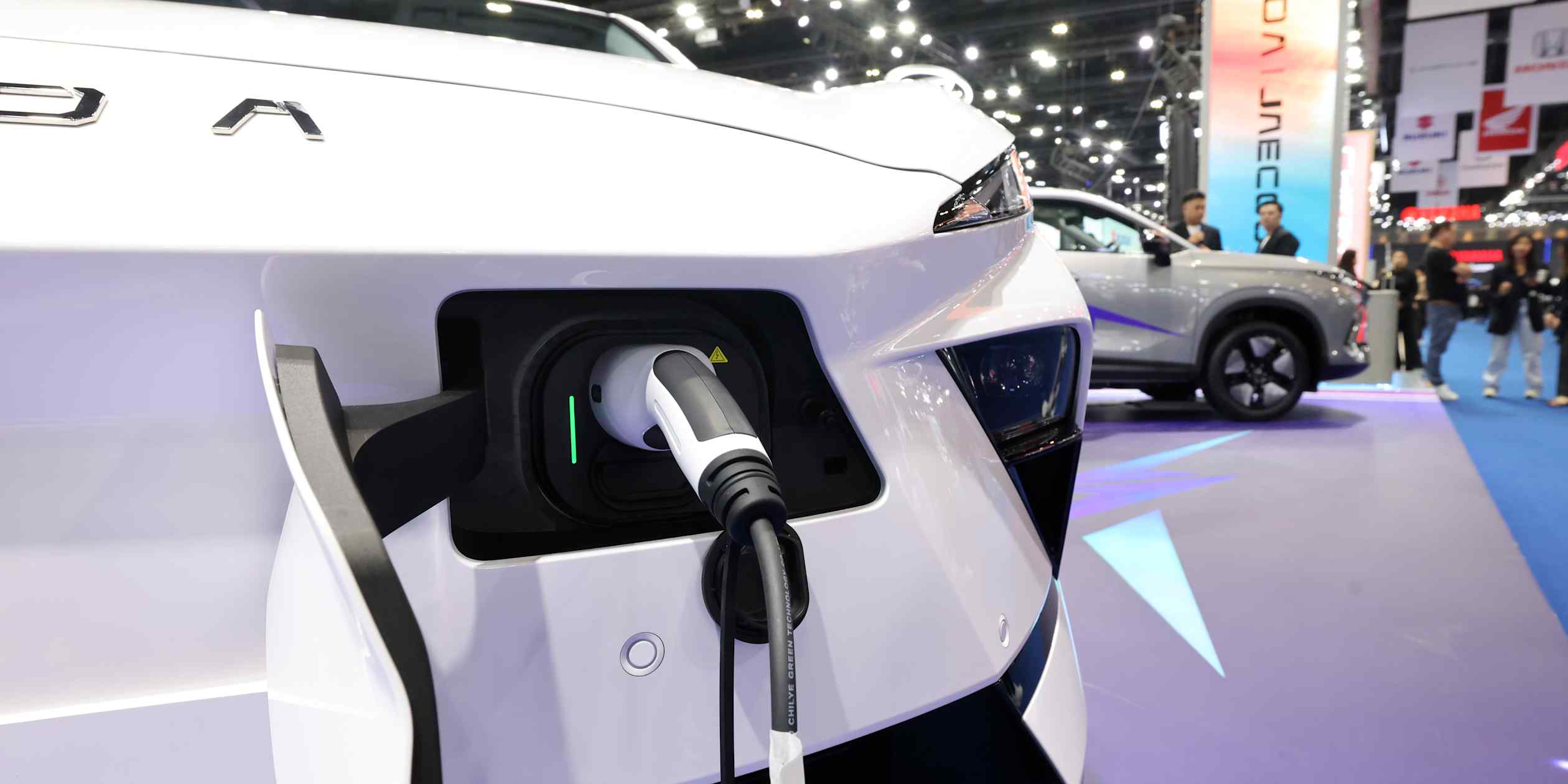
曼谷 —— 泰国将把进口电动汽车的消费税从目前的 10% 提高至 35%,以应对来自中国的成品车涌入,推动本地生产。
BANGKOK -- Thailand will raise its excise tax on imported electric vehicles to 35% from the current 10%, as it seeks to promote local production in response to an influx of finished cars from China.
据工业部长瓦拉武·西帕阿查(Varawut Silpa-archa)称,内阁周二批准了针对电池电动汽车的该计划,新税率将于明年 1 月 1 日生效。
The cabinet on Tuesday approved the plan for battery EVs, with the new tax rate taking effect Jan. 1 next year, according to Industry Minister Varawut Silpa-archa.
瓦拉武在内阁会议后对记者表示:“政府优先考虑那些在泰国投资、帮助发展我国汽车工业并支持泰国经济数十年的供应链和投资者,特别是日本企业。”
"The government prioritizes supply chains and investors who have invested in Thailand, helped develop our auto industry and supported the Thai economy for decades, particularly the Japanese companies," Varawut told reporters after the cabinet meeting.
消费税厅厅长蓬猜·提拉维查(Pornchai Thiraveja)表示,税制重组旨在促进本地汽车产业投资,帮助该国转型为区域电动汽车生产中心。
Pornchai Thiraveja, director general of the excise department, said the tax restructuring aims to promote investment in the local auto industry that will help transform the country into a regional EV production hub.
泰国是东南亚第三大汽车市场,仅次于马来西亚和印度尼西亚。与许多其他国家一样,随着油价上涨加速了从燃油车的转变,电动汽车在泰国的渗透率日益提高,由中国品牌引领。据泰国工业联合会数据,1 月至 9 月乘用电动汽车销量达 161,532 辆,占总销量的 31%。同期,泰国电动汽车产量为 70,472 辆,联合会数据显示,这表明进口量相当可观。
Thailand is the third-largest auto market in Southeast Asia after Malaysia and Indonesia. As in many other countries, EVs are increasingly penetrating the market in Thailand, led by Chinese brands, as higher oil prices accelerate the shift away from internal combustion engine cars. Passenger EV sales reached 161,532 cars from January through September, accounting for 31% of total sales, according to the Federation of Thai Industries. Meanwhile, EV production in Thailand totaled 70,472 cars over the same period, the federation's data showed, indicating a sizable volume of imports.
泰国政府一直在考虑消费税改革,因为它认为进口电动汽车的增加无助于发展本地供应链和创造就业。
The Thai government has been considering the excise tax overhaul because it believes the increase in imported EVs will not help develop local supply chains and create jobs.
主要专注于混合动力和燃油车的日本汽车组装商抱怨,现行税制不公平,使本地生产的汽车缺乏竞争力。在泰国组装的混合动力车面临 6% 至 15% 的消费税率,而燃油车税率为 25% 至 35%。
Japanese auto assemblers, which primarily focus on hybrids and internal combustion engine cars, have complained the current tax system is unfair and makes locally made cars less competitive. Hybrids assembled in Thailand are subject to excise tax rates of 6% to 15%, while internal combustion engine cars are taxed at a 25% to 35% rate.
据泰国商务部统计,2026年前九个月,泰国电动汽车进口额约为23.6亿美元,该统计依据为仅靠电动机驱动的车辆分类,其中96%来自中国。
According to Commerce Ministry statistics, the value of Thailand's EV imports was about $2.36 billion during the first nine months of 2026, based on a classification for vehicles with only an electric motor for propulsion, with 96% coming from China.
多家中国车企在泰国设有工厂,包括长城汽车,但并非所有车型都在当地生产。
Several Chinese automakers have plants in Thailand, including Great Wall Motor but not all models are produced locally.
中国品牌享受零关税待遇。据泰国财政部称,根据2010年生效的中国-东盟贸易协定,成品汽车关税已被取消,使其在价格上具有竞争力。
Chinese brands benefit from a zero tariff. Under the ASEAN-China trade pact, which took effect in 2010, tariffs on finished autos were scrapped, according to the Thai Finance Ministry, making them competitive on price.
业内人士和分析师表示,新的消费税方案将有助于放缓进口汽车的增长并支持本地生产。“税制结构应成为一种机制,帮助[国家]吸引能在国内创建供应链的真实投资,”泰国工业联合会主席Pimjai Leeissaranukul表示。
Industry officials and analysts say the new excise tax scheme will help slow the increase in imported cars and support local production. "The tax structure should be a mechanism that helps [the country attract] real investments that create supply chains in the country," said Pimjai Leeissaranukul, chair of the Federation of Thai Industries.
但开泰研究中心分析师Rujipan Assarat警告称,即使实施新的消费税方案,由于该国经济相对疲弱,消费者需求可能不足以提振产量。“汽车产量可能不会迅速上升,因为在经济前景黯淡的背景下,需求依然低迷,”Rujipan说。
But Rujipan Assarat, an analyst of Kasikorn Research Center, cautions that even with the new excise tax scheme, consumer demand may not be sufficient to boost production due to the country's relatively weak economy "Car production may not rise rapidly, as demand remains low amid a gloomy economic outlook," Rujipan said.