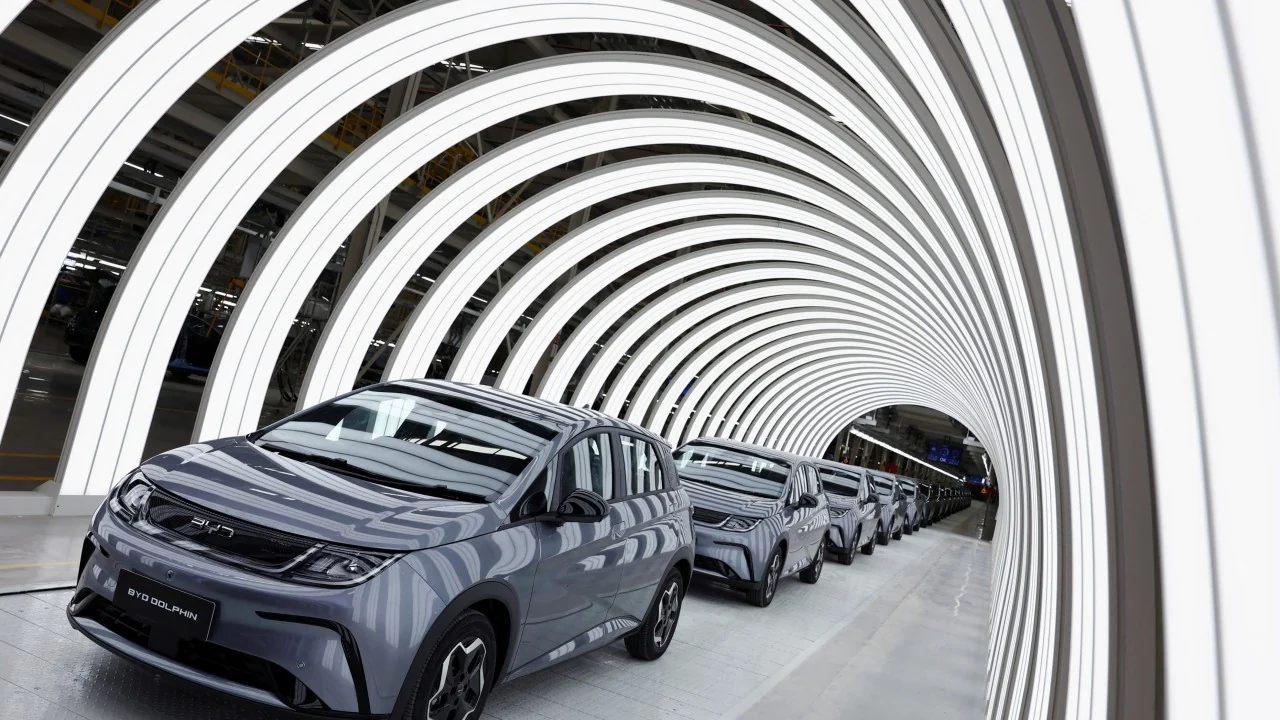
东南亚电动汽车热潮可能令该地区的中小企业掉队,因为中国汽车巨头绕过当地零部件制造商,转而青睐进口组件和封闭的供应商网络。
Southeast Asia’s electric vehicle boom risks leaving the region’s smaller companies behind, as Chinese automotive giants bypass local part-makers in favour of imported components and locked-in supplier networks.
印度尼西亚、泰国和马来西亚的本地制造商面临双重挤压:用于汽油和柴油车(统称为内燃机车辆,ICE)的零部件需求正在减弱,而高昂的准入门槛又将它们挡在电动汽车供应链之外。
Local manufacturers across Indonesia, Thailand and Malaysia are facing a double squeeze: demand is weakening for parts used in petrol and diesel cars, collectively known as internal combustion engine (ICE) vehicles, while steep barriers to entry also keep them out of EV supply chains.
分析师表示,维修保养业务以及混合动力车(将汽油发动机与电动机结合)或许能提供一条生路,但若缺乏更有力的政府支持和更便利的对接中国制造商的渠道,电动化转型恐将掏空该地区已建立的供应基础。
Analysts say repair and servicing work plus hybrids, which pair a petrol engine with an electric motor, could offer a lifeline, but without stronger government support and better access to Chinese manufacturers, the EV transition threatens to hollow out the region’s established supply base.
据印度尼西亚经济学家比马·尤迪斯提拉·阿迪内加拉称,中国电动汽车投资迄今为成熟的本地零部件制造商带来的业务微乎其微。
Chinese EV investments have so far generated minimal business for established local component makers, according to Indonesian economist Bhima Yudhistira Adhinegara.
“日系汽车与中国电动汽车的供应链截然不同,”比马说,他是雅加达经济与法律研究中心执行主任。“最大的障碍在于融资、技术和接触制造商的渠道。”类似担忧在泰国也已浮现,泰国长期被视为东南亚汽车产业的中坚。泰国汇商银行研究院在其2026-2028年行业展望报告中指出,本地供应商难以进入中国电动汽车供应链。
“The supply chain is very different between Japanese autos and Chinese EVs,” said Bhima, executive director of the Centre of Economic and Law Studies in Jakarta. “The biggest barriers are financing, technology and access to manufacturers.”Similar concerns have emerged in Thailand, long seen as the backbone of Southeast Asia’s auto sector. Krungsri Research, the research arm of Thailand’s Bank of Ayudhya, said in its 2026-28 industry outlook report that local suppliers were struggling to enter Chinese EV supply chains.
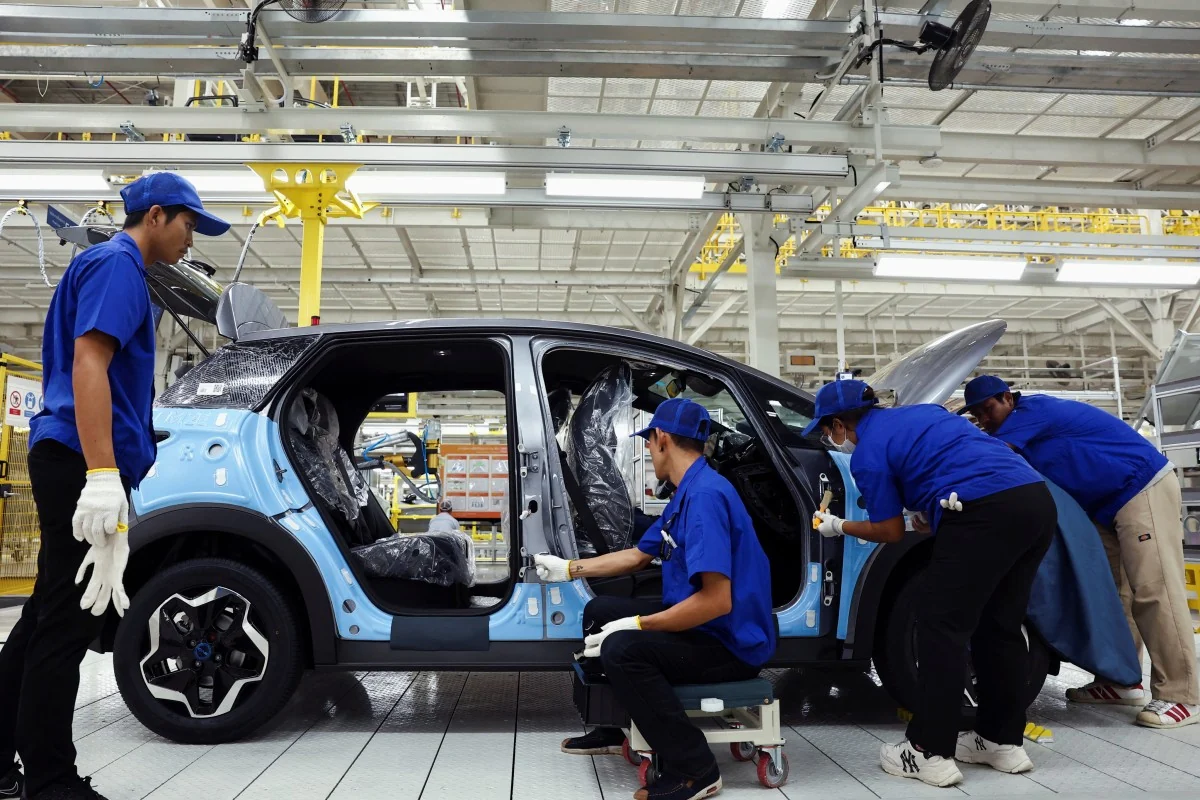
报告称,制造商要么进口主要部件,要么依赖现有的中国供应商,泰国厂商在成本和高技术专有诀窍两方面均处于劣势。
Manufacturers either imported major components or relied on existing Chinese suppliers, it said, with Thai vendors at a disadvantage on both cost and hi-tech proprietary know-how.
持续的燃油车和混动车需求理论上能提供转型所需的资金,但比马表示,财务压力已限制了印尼小型企业的投资能力。
Continued demand for ICE cars and hybrids could, in theory, generate the income needed to fund the switch to electric, but Bhima said the financial strain was already limiting smaller Indonesian firms’ ability to invest.
国内消费支出疲软和燃油成本上升抑制了需求,迫使规模较小的供应商通过裁员、降低产品质量或寻求债务重组来维持生存。
Sluggish domestic consumer spending and rising fuel costs have sapped demand, forcing smaller suppliers to respond by downsizing, cutting product quality or seeking credit restructuring just to stay afloat.
“政府没有为小型内燃机供应商提供过渡激励措施,”Bhima说。
“There are no transitional incentives from the government for small ICE suppliers,” Bhima said.
他呼吁印尼政府帮助小型制造商与电动汽车品牌和组装厂建立联系,并利用本地成分规则——即要求车辆价值中一定比例必须在国内采购——确保企业被纳入供应链。
He called on Indonesia’s government to help smaller manufacturers connect with EV brands and assembly plants, and to use local-content rules – requirements that a certain share of a vehicle’s value be sourced domestically – to ensure firms were brought into the supply chain.
“政府可以确保为满足本地成分要求而进行的电动汽车投资和销售必须吸纳本地小型制造商,”Bhima说。
“The government can ensure that investment and sales of EVs to meet local content requirements must absorb local small manufacturers,” Bhima said.
在泰国,Krungsri Research发现,混合动力汽车生产同时支撑了对传统发动机零部件和电气系统的需求,日本混合动力汽车制造商从东南亚国家采购了大量零部件。
In Thailand, Krungsri Research found that hybrid production supported demand for both conventional engine parts and electrical systems, with Japanese hybrid manufacturers sourcing substantial volumes of their parts from within the Southeast Asian nation.
东盟与东亚经济研究所于10月13日发布的一份汽车总体规划持相似立场,主张近期支持低排放车辆和混合动力车,同时为未来更广泛的电气化做准备。
An automotive master plan published by the Economic Research Institute for Asean and East Asia on October 13 took a similar line, advocating support for lower-emission vehicles and hybrids in the near term while preparing for wider electrification in future.
其他泰国制造商则完全实现了汽车行业之外的多元化发展。泰国汽车零部件制造商协会会长Sompol Tanadumrongsak此前曾敦促本地供应商转型生产铁路、医疗设备、航空和农业机械零部件。
Other Thai manufacturers are diversifying away from the automotive sector entirely. Sompol Tanadumrongsak, president of the Thai Auto-Parts Manufacturers Association, has previously urged local suppliers to repurpose for rail, medical equipment, aviation and agricultural machinery.
本刊已就本文联系Sompol及该协会置评,但在发稿时尚未收到回复。
This Week in Asia contacted Sompol and the association for comment on this article, but had not received a response at the time of publication.
替换零部件提供了另一个潜在市场。Krungsri Research发现,驾驶员继续使用旧款内燃机汽车,可能会支撑泰国售后替换零部件的需求,即使技术颠覆加速且来自国外的竞争加剧。
Replacement parts offer another potential market. Drivers holding onto their old ICE cars could prop up demand for aftermarket replacement parts in Thailand, Krungsri Research found, even as technological disruption accelerates and competition from abroad intensifies.
在马来西亚,中国电动汽车先锋比亚迪(BYD)最近放弃了在丹绒马林建设拟议组装厂的计划,此前因投资、贸易及工业部设定的出口配额和定价条件产生争议。该部门为这些要求辩护,称其不具歧视性。
In Malaysia, Chinese EV pioneer BYD recently dropped plans for a proposed assembly plant in Tanjung Malim following a dispute over export quotas and pricing conditions set by the Ministry of Investment, Trade and Industry. The ministry defended the requirements as non-discriminatory.
本月初,比亚迪调整策略,与当地合同组装商Inokom合作,在位于马来西亚西北部吉打州居林的现有工厂组装乘用车。
Earlier this month, BYD changed tack, partnering with local contract assembler Inokom to assemble passenger vehicles at an existing facility in Kulim, in Malaysia’s northwestern Kedah state.
尽管如此,本地增值仍然有限。马来西亚媒体3月报道,本地组装的电动汽车本地化率仅为20%至30%,而外资品牌燃油车的本地化率高达70%。
Still, local value add remains modest. Malaysian media reported in March that domestically assembled EVs comprised just 20 to 30 per cent local content, compared with up to 70 per cent for foreign-branded ICE cars.
马来西亚一直试图将其供应商与中国供应链对接。去年5月,马来西亚投资发展局促成23家国内零部件供应商和12家技术供应商与中国车企奇瑞对接,达成四项涵盖零部件、技术转让和联合投资的商业协议。
Malaysia has attempted to link up its suppliers with Chinese supply chains. In May last year, the Malaysian Investment Development Authority brought together 23 domestic parts suppliers and 12 technology suppliers with the Chinese carmaker Chery, resulting in four commercial agreements covering components, technology transfer and joint investment.
《Motoring Malaysia》总编辑、长期关注行业的Aiman Abdullah表示,本地车企的电气化项目正逐步积累本地工程和制造专长,补充称在混合动力高压系统方面积累的经验有助于供应商进军电动汽车零部件领域。
Aiman Abdullah, managing editor of Motoring Malaysia and a long-time industry watcher, said domestic carmakers’ electrification programmes were gradually building up local engineering and manufacturing expertise, adding that experience working with the high-voltage systems in hybrids could help vendors move into EV components.
但他强调,供应商仍需要政府和车企提供更清晰的规划,因为供应商通常需要6至18个月为量产做准备,而投资往往需要约十年才能收回成本。
But suppliers still needed clearer planning from both the government and carmakers, he stressed, because vendors typically required six to 18 months to prepare for full-scale production,while investments often took about a decade to pay off.
“投资者需要在政策方面看到稳定性和专注度,才会掏出支票簿,”Aiman说。
“Investors need to see stability and focus in terms of policy before they take out their chequebooks,” Aiman said.
他表示,小型企业可能有愿景和一定的技术专长,但缺乏进军电动汽车领域的资金实力,建议设立基金帮助它们扩大规模和提升产能。
Smaller businesses might have the vision and some amount of technical expertise, but lacked the financial means to break into EVs, he said, proposing a fund to help them expand and scale up production.
维修和翻新汽车为进入更广泛的电动汽车经济提供了一条替代路径,但这同样存在局限。
Servicing and reconditioning cars offers an alternative way into the wider EV economy, though this again has limits.
区域二手车平台 Carsome 联合创始人、其培训部门 Carsome Academy 首席执行官张峻毅(Teoh Jiun Ee,音译)表示,马来西亚已经建立了成熟的生态系统,可提供车身修复、轮胎和悬挂等常规服务。
Teoh Jiun Ee, co-founder of regional used-car platform Carsome and CEO of its training arm, Carsome Academy, said Malaysia already had a well-established ecosystem for conventional services such as body repairs, tyres and suspension.
但他表示,涉及高压系统、电池评估和车型专用部件时,工作会变得更加专业化。
But when it came to high-voltage systems, battery assessments and model-specific components, the work became more specialised, he said.
“关键的区别在于我们能在当地开展哪些工作,以及我们能获取哪些零部件、数据和专业系统来开展这些工作。”Carsome 运营自己的检测中心和翻新设施,能够检测电动汽车,但无法维修或更换单个电池模块,此类情况会转介给制造商,尤其是仍在保修期内的车辆。
“The key distinction is between work we can carry out here and the parts, data and specialist systems we can access to carry it out.”Carsome, which operates its own inspection centres and refurbishment facilities, is able to inspect EVs, but it cannot repair or replace individual battery modules and refers such cases to manufacturers, especially for cars still under warranty.
张峻毅表示,技术人员可以在现有的车辆系统和故障排查知识基础上,增加电气系统、高压安全和电动汽车诊断方面的技能。
Technicians could build on their existing knowledge of vehicle systems and fault-finding by adding skills in electrical systems, high-voltage safety and EV diagnostics, Teoh said.
但他表示,能否获得此类再培训部分取决于由谁承担费用,并补充说雇主、政府和行业合作伙伴可以提供帮助。
Yet access to such retraining depended partly on who bore the cost, he said, adding that employers, government and industry partnerships could help.
“如果费用完全由个人技术人员承担,最需要提升技能的人可能最难获得培训,”张峻毅说。
“If the cost falls entirely on individual technicians, there is a risk that the people who most need to upgrade their skills may be the least able to access it [training],” Teoh said.
“对我们而言,更广阔的机会在于在此建立一个更成熟的二手电动汽车生态系统,让车辆能够得到持续且安全的评估,买家对所购车辆的状况有更大的信心。”
“For us, the broader opportunity is to develop a more mature used-EV ecosystem here, where vehicles can be assessed consistently and safely, and buyers have greater confidence in the condition of the cars they purchase.”