让这一发现令人惊讶的并不是它的发现地点。撒哈拉沙漠长期以来一直是地球和太阳系历史的一种天然档案馆。在它的沙海之中,科学家们曾发现过拥有4000万年历史的化石以及其他陨石。例如,在2019年,人们曾回收一块拥有45亿年历史的碎片,根据最近的研究,它可能来自一颗古老且如今已消失的原行星,其体型甚至可能与月球相当。
The location is not what makes this finding surprising. The Sahara has long been a kind of natural archive of the history of Earth and the solar system. Among its sands, scientists have found 40-million-year-old fossils and other meteorites. In 2019, for example, a 4.5-billion-year-old fragment was recovered that, according to recent research, may have come from an ancient, now-vanished protoplanet, possibly as large as the moon.
这颗被命名为“特加扎001”(Teghaza 001)的陨石,原本可能只是地球上发现的火星碎片收藏中的又一个普通藏品。尽管这些岩石对于研究火星的成分和地质历史极其有用,但它们往往只能提供关于火星遥远过去环境条件的有限信息。然而,发表在《科学》和《科学进展》期刊上的一系列研究表明,特加扎001与其他样本不同。除了年代异常久远之外,它还保留了火星地壳物质与其古代水圈之间相互作用的化学痕迹。
The meteorite, named Teghaza 001, might have remained just another entry in the collection of Martian fragments found on Earth. Although these rocks are extraordinarily useful for studying Mars’ composition and geological history, they often provide limited information about the environmental conditions of its distant past. However, a series of studies published in the journals Science and Science Advances revealed that Teghaza 001 is not like other samples. In addition to being exceptionally old, it has preserved chemical traces of the interaction between materials in the Martian crust and its ancient hydrosphere.
美国宇航局喷气推进实验室的杨·刘(Yang Liu)在一份新闻稿中表示:“该论文的一位审稿人称其为火星的‘罗塞塔石碑’。”
“One of the paper’s reviewers called it a Rosetta Stone for Mars,” Yang Liu of NASA’s Jet Propulsion Laboratory said in a press release.
一种名为磷灰石的矿物的微小晶体保存了两种氢源的特征:一种源自火星内部,另一种与其古代水圈有关。换句话说,这颗陨石包含被富水环境改变的物质。多年来,有大量证据表明火星表面曾一度拥有液态水。如今,关于这颗行星的一些重大问题是,这些水是否孕育了微观生命的出现,以及究竟发生了什么才改变了这个曾经宜居的环境。
Tiny crystals of a mineral called apatite preserves signatures of two sources of hydrogen: one originating from the interior of Mars and the other related to its ancient hydrosphere. In other words, the meteorite contains material that was altered by a water-rich environment. For years, there has been considerable evidence that Mars once harbored liquid water on its surface. Today, some of the big questions about the planet are whether that water allowed microscopic life to emerge and what happened to change this once hospitable environment.
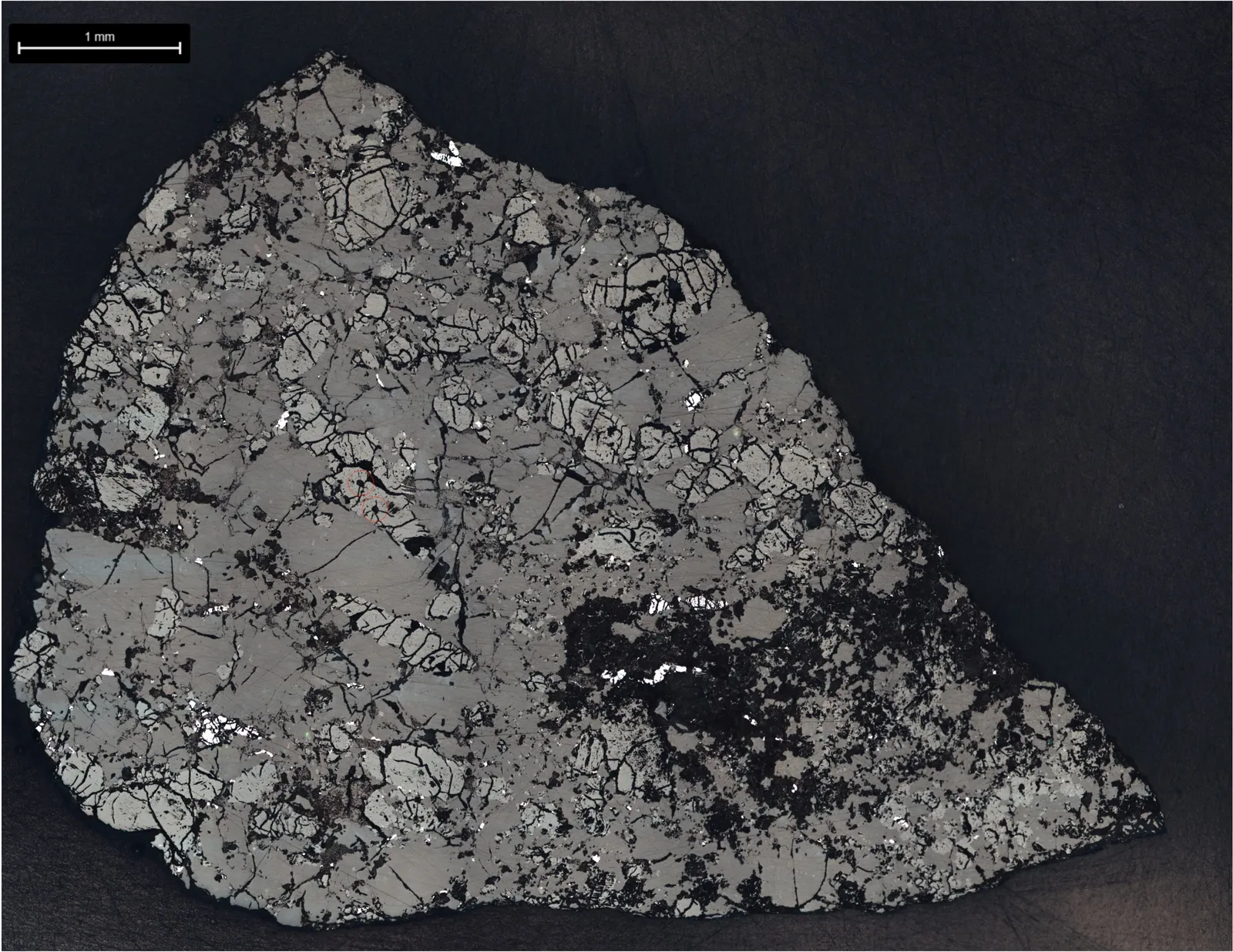
这颗陨石表明,火星深处的岩浆与充满水的表面之间曾发生过物质交换。由于这块岩石来自火星及我们太阳系其余部分形成后大约5亿年的时期,这种挥发性活动发生在火星存在的最早期。
This meteorite reveals that there was an exchange of materials between the magma deep within Mars and a watery surface. Since the rock comes from just about 500 million years after Mars and the rest of our solar system formed, this volatility occurred very early in the planet’s existence.
参与该项研究的另一位美国宇航局科学家李·萨珀(Lee Saper)补充道:“这确实是我们获得的第一块来自火星从未采样过的区域的火星地壳。它记录了水与岩石的相互作用,甚至可能记录了火星在失去水分时的火星大气印记。”如今,火星是一个寒冷且荒凉的星球,但它并非一直如此。太空任务搜集到的证据表明,它曾经拥有河流、湖泊,甚至可能拥有大面积的水体。
“This is really our first piece of Martian crust from a part of Mars we’ve never had a sample of before,” added Lee Saper, another NASA scientist who contributed to the research. “It records interactions of water and rock and maybe even an imprint of the Martian atmosphere as it was losing water.”Today, Mars is a cold and barren planet, but it was not always that way. Evidence gathered by space missions suggests that it once had rivers, lakes, and possibly large bodies of water.
但这种转变在数十亿年里是如何发生的,一直是个谜。回答这个问题正是向火星发送探测器、漫游车以及或许有一天发送载人任务的部分原因。但有时科学关乎机遇,而答案则以极其罕见的陨石形式到来。
But how that transformation happened over billions of years has remained a mystery. Answering that question is part of the reasoning behind sending probes, rovers, and perhaps, one day, crewed missions to Mars. But sometimes science is about serendipity, and answers arrive in the form of extraordinarily unlikely meteorites.
这个故事最初发表在西班牙语《连线》杂志(WIRED en Español)上,并从西班牙语翻译而来。
This story originally appeared on WIRED en Español and has been translated from Spanish.