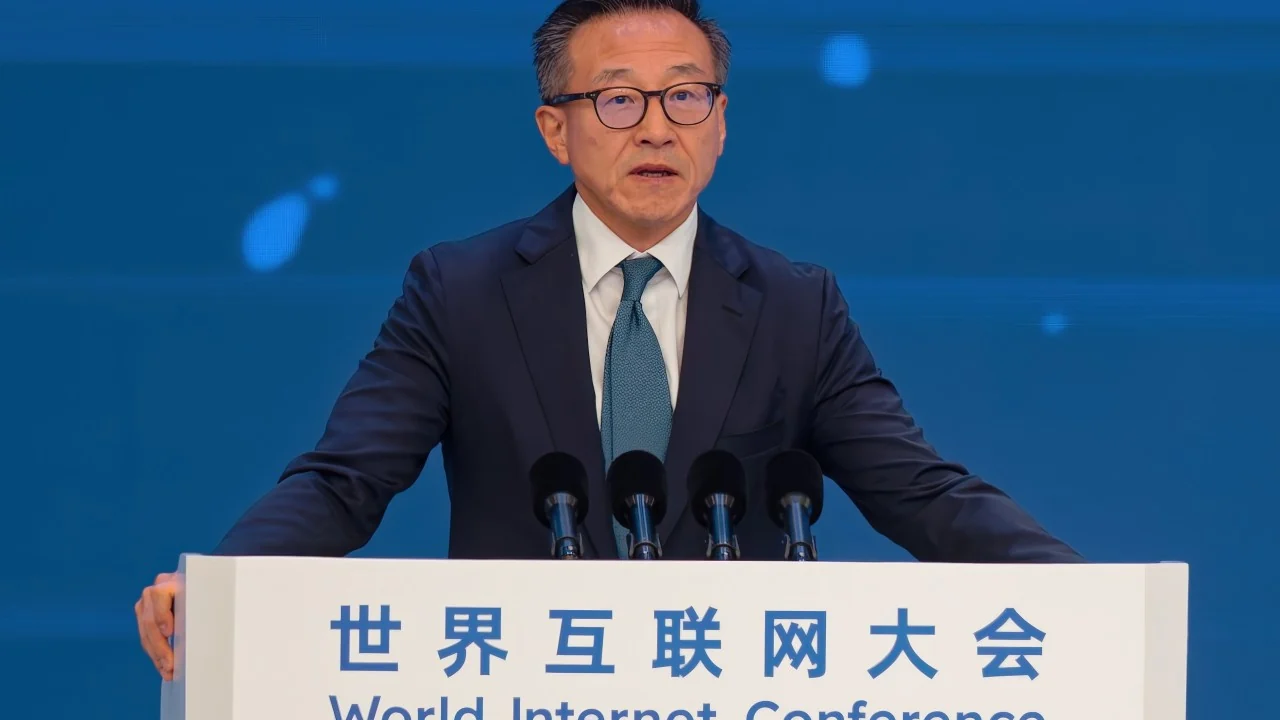
阿里巴巴集团董事局主席蔡崇信周二表示,开源是打造可持续人工智能产业的唯一可行路径,这家中国科技巨头正加倍押注其开源AI战略。
Open source is the only viable path to creating a sustainable artificial intelligence industry, Alibaba Group Holding chairman Joe Tsai said on Tuesday, as the Chinese technology giant doubles down on its open-source AI strategy.
在浙江省举办的年度世界互联网大会乌镇峰会开幕式上,蔡崇信指出,随着AI需求激增与算力持续短缺形成矛盾,国内科技公司正日益围绕开放生态系统达成共识。
Speaking at the opening ceremony of the annual World Internet Conference Wuzhen Summit in eastern China’s Zhejiang province, Tsai pointed to a growing convergence around open ecosystems among domestic tech companies, as surging AI demand rubs up against persistent shortages of computing power.
“只有通过开源,AI才能普及;只有通过普及,我们才能创造一个可持续、包容的智能时代,”这位阿里巴巴联合创始人在由国家互联网信息办公室和浙江省政府支持的活动上对与会者表示。
“Only through open source can AI become popularised, and only through popularisation can we create a sustainable, inclusive intelligent era,” the Alibaba co-founder told attendees at the event backed by the Cyberspace Administration of China and the Zhejiang provincial government.
蔡崇信将中国在全球开源版图中的领先地位,归因于他所谓的“中国创新的精神内核”。他说,这一理念聚焦于“超越自我利益以增进共同福祉,通过分享提升集体智慧,通过互助共赢创造更大价值”。
Tsai framed China’s leading role in the global open-source landscape around what he called the “spiritual core of Chinese innovation”. This philosophy, he said, focused on “transcending self-interest to enhance the common well-being, elevating collective wisdom through sharing, and creating greater value by helping each other succeed”.
他的发言与峰会更广泛的政治基调一致。国务院总理李强周二在主旨演讲中,倡导在AI和互联网发展中坚持“包容均衡”和“对话开放”,同时警告不要“泛化国家安全概念”和筑起“数字铁幕”。
His remarks aligned with the summit’s broader political tone. In a keynote address on Tuesday, Premier Li Qiang advocated for “inclusive balance” and “open dialogue” in the development of AI and the internet, while warning against “overstretching national security concepts” and erecting a “digital iron curtain”.
在与华盛顿竞争加剧的背景下,北京已将开源AI作为其推动技术自立自强更广泛举措的一部分,予以大力支持。
Beijing has thrown its weight behind open-source AI as part of its broader push for technological self-reliance amid an escalating rivalry with Washington.
据官方媒体报道,上月底,中国知名AI企业深度求索和MiniMax获得监管批准,可在海外发布和授权开源系统。
Late last month, prominent Chinese AI firms DeepSeek and MiniMax secured regulatory approval to release and license open-source systems overseas, according to state media reports.
这些许可在当局拟对AI相关技术实施新出口限制几天内获批,确保了国内头部企业能继续在国际上分发模型权重。
Granted days after authorities proposed new export restrictions on AI-related technologies, the clearances ensure that domestic champions can continue distributing model weights internationally.
尽管OpenAI和Anthropic等美国领先公司认为强大的开放权重模型构成安全风险,但全球越来越多的开发者正转向开放替代方案。
While leading US companies such as OpenAI and Anthropic have argued that powerful open-weight models pose safety risks, an increasing number of developers globally are turning to open alternatives.
前Google Brain负责人、百度前首席科学家吴恩达在8月表示,开放权重系统“在我看来比闭源权重模型更安全”。吴恩达指出,他曾使用两款中国模型——Moonshot AI(月之暗面)的Kimi K3和Z.ai的GLM-5.2——对一款新的AI智能体工具进行安全审查。
Andrew Ng, the former head of Google Brain and chief scientist at Baidu, said in August that open-weight systems “seem safer to me than closed-weight models”. Ng noted that he had used two Chinese models – Moonshot AI’s Kimi K3 and Z.ai’s GLM-5.2 – to conduct security reviews on a new AI agent tool.
在中国,阿里巴巴已成为开源AI最活跃的推动者之一。据公司数据,其旗舰模型家族Qwen现拥有470多个开源变体,总下载量超过40亿次,衍生模型迄今已创建超过33万个。
Within China, Alibaba has emerged as one of the most active promoters of open-source AI. Its flagship model family, Qwen, now has more than 470 open-source variants, with total downloads exceeding 4 billion and more than 330,000 derivative models created to date, according to company figures.
蔡崇信表示,开放权重大幅降低了小型企业和发展中国家的研发成本。他援引乌干达一个非营利组织的例子,该组织利用Qwen构建了支持68种非洲语言的本地化AI模型,使当地工程师能够绕过基础模型构建的障碍,无需从头开始训练模型。
Tsai said open weights significantly lowered research and development costs for smaller businesses and developing nations. He cited the example of a non-profit group in Uganda that had used Qwen to build a localised AI model supporting 68 African languages, allowing local engineers to bypass foundational hurdles without building models from scratch.
蔡崇信在乌镇的演讲呼应了他上月在意大利Wave科技大会上的类似言论,当时他表示,拥抱开源路径是欧洲实现技术独立的唯一途径。
Tsai’s pitch in Wuzhen follows similar remarks he delivered last month at the Wave tech conference in Italy, where he said embracing the open-source approach was the only way for Europe to achieve tech independence.
“你不想把数据喂给某个闭源API,”蔡崇信当时说,“你想保留这些数据,并能够获取开源模型,进一步训练你的模型,针对你的用途加以改进。”蔡崇信表示,阿里巴巴正利用其核心电商业务产生的250亿美元自由现金流为其AI基础设施和模型开发提供资金,并补充称,这家总部位于杭州的公司过去三年每年都将计算资本支出翻倍。阿里巴巴拥有《南华早报》。
“You don’t want to feed it into some closed-source API,” Tsai said at the time. “You want to maintain those data and be able to take open-source models and then further train your model, and improve it for your use.”Alibaba was using the US$25 billion in free cash flow generated by its core e-commerce business to fund its AI infrastructure and model development, Tsai said, adding that the Hangzhou-based company had doubled its computing capital expenditure every year for the past three years. Alibaba owns the South China Morning Post.