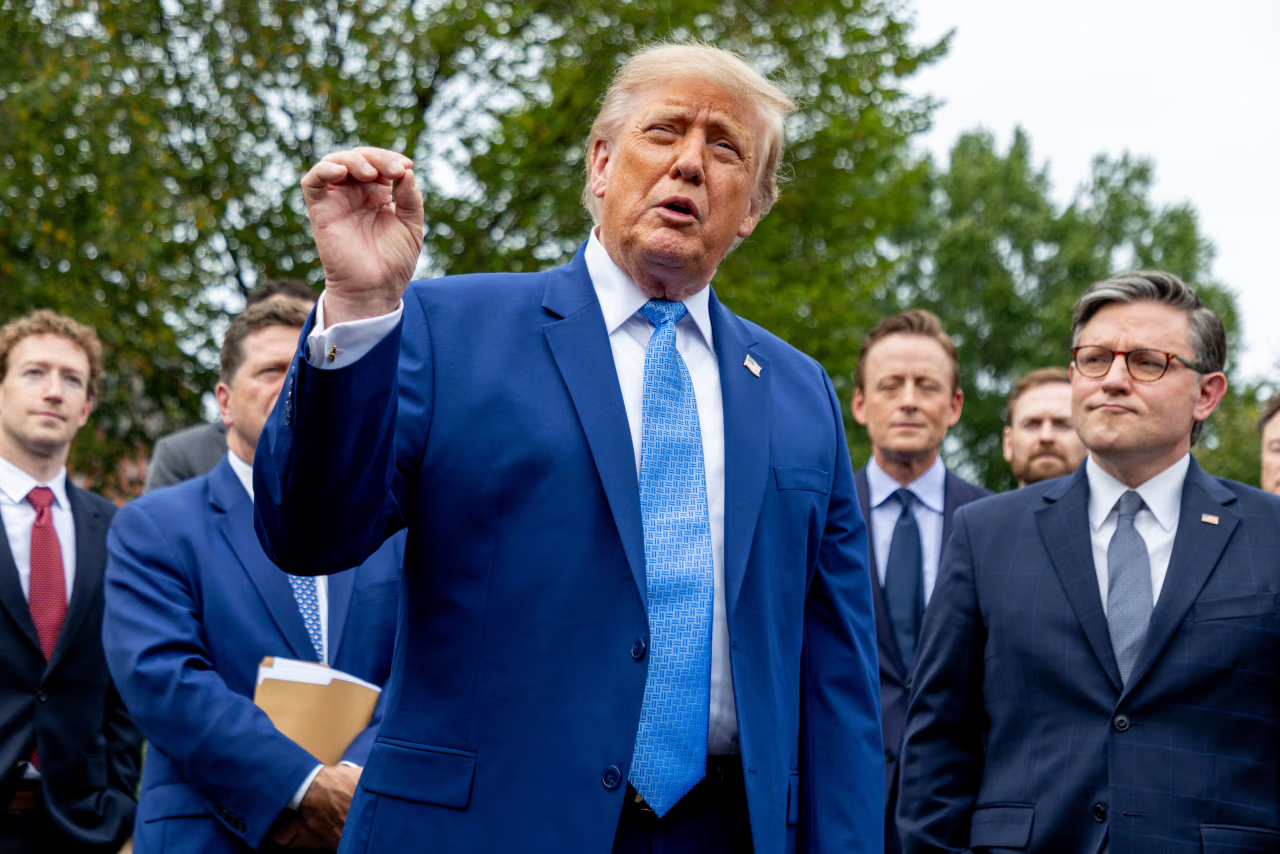
特朗普总统向来不喜欢糟糕的品牌命名,他已向“人工智能”这一术语宣战,并希望所有人都称之为“超级智能”。如今,硅谷的大佬们——他们是白宫最常见的访客之一——正面临考验:他们能否跟上这一新的宣传口径?
Never a fan of bad branding, President Trump has declared war on the term “artificial intelligence” and wants everyone to call it “superintelligence.”Now the masters of Silicon Valley—who count as some of the White House’s most frequent visitors—are being put to the test: Can they get on board with the new messaging?
与总统下令重新命名大型水域或阿拉斯加的一座山峰不同,重塑AI品牌对于那些已将未来乃至公司名称押注于此的企业来说,难度要大得多。但特朗普表示,“Artificial”(人工的)一词听起来像是假的,他认为这是个问题。“这不是假的。实际上它很神奇,”他在9月下旬的联合国大会上表示。几天后,他签署了一项行政命令,要求所有措辞为“人工智能”的政府文件均予以更名。
Unlike the president’s edicts to rename large bodies of water or a mountain in Alaska, rebranding AI is trickier for companies that have staked their futures, even names, on it. But Trump said “artificial” makes it sound fake, which he sees as a problem.“It is not fake. It’s actually amazing,” he told the United Nations General Assembly in late September. Days later, he signed an executive order that all government documents with the wording be renamed.
“白宫认为,凡使用‘Artificial Intelligence’(人工智能)一词,而非广泛接受的、更新、更准确的‘Super Intelligence’(超级智能)一词者,均为敌人!”特朗普上个月在Truth Social上发文称。
“The White House considers anyone that uses the term, ‘Artificial Intelligence,’ as opposed to the highly accepted new and more accurate term, ‘Super Intelligence,’ THE ENEMY!”Trump said last month on Truth Social.
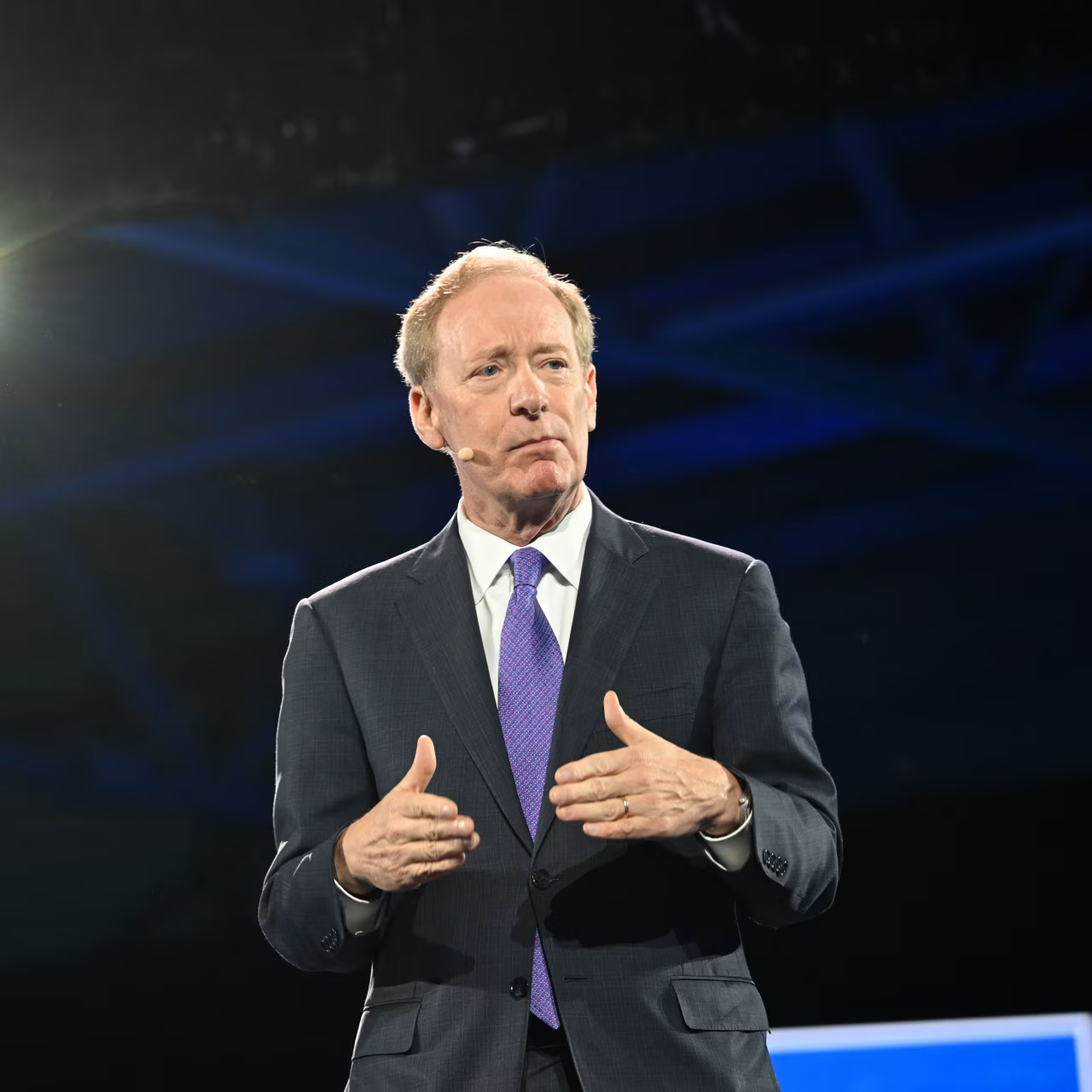
自此,科技高管们一直在语言的钢丝上行走,有时甚至在半句话中就调整用语。“AI安全——或者说SI安全——的建筑规范应当是什么样?”微软总裁布拉德·史密斯10月在一档播客节目中说道。一位微软发言人表示,公司对该技术使用一系列术语。
Tech executives have been walking a linguistic tightrope ever since, sometimes recalibrating in midsentence. “What should a building code for AI safety—or SI safety—look like?”Microsoft President Brad Smith said on a podcast in October. A Microsoft spokeswoman said the company uses a range of terms for the technology.
与特朗普关系密切的英伟达首席执行官黄仁勋,曾在特定受众面前使用SI,在其他场合则用AI。“超级智能的未来,不仅取决于它能做什么,更取决于它赢得的信任,”他在X平台发文称,前一天他和其他科技领袖刚在白宫签署承诺,确保该技术安全。
Nvidia Chief Executive Jensen Huang, who has a close relationship with Trump, has used SI for certain audiences, and AI for others. “The future of Super Intelligence will be shaped not only by what it can do, but by the confidence it earns,” he posted on X the day after he and other tech leaders signed a pledge at the White House to keep the technology safe.
几周后,黄仁勋在柏林的一次会议上又换回了旧称呼:“欧洲的每一家公司都将成为AI公司,”他说道。
Huang was back to the old lingo at a conference in Berlin a few weeks later: “Every company in Europe will become an AI company,” he said.
不惧抛弃世界知名品牌(还记得 Twitter 吗?)的 SpaceX 和特斯拉首席执行官埃隆·马斯克(Elon Musk)几乎立即采用了新术语。他宣称,SpaceX 的 AI 部门将更名为 SpaceXSI。在一份证券文件中,特斯拉表示,其提及的 SI “指的是我们之前描述为‘人工智能’或‘AI’的技术和活动。”
Not one to shy from jettisoning a world-famous brand (remember Twitter?), SpaceX and Tesla CEO Elon Musk took to the new terminology almost immediately. SpaceX’s AI division will become SpaceXSI, he declared. In a securities filing, Tesla said its mentions of SI “refer to the technologies and activities that we previously described as ‘artificial intelligence’ or ‘AI.’”
Salesforce 首席执行官马克·贝尼奥夫(Marc Benioff)表示,他也在跟进这一变化。他在 X 平台上说,公司的 AIForce 平台现更名为 SIForce:“超级智能时代已经到来。” 但当“AI”已成招牌时,更名就棘手得多。OpenAI 首席执行官山姆·奥特曼(Sam Altman)已表示公司不会更名。“品牌具有粘性,”他告诉《Politico》(《国会山报》旗下政治新闻网站)。
Salesforce CEO Marc Benioff said he is also getting with the program. The company’s AIForce platform is now SIForce, he said on X: “The era of super intelligence is here.”Making the change is trickier when “AI” is on the shingle. OpenAI CEO Sam Altman has said the company won’t change its name. “Brands are sticky,” he told Politico.
真正的考验出现在最近几天。在一波科技行业财报发布、Anthropic 的公开募股申报,以及上周因 AI(或 SI)支出引发的股市大跌中,公司高管们有各种机会拥抱——或跳过——这一重塑品牌。
The real test has come in recent days. Between a wave of tech-industry earnings reports, Anthropic’s public-offering filing and last week’s stock-market meltdown over AI, or SI, spending, company bosses have had all sorts of opportunities to embrace—or skip—the rebrand.
《华尔街日报》分析发现,自上周以来,在 119 家讨论该技术的标普 500 成分股公司中,有五家在投资者电话会议、证券文件或新闻稿中使用了“超级智能”的某种变体。有的用一个词,有的用两个词,在是否大写的问题上也存在分歧。
Of 119 S&P 500 companies discussing the technology on investor calls, securities filings or news releases since last week, five have used some variation on “superintelligence,” a Wall Street Journal analysis found. Some use one word, others two, and there is a split over whether it is capitalized.
“人们正在摸索前行,”倡导 AI 安全政策的非营利组织“安全 AI 联盟”首席执行官布伦丹·斯坦豪泽(Brendan Steinhauser)说。“他们通常会找到一种方式,不与白宫唱反调,但同时也会说,‘我们将继续以我们一直以来的方式谈论这件事。’” 一方面,“超级智能”在 AI 圈子里早已广泛使用,用来描述(目前仍属假设性的)认知能力超过最天赋异禀人类的模型。斯坦豪泽表示,他的组织旨在保留这一定义,并保持 AI 作为更通用的术语。
“People are muddling through,” said Brendan Steinhauser, CEO of the Alliance for Secure AI, a nonprofit advocating for AI-safety policies. “They’re typically finding a way to not be oppositional to the White House but also saying things like, ‘We’re going to continue to talk about this in the way we have talked about it.’”For one thing, “superintelligence” was already widely used in AI circles to describe (so far, hypothetical) models more cognitively capable than the most gifted humans. Steinhauser said his group aims to preserve that definition and keep AI as the more general term.
“是的,我们将继续被称为‘安全人工智能联盟’,”该组织10月在X平台发帖称,借用了特朗普标志性的落款:“感谢您对这件事的关注。”
“Yes, we will continue to be called The Alliance for Secure AI,” the group posted on X in October, borrowing Trump’s signature signoff: “Thank you for your attention to this matter.”
即使在特朗普的白宫内部,改变也很难。第一夫人梅拉尼娅·特朗普账号最近的一条Facebook帖文——宣布一项面向学生的计算挑战——在一处用了“AI”而非“SI”。一位评论者温和地指出了这一疏漏:“我自己也在不断纠正。”
Even within Trump’s White House, change is hard. A recent Facebook post from first lady Melania Trump’s account—announcing a computing challenge for students—referred to AI instead of SI in one instance. One commenter gently called out the lapse: “I’m still correcting myself also.”
在特朗普前“AI沙皇”戴维·萨克斯共同主持的“All-In”播客中,这位科技创始人指出,听众正在审视主持人何时重新使用“AI”而非“SI”。10月下旬的一期节目标题为“AI网络恐慌”。“你为此挨了一些骂,”萨克斯上周开玩笑对他的联合主持人、科技企业家杰森·卡拉卡尼斯说。
On the “All-In” podcast co-hosted by Trump’s former AI czar David Sacks, the tech founder pointed out that listeners were scrutinizing when the hosts reverted to “AI” instead of “SI.”A late October episode was titled “AI Cyber Panic.”“You’re getting some shade for that,” Sacks joked with his co-host, tech entrepreneur Jason Calacanis, last week.
在华盛顿举行的一次机器人会议上,美国国家标准与技术研究院的一位顶尖研究员以关于他使用“超级智能”一词的免责声明开启了一场小组讨论。“毫无疑问,我迟早会说溜嘴,”领导NIST人工智能研究、测量与标准部的克雷格·施伦诺夫说。“我还没完全清空缓存,所以肌肉记忆会介入,导致‘AI’蹦出来。”
At one Washington conference on robotics, a top researcher at the National Institute of Standards and Technology kicked off a panel discussion with a disclaimer about his use of superintelligence.“No question I’m going to slip up at some point,” said Craig Schlenoff, who leads NIST’s AI research, measurement and standards division. “I haven’t completely cleared my cache yet, so muscle memory is going to jump in and AI is going to come in.”